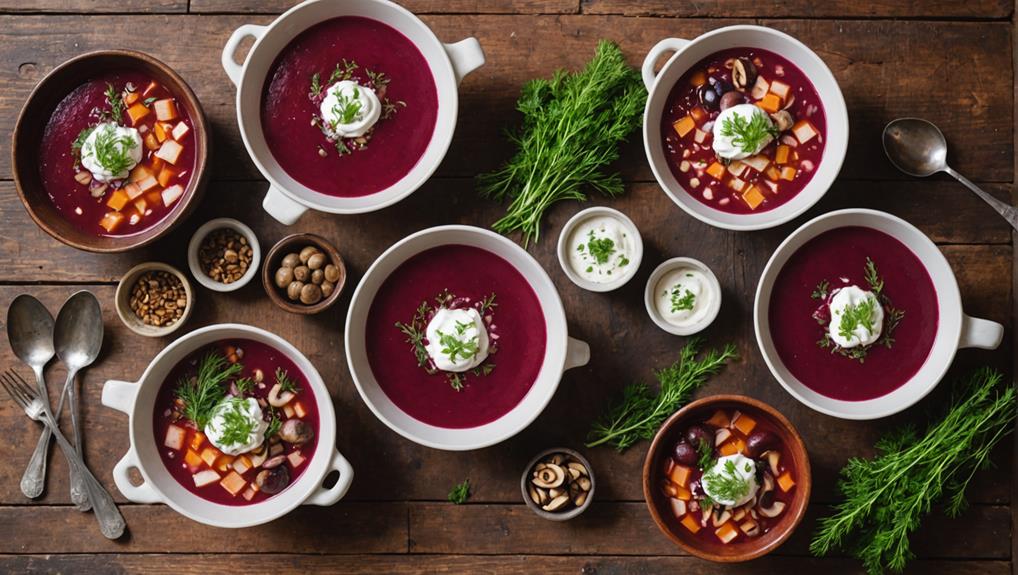
When you think about borscht, it's easy to picture the vibrant Ukrainian version, but have you considered the diverse interpretations found across Europe? Each country adds its own twist, from the lighter Russian styles to Poland's unique barszcz variations, showcasing regional ingredients and cultural practices. You might be surprised to learn about the revitalizing cold borscht options popular in summer. What's more intriguing is how each bowl tells a story that reflects communal values and local traditions. So, what makes these variations so special?
Need cookware for your meal? Toolbox, a Pear to Pear rental marketplace, might be worth a look.
Quick Takeaways
- Ukrainian borscht often features a classic red variant with a balance of sweet and sour flavors, commonly made with beef stock and root vegetables.
- Russian borscht is lighter in consistency, incorporating beetroot, cabbage, and meats, and is typically served with black rye bread.
- Polish barszcz includes variations like clear red barszcz from fermented beets and vegetarian options with dried mushrooms, showcasing local traditions.
- White barszcz, a Polish specialty, has a tangy base of soured wheat flour, enriched with sausage and eggs, traditionally served at Easter.
Overview of Borscht
Borscht, a beloved sour soup with deep roots in Eastern European and Northern Asian cuisines, captivates with its rich flavors and vibrant colors, reflecting the diverse ingredients and traditions of the region.
Its most iconic variant, red borscht, features beets as a key ingredient, offering a striking ruby hue that's both visually appealing and flavorful. This beet soup is often enriched with cabbage, potatoes, and garlic, showcasing the culinary traditions of Ukraine.
In contrast, white borscht stands out with its creamy base made from fermented rye flour or sour cream, typically served during Easter celebrations. This Polish variant highlights how variations of borscht adapt to cultural practices.
Cold borscht, another invigorating option, is perfect for summer gatherings, combining beet juice with an array of vegetables and herbs, creating a light yet satisfying dish.
Each version of borscht holds cultural significance, weaving together history and community through shared meals.
The versatility of borscht, whether hot or cold, allows it to transcend seasons, making it a cherished part of the culinary landscape. You'll find that serving these delightful soups not only nourishes but also invites connection and conversation around the table.
Ukrainian Borscht Variations
Ukrainian borscht offers a rich tapestry of flavors, with the classic red borscht standing out for its vibrant hue and balance of sweet and sour notes.
You'll find that cold borscht variants, like chlodnik, provide a revitalizing contrast, perfect for summer days.
Each variation not only reflects regional ingredients but also the cultural significance of this beloved dish in Ukrainian cuisine.
Classic Red Borscht
This vibrant dish, renowned for its deep red hue and hearty flavors, showcases the rich culinary traditions of Ukraine through its diverse regional adaptations and seasonal ingredients.
Classic Ukrainian red borscht is a comforting soup that typically begins with a base of beef stock, simmering to create a rich broth that serves as the foundation for root vegetables like beets, potatoes, and cabbage.
As you prepare this dish, you'll find that the balance between sweet and sour tastes is key. Fresh beets lend their natural sweetness, while vinegar adds that essential sour touch, creating a harmonious flavor profile. Traditional additions like sautéed onions and carrots enrich the mix, while garlic can elevate the taste even further.
This beloved comfort food isn't just a meal; it also embodies cultural pride, often gracing tables during family gatherings and festive occasions, particularly on Christmas Eve.
Regional variations may introduce locally sourced ingredients like kidney beans and green onions, allowing for a personal touch. When served hot with a dollop of sour cream, classic red borscht becomes an inviting dish that warms both the heart and soul.
Cold Borscht Variants
Chłodnik offers a delightful twist on traditional borscht, transforming the classic dish into an invigorating summer soup that highlights fresh, seasonal ingredients. This cold borscht is a rejuvenating option, primarily made with beetroot, served chilled to provide a cooling effect on hot days. Its vibrant red color not only pleases the eye but also indicates the rich flavors waiting to be savored.
In Ukrainian cuisine, cold borscht typically features hard-boiled eggs, dill, and often a dollop of sour cream, adding creaminess and depth to each spoonful. The incorporation of beet juice or fermented beet sour creates a distinctive tang that sets it apart from its hot counterpart. Variations of chłodnik may include crunchy vegetables like cucumbers and radishes, or even greens such as sorrel and spinach, which enhance the soup's fresh and zesty profile.
As you prepare to serve this chilled delight, remember that chłodnik reflects the agricultural practices of Ukraine, emphasizing the importance of seasonal ingredients. Offering a bowl of this unique borscht not only showcases your culinary skills but also invites your guests to experience a taste of summertime in every bite.
Russian Borscht Styles
When you explore Russian borscht, you'll notice its unique liquid consistency, which sets it apart from thicker variations.
This heartier stew often features a blend of ingredients like beetroot, cabbage, and an array of meats, all simmered to create a rich flavor profile.
The early addition of vegetables not only influences the texture but also reflects regional adaptations and personal preferences throughout Russia.
Liquid Consistency Characteristics
Russian borscht often showcases a unique liquid consistency that balances hearty ingredients with a lighter broth, making it a comforting yet invigorating dish. Unlike its Ukrainian counterpart, Russian borscht tends to be more liquidy, resulting in a broth that remains flavorful and rich without becoming overly thick. The primary ingredients—beetroot, cabbage, and potatoes—are stewed together, allowing the flavors to meld beautifully.
In this style of borscht, vegetables are typically added early in the cooking process, which softens their texture and enhances the overall broth. This method not only contributes to the dish's inviting appearance but also invites diners to experience a medley of flavors in each spoonful. The inclusion of cured meats, such as beef or sausage, further enriches the broth, ensuring that every bowl is a hearty stew that satisfies the palate.
When served with black rye bread, Russian borscht becomes a complete meal, perfect for any season. The careful balance of liquid consistency in Russian borscht truly defines its character, making it a beloved choice for those looking to serve a comforting dish that warms the soul.
Ingredient Variations and Usage
While traditional recipes often highlight beetroot, cabbage, and potatoes, the diverse ingredient variations in Russian borscht allow for a personalized touch that elevates each bowl's flavor profile.
You might choose to incorporate a variety of meats, such as cured sausages or poultry, enhancing the broth's richness and complexity. The use of a robust vegetable broth as a base promotes a more liquid consistency, making each spoonful comforting and hearty.
In your cooking, consider adding vegetables early on to achieve a softer texture, which complements the earthy flavor of the beetroot. Don't forget the delightful garnish of sour cream; it not only adds creaminess but also balances the sweet and sour notes of the dish.
For those looking to experiment, variations can include dried mushrooms, which contribute an extra layer of umami richness.
Serve your borscht with slices of black rye bread, perfect for sopping up the flavorful broth. By exploring these ingredient variations, you create a borscht that reflects your taste, ensuring that every bowl is a unique experience for your guests.
Polish Barszcz Interpretations
Polish barszcz showcases a delightful array of interpretations, each reflecting regional ingredients and cherished family traditions that elevate this classic dish beyond its simple roots. At its core, you'll find the vibrant clear red barszcz made from fermented beets, celebrated for its distinct sour flavor. This version serves as a canvas for creativity, with each cook adding local influences.
Regional variations abound, including the beloved vegetarian barszcz, which is often prepared with a clear broth and garnished with dried mushrooms, perfect for serving with delicate uszka dumplings. For a revitalizing summer option, consider chlodnik, a chilled beet soup that combines yogurt with chopped vegetables, offering a light and invigorating meal.
During Easter, white barszcz takes center stage, its tangy base from soured wheat flour, enriched with sausage, hard-boiled eggs, and potatoes. This dish not only satisfies the palate but also embodies Polish family traditions passed down through generations.
Cold Borscht Options
Building on the rich tapestry of interpretations found in Polish barszcz, cold borscht, or chłodnik, emerges as a revitalizing summer staple across Eastern Europe, celebrated for its vibrant colors and invigorating flavors that perfectly complement warm weather dining. This summer dish is a visual delight, often showcasing a vibrant pink hue that entices the eye and appetite alike.
The classic Lithuanian version typically features beet juice or fermented beets, enriched with fresh vegetables such as cucumbers and radishes, as well as boiled eggs for textural contrast. In Poland, the invigorating base of fermented beets often combines with yogurt or sour cream, lending a creamy touch to the dish.
What makes cold borscht particularly appealing is its cooling properties, making it an ideal choice for hot days. Furthermore, variations abound; adding herbs like dill and chives not only enhances the dish's freshness but also elevates its flavor profile.
Whether served as a starter or a light meal, cold borscht offers a delightful experience, ensuring your guests savor the essence of summer in every spoonful.
Borscht Beyond Eastern Europe
How has borscht evolved beyond its Eastern European roots to embrace diverse flavors and ingredients across the globe? This hearty soup has seen remarkable adaptations that reflect the culinary traditions of various regions.
In the Caucasus, for instance, fresh herbs and spicy peppers enhance the classic recipe, sometimes incorporating lamb as a meat base, creating a unique variation that speaks to local tastes.
Iranian borscht showcases the influence of the Armenian diaspora, where local meat cuts blend with the familiar base of beets and potatoes, maintaining the dish's essential character while introducing new elements.
Similarly, in Hong Kong, the version known as luo song tang substitutes tomatoes for beets, illustrating a fascinating fusion of culinary traditions.
Armenia offers its own regional twists, adding distinct spices and ingredients that mirror local agricultural practices.
These global interpretations of borscht not only celebrate the versatility of this beloved soup but also highlight its adaptability to different palates. As you explore these diverse variations, you'll discover how borscht transcends its origins, becoming a canvas for creativity and cultural exchange worldwide.
Cultural Significance of Borscht
Borscht serves as a vibrant symbol of cultural identity and heritage, deeply rooted in the traditions of Eastern European and Slavic communities, where it reflects their historical dietary practices and communal values. This iconic dish is often featured in ritual meals tied to Eastern Orthodox and Jewish traditions, showcasing its significance during communal gatherings.
When you serve borscht, you're extending an invitation into a world of hospitality, as it's a staple at family celebrations and gatherings. Its role as comfort food can't be overstated; the warmth of a bowl of borscht resonates with those seeking solace and connection.
Borscht has gained international recognition, celebrated in food festivals and acknowledged by UNESCO for its cultural significance, particularly in Ukraine amidst geopolitical challenges. The dish embodies resourcefulness, traditionally crafted from locally sourced ingredients, reflecting the culinary adaptations of various regions.
In sharing borscht, you're not just serving a meal; you're honoring a rich heritage that fosters social connections and cultural pride, ensuring that each bowl tells a story of community and resilience.
Common Questions
Are There Different Types of Borscht?
Yes, there're various types of borscht, each offering distinct flavors and ingredients. You can explore options like red borscht, white borscht, or chilled versions, catering to different tastes and occasions while delighting your guests.
What Is the Difference Between Russian Borscht and Ukrainian Borscht?
When exploring the differences between Russian and Ukrainian borscht, you'll notice Ukrainian versions are heartier with richer flavors, while Russian borscht leans towards a lighter, stew-like consistency, reflecting their unique culinary heritages.
What Is the Difference Between Polish and Ukrainian Borscht?
When comparing Polish and Ukrainian borscht, you'll notice Ukrainian versions are heartier and richer, while Polish barszcz tends to be lighter and sour. Each reflects its culture, enhancing your dining experience with unique flavors.
What Are the Unique Components of Borscht?
Borscht's vibrant beetroot base contrasts with earthy vegetables like cabbage and potatoes. You'll find rich flavors in meaty versions, while vegan options shine through diverse veggies, ensuring everyone can savor this beloved dish's unique essence.
Wrapping Up
In the grand culinary circus of Europe, borscht takes center stage, juggling flavors and colors with impressive flair.
Whether you prefer the bold, blood-red Ukrainian version or the delicate, almost timid Russian broth, there's a bowl for every palate.
Polish barszcz struts in with its fermented charm, while cold borscht cools off summer's heat like an invigorating slap.
So, next time you savor a spoonful, remember: it's not just soup; it's a cultural revolution in a bowl!