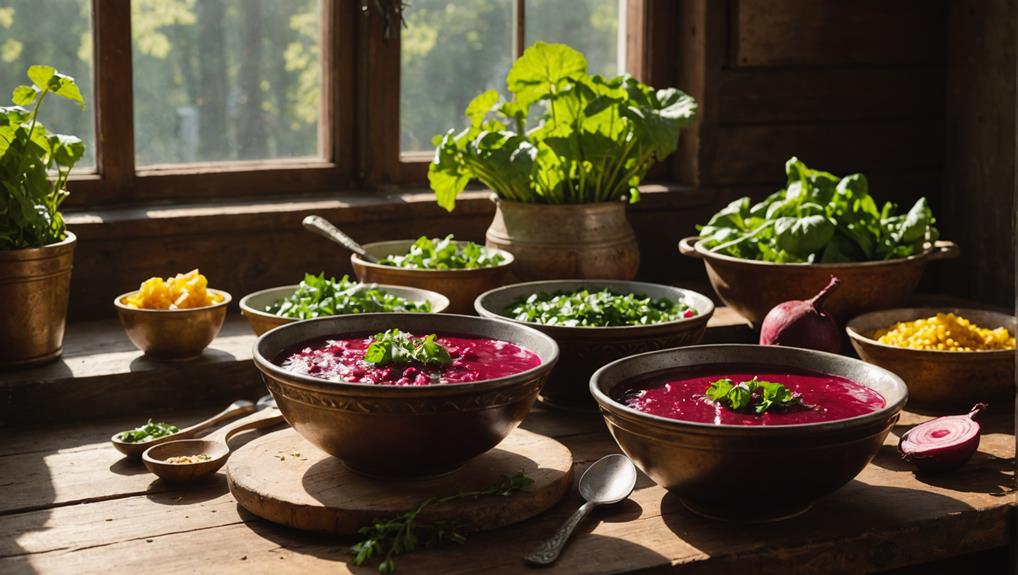
When you consider the diverse variations of borscht across Eastern Europe, you're not just looking at a dish; you're uncovering a tapestry of history, culture, and community. Each bowl tells a different story, influenced by local ingredients and traditions that have evolved over generations. This exploration reveals not only the adaptability of borscht but also its role as a cultural symbol. So, what makes these regional differences so significant, and how do they reflect the broader narrative of Eastern European identity?
Need cookware for your meal? Toolbox, a Pear to Pear rental marketplace, might be worth a look.
Quick Takeaways
- Borscht's historical roots showcase the evolution of a humble dish into a cultural staple across Eastern Europe, reflecting regional agricultural practices.
- Unique regional variations highlight local ingredients and culinary traditions, enriching the understanding of Eastern European food culture.
- Borscht serves as a symbol of resilience, representing community bonds and cultural pride within Eastern European societies.
- Modern adaptations of borscht reveal innovative culinary practices, blending tradition with contemporary flavors to appeal to diverse palates.
Origins of Borscht
Tracing the origins of borscht reveals a fascinating journey that began in Ukraine between the 5th and 9th centuries, where this humble dish was first crafted from cow-parsnips to nourish the rural poor.
Initially, borscht was a simple broth, a reflection of the ingredients available to those living off the land. The name itself comes from the Old Slavic term for hogweed, emphasizing its roots in wild plants.
By the 16th century, however, the inclusion of red beets transformed borscht, adding a rich flavor and the vibrant color we associate with it today. This evolution marked a significant shift in its history, as borscht transcended its peasant origins, becoming a beloved staple across various social classes.
As borscht spread throughout Eastern Europe, it adopted unique variations, allowing local culinary traditions to shine through. Each region added its twist, whether it was the use of different vegetables, meats, or spices, showcasing the adaptability of this dish.
Understanding the origins of borscht not only deepens your appreciation for it but also connects you to the rich tapestry of Eastern European history and culture.
Cultural Importance of Borscht
Borscht isn't just a dish; it's a vibrant symbol of cultural pride and community, deeply woven into the fabric of Eastern European traditions. Its cultural significance transcends mere nutrition, representing national pride, especially in Ukraine, where UNESCO recognized it as part of the country's cultural heritage in 2022.
You'll find borscht at the heart of culinary traditions, served during holidays and celebrations like Christmas Eve in Poland or Jewish Passover events. It embodies hospitality, often gracing the tables of family gatherings and communal feasts, reinforcing social bonds among friends and loved ones.
The variations of borscht reflect regional identities, showcasing local ingredients and customs, which add to its rich tapestry of flavors. Each bowl tells a story of the community it comes from, illustrating the resilience of Eastern Europeans who've preserved these practices despite historical challenges, including the ongoing Russian invasion.
Key Ingredients in Borscht
When you think about borscht, the vibrant red beets are likely the first ingredient that comes to mind, but there's so much more to explore.
Essential vegetables like potatoes and cabbage create a hearty base, while regional variations might surprise you with unique additions like sorrel or tomatoes.
Whether you choose meat or stick to a veggie broth, the key ingredients truly shape the borscht experience.
Essential Vegetables Used
Red beets are the star of borscht, lending their vibrant color and natural sweetness that define this beloved soup across Eastern Europe. These vital vegetables create a beautiful base, setting the stage for the unique flavors you can achieve.
Cabbage is another key ingredient, adding earthy tones and a delightful texture that complements the beets perfectly. When you toss in potatoes, you enhance the soup's consistency, making it heartier and more satisfying to serve.
For a twist, consider adding lima beans; they introduce a creamy element and boost nutritional value, showcasing borscht's adaptability. Each vegetable plays a significant role in crafting a well-rounded dish, and you can easily customize the mix to suit your preferences or seasonal availability.
To elevate the flavors even further, a splash of distilled white vinegar is vital. It balances the sweetness of the beets and the richness of the other vegetables, bringing the entire dish together.
Embrace these vital vegetables in your borscht variations, and you'll create a warm, inviting bowl that's sure to impress your guests and warm their hearts.
Meat and Broth Choices
Choosing the right meat and broth is crucial for creating a borscht that bursts with flavor and depth, setting the stage for this iconic dish's unique variations.
Traditional borscht often relies on hearty meat stocks from beef, pork, or chicken, with oxtail being a favorite for its rich flavor and depth. The choice of broth greatly influences the final taste, so consider incorporating smoked meats like ham hocks or sausages to enhance the savory profile.
For those seeking lighter options, vegetarian versions can be just as satisfying. You can substitute meat with root vegetables and seasonal greens, using a well-prepared vegetable stock to maintain that crucial depth of flavor. Adding caramelized onions and tomatoes not only enriches the broth but also introduces a layer of complexity that elevates the entire dish.
Experiment with different broth choices to discover what resonates best with your palate and the preferences of your guests. Whether you opt for traditional meat stocks or creatively crafted vegetarian alternatives, the right ingredients will make certain your borscht becomes a memorable centerpiece at any gathering.
Regional Ingredient Variations
Borscht's regional ingredient variations reveal a rich tapestry of flavors, showcasing how local produce and culinary traditions shape this beloved dish across Eastern Europe. Each region puts its unique spin on borscht, inviting you to explore local ingredients that enhance flavor and texture.
For instance, in Belarus, you might find smoked meats enriching the broth, while Georgian versions may surprise you with plums and chili, adding a delightful sweetness and heat. Poland offers a distinct take with white borscht, featuring fermented rye flour, sausage, and hard-boiled eggs, diverging from the iconic Ukrainian red borscht known for its vibrant beets, potatoes, and cabbage that lend a hearty texture.
Moldovan borscht showcases unique local produce like fermented maize and cherry leaves, making each bowl a celebration of its origins. When the summer heat rolls in, don't overlook cold borscht from Lithuania, often garnished with invigorating radishes and cucumbers—perfect for a light, revitalizing meal.
Embracing these regional variations not only enriches your culinary repertoire but also allows you to serve dishes that tell a story of tradition and community.
Popular Borscht Variations
Many delicious variations of borscht showcase the diverse flavors and ingredients of Eastern European cuisine, each offering a unique twist on this beloved dish.
The most iconic variation, red borscht, features beets, meat, and cabbage, creating a warm, hearty meal that's often garnished with sour cream. If you're looking for something lighter, green borscht is a delightful alternative, made with sorrel and potatoes, delivering an invigorating, lemony taste that brightens your palate.
For warm summer days, cold borscht is a must-try. Served chilled, it combines beets and cucumbers with yogurt or sour cream, making it a perfect dish for outdoor gatherings.
White borscht, a Polish specialty, takes a different route with its fermented rye flour base, often paired with sausage and hard-boiled eggs, traditionally enjoyed during Easter celebrations.
Don't forget about vegan borscht! This plant-based version replaces meat with an array of colorful vegetables, ensuring the signature red hue and sweet flavor from beets remain intact.
Exploring these variations allows you to embrace the rich culinary traditions of Eastern Europe while delighting your guests with each unique borscht experience.
Ukrainian Borscht Types
When you think of Ukrainian borscht, the vibrant Red Borscht often comes to mind, bursting with the rich flavors of beets and tender meat.
But don't overlook the rejuvenating Cold Borscht, a delightful summer dish that combines beets with creamy yogurt or sour cream.
Each type showcases the versatility of this beloved soup, inviting you to explore its unique characteristics.
Iconic Red Borscht
Iconic Red Borscht, with its deep crimson hue and rich blend of beets, cabbage, and tender meat, captures the essence of Ukrainian comfort food and cultural pride. This beloved soup is a staple of Ukrainian culinary traditions, often simmered to perfection, allowing the beets to develop their natural sweetness. You'll find that a splash of vinegar or lemon juice balances the flavors beautifully, creating a dish that warms the heart.
Traditionally served hot, a dollop of sour cream and a sprinkle of fresh dill enhance its flavors, making it a comforting choice during chilly months. The Ukrainian version of borscht isn't just a meal; it embodies a rich heritage of Ukrainian culture, connecting families and communities through shared experiences.
You'll also discover variations of red borscht, showcasing regional ingredients and unique cooking techniques, which highlight the dish's adaptability. For those seeking a lighter option, vegetarian borscht substitutes meat with hearty vegetables while retaining the vibrant color and flavor.
No matter how you choose to serve it, Red Borscht remains a delicious tribute to Ukraine's culinary legacy that you can proudly share with others.
Refreshing Cold Variants
As summer heat sets in, cold borscht, or 'Holodnik,' offers a revitalizing escape with its vibrant blend of beets, cucumbers, and radishes, all brought together in a tangy kefir or sour cream base. This invigorating summer variant is perfect for those hot days when you want something light yet satisfying. The bright pink hue of the soup not only pleases the eyes but also promises a burst of flavor.
Incorporating fresh herbs like dill and parsley elevates the dish, adding aromatic notes that complement the earthy beets. You can serve this nutritious meal with hard-boiled eggs or boiled potatoes, making it a well-rounded option for your guests.
For those looking to experiment, consider adding seasonal ingredients like sorrel or green onions for an exciting twist. Cold borscht embodies the versatility of this beloved dish, showcasing how various cultures within Eastern Europe adapt classic recipes to highlight fresh, local produce.
Global Adaptations of Borscht
Borscht's adaptability shines through in its global variations, reflecting local ingredients and cultural influences that transform this traditional dish into something uniquely regional. You'll find that red borscht has become a staple in American Jewish communities, thanks to Ashkenazi Jewish immigrants who preserved their cherished recipes, especially in the Borscht Belt. This cultural exchange has allowed the dish to flourish, evolving into countless interpretations.
In countries like Georgia, you might encounter borscht enhanced with spicy chili, while in China, tomatoes make a surprising appearance. The versatility of borscht doesn't stop there; during the summer months, cold borscht variations, often crafted from fresh raw vegetables and creamy kefir, provide an invigorating option for warm-weather dining. Lithuania presents yet another twist with its cold beetroot consommé, elegantly garnished with radishes and cucumbers.
Even Mexico has embraced borscht, infusing it with local spices and ingredients, showcasing how culinary traditions worldwide can adapt and thrive. Whether you're serving a traditional bowl or experimenting with these unique adaptations, you're sure to delight your guests with this globally beloved dish.
Traditional Cooking Techniques
In traditional kitchens across Eastern Europe, cooks start their borscht by simmering tender cuts of meat in cold water, allowing the flavors of aromatics to infuse the broth and create a hearty base for this beloved soup. This rich broth forms the foundation of the dish, showcasing the culinary craftsmanship behind the traditions of borscht.
Next, you'll prepare smazhennia, a delightful mixture of caramelized onions and carrots that enhances the soup's flavor, delivering a subtly sweet note. Depending on the region, you might opt for light-colored beets for a milder taste, steering clear of red beets if the recipe calls for it.
As you add your main ingredients, aim for a thick consistency, which is often desired in the final dish. Garnish with fresh dill for a burst of color and flavor, and serve alongside crusty rye bread for dipping.
Lastly, let your borscht sit overnight; this common practice allows the flavors to meld, resulting in an even more delicious and satisfying meal. Embrace these traditional techniques, and you'll create unique variations that honor the rich history of borscht.
Borscht in Modern Cuisine
With a vibrant resurgence in modern cuisine, borscht is evolving beyond its traditional roots, inviting chefs to experiment with an array of innovative ingredients and techniques that breathe new life into this classic dish.
You're likely to find unique variations that incorporate bold flavors like ginger and chili, showcasing the flexibility of this beloved soup.
As plant-based diets gain popularity, vegan borscht has emerged, replacing meat with a medley of seasonal vegetables while maintaining the iconic beetroot color and taste.
During the warmer months, cold borscht has become an invigorating favorite, often garnished with yogurt or sour cream, perfect for serving guests at summer gatherings.
Culinary competitions and food festivals across Eastern Europe celebrate borscht's versatility, blending traditional recipes with contemporary flair.
This global interest in Eastern European cuisine encourages restaurants to craft their own unique takes on borscht, incorporating local flavors and ingredients.
Borscht as a Cultural Symbol
Embodying the essence of home and heritage, borscht stands as a powerful cultural symbol throughout Eastern Europe, particularly in Ukraine. This vibrant beetroot soup represents not just a dish, but a tapestry of national pride and identity.
You'll find borscht at the heart of various rituals and celebrations, from Christmas Eve dinners to weddings, fostering a sense of community and familial bonds. Recognized by UNESCO in 2022, borscht highlights the resilience of Eastern European cultures amidst ongoing challenges.
When you prepare and share this beloved soup, you're not just serving food; you're engaging in a tradition that preserves family ties and culinary heritage. Each bowl of borscht tells a story, showcasing the local ingredients and culinary practices unique to each region, illustrating its variations and adaptability.
As you serve borscht, you connect with generations past and present, inviting others to partake in this rich cultural experience. By embracing its flavors and significance, you help keep the traditions alive, reinforcing the importance of community and the enduring spirit of Eastern Europe.
Common Questions
What Is the Significance of Borscht?
Borscht's significance lies in its rich cultural heritage and emotional connections. It's not just a dish; it symbolizes unity, resilience, and tradition, bringing families together during celebrations and evoking nostalgia for shared ancestral roots.
What Are Some Interesting Facts About Borscht?
Borscht's like a warm hug on a chilly day; its vibrant hues and rich flavors tell stories of tradition. You'll discover countless variations, each reflecting unique regional ingredients and cultural significance, making every bowl a delightful experience.
What Is Borscht Made of in East Europe Soup?
Borscht in Eastern Europe typically combines vibrant red beets with hearty vegetables like potatoes, cabbage, and carrots. You'll often find meat stock enriching the flavor, creating a comforting, satisfying soup perfect for serving others.
Are There Different Types of Borscht?
Borscht boasts beautiful varieties, from bold beet-based red to creamy, comforting white, and revitalizing green. You'll discover delightful diversity, each type showcasing unique flavors and ingredients that warm your heart and impress your guests.
Wrapping Up
As you explore the enchanting world of borscht variations, you're not just savoring a dish; you're tasting history, culture, and community with every spoonful.
Each bowl tells a story, weaving together local ingredients and traditions that make Eastern Europe's culinary tapestry so rich.
So why not take a culinary journey?
Let each unique borscht variation transport you to the heart of its origins, where flavors and traditions intertwine, inviting you to share in a cultural legacy that's truly unforgettable.