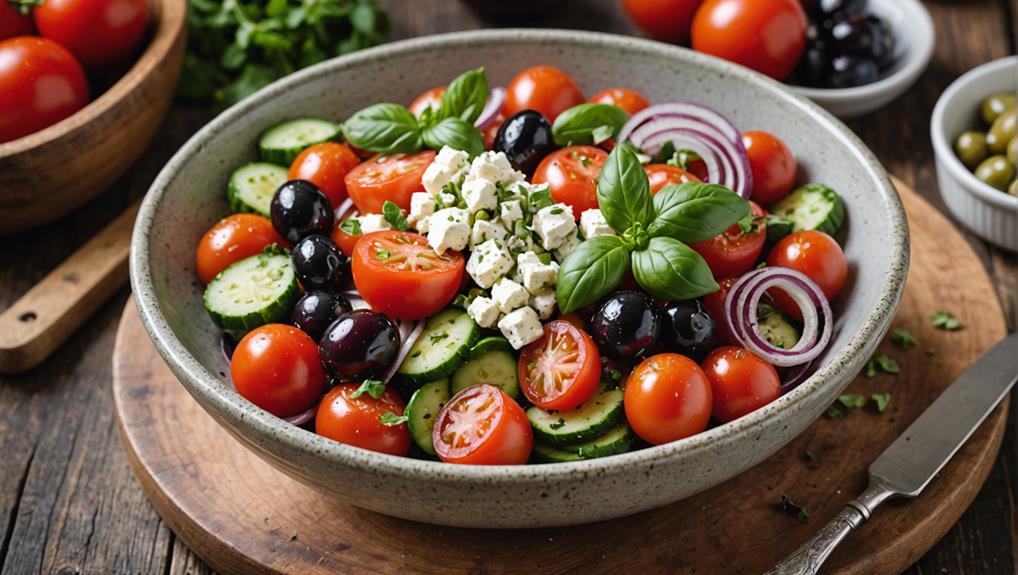
When it comes to creating a dish that embodies the essence of the Mediterranean, you might find yourself looking for the perfect blend of ingredients. Cretan Greek Salad, or Dakos, relies on a few key components that elevate its flavors and textures. You'll want to contemplate the role of barley rusks, fresh vegetables, and rich feta cheese, but there's more to explore. Discovering how these elements come together can truly transform your understanding of this classic dish, and you might be surprised by what you uncover about its origins and variations.
Need cookware for your meal? Toolbox, a Pear to Pear rental marketplace, might be worth a look.
Quick Takeaways
- Cretan Greek Salad features barley rusks, ripe tomatoes, seedless cucumbers, finely chopped onions, and green capsicum for a fresh flavor base.
- Feta cheese is essential, providing tangy and salty notes, while other options like Mizithra and Ricotta Salata can be used.
- High-quality extra virgin olive oil and red wine vinegar serve as the dressing, enhanced with dried Greek oregano, salt, and pepper.
- Olives and capers add color and texture, complementing the salad's vibrant ingredients.
Overview of Cretan Greek Salad
Cretan Greek Salad, or Dakos, is a vibrant and flavorful dish that showcases the unique combination of crunchy barley rusks, fresh vegetables, and creamy feta cheese, making it a delightful taste of the Mediterranean.
This traditional salad isn't just a meal; it's an experience that brings people together. The barley rusks serve as a sturdy base, absorbing the juices from the tomatoes and cucumbers, allowing you to savor every bite.
You'll love how the creamy feta cheese adds richness and a salty kick, perfectly balancing the fresh flavors of juicy tomatoes, crisp cucumbers, and aromatic red onions.
To elevate the dish, drizzle extra virgin olive oil over the top; its fruity and peppery notes enhance the overall taste.
Don't forget the dried oregano, which adds an earthy aroma that's quintessential to Greek cuisine.
Garnished with olives and capers, this salad bursts with colors and textures, making it as pleasing to the eye as it is to the palate.
Best served fresh, Cretan Greek Salad is a perfect option for gatherings, ensuring everyone enjoys a slice of the Mediterranean on their plate.
Primary Ingredients
When you prepare a Cretan Greek Salad, the choice of fresh vegetables sets the tone for the dish.
You'll want to explore the best cheese varieties that complement the vibrant flavors, alongside the essential dressing that ties everything together.
Let's break down these primary ingredients to elevate your salad experience.
Fresh Vegetables Selection
Fresh, ripe tomatoes form the juicy foundation of a delicious Cretan Greek Salad, setting the stage for a vibrant mix of flavors and textures. You'll want to choose aromatic varieties that burst with flavor, as they elevate the entire dish.
Next, add in some seedless cucumbers for that revitalizing crunch. Opt for smaller, thin-skinned types, as they blend seamlessly with the other ingredients and won't overpower the salad.
To enhance the flavor profile, finely chop some red or white onions. Their sharpness complements the sweetness of the tomatoes and balances the overall taste.
A touch of green capsicum (bell pepper) introduces a pop of color along with a mild sweetness, giving your salad that extra flair.
Cheese Varieties Recommendations
Choosing the right cheese can elevate your Cretan Greek salad, adding layers of flavor and texture that perfectly complement the fresh vegetables. Here are three excellent cheese varieties to take into account:
- Feta Cheese: This tangy, salty staple is a must-have in any Greek salad. Opt for feta made from sheep's milk for an authentic taste. Its crumbly texture enhances the salad's overall flavor, creating a delightful contrast with the crisp veggies.
- Mizithra: For a unique twist, add Mizithra, a fresh cheese from sheep's milk. Its creamy richness and slight sweetness can beautifully balance the salad, creating a harmonious blend of flavors that your guests will love.
- Anthotyros: This traditional Cretan cheese offers a mild flavor and crumbly texture, making it an excellent choice for authenticity. Its subtle taste complements the fresh ingredients without overpowering them.
You might also take into account crumbling some Ricotta Salata for a creamy yet tangy addition. This firm, salted cheese pairs wonderfully with the salad's vibrant ingredients, ensuring a delightful experience for everyone at your table.
Dressing Essentials Explained
A well-crafted dressing is essential for elevating your Cretan Greek salad, combining rich flavors and vibrant acidity to perfectly complement the fresh ingredients.
Start with high-quality extra virgin olive oil as your base. This not only enhances the salad's flavor but also adds healthy fats that everyone will appreciate. Next, introduce red wine vinegar to the mix; its tangy acidity balances the richness of the olive oil and feta, creating a harmonious blend.
Don't forget the dried Greek oregano, a vital herb that brings authentic Mediterranean flair to your dressing. Its aromatic qualities are key to achieving that distinct Cretan taste. To really elevate the overall flavor, you'll want to season with salt and freshly ground black pepper. These ingredients work together to enhance the dressing's profile.
For an extra layer of brightness, consider adding a drizzle of lemon juice. This optional touch can bring complexity to your salad, making it even more delightful for your guests.
With these dressing essentials, your Cretan Greek salad won't only look inviting but taste divine, ensuring everyone at your table enjoys a true taste of the Mediterranean.
Nutritional Benefits
When you enjoy a Cretan Greek salad, you're not just treating your taste buds; you're also fueling your body with essential nutrients.
The high fiber content from barley rusks and fresh vegetables supports your digestive health, while the healthy fats from extra virgin olive oil promote heart health and enhance vitamin absorption.
Together, these ingredients create a delicious and nutritious meal that keeps you feeling great.
High Fiber Content
Packed with fiber-rich ingredients, Cretan Greek Salad not only supports digestive health but also keeps you feeling full longer.
This traditional Greek dish features barley rusks, a high fiber content component essential for any nutritious meal. The combination of fresh vegetables like tomatoes, cucumbers, and peppers enhances the salad's fiber profile, making it both satisfying and wholesome.
Here are three key benefits of the high fiber content in Cretan Greek Salad:
- Promotes Digestive Health: The fiber aids in digestion, preventing constipation, and supporting gut health.
- Enhances Satiety: With approximately 4g of fiber per serving, this salad helps you feel full, which can assist in weight management and reduce overall calorie intake.
- Lowers Health Risks: A high-fiber diet is linked to lower risks of heart disease, diabetes, and digestive disorders, making this salad a smart choice for anyone looking to maintain a healthy lifestyle.
Healthy Fats Source
Brimming with healthy fats, Cretan Greek Salad not only tantalizes your taste buds but also supports heart health and overall wellness. At the heart of this dish is extra virgin olive oil, a rich source of monounsaturated fatty acids that can help lower bad cholesterol and improve cardiovascular function.
Adding to this, the olives contribute oleic acid, known for its ability to reduce inflammation and lower blood pressure. When you sprinkle feta cheese on top, you're not just adding flavor; you're also incorporating healthy fats, protein, and calcium, all of which are crucial for muscle strength and bone density.
The combination of these ingredients makes your Cretan Dakos Salad not only delicious but also a powerhouse of omega-3 fatty acids, essential for brain health. Moreover, the healthy fats found in olive oil and olives enhance the absorption of fat-soluble vitamins like A, D, E, and K in your salad, boosting its nutritional value.
Preparation Techniques
To create a flavorful Cretan Greek salad, start by washing and chopping fresh tomatoes, cucumbers, green capsicum, and onions into bite-sized pieces that will form the vibrant salad base. This colorful medley is just the beginning of your culinary masterpiece.
Next, follow these essential preparation techniques:
- Prepare the barley rusks by briefly soaking them in cold water. You want them softened but not mushy; then, break them into medium-sized pieces.
- Combine the chopped vegetables in a mixing bowl and drizzle high-quality extra virgin olive oil over the top. Add vinegar, dried Greek oregano, salt, and pepper to elevate those fresh flavors.
- Let the salad sit for about 15 minutes. This resting period allows the flavors to meld beautifully and lets the barley rusks absorb moisture from the vegetables.
Serving Suggestions
Serving Cretan Greek salad fresh not only preserves the crunchiness of the vegetables but also enhances the vibrant flavors, making it an ideal dish for summer gatherings and outdoor meals.
To elevate your dining experience, serve this Horiatiki Greek salad in a large bowl, allowing the vivid colors of tomatoes, cucumbers, and bell peppers to shine as a beautiful centerpiece. Drizzle generous amounts of extra virgin olive oil over the salad just before serving; it complements the freshness and adds a luxurious touch that harkens back to the Greek island of Crete.
Pair your Cretan salad with grilled meats like chicken, lamb, or seafood to create a feast that tantalizes the taste buds. It also works wonderfully as a side dish alongside traditional Greek dishes like moussaka or pasticcio, showcasing the Mediterranean's rich culinary heritage.
For an extra treat, offer crusty bread on the side, perfect for soaking up the delicious juices. Your guests will appreciate the effort and the flavors, making your meal memorable.
Regional Variations
Cretan Greek salad comes alive with regional variations that reflect the diverse flavors and ingredients unique to each part of Greece, making every version a delightful exploration of local culinary traditions.
When you serve these salads, you're not just offering a dish; you're sharing a slice of Greek culture.
Here are three notable regional variations to contemplate:
- Dakos Salad: Originating from Crete, this salad features barley rusks soaked in extra virgin olive oil, topped with chopped tomatoes, red onion, and a sprinkle of local herbs. It's a hearty twist on the classic.
- Kritiki Salata: Another Cretan specialty, this version often includes boiled potatoes and eggs, creating a unique texture that stands out from the mainland's Horiatiki salad. It's not just a salad; it's a satisfying meal in itself.
- Island Variations: In certain islands, fresh Mizithra cheese adds a creamy depth to salads. You might also find unique ingredients like purslane or pickled hot peppers, showcasing the rich agricultural diversity across Greece.
Each variation invites you and your guests to experience the essence of Greek culinary heritage.
Customization Options
Customization options for your Greek salad can elevate the dish, allowing you to tailor flavors and textures to suit your palate.
Start by swapping out the traditional barley rusks for toasted whole-grain bread or krisprolls; this simple change can add a delightful crunch and enhance the overall experience.
For a richer taste, don't hesitate to experiment with different cheeses like halloumi, ricotta salata, or aged Manchego. These alternatives can provide a unique twist while complementing the fresh tomatoes and olives. You might also consider adding seasonal vegetables such as bell peppers, zucchini, or radishes to boost freshness and color.
To make your salad more filling, incorporate proteins like grilled chicken, shrimp, or chickpeas, transforming it into a satisfying main dish.
For an extra kick, enhance the Mediterranean flavor profile with ingredients like capers, artichoke hearts, or roasted red peppers. Drizzling your creation with high-quality extra virgin olive oil won't only enhance the taste but also tie all the elements together beautifully.
With these customization options, your Cretan Greek salad will surely impress anyone you serve!
Storage Tips
To keep your Greek salad fresh and flavorful, store any leftovers in an airtight container in the refrigerator for up to 1-2 days. For the best experience when serving, follow these essential storage tips:
- Keep the dressing separate: To avoid sogginess, don't mix the dressing with the salad until just before serving. Add it about 30 minutes prior for ideal flavor and texture.
- Season with salt: If you're using salty ingredients like feta, consider adding salt just before serving. This helps maintain the crispness of your vegetables while enhancing their taste.
- Add barley rusks last: If your salad includes barley rusks, toss them in just before serving. This keeps them crunchy and prevents them from soaking up too much moisture.
For maximum freshness, you might also consider preparing each component separately if you plan on storing the salad for longer. Fresh veggies should be washed and cut right before use to confirm they retain their vibrant flavors.
Following these tips will guarantee your Cretan Greek salad remains a delightful dish for you and your guests!
Common Questions
What Are the Essential Ingredients for Greek Food?
When you explore Greek food, you'll find vibrant vegetables, rich olive oil, creamy feta, aromatic oregano, and briny olives. These ingredients create delicious, fresh dishes that will impress your guests and elevate your meals.
What Is a Traditional Greek Salad Made Of?
Imagine a vibrant garden on your plate; a traditional Greek salad bursts with ripe tomatoes, crisp cucumbers, tangy olives, and creamy feta, all drizzled with olive oil and oregano—a revitalizing delight for any gathering.
What Is a Substitute for Cretan Rusks?
If you need a substitute for Cretan rusks, try toasted whole-grain bread or homemade sourdough. Bagel chips or krisprolls work well too. Just guarantee they hold moisture without getting soggy for the perfect crunch.
What Does Greek Salad Dressing Contain?
Greek salad dressing contains rich extra-virgin olive oil, tangy red wine vinegar, aromatic dried oregano, fresh lemon juice, and essential salt and pepper. These ingredients create a delightful flavor that'll elevate any salad you serve.
Wrapping Up
Cretan Greek salad isn't just a feast for the palate; it's also a nutritional powerhouse.
Did you know that incorporating just one serving of this colorful dish can provide you with over 30% of your daily vitamin C needs?
With its fresh veggies and creamy feta, you'll enjoy a delicious blend of flavors while boosting your health.
So, whether you're hosting a gathering or enjoying a quiet meal, this vibrant salad is sure to impress and nourish!