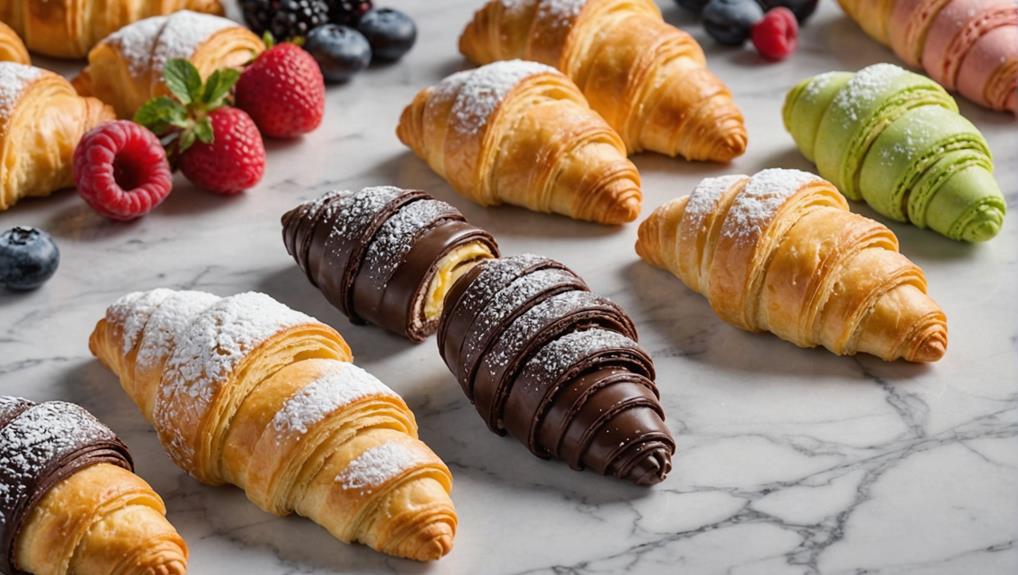
When you think of classic French pastries, a world of intricate flavors and textures opens up before you. You might consider the buttery croissant or the elegant éclairs filled with rich cream, but there's so much more to explore. Each pastry tells its own story, from the delicate macarons to the layered mille-feuille. And then there's the rustic charm of a galette that showcases seasonal fruits. Curious about which recipes truly capture the essence of French culinary artistry? The answer might surprise you.
Need cookware for your meal? Toolbox, a Pear to Pear rental marketplace, might be worth a look.
Quick Takeaways
- Try Éclairs, filled with pastry cream and topped with chocolate ganache for a classic indulgent treat.
- Enjoy Profiteroles, versatile choux pastry shells that can be filled with whipped cream, ice cream, or savory cheese.
- Experience Mille-Feuille, featuring layered puff pastry and silky pastry cream, often adorned with a glossy glaze.
- Savor Tarte Tatin, an upside-down tart with caramelized apples baked in a flaky pastry for rich flavor.
Croissant
Croissants, with their irresistible flaky layers and buttery richness, are the quintessential French pastry that transforms any breakfast into a culinary delight.
You'll find that the magic lies in the meticulous lamination process, where layers of butter are folded into the dough multiple times. This technique creates the signature flaky texture that's both airy and indulgent.
To make a perfect croissant, you need to dedicate time to the dough. Traditionally, it requires several days of preparation, including chilling periods to maintain the butter's consistency. This attention to detail pays off when you see that golden, shiny finish after brushing them with egg wash just before baking.
The classic crescent shape isn't just iconic; it's essential for achieving that airy structure. While plain croissants are a classic, don't hesitate to explore sweet variations filled with chocolate or almond paste, or savory options stuffed with ham and cheese.
Each bite of a croissant is a harmonious blend of textures and flavors, making it an exceptional treat for anyone you're serving. Whether enjoyed alone or paired with a warm beverage, the croissant is a delightful centerpiece of any breakfast spread.
Éclair
When you think of an éclair, imagine a delicate choux pastry puff, filled with rich pastry cream and topped with glossy chocolate ganache.
You'll discover its fascinating history, variations in flavors, and the art of perfecting that airy dough.
Let's explore how to master this classic French treat and impress your taste buds.
History of Éclairs
The éclair, a delightful creation of choux pastry, has captured the hearts of pastry lovers since its emergence in 19th-century Paris, where it quickly became a symbol of indulgence and culinary artistry. The term 'éclair,' meaning 'lightning' in French, reflects both its elongated shape and the speed with which it's devoured.
Made from light and airy choux pastry, these pastries puff up beautifully during baking, forming a hollow interior perfect for filling. Traditionally, you'll find éclairs filled with luscious pastry cream, often enhanced with vanilla, and topped with a glossy layer of rich chocolate ganache. This classic combination defines the essence of French pastry culture, showcasing the meticulous craftsmanship that Parisian patisseries are known for.
As you explore the history of éclairs, you'll appreciate how they evolved into a staple of French bakeries, celebrated for their delicate texture and exquisite flavor. Their popularity in Parisian patisseries led to an enduring legacy, as everyone, from locals to visitors, indulges in these delightful treats, making them a must-try in any classic French pastry selection.
Variations and Fillings
Exploring the world of éclairs reveals a delightful array of variations and fillings that elevate this classic pastry beyond its traditional roots.
While the classic filling is often pastry cream, you can surprise your guests with creative variations that feature whipped cream, chocolate mousse, or even flavored custards. Each of these fillings brings its unique texture and taste, transforming each bite into a new experience.
Traditionally topped with a rich chocolate ganache, éclairs can also be adorned with fondant or colorful icing, allowing you to match them to any occasion. Think about using seasonal fruits or innovative flavor combinations, like matcha or rose, to capture the essence of the moment.
For added intrigue, consider a crispy craquelin topping, which introduces an appealing texture that contrasts beautifully with the soft choux pastry.
This light dough, with its hollow interior, is perfect for showcasing your creative flair in both fillings and toppings. By experimenting with these variations, you can craft éclairs that not only satisfy sweet cravings but also impress your guests with your culinary creativity.
Perfecting Choux Pastry
Perfecting choux pastry requires precise technique and attention to detail, as the right balance of ingredients and cooking methods will guarantee your éclairs rise beautifully and achieve that coveted hollow center.
Start by cooking your dough on the stovetop, combining water, butter, and flour until it forms a smooth paste. This essential step hydrates the flour and generates steam, vital for that delightful puff.
Once you've added in the eggs, pipe the mixture onto a baking sheet, ensuring it holds its shape and displays a glossy surface. Your éclairs should bake in a hot oven initially to create steam and then lower the temperature to prevent burning while ensuring they cook through.
Traditionally, fill your éclairs with luscious pastry cream and top them with silky chocolate ganache, but don't shy away from experimenting with flavored custards or creams. This versatility makes choux pastry a star among French pastries and desserts.
With practice, you'll create baked goods that not only look stunning but also offer a delightful contrast of textures, leaving your guests keen for more. Enjoy the process of mastering this exquisite French classic!
Macaron
Macarons charm with their delicate structure, showcasing a crisp exterior that gently gives way to a soft, chewy interior, inviting you to savor each colorful bite. These elegant desserts elevate any occasion, whether it's a wedding, shower, or festive gathering.
Made from almond flour, egg whites, and sugar, macarons feature versatile fillings like flavored buttercreams, ganaches, or jams. Popular flavors include raspberry, pistachio, chocolate, and salted caramel, and they are perfectly arranged in decorative boxes or towers.
Crafting the perfect macaron requires precise measurements and a keen attention to detail. The success lies in mastering the folding technique to maintain airiness while ensuring the batter is neither too runny nor too thick. Once piped onto a baking sheet, patience is key; allow them to rest before baking, which helps form that coveted outer shell.
With their vibrant colors reflecting an array of flavors, macarons not only tempt the palate but also please the eye. Whether you're serving them at a sophisticated soirée or gifting them to a friend, these delightful treats are sure to leave a lasting impression.
Mille-Feuille
When you make Mille-Feuille, you'll want to gather essential ingredients like flaky puff pastry and silky pastry cream to create that signature texture.
Mastering preparation techniques is vital, especially when it comes to baking the pastry under weights for ideal crispness.
Essential Ingredients Overview
To create a truly authentic Mille-Feuille, you'll need to focus on high-quality puff pastry and a rich pastry cream, as these essential ingredients form the backbone of this classic French dessert. The beauty of Mille-Feuille lies in its delicate, flaky texture and harmonious layers that will delight anyone you serve.
Here's what you need:
- Puff Pastry: Made from flour, butter, water, and salt; it requires careful lamination to achieve its signature flaky texture.
- Pastry Cream: A velvety filling made from milk, sugar, egg yolks, cornstarch, and vanilla, which balances the crispiness of the pastry.
- Glaze: A sweet topping, often made from powdered sugar and water, that adds a glossy finish and can be flavored with chocolate or fruit purees.
This combination guarantees that each bite of your Mille-Feuille is a delightful mix of crisp and creamy, making it a show-stopping dessert for any gathering.
Preparation Techniques Explained
Creating a stunning Mille-Feuille requires meticulous preparation techniques that highlight the interplay between flaky pastry and creamy filling.
Start by rolling out your puff pastry into a thin, even layer. Cut it into rectangles, ensuring uniformity for a classic French dessert that impresses at any gathering. To achieve that perfect crisp texture, bake the puff pastry under weights, like another baking sheet, which prevents excessive puffing.
Once baked, alternate layers of the delicate pastry with rich pastry cream or crème mousseline. This balance between the flaky and creamy elements is key to a delightful bite. For a visually appealing finish, dust the top layer generously with powdered sugar or glaze. Consider using melted chocolate or icing to create decorative patterns that enhance its charm.
When it's time to serve, use a serrated knife to slice through the layers with precision, showcasing the beautiful strata of pastry and cream. With these preparation techniques, you'll create a Mille-Feuille that not only tastes exquisite but also captivates the eyes of your guests, making your classic French dessert the star of the table.
Serving Suggestions Ideas
Serve your Mille-Feuille chilled, elegantly adorned with a dusting of powdered sugar or a delicate fondant glaze, and complement it with a side of fresh berries or citrus slices for a revitalizing contrast. This classic dessert shines not only in taste but in presentation.
Here are some serving suggestions to delight your guests:
- Fresh Fruit Garnish: Use a medley of berries or thinly sliced citrus for a vibrant touch.
- Pastry Cream Variations: Experiment with flavored pastry creams, like chocolate or raspberry, to elevate the flavor profile.
- Chocolate Drizzle: Add a sophisticated touch with a light drizzle of chocolate sauce for a rich contrast.
When serving, remember to use a serrated knife to cut through the delicate layers without crushing them. This guarantees a perfect, neat portion that highlights the elegant presentation of your Mille-Feuille.
Each bite showcases the flaky pastry and rich pastry cream, making it a memorable treat for any occasion.
Tarte Tatin
Tarte Tatin, with its delightful layers of caramelized apples resting atop a flaky pastry, captures the essence of classic French baking in every bite. This upside-down tart features a buttery pastry crust that cradles sweet, tender apples cooked in butter and sugar, transforming them into a luscious topping.
The key to a perfect tarte tatin lies in using firm apples, like Granny Smith or Golden Delicious, ensuring they retain their shape while developing a rich caramel flavor. As you bake the tart in a skillet, the apples become beautifully golden, inviting you to flip the dish for a stunning presentation. The moment you reveal the caramelized apples is magical, showcasing the dessert's allure.
While apples reign supreme, feel free to experiment with seasonal fruits like pears for a delightful twist. Serve your tarte tatin warm, and don't forget the finishing touch: a scoop of vanilla ice cream. The creamy contrast enhances the dessert's rich, buttery taste, making it an unforgettable treat.
Whether it's a dinner party or a cozy family gathering, this classic French dessert is sure to impress and satisfy every palate.
Brioche
Brioche, with its rich buttery flavor and tender crumb, stands as a quintessential French pastry that elevates both sweet and savory dishes to new heights. This luxurious bread isn't just a treat; it's a versatile delight that you can serve in various forms.
- Perfect for French cinnamon toast
- Ideal for gourmet sandwiches
- A splendid base for bread pudding
To create the perfect brioche, you'll need to embrace high-quality ingredients, especially fresh butter and eggs. These components contribute to its rich flavor profile and the tender, moist crumb that makes each bite irresistible.
The dough undergoes a long fermentation period, often involving two rises, which enhances its flavor and texture, resulting in that signature golden brown crust.
Whether you're planning an elegant brunch or a comforting dessert, brioche is your go-to pastry. With a little patience and care, you can impress your guests and elevate your culinary repertoire.
Galette
After enjoying the rich decadence of brioche, you'll find that a galette offers a delightful contrast with its rustic charm and versatility, making it an easy yet impressive option for showcasing seasonal fruits or savory fillings. This free-form pastry is made with buttery pie dough, which creates a crisp and flaky crust that perfectly cradles your chosen ingredients.
To craft a galette, roll out your dough into a large circle, leaving the edges slightly thicker for a sturdy border. Then, pile in your seasonal fruits or versatile fillings like vegetables or cheeses. Fold the edges over the filling, allowing for a beautifully rustic appearance that highlights the homemade quality of your dish.
Baking the galette at a high temperature is essential; it guarantees that the crust becomes golden and crisp while the filling bubbles with flavor. Whether you choose sweet berries or savory greens, each galette serves as a stunning centerpiece, inviting your guests to indulge in its delicious simplicity.
Prepare the dough ahead of time for effortless entertaining, and you'll impress everyone with your culinary prowess and the delightful taste of this classic French pastry.
Profiteroles
Profiteroles, with their delicate choux pastry shells, offer a delightful balance of crispiness and softness, inviting you to explore a world of sweet or savory fillings that can elevate any dessert table or gathering. These small, hollow puffs are a classic of French patisserie, renowned for their light and airy texture.
Consider these popular filling options for your profiteroles:
- Whipped cream for a light, airy delight.
- Ice cream for a rejuvenating twist.
- Savory cheese for an unexpected appetizer.
Creating profiteroles begins with a simple dough made from water, butter, and flour, combined with eggs to achieve that perfect rise. After baking until golden brown, the crisp outer shell encases a soft, custard-like interior, ready for your chosen filling.
Whether you serve them as a dessert or a snack, profiteroles are a versatile treat that never fails to impress. Their elegant appearance and rich flavors make them a favorite for special occasions, ensuring your guests will remember the experience long after the last bite.
Floating Island
With their airy meringue floating gracefully atop a silky crème anglaise, Floating Island presents a stunning contrast that enchants both the eyes and the palate. This classic French dessert, known as 'île Flottante,' showcases the delicate balance of textures that defines French cuisine.
You'll whip egg whites and sugar to create a light meringue, which is then poached gently in simmering milk, resulting in a fluffy cloud that seems to defy gravity.
Once you've prepared the creamy crème anglaise, pour it into a shallow dish, allowing the luscious custard to cradle the meringue islands. The visual appeal is further enhanced when you add a drizzle of caramel or chocolate sauce, giving it that extra touch of elegance.
Ideal for special occasions, Floating Island is often served chilled, providing a revitalizing end to a hearty meal. Its delicate flavors and stunning presentation make it a favorite among guests, leaving a lasting impression.
When you serve this dessert, you'll not only delight your guests but also invite them to experience the charm of French culinary artistry. Embrace the beauty of Floating Island and elevate your dessert game!
Common Questions
What Are the Classic French Pastries?
When you think of classic French pastries, imagine flaky croissants, rich éclairs, delicate macarons, layered mille-feuille, and caramelized Tarte Tatin. Each offers unique textures and flavors that'll surely impress anyone you serve.
What Is the Most Popular Pastry in France?
You're diving into French pastries, and the croissant steals the spotlight. Its flaky, buttery layers beckon at breakfast, creating a delightful experience that's both comforting and indulgent, perfect for serving friends and family alike.
What Are Three 3 Examples of Classical Pastries?
Imagine savoring an éclair's luscious cream, or the delicate crunch of a macaron. When you explore classic pastries like mille-feuille, you'll delight your guests with exquisite flavors and textures that define French culinary artistry.
What Are the 10 Most Popular Types of Pastry?
When you explore the ten most popular types of pastries, you'll encounter delightful options like croissants, éclairs, and macarons, each offering unique textures and flavors that'll impress anyone you serve at your next gathering.
Wrapping Up
In the world of pastries, each creation tells a story, much like a symphony composed of rich notes and delicate harmonies.
When you bite into a flaky croissant or a creamy éclair, you experience the artistry of French culinary tradition.
Just as a painter carefully layers colors, you layer flavors and textures with each recipe you try.
So, roll up your sleeves, embrace the joy of baking, and let these classic French pastries transform your kitchen into a culinary masterpiece.