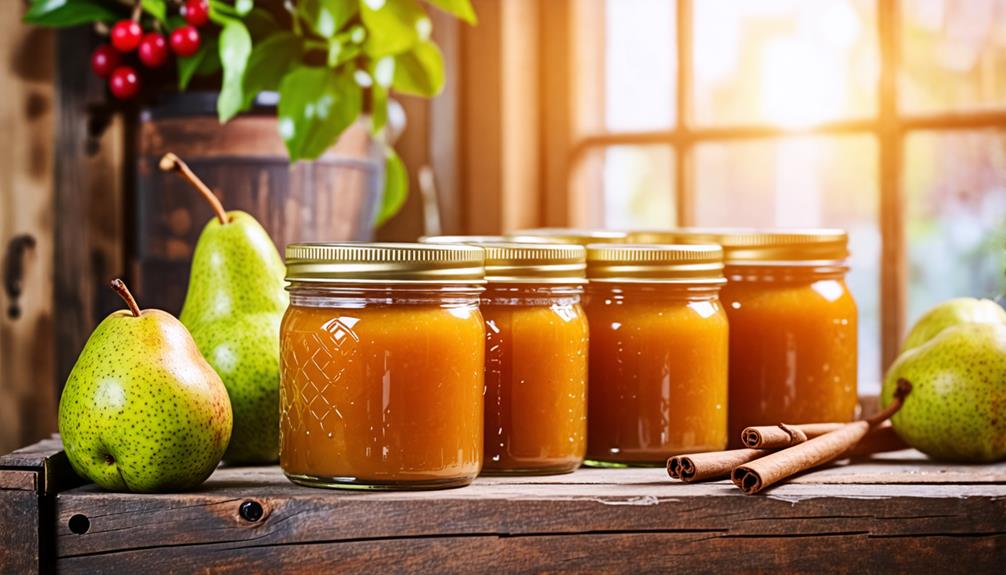
Storing homemade pear butter properly, ensuring freshness, and maximizing flavor are essential steps for any home cook. To achieve this, one must consider techniques like canning, refrigeration, and freezing, each offering distinct advantages. Understanding the importance of sterilization, the right jar sealing methods, and ideal storage conditions can make a significant difference in shelf life. However, many overlook simple yet effective tips that can enhance longevity and taste even further. What are these overlooked strategies, and how can they elevate the homemade pear butter experience?
Need cookware for your meal? Toolbox, a Pear to Pear rental marketplace, might be worth a look.
Quick Takeaways
- Use sterilized jars to prevent contamination and extend the shelf life of your pear butter.
- Store in a cool, dark place with temperatures between 50°F and 70°F for optimal preservation.
- Process jars in a boiling water bath for 10-15 minutes to ensure proper sealing and safety.
- Refrigerate unsealed jars and consume them within three weeks for best freshness.
- For long-term storage, freeze pear butter in airtight containers, labeling them with the freezing date.
Importance of Proper Storage
Properly storing homemade pear butter is important for preserving its delightful flavor and preventing spoilage. When canned, pear butter can last up to 18 months if stored in a cool, dark place, ensuring it maintains its best flavor.
To achieve this, it's essential to use sterilized jars before filling, as this minimizes the risk of contamination. After sealing, one must check seals to confirm a proper vacuum has formed, which is critical for long-term storage.
For those who prefer immediate use, refrigerated pear butter can remain fresh for up to three weeks, while frozen pear butter can be kept for a year in airtight, freezer-safe containers.
To minimize waste, it's wise to label jars with the date of preparation, allowing for a first-in, first-out approach. Additionally, storing the pear butter in a dark cupboard or pantry helps shield it from light and heat, factors that can adversely affect its texture and flavor.
Canning Pear Butter
Canning pear butter is a rewarding process that not only extends the shelf life of this delicious spread but also locks in its rich flavors. To begin, use sterilized jars, confirming they're free from contaminants.
When filling the jars, leave a 1/2-inch headspace; this gap is essential for proper sealing and preventing spoilage. High-acid ingredients, such as lemon juice, should always be included, enhancing both flavor and safety.
Once the jars are filled, process them in a boiling water bath. For lower altitudes, a processing time of 10 minutes is sufficient, while those above 6,000 feet should extend this to 15 minutes to guarantee safety.
After processing, allow the jars to cool and then check the seals. Properly sealed jars can be stored in a cool, dark place for up to 18 months.
For best results, label each jar with the date of canning to help track freshness. This practice guarantees ideal usage within the recommended timeframe, allowing everyone to enjoy the homemade pear butter at its best.
With these steps, canning pear butter becomes a simple yet effective way to savor this delightful treat year-round.
Freezing Pear Butter
Freezing pear butter offers a convenient way to preserve its delightful flavor while extending its shelf life. To begin, allow the pear butter to cool to room temperature before transferring it into freezer-safe jars or containers.
It's vital to leave enough headspace to accommodate expansion during freezing, which can help maintain texture. For peak freshness, label jars with the date of freezing.
When properly sealed, frozen pear butter can maintain quality for up to one year. Confirm that jars are tightly sealed to prevent freezer burn; using vacuum-sealed bags can further enhance shelf life.
Portioning pear butter into smaller containers simplifies the thawing process and minimizes the risk of repeated freeze-thaw cycles, which can compromise quality.
When it's time to enjoy the frozen pear butter, the best method is to thaw it in the refrigerator overnight, preserving its texture and flavor. Avoid rapid thawing at room temperature, as this can affect the final product.
Best Conditions for Storage
To guarantee homemade pear butter retains its delicious flavor and texture over time, it's essential to store it under ideal conditions. First, always use sterilized jars to store the pear butter; this prevents spoilage and allows a vacuum seal to form as the jars cool.
Once sealed, canned pear butter should be kept in a cool, dark place, like a pantry or cupboard, with temperatures ideally between 50°F and 70°F (10°C to 21°C) for maximum shelf life.
Unsealed jars of pear butter can be refrigerated for up to three weeks, while properly canned jars can last up to 18 months when stored correctly. To further safeguard quality, it's wise to label each jar with the date of canning, which helps track freshness and guarantees timely consumption.
For those seeking long-term storage solutions, consider using freezer-safe containers. Freezing pear butter preserves its flavor and texture effectively for up to a year.
Tips for Long-lasting Freshness
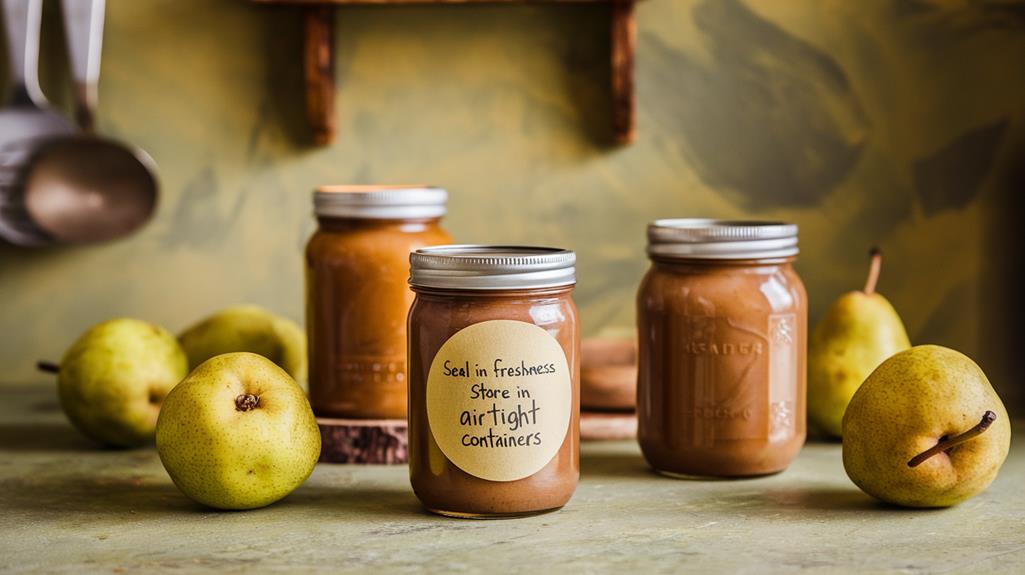
Proper storage techniques play an essential role in maintaining the freshness of homemade pear butter. To guarantee maximum freshness, it's vital to store the butter in sterilized jars. Label each jar with the date of preparation for easy tracking.
For long-term storage, employ water bath canning, processing jars for 10-15 minutes, based on altitude. This method allows the pear butter to be stored in a cool, dark place for up to 18 months.
If a jar remains unsealed, refrigerate it and consume the contents within three weeks to maintain ideal flavor and quality. For those looking to preserve pear butter for even longer, consider using freezer-safe containers. When properly sealed, frozen pear butter can last up to one year without suffering freezer burn.
Always check seals before use; discard any unsealed jars or those that show signs of spoilage, such as off-smells or bubbling upon opening.
Common Questions
How Do You Preserve Fruit Butter?
To preserve fruit butter, one must follow proper canning techniques.
She should sterilize jars and process them in a boiling water bath, adhering to recommended times based on altitude.
For longer storage, canned fruit butter can last up to 18 months in a cool, dark place.
If she opts for short-term preservation, refrigerating for three weeks or freezing for a year will effectively maintain flavor and texture.
Adding lemon juice enhances safety and flavor, too.
Does Fruit Butter Need to Be Refrigerated?
When considering fruit butter, the question of refrigeration often arises. While unopened jars can sit happily in a pantry, once opened, they require a cool refuge.
Refrigerating fruit butter prevents spoilage, extending its life considerably. For homemade varieties, they need cold storage if unsealed to guarantee freshness.
Therefore, it's clear: while fruit butter can thrive outside for a time, it truly flourishes when kept chilled after opening, serving others with delightful, safe flavors.
Do I Need to Peel Pears for Pear Butter?
When making pear butter, it's best to peel the pears first. Peeling guarantees a smoother texture by eliminating any gritty consistency that the skins might introduce.
It also removes potential bitterness, allowing the natural sweetness to shine through. Varieties like Bartlett, Bosc, and Anjou benefit from this process.
Although the skins contain nutrients, the overall quality of the pear butter improves considerably when the fruit is peeled before cooking.
What to Do if Pear Butter Is Too Runny?
When pear butter turns out too runny, Jane carefully considers her options. She stirs the mixture on low heat, allowing it to thicken gradually over 20-30 minutes.
If that doesn't work, she mixes cornstarch with water, adding it cautiously while cooking to eliminate any starchy taste.
Alternatively, Jane incorporates more pureed pears for a richer flavor.
Ultimately, she tests the thickness on a chilled plate, ensuring it holds its shape before serving.
Wrapping Up
In the garden of homemade preserves, proper storage acts as the vigilant gardener, ensuring the fruits of labor flourish. By canning, freezing, or refrigerating pear butter, one protects its delicate essence from the ravages of time. Like a treasure chest nestled in a cool, dark corner, each jar holds the promise of flavor, ready to bloom on a winter's day. With careful attention to conditions, homemade pear butter can thrive, offering sweet solace throughout the seasons.