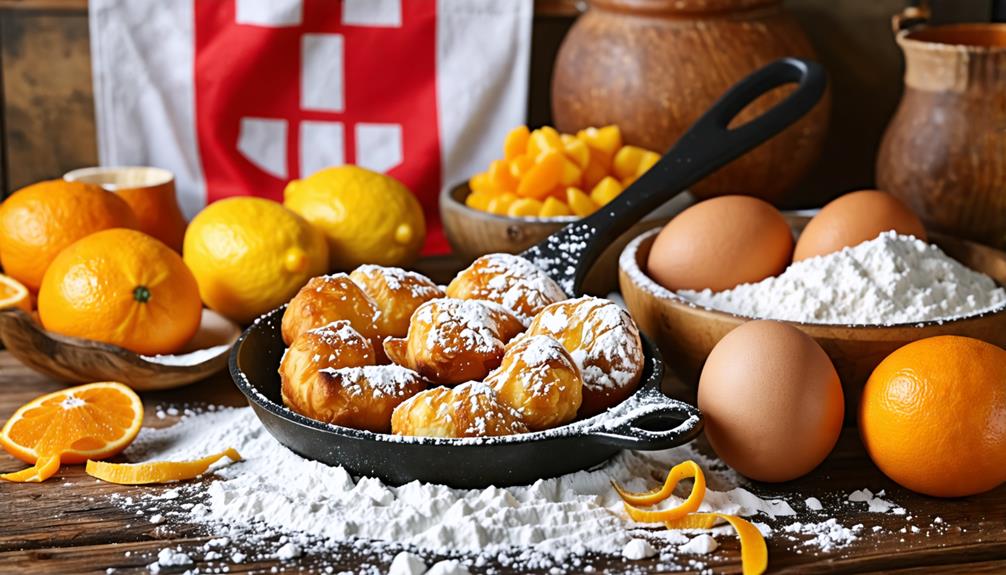
Crafting authentic Croatian fritule is like initiating a culinary adventure that could rival the quest for the Holy Grail. It's not just about frying dough; it's about mastering a tradition that's been cherished for generations. With the right ingredients and techniques, anyone can transform simple components into these delightful treats. But what makes fritule truly irresistible? The answer lies in the careful balance of flavors and the meticulous process that's often overlooked. Discovering this balance could elevate any kitchen endeavor to new heights.
Need cookware for your meal? Toolbox, a Pear to Pear rental marketplace, might be worth a look.
Quick Takeaways
- Combine flour, dried yeast, sugar, and optional lemon zest in a bowl for the dry ingredients before adding wet ingredients.
- Activate the yeast by dissolving sugar in warm water and letting it foam before mixing into the dough.
- Allow the dough to rise in a warm environment for about one hour until it doubles in size.
- Heat vegetable oil to 350°F (175°C) and test readiness by dropping in a small piece of batter.
- Fry tablespoon-sized portions of dough in small batches until golden brown, then dust with powdered sugar before serving.
Understanding Croatian Fritule
Croatian fritule are often hailed as a beloved treat that captures the essence of festive celebrations. These delightful Croatian fritters, originating from the picturesque coastal region of Dalmatia, symbolize the rich culinary heritage of Croatia.
Typically enjoyed during Christmas and Carnival, fritule are mini doughnuts that boast a crispy exterior and a soft, fluffy interior, making them irresistible.
The foundation of fritule lies in a simple yet versatile yeast dough prepared with flour, sugar, eggs, and yeast. Many recipes also call for a splash of brandy or rakija, enhancing the flavor while reducing oil absorption during frying.
To elevate the experience, many people add lemon zest and mix in raisins or nuts, creating a delectable texture that keeps everyone coming back for more.
Best served warm, these treats are often dusted generously with powdered sugar or paired with a rich chocolate sauce, providing an indulgent finish to any meal.
Whether at family gatherings or festive events, Croatian fritule bring joy and a sense of togetherness, inviting everyone to savor each delightful bite.
Gathering Essential Ingredients
To create authentic fritule, having the right ingredients on hand is essential.
Begin with a solid flour mixture, using 500g of all-purpose flour as the backbone of this delightful treat. This primary ingredient provides the structure needed for the fritule, ensuring they achieve the perfect fluffy texture. To aid in this endeavor, incorporate 1 teaspoon of dried yeast, which will help the dough rise beautifully.
Next, sweeten the dough by adding 60g of golden caster sugar, which enhances the overall flavor profile.
For an added complexity, include 45ml of brandy or a similar liqueur; this not only enriches the taste but also minimizes oil absorption during frying, resulting in lighter fritule.
Preparing the Dough

In a spacious mixing bowl, combine the dry ingredients: 500g of plain flour, 1 teaspoon of dried yeast, and 60g of golden caster sugar. This dry mixture forms the base of the dough for traditional Croatian fritule.
In a separate bowl, beat one egg and blend in freshly grated lemon zest, a splash of vanilla extract, and 45ml of brandy. These flavors will elevate the fritule, adding depth to each bite.
Gradually incorporate this egg mixture into the dry ingredients, stirring gently. As they blend, slowly mix in lukewarm milk until a thick batter forms. It's vital to guarantee all components are evenly combined, creating a rich dough that's slightly sticky yet cohesive.
Once well-mixed, allow the batter to rest for approximately 30 minutes. This resting period is important, as it develops both the consistency and flavor of the dough, making it ideal for frying.
After the dough has rested, it should have a light and airy texture, ready for the next steps. This preparation sets the stage for crafting delightful fritule, sure to impress anyone fortunate enough to enjoy them.
Activating the Yeast
Activating the yeast is an imperative step in the fritule-making process, as it sets the foundation for a light and airy texture.
To begin, one should dissolve 1 teaspoon of sugar in 1 cup of warm water, ideally at a temperature of 110°F (43°C). This sugar creates a nourishing environment that encourages yeast fermentation.
Next, sprinkle 1 (0.25-ounce) package of active dry yeast or 2 1/4 teaspoons over the warm water, allowing it to sit undisturbed for about 5-10 minutes.
During this time, the yeast will begin to activate, forming a foamy surface that signals it's alive and ready for action.
It's important to monitor the water temperature, as anything above 130°F (54°C) can kill the yeast, leading to disappointing results.
Once the yeast mixture becomes foamy, it's time to incorporate it into the dough.
This step is fundamental, as the activated yeast will contribute to the fritule's delightful lightness, ensuring that every bite is a perfect blend of flavor and texture.
Mixing Wet and Dry Ingredients

Combining the wet and dry ingredients is an important step in crafting the perfect fritule batter. To begin, one should first gather a large mixing bowl to combine the dry ingredients, including flour and baking powder. This guarantees an even distribution of the baking powder, which is vital for achieving light and airy fritule.
In a separate bowl, the wet ingredients—eggs, sugar, plain yogurt, and vanilla extract—should be mixed thoroughly until they reach a smooth consistency.
Next, it's time for mixing wet and dry ingredients. Gradually incorporate the dry mixture into the wet ingredients, using a rubber spatula to stir gently. This technique avoids overmixing, which can result in dense fritule instead of the desired fluffy dough balls.
If desired, adding optional ingredients like rum or brandy at this stage can enhance the batter's flavor while also reducing oil absorption during frying.
Once combined, the batter should be smooth and thick. Allowing it to rest briefly lets the flavors meld and the texture develop, setting the stage for a delightful frying experience that will impress any gathering.
Allowing Dough to Rise
Allowing the dough to rise is an essential step that transforms fritule from a simple mixture into a fluffy delicacy. This process typically takes about one hour in a warm environment, vital for developing the fritule's light and airy texture.
To create the perfect rising atmosphere, the dough should be placed in a floured bowl, covered with a damp cloth or plastic wrap to seal in moisture.
Before mixing, it's important to activate the yeast in warm water with a touch of sugar. This guarantees that the yeast is lively and ready to work its magic when incorporated into the dough.
For those seeking an ideal temperature, a warm water bath can work wonders; simply place the covered bowl in a sink filled with warm water to maintain that perfect rising environment.
As the dough rises, it will double in size and develop a soft, elastic consistency, signaling that it's ready for the next delicious step.
This transformation not only enhances the fritule's texture but also creates an inviting aroma that promises joy for everyone gathered around the table.
Heating the Oil

With the dough beautifully risen and ready for frying, the next step involves heating the oil to create that perfect golden crust on the fritule. A large pot or deep frying pan is essential, filled with at least an inch of vegetable oil. This depth allows the fritule to float freely, cooking evenly and achieving that delightful crunch.
To guarantee the oil reaches the ideal frying temperature, a cooking thermometer is a must. Target around 350°F (175°C) for best results. Before adding the fritule, a simple test can confirm the oil's readiness. Dropping in a small piece of batter should produce an immediate sizzle and a quick rise, indicating the oil is hot enough.
When it's time to fry, avoid overcrowding the pan. Too many fritule at once can lower the oil temperature, leading to a soggy texture instead of that desired crunch on the outside. Fry in small batches to maintain high heat.
As the fritule cook, keep an eye on the temperature, adjusting the heat as necessary to avoid burning and guarantee they become deliciously golden and crisp.
Shaping the Fritule
Shaping the fritule is a delightful step that brings the batter to life. To achieve the perfect fritule, one can use two dessert spoons to scoop out tablespoon-sized portions of the batter. This method guarantees uniformity, allowing the fritule to cook evenly. Each portion should resemble the diameter of a golf ball, striking a balance between a crispy exterior and a soft and fluffy interior.
For those seeking a more traditional approach, lightly floured hands can be used to roll the batter into small balls, creating a personal touch. Once shaped, it's vital to gently drop the fritule into hot oil, confirming there's enough space between each piece. This prevents sticking and allows them to puff up beautifully.
Maintaining a consistent oil temperature is important, as it determines the fritule's ability to achieve that desired golden brown color. With each fritula carefully shaped and placed in the oil, the anticipation builds for the delectable treat that awaits.
This meticulous shaping process not only enhances the fritule's texture but also elevates the experience of serving these delightful Croatian sweets to others.
Frying to Perfection

Frying fritule to perfection requires careful attention and a few essential techniques. To achieve those delightful mini doughnuts that everyone craves, it's vital to get the frying process just right. Here are some key steps to keep in mind:
- Heat the oil: Use vegetable oil heated to approximately 350°F (175°C) for ideal frying.
- Test the temperature: Drop a small amount of batter into the oil; it should sizzle and rise immediately if the temperature is correct.
- Fry in small batches: Avoid overcrowding the pan, which can lower the oil temperature and result in soggy fritule.
- Cook to golden perfection: Fry fritule for about 1-2 minutes on each side until they achieve that beautiful golden brown color.
Once fried, drain the mini doughnuts on paper towels to eliminate excess oil.
For the final touch, dust them with powdered sugar while they're still warm, enhancing both flavor and presentation.
With these techniques, anyone can master the art of frying fritule, ensuring they're a hit at any gathering.
Serving and Enjoying Fritule
Serving fritule warm is crucial for preserving their delightful crispy exterior and soft, fluffy interior, making them irresistibly tempting. As soon as they come out of the fryer, a generous dusting of powdered sugar adds not just sweetness but also an enticing visual appeal that draws everyone in. The golden-brown fritule glisten under the light, inviting guests to indulge.
Fritule's versatility shines through, as they can be enjoyed plain or drizzled with rich chocolate sauce, allowing hosts to cater to varied tastes. For an elevated experience, pairing these treats with mulled wine or a steaming cup of coffee enhances their flavor, making them perfect for festive gatherings and cozy evenings alike.
To elevate the presentation, serve fritule in decorative bowls, creating an inviting centerpiece that sparks conversation and delight. Guests will appreciate the effort put into both the dish and its presentation, fostering a warm, communal atmosphere.
With each bite, the combination of warmth, sweetness, and texture guarantees that fritule aren't just a treat but an experience to savor and share with loved ones.
Common Questions
What Is Fritule Made Of?
Fritule's delightful base blends all-purpose flour, sugar, and dried yeast, creating a fluffy texture. Eggs enrich the dough, while optional brandy or rum enhance flavor. Raisins or nuts add unique twists, making each bite memorable.
What Is a Croatian Fruitle?
A Croatian fritule is a delightful mini doughnut, often enjoyed during festive seasons. With a crispy exterior and fluffy interior, they're typically dusted with powdered sugar, making them a beloved treat for gatherings and celebrations.
How Do You Pronounce Fritule?
Ironically, many mispronounce "fritule," yet it's simple. They say "free-too-leh," with the soft "r" and "u" like in "food." Understanding this enriches their appreciation for Croatian culture and its delightful culinary traditions.
Wrapping Up
As the golden fritule emerge from the bubbling oil, they transform like sun-kissed orbs of joy, ready to bring warmth to any gathering. Each bite is a celebration, echoing the laughter and love of Croatian kitchens. Just like a well-tended garden, these delightful treats flourish when crafted with care, inviting friends and family to savor the sweetness of tradition. So, gather around, share a story, and let the fritule weave their magic into your hearts and memories.