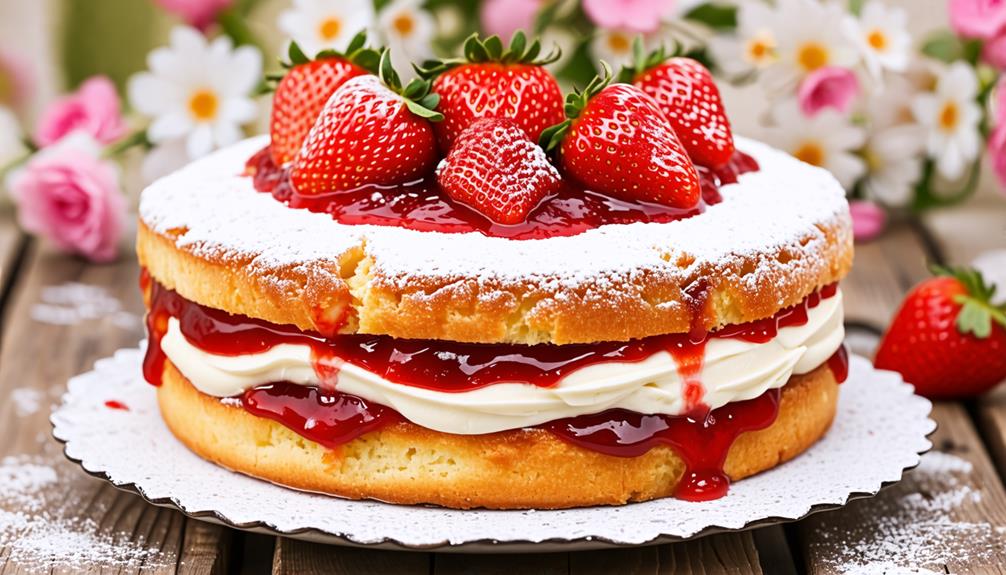
Imagine you've baked a Victoria sponge cake for a friend's birthday, only to find it dense and lacking flavor. You might be wondering what went wrong. To avoid such disappointments, it's important to focus on specific tips that guarantee your cake turns out light, fluffy, and delicious every time. From understanding ingredient temperatures to perfecting your mixing method, these details can make all the difference. But what are the vital elements that you need to pay attention to for that perfect bake?
Need cookware for your meal? Toolbox, a Pear to Pear rental marketplace, might be worth a look.
Things to Note
- Use equal weights of high-quality flour, butter, and caster sugar for a balanced and flavorful cake.
- Ensure eggs and butter are at room temperature to promote proper mixing and aeration.
- Cream butter and sugar until light and fluffy, incorporating air for a lighter texture.
- Sift flour and baking powder together, then gently fold into the mixture to preserve air bubbles.
Essential Ingredients for Success
To bake a perfect Victoria sponge cake, you need equal weights of flour, butter, and caster sugar, along with three large eggs and a teaspoon of baking powder. These essential ingredients are the foundation for a delightful cake that'll impress your guests.
Using caster sugar instead of granulated sugar is key. Its finer texture helps create a lighter cake by incorporating more air during the creaming process, resulting in a fluffy sponge. When you choose self-raising flour, you simplify your baking by combining flour and baking powder, ensuring the right rise without extra steps.
Don't overlook the quality of your ingredients. Opt for high-quality butter and flour, as they greatly impact the final taste and texture of your cake. Fresh eggs, ideally weighing 58-60g each, will enhance the cake's volume and flavor, making it even more irresistible.
Importance of Ingredient Temperatures
When baking a Victoria sponge cake, the temperature of your ingredients can make a big difference.
Using room temperature eggs and softened butter guarantees proper mixing and aeration, resulting in a lighter cake.
Room Temperature Ingredients
Using room temperature ingredients, like eggs and butter, is vital for achieving a light and fluffy Victoria sponge cake.
When you allow your eggs to sit out for at least 30 minutes, they whip up much better, incorporating air that adds volume to your cake. Cold eggs can hinder this process, leading to a denser texture that won't impress your guests.
Softened butter, also at room temperature, blends seamlessly with sugar and beaten eggs, creating a smooth batter. This integration is significant, as it guarantees even distribution of ingredients, enhancing the overall texture of your cake.
When all ingredients are at room temperature, you promote ideal rise during baking, avoiding the need for over-mixing, which can result in a tougher cake.
Egg Temperature Effects
Room temperature eggs greatly enhance the volume and texture of your Victoria sponge cake, making it light and airy.
When you use cold eggs, they struggle to incorporate air effectively, resulting in a denser sponge cake that may not impress your guests. To achieve ideal aeration, let your eggs sit out for at least 30 minutes before mixing. This simple step allows them to warm up, promoting better volume when beaten.
For the best results, aim for eggs weighing between 58-60g. This weight strikes the right balance between moisture and structure, giving your batter the perfect foundation.
Additionally, consider cracking your eggs into a glass bowl rather than a plastic one. Glass can enhance their expansion, further aiding in aeration during mixing.
Butter Consistency Matters
Achieving the right butter consistency is vital for creating a light and airy Victoria sponge cake. You want your butter to be at room temperature—soft but not melted. This temperature guarantees that the butter can easily incorporate air when creamed with sugar, leading to a sponge with a delightful texture.
If the butter's too cold, you risk over-mixing as you try to combine it with sugar and eggs. This can result in a denser sponge that lacks the airy lift you desire.
On the flip side, using softened butter allows you to achieve a fluffy consistency during the creaming process, which is essential for maximizing the cake's volume.
Perfecting the Mixing Method
When it comes to mixing your Victoria sponge, the techniques you choose can make all the difference.
You'll want to focus on incorporating air properly to achieve that light, fluffy texture.
Understanding the balance between mixing methods can help you avoid common pitfalls and elevate your baking game.
Mixing Techniques Comparison
To perfect your Victoria sponge, understanding the differences between traditional and modern mixing techniques can greatly impact your cake's texture and rise.
The traditional method starts with creaming butter and caster sugar until light and fluffy. Then, you gradually add beaten eggs, ensuring a smooth blend, before gently folding in sifted flour. This careful folding preserves the airiness fundamental for a light sponge.
On the other hand, the modern technique often employs an electric mixer to whisk all ingredients together. While this can save time, it's essential to watch for overmixing, which can lead to a denser cake. Regardless of the method, consistency in mixing is important. Aim for a mixture that holds a stable figure 8 when lifted, indicating adequate aeration without overworking the batter.
Avoid distractions while mixing; focused and quick actions help trap air effectively, enhancing your cake's rise. Remember, gentle folding during the flour incorporation stage is key. Use a spatula to cut through the mixture and lift it, ensuring those precious air bubbles stay intact.
Importance of Air Incorporation
Incorporating air into your Victoria sponge mixture is crucial for creating that light and fluffy texture that everyone loves. The creaming method is your best friend here; by beating butter and sugar together until they're light and fluffy, you effectively trap air in the batter. This aeration is key, as those little air pockets expand during baking, helping your cake rise beautifully.
Don't forget to sift your flour before adding it to the mixture. This not only aerates the flour but also prevents clumping, guaranteeing an even distribution throughout the batter.
Once you've combined the ingredients, use gentle folding techniques. Carefully cut through the mixture and lift it with a spatula—this preserves the air bubbles and prevents overmixing, which can lead to a denser cake.
Lastly, focus on quick mixing and avoid distractions. Prolonged mixing can deflate those essential air pockets, compromising your cake's rise.
Tips for Flour and Baking Powder
For a light and fluffy Victoria sponge, always opt for self-raising flour, as it includes baking powder to help the cake rise perfectly. This combination creates a tender sponge cake that your guests will adore. If you prefer using plain flour, remember to add baking powder at a ratio of 1 teaspoon per 100g of flour to achieve a similar lift.
To elevate the softness of your cake, consider incorporating a bit of cornflour with your self-raising flour. This addition helps reduce gluten development, resulting in a more delicate texture. Before mixing, sift the flour and baking powder together to aerate the ingredients, which further enhances the lightness of your sponge cake.
Accurate measurements are essential in baking, so make sure you're precise with your flour and baking powder. Even minor discrepancies can drastically affect the rise and texture of your cake.
Choosing Fats and Flavorings
Choosing the right fats and flavorings can make all the difference in achieving a deliciously moist and flavorful Victoria sponge cake.
Start with butter, your best bet for a rich flavor and a tender texture. It gives your cake that luxurious mouthfeel that everyone loves. If you prefer a lighter touch, margarine works too, but keep in mind it may alter the final taste slightly.
Don't forget about the milk! Adding it to your batter helps achieve the perfect consistency, ensuring your sponge remains moist without losing its airy quality.
For flavor, vanilla extract is a classic choice. Just remember to use it sparingly; you want to enhance the cake's delicate taste, not overpower it.
To elevate your Victoria sponge, consider incorporating fresh berries or homemade jams. They add a revitalizing contrast to the sweetness and can make your cake truly special.
Balancing these flavors is key. With the right combination of butter, a hint of vanilla, a splash of milk, and those vibrant fresh berries, you're set to impress everyone at your gathering.
Enjoy the process, and watch your guests delight in every slice!
Baking Process and Timing
To achieve the perfect Victoria sponge cake, preheat your oven to 180C (350F) before you start mixing your batter. This guarantees even baking and helps maintain the cake's delightful airiness.
While your oven heats, grease and line your cake tins to prevent sticking, making it easier to serve your beautiful creation later.
Once your batter is ready, pour it into the prepared tins and place them in the oven. Bake your sponge cakes for approximately 25-30 minutes. Keep an eye on them; you're looking for a lovely golden color. To check for doneness, insert a skewer into the center—if it comes out clean, your cakes are ready!
During the first 20 minutes of baking, resist the temptation to open the oven door. Doing so can cause the temperature to drop and may lead your sponge to collapse.
After baking, let the cakes cool in the tins for a short while before transferring them to a wire rack. This little extra step will help prevent dryness, guaranteeing each slice is moist and delightful for your guests.
Happy baking!
Assembly and Presentation Techniques
Begin by placing the less attractive cake layer on a serving plate, then spread a generous layer of raspberry or strawberry jam on top for a delicious base.
Next, add a thick layer of buttercream, which will enhance the cake's richness. When you place the second cake layer on top, make sure the flat side is facing down. This helps create a stable and visually appealing final product.
For the finishing touch, dust the top of the assembled cake with icing sugar to provide a decorative finish. This not only adds a touch of elegance but also offers a satisfying crunch that contrasts beautifully with the soft sponge. To elevate the presentation even further, consider garnishing with fresh berries or edible flowers for a pop of color.
When it's time to serve, cut the cake into even slices to maintain a neat presentation. Present it alongside a pot of tea or coffee to complement the classic afternoon tea experience.
Your lovingly assembled Victoria sponge cake is sure to impress your guests!
Creative Variations to Try
After mastering assembly and presentation techniques, you can take your Victoria sponge cake to the next level by exploring some creative variations that add exciting flavors and textures.
One delicious twist is to incorporate cocoa powder into your batter, transforming your classic sponge into a rich chocolate delight that chocolate lovers will adore.
You could also brighten the cake's flavor by adding citrus zest, like lemon or orange, for a rejuvenating twist. This citrus addition pairs wonderfully with fillings such as raspberry jam, enhancing the overall taste experience.
For a nutty surprise, consider swapping out vanilla extract for almond extract; this subtle change complements fruity fillings like cherry jam beautifully.
If you're in the mood for coffee, dissolve instant coffee granules in warm water and mix it into the batter. This variation creates a delightful caffeinated treat that's perfect for gatherings.
Additionally, layer your sponge with different fillings, such as lemon curd or chocolate ganache, to cater to diverse taste preferences.
Frequently Asked Questions
What Are Three Ways the Victoria Sponge Cake Could Be Decorated?
You can decorate a Victoria sponge cake in several delightful ways.
First, dust the top with caster sugar for a sweet, crunchy finish.
Next, arrange fresh berries like strawberries or raspberries for a vibrant touch.
Finally, spread a layer of whipped cream or buttercream between the cake layers and on top, adding richness and smoothness.
These simple yet elegant decorations will surely impress your guests and elevate your cake's presentation!
What Are the Basic Things You Need to Know While Making Sponge Cake?
When you're making a sponge cake, start with room temperature ingredients like eggs and butter for the best results.
Weigh everything accurately to keep the balance right, ensuring a light texture.
Cream the butter and sugar until fluffy, but be careful not to over-mix when folding in the flour.
Preheat your oven to 180C (350F) for even baking, and always use fresh, quality ingredients to enhance flavor and texture.
What Consistency Should Victoria Sponge Cake Batter Be?
When you're making Victoria sponge cake batter, it should be smooth and slightly thick.
You want it to drop slowly from a spoon while still holding its shape in the tin.
A well-mixed batter will form a stable figure 8 pattern on the surface without disappearing.
Be cautious not to over-mix, as that can make it dense.
If it's too runny, you might need more flour; too thick? A splash of milk should help!
What Is the Secret to a Perfect Cake?
Baking a perfect cake is like crafting a masterpiece; it requires passion and precision.
The secret lies in using room temperature ingredients, especially eggs and butter, to create a light, airy texture.
You'll want to cream the butter and sugar until fluffy, ensuring you trap air for that rise.
Don't forget accurate measurements and avoid over-mixing after adding flour.
Conclusion
In the end, baking a perfect Victoria sponge cake is like crafting a beautiful symphony—each ingredient plays its part in harmony.
When you combine equal weights of flour, butter, and sugar, you're not just mixing; you're composing a delicious masterpiece.
Keep those eggs at room temperature, and treat your batter gently, just like a musician nurtures their instrument.
With practice and patience, you'll create a cake that rises to the occasion, leaving everyone craving an encore!