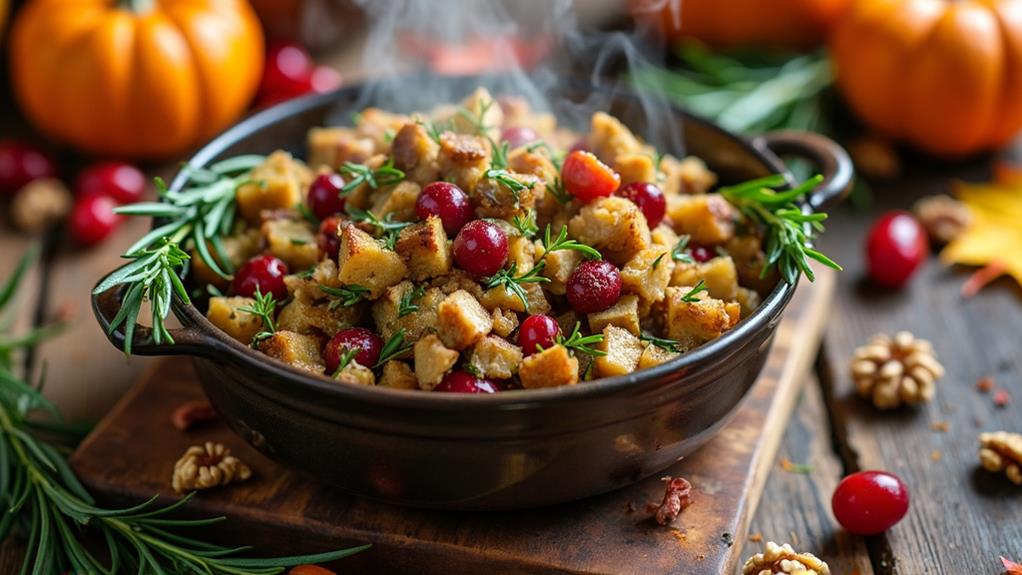
In the spirit of culinary creativity, holiday stuffing deserves a moment in the spotlight. It's not just a side dish; it's an opportunity to elevate traditional flavors with herb-infused variations that can transform any festive meal. By incorporating fresh herbs and unique ingredients, one can craft a stuffing that surprises and delights. The art lies in balancing flavors and textures, ensuring each spoonful complements the main course. As the holidays approach, exploring these innovative recipes could lead to a new family favorite that might just outshine the turkey itself.
Need cookware for your meal? Toolbox, a Pear to Pear rental marketplace, might be worth a look.
Quick Takeaways
- Use a blend of stale sourdough and rustic Italian bread for enhanced texture and moisture in your stuffing.
- Incorporate sautéed onions, celery, and fresh herbs like sage and thyme to build a rich flavor foundation.
- Combine broth and eggs as binding agents to ensure a cohesive and moist stuffing mixture.
- Bake at 350°F for 30-40 minutes for a crispy top while maintaining a moist interior.
- Get creative with leftovers by making breakfast hashes or stuffing bell peppers for a delicious twist.
Traditional Herb Stuffing Essentials
When it comes to crafting a memorable holiday meal, few dishes rival the comforting allure of traditional herb stuffing. This dish begins with a base of stale or toasted bread cubes, which absorb moisture beautifully, creating a delightful texture that elevates any festive gathering.
Aromatics like sautéed onions, celery, and leeks cooked in butter form a rich flavor foundation, enhancing the stuffing's appeal.
Fresh herbs are the stars in any traditional stuffing recipe. Aromatic sage, thyme, rosemary, and parsley infuse the dish with nostalgic holiday flavors, inviting guests to savor each bite.
To bind the stuffing together, a mixture of broth and eggs is used. The broth adds essential moisture, while the eggs act as a binding agent, ensuring a cohesive and hearty blend.
Baking the stuffing until it reaches an internal temperature of 160°F is vital for safety and flavor. This not only guarantees it's safe to eat but also allows the top to develop a crispy, golden-brown crust.
Flavorful Ingredient Combinations
What makes a holiday stuffing truly unforgettable? It's all about the flavorful ingredient combinations that elevate the dish. A blend of stale sourdough and rustic Italian bread serves as the perfect base, enhancing both the texture and moisture absorption. This combination allows every bite to soak up the rich flavors of the herb stuffing recipe.
Fresh herbs like sage, thyme, and rosemary are essential. Sage, in particular, brings a nostalgic flavor, reminding everyone of cherished holiday traditions. Pairing these herbs with aromatic vegetables—sautéed onions, celery, and leeks cooked in butter—creates a rich foundation that perfectly complements the bread.
To add depth, a splash of chicken or vegetable broth not only moistens the stuffing but also intensifies the overall flavor; about 1¾ cups is ideal for achieving that balanced texture.
For those looking to experiment, incorporating ingredients like toasted nuts, dried fruits, or savory sausage can introduce exciting new dimensions of flavor and texture, making the stuffing even more enticing.
With these combinations, holiday stuffing transforms from a simple side into a memorable centerpiece that everyone will savor.
Step-by-Step Preparation Guide
To create the perfect herb-infused stuffing, understanding the essential ingredients and cooking techniques is vital.
A blend of stale bread, sautéed vegetables, and aromatic herbs forms the base, while precise cooking methods guarantee a delightful texture.
With a straightforward preparation guide, anyone can master this holiday favorite.
Essential Ingredients Overview
Crafting the perfect herb-infused holiday stuffing starts with a careful selection of essential ingredients that work harmoniously together. First, choose a mix of stale or toasted bread cubes, such as sourdough and rustic Italian, to add depth and absorb moisture beautifully.
Next, create a rich flavor base by sautéing finely chopped onions, celery, and garlic in butter, which will enhance the overall taste of the stuffing recipes.
Incorporating fresh herbs like sage, thyme, and parsley is essential for an aromatic profile that elevates the dish. These herbs infuse the stuffing with a delightful fragrance that will beckon guests to the table.
To bind the mixture, combine broth and eggs, ensuring even moisture distribution while achieving a cohesive texture. This step is critical for creating that perfect bite.
Cooking Techniques Explained
Preheating the oven is the first step toward creating a delicious herb-infused holiday stuffing. Set it to around 350°F and grease your baking dish to guarantee the stuffing doesn't stick.
Next, employ essential cooking techniques by sautéing aromatics. In a skillet over medium heat, melt butter and add finely chopped onions, celery, and garlic, cooking until softened—about five minutes.
After the vegetables are ready, it's time to mix the stuffing mixture. Combine the sautéed veggies with stale or toasted bread cubes, making sure to sprinkle in fresh herbs for that aromatic touch. Gradually pour in broth until the mixture reaches your desired moisture level.
Then, transfer the stuffing mixture to your greased baking dish and cover it with foil to lock in moisture during the initial baking phase, usually for about 30 minutes. Finally, remove the foil for the last 10-15 minutes, allowing the top to crisp up beautifully.
- Preheat your oven to 350°F
- Sauté onions, celery, and garlic in butter
- Combine with bread cubes and fresh herbs
- Bake covered, then uncovered for crispiness
This method guarantees a stuffing that's both flavorful and comforting.
Baking Techniques for Perfect Stuffing
Choosing the right bread is essential for achieving perfect stuffing, as it directly influences the texture and flavor.
A balanced baking temperature guarantees that the stuffing cooks evenly, allowing the bread to absorb the aromatic ingredients while developing a delightful crust.
Bread Choices Matter
When it comes to creating the perfect holiday stuffing, the choice of bread plays a pivotal role in achieving that ideal texture and flavor. Opting for stale or toasted bread cubes, like sourdough or rustic Italian, enhances the stuffing's ability to absorb moisture without becoming soggy.
Fresh bread might seem tempting, but it leads to a disappointing, mushy result.
To guarantee the best stuffing experience, consider these tips:
- Use stale bread: Day-old bread or croutons are perfect for peak moisture absorption.
- Tear, don't cut: Breaking the bread by hand creates a rustic texture that elevates the overall mouthfeel.
- Monitor moisture level: Gradually add broth to achieve a perfect balance—neither too dry nor overly wet.
- Bake uncovered: Finishing the stuffing uncovered adds a crispy top, providing a delightful contrast to the soft interior.
Baking Temperature Tips
Achieving the perfect bake for holiday stuffing requires a keen eye on temperature and timing. To guarantee an even cook and a golden crust, preheat the oven to 350°F (175°C).
Baking stuffing uncovered for 30-40 minutes allows the top to crisp while keeping the inside moist and flavorful.
If you're preparing the stuffing ahead of time, refrigerate it, but let it sit at room temperature for about an hour before placing it in the oven. This step prevents extended cooking time and promotes even baking.
For that desired crispy texture, uncover the dish during the last 10-15 minutes of baking, letting the stuffing achieve a beautiful golden-brown hue.
Monitoring the internal temperature is essential; the stuffing must reach 160°F (71°C) for safe consumption, especially when cooked inside a turkey.
Using a food thermometer guarantees the stuffing is both delicious and safe. By following these baking temperature tips, you'll serve a delightful, herb-infused stuffing that's sure to impress your guests and elevate your holiday feast.
Creative Serving Suggestions
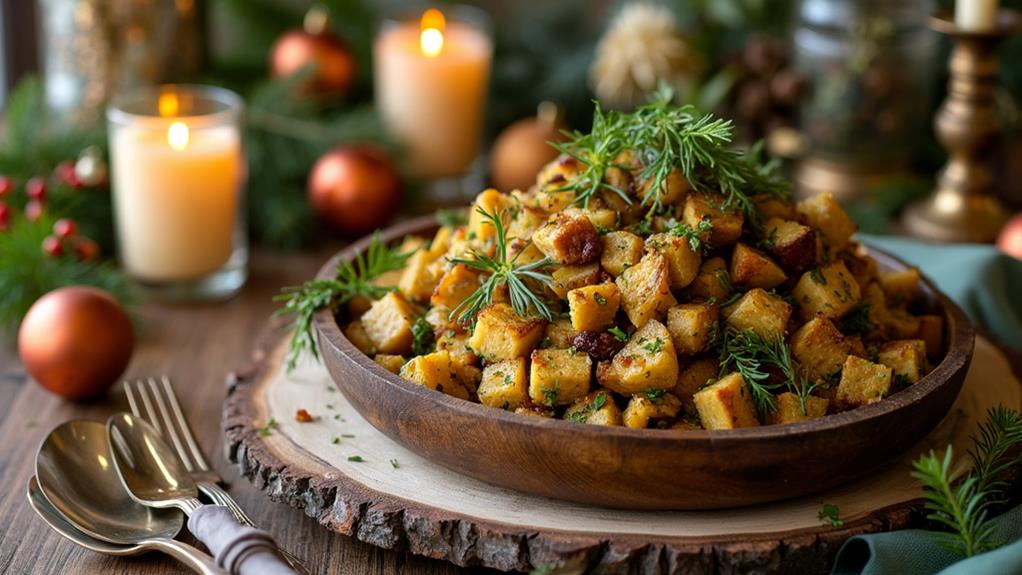
Elevating the holiday experience, herb-infused stuffing can be transformed into a variety of creative serving options that delight guests and make the most of this beloved dish.
With a few imaginative twists, stuffing becomes more than just a side—it's the star of the meal. Here are some delightful serving suggestions:
- Classic Pairing: Serve herb-infused stuffing as a hearty side dish alongside roasted turkey or ham, enhancing the overall flavor profile of the main dish.
- Savory Hash Skillet: Transform leftover stuffing into a breakfast favorite by mixing it with eggs and fresh vegetables for a delicious hash.
- Stuffed Bell Peppers: Get creative by incorporating stuffing into stuffed bell peppers, adding additional veggies and cheese for a unique and flavorful dish.
- Stuffing Waffles: For a fun twist, take leftover stuffing and mix it with eggs, cooking it in a waffle maker for a crispy breakfast option.
These inventive recipes not only elevate the stuffing but also impress guests with a festive flair, ensuring that the spirit of the holidays shines through every bite.
Leftover Stuffing Ideas
Leftover stuffing can be a culinary treasure, offering endless possibilities to transform the holiday favorite into new and exciting meals. One delicious idea is to create a hearty breakfast hash. By sautéing leftover stuffing with diced potatoes, bell peppers, and onions, then topping it with fried or scrambled eggs, cooks can start the day with a savory twist.
For a fun twist, mixing leftover stuffing with eggs and cooking it in a waffle maker results in unique stuffing waffles that are both crispy and comforting.
Alternatively, leftover stuffing makes an excellent filling for Thanksgiving sandwiches, layered with turkey, cranberry sauce, and crisp lettuce between slices of bread.
Another creative option is to stuff bell peppers with leftover stuffing, baking them until the peppers are tender and flavorful. This not only adds color to the plate but also turns a simple dish into a hearty meal.
For those who wish to save some for later, leftover stuffing can be frozen for up to three months. Simply thaw and reheat in the oven with a splash of broth to restore moisture and flavor, ensuring that the essence of the Thanksgiving stuffing recipe isn't lost.
Community Feedback and Variations
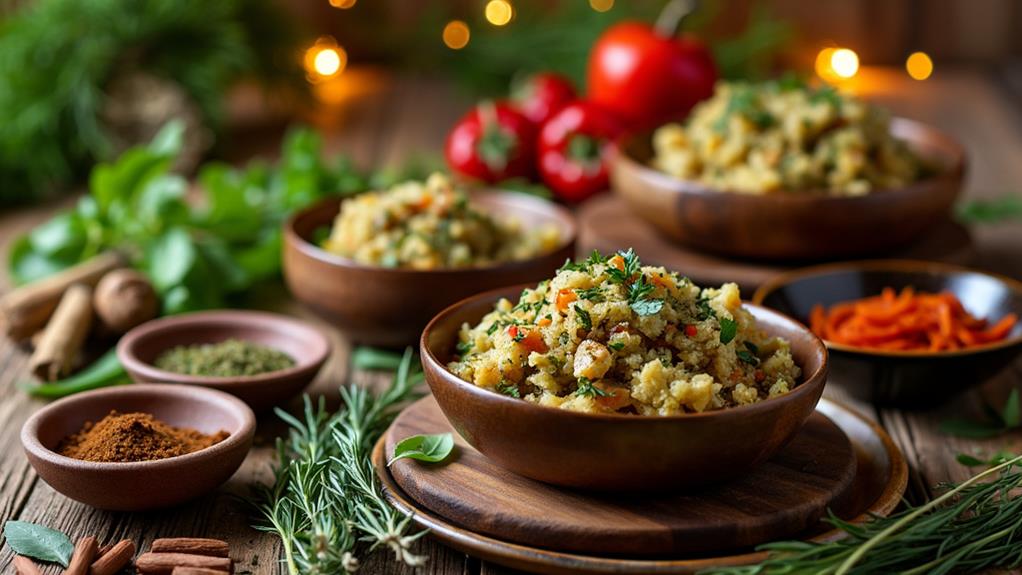
Community feedback reveals a vibrant tapestry of experiences and adaptations surrounding the Classic Herb Stuffing recipe, which boasts an impressive 4.3-star rating from 23 reviews. This high satisfaction level showcases the recipe's ability to resonate with families during the holiday season.
Many users enthusiastically share their variations, transforming the stuffing into something uniquely personal, and demonstrating its easy-to-make nature.
Some popular adaptations include:
- Nuts: Adding walnuts or pecans for a delightful crunch.
- Dried Fruits: Incorporating cranberries or apricots for a touch of sweetness.
- Different Bread Types: Experimenting with sourdough or cornbread to enhance flavor.
- Herb Blends: Using fresh herbs like thyme and rosemary for a fragrant twist.
Enthusiastic testimonials reveal that even the most skeptical stuffing critics have become fans, with the recipe quickly turning into a family favorite.
The active engagement in the comments encourages users to exchange tips and variations, fostering a community that enhances the overall recipe experience. This collaborative spirit not only enriches the dish but also nurtures connections among those who gather around the table.
Common Questions
How Do You Enhance Packet Stuffing?
To enhance packet stuffing, one can incorporate fresh herbs like sage and thyme for a burst of flavor.
Sautéing onions, celery, and garlic in butter creates a rich foundation, while adding sautéed mushrooms or roasted nuts introduces delightful texture.
Swapping some water with white wine or chicken broth elevates moisture and taste.
For a heartier dish, mixing in cooked sausage or pancetta turns a simple stuffing into a savory side that'll impress guests.
What Is a Good Substitute for Onions in Stuffing?
When substituting onions in stuffing, one can consider leeks for their sweet, mild flavor, or shallots for a delicate touch.
Chopped celery offers a fresh crunch without the allium taste, while green onions provide a milder onion essence.
For those avoiding onions entirely, garlic adds depth, and finely diced bell peppers bring sweetness and color.
Each option enhances the dish, ensuring everyone at the table enjoys a delightful experience, regardless of their preferences.
Is Stuffing Better With or Without Eggs?
Is stuffing truly better with or without eggs? Many culinary enthusiasts argue that using eggs creates a richer, denser texture that binds ingredients beautifully.
This custard-like consistency elevates the dish, making it a comforting centerpiece. However, those with dietary restrictions often appreciate egg-free options, celebrating the versatility of stuffing.
Ultimately, the choice reflects personal taste, with each variation offering unique flavors and textures that can delight any gathering.
What Is the Best Kind of Bread to Use for Stuffing?
When it comes to the best kind of bread for stuffing, he knows stale or dried bread cubes are key. Crusty sourdough and rustic Italian varieties offer a robust texture and flavor. A mix of both provides the perfect balance.
Fresh bread, on the other hand, leads to mushiness, so day-old or lightly toasted options are preferable. For added flavor, homemade garlic croutons can elevate the dish, ensuring a delightful experience for everyone.
Wrapping Up
In the heart of every festive gathering, herb-infused holiday stuffing emerges as a beloved staple. While some may believe that traditional recipes reign supreme, the truth is that creativity knows no bounds. By experimenting with unique ingredients and personal touches, each home can craft a stuffing that reflects its own culinary spirit. Embracing this versatility not only elevates the dish but also invites cherished memories around the table, proving that the joy of stuffing lies in its endless possibilities.