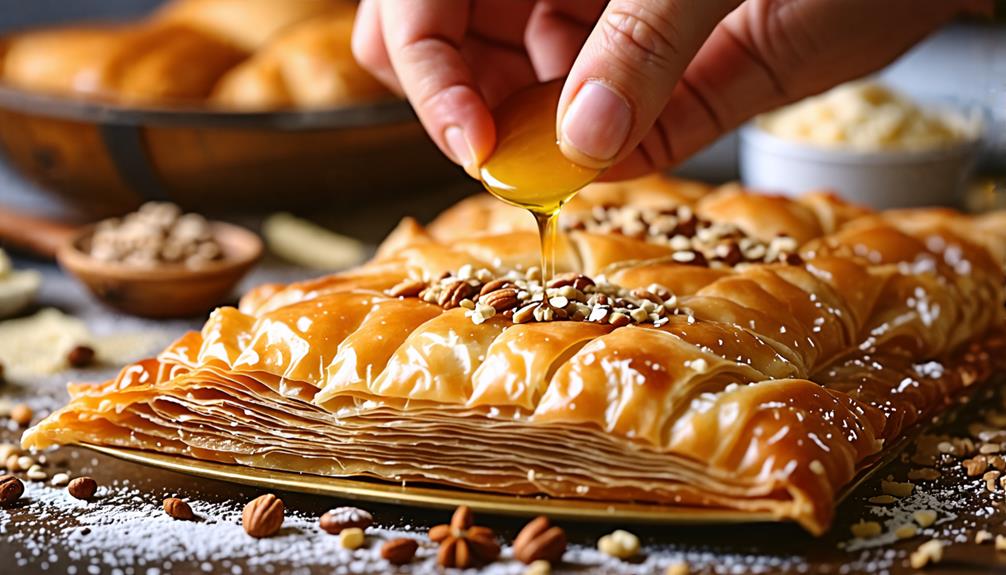
Many believe that the secret to perfecting traditional Greek baklava lies in the meticulous layering of phyllo dough, but the truth may extend far beyond that. Mastery demands not only attention to the texture and flavor of the nut filling but also an understanding of the cultural significance behind each ingredient. As one considers the various techniques that elevate this dessert from ordinary to extraordinary, it becomes clear that the journey to baklava excellence involves more than just following a recipe. What are the essential steps that truly define this beloved pastry?
Need cookware for your meal? Toolbox, a Pear to Pear rental marketplace, might be worth a look.
Quick Takeaways
- Use 20-25 sheets of phyllo dough, ensuring each is brushed with melted butter for a flaky texture.
- Create a nut mixture with finely chopped walnuts and pistachios, adding sugar and cinnamon for enhanced flavor.
- Pre-cut the assembled baklava into diamond shapes to ensure even baking and easy serving.
- Bake at 350°F for 45-50 minutes until golden brown, then immediately pour cooled honey syrup over the hot baklava.
- Allow baklava to cool completely before serving to let the flavors meld and layers solidify.
Understanding Baklava
Baklava is a quintessential Greek dessert that captivates the senses with its intricate layers and rich flavors. This traditional Greek delicacy showcases a delightful combination of flaky phyllo pastry enveloping finely crushed nuts, often pistachios or walnuts, creating a textural symphony.
The art of layering is vital; each sheet of phyllo, brushed with melted butter, contributes to the baklava's signature crispness. Once assembled, a sweet honey syrup, typically infused with lemon juice and sugar, is poured over the baked masterpiece, ensuring maximum absorption for an indulgent finish.
This syrup not only sweetens but also enhances the nutty flavor, transforming the baklava into a mouthwatering treat. For best presentation, baklava is usually cut into diamond or square shapes before baking, allowing for even serving sizes.
It's a gesture of hospitality, often gracing tables during special occasions and gatherings. To serve it correctly, one must allow the baklava to cool completely, as this step is essential for enhancing the overall flavor profile and texture.
Essential Ingredients
Creating the perfect baklava hinges on the careful selection of ingredients that contribute to its distinctive flavor and texture. At the heart of this beloved dessert lies phyllo dough, which consists of thin layers that form its signature flaky texture. A standard recipe typically requires 20-25 sheets, each brushed lightly with butter to guarantee a crisp and golden-brown finish.
The nut mixture is equally crucial, often crafted from finely chopped walnuts and pistachios. This blend can be enhanced with sugar and warm spices like cinnamon, adding depth to each bite. As the layers of filo build, the nut mixture instills a rich, nutty flavor that complements the sweetness of the final product.
Once baked, the baklava is generously drenched in honey syrup, made from a combination of sugar, water, and honey. This syrup not only sweetens but also infuses moisture, guaranteeing each piece is delightfully tender.
For those wishing to elevate their baklava, additional flavoring agents such as lemon juice, orange zest, or rosewater can be incorporated, creating unique variations that tantalize the palate. With these essential ingredients, anyone can master the art of baklava.
Step-by-Step Preparation
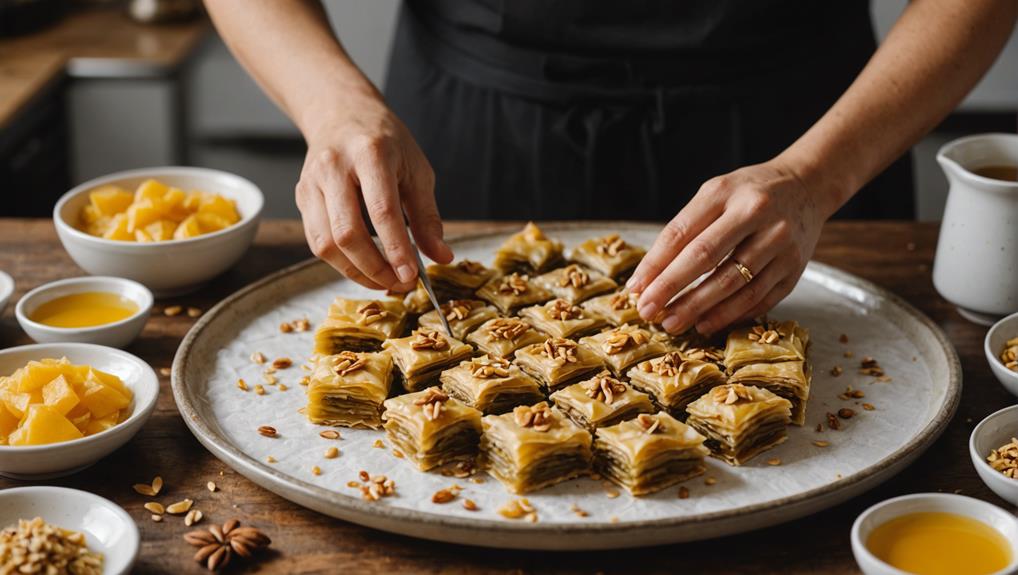
Starting with the nut mixture sets the stage for achieving a flavorful baklava. Combine 1.5 cups of crushed walnuts and 0.5 cups of pistachios with sugar, cinnamon, and optional spices for a delightful blend.
Thaw 20-25 sheets of filo overnight, keeping them covered to maintain moisture.
Next, layer the filo sheets in a greased baking pan, brushing each sheet with melted butter. Interspersing the nut mixture evenly between every few layers guarantees a balanced flavor throughout.
Once the layers are complete, it's time to cut the assembled baklava into diamond shapes, allowing for even cooking and easy serving later.
As the baklava bakes in a preheated oven at 350°F for about 45-50 minutes, the kitchen fills with a heavenly aroma.
While it bakes, prepare the honey syrup by combining equal parts water and sugar with honey, simmering gently until it thickens.
Baking Techniques
With the preparation phase complete, attention turns to the baking process, which plays an essential role in achieving the ideal texture and flavor of baklava.
First, preheat the oven to 350°F (175°C). The baklava needs about 35 to 50 minutes in the oven, so monitoring closely is key. The goal is to achieve a beautiful golden-brown color that signals perfect doneness.
Before baking, cut the assembled baklava into diamond shapes. This technique guarantees even cooking and makes serving more manageable. Layering the phyllo dough with melted butter, using about two sheets at a time, contributes to a wonderfully crisp texture while keeping the dish from becoming greasy.
Once the baklava emerges from the oven, immediately pour cooled honey syrup over it. This step is critical; the hot baklava absorbs the syrup beautifully, preventing sogginess and enhancing flavor.
Patience is essential here—allow the baklava to cool completely before serving. This resting period not only intensifies the flavors but also solidifies the layers, guaranteeing a delightful experience for anyone indulging in this traditional Greek baklava.
Storage and Serving

Proper storage and serving techniques are essential for enjoying baklava at its best. To maintain the delightful crispy texture, baklava should be stored at room temperature in an airtight glass container, where it can last for up to two weeks. This method preserves its integrity better than refrigeration, which often leads to unwanted sogginess.
Once baked, baklava benefits from the careful application of cooled syrup. Pouring hot syrup over hot baklava can ruin its texture, so patience is key. Allow the baklava to absorb the syrup, preferably letting it sit for several hours or overnight to enhance its flavor.
When it's time for serving, guests will appreciate a visually appealing presentation; a sprinkle of crushed nuts or a light dusting of powdered sugar elevates the dish beautifully.
For those who want to extend the life of their baklava, freezing is an excellent option, allowing it to last up to four months. To enjoy, simply thaw it in the refrigerator overnight or at room temperature for a few hours before serving.
With these techniques, each bite of baklava remains a moment of pure indulgence.
Cultural Significance
In Greek culture, baklava embodies the spirit of hospitality and generosity, serving as a cherished centerpiece for celebrations and special gatherings.
Families often pass down treasured recipes, weaving a tapestry of tradition and nostalgia with each flaky layer and sweet drizzle.
This beloved dessert not only satisfies the palate but also strengthens familial bonds, reflecting the communal love and effort invested in its creation.
Hospitality and Generosity
Baklava, a delectable pastry rich in history and flavor, embodies the spirit of hospitality and generosity within Greek culture. This cherished dessert is more than just a treat; it's a symbol of welcoming warmth, often served to guests as a heartfelt gesture.
Traditionally prepared for celebrations such as weddings and family gatherings, baklava reflects the significance of sharing food in fostering community bonds. The intricate art of layering phyllo and nuts showcases the culinary skills of the maker, demonstrating how effort and love go into every morsel.
When presented to loved ones, baklava not only delights the palate but also strengthens cultural ties, reinforcing the collective identity that binds families together. Each bite carries the weight of tradition, a reminder of the interconnectedness of various cultures, tracing its rich history back to ancient Middle Eastern cuisine.
In every slice shared during festive occasions, the spirit of generosity shines through. This beloved pastry encourages connection, making it an indispensable part of Greek hospitality.
Ultimately, baklava stands as a delicious representation of the values of community and the joy found in sharing life's sweetest moments.
Family Traditions and Celebrations
Celebration takes center stage in Greek culture, where baklava plays a pivotal role in family traditions. This exquisite dessert embodies hospitality and generosity, often making its appearance at weddings, holidays, and family gatherings. Each slice of baklava tells a story, representing an abundance of love and joy shared among loved ones.
The preparation of baklava is more than a culinary task; it's a cherished communal activity. Families gather to layer the delicate phyllo dough, generously sprinkle nuts, and drench the creation in syrup, fostering togetherness and bonding.
- Family recipes handed down through generations strengthen connections and guarantee cultural continuity.
- Regional variations highlight the diversity of Greek culinary traditions, showcasing local nuts and spices.
- Sharing baklava during celebrations amplifies the sense of hospitality, welcoming everyone to partake in the experience.
As families savor each bite, they honor their heritage and reinforce the values of love and community. In this way, baklava transcends mere dessert, becoming a symbol of cherished family traditions and the spirit of togetherness that defines Greek culture.
Common Questions
Is Greek Baklava Different From Turkish Baklava?
Greek baklava differs from Turkish baklava in nut selection, syrup ingredients, flavorings, and layering techniques. While Greek varieties emphasize cinnamon and thicker phyllo, Turkish versions highlight pistachios and aromatic waters, showcasing unique culinary traditions.
How to Make Baklava Not Soggy?
To prevent sogginess, she cools the honey syrup before pouring it over hot baklava, uses thin butter layers between phyllo sheets, and avoids nuts on top, ensuring a crispy, delightful texture for everyone to enjoy.
What Is the Difference Between Greek Baklava and Lebanese Baklava?
Like a cultural tapestry, Greek and Lebanese baklava weave distinct flavors. Greek baklava boasts honeyed syrup and walnuts, while Lebanese features aromatic rosewater and pistachios, showcasing rich traditions through different shapes and textures during celebrations.
Why Does Baklava Have 33 Layers?
Baklava traditionally features 33 layers, symbolizing Christ's years on Earth. Each carefully layered phyllo contributes to its flaky texture, while the even distribution of butter and nuts guarantees a delightful, harmonious flavor in every bite.
Wrapping Up
Mastering traditional Greek baklava techniques transforms the kitchen into a haven of aromatic delights. By layering phyllo dough and crafting the perfect nut mixture, baklava emerges as a culinary marvel, rivaling the treasures of ancient Greece. The careful baking and syrup soaking elevate each piece into a golden, flaky masterpiece. With every bite, the rich flavors and textures unite, creating an unforgettable experience that leaves taste buds dancing and hearts yearning for more. Truly, baklava is a slice of heaven.