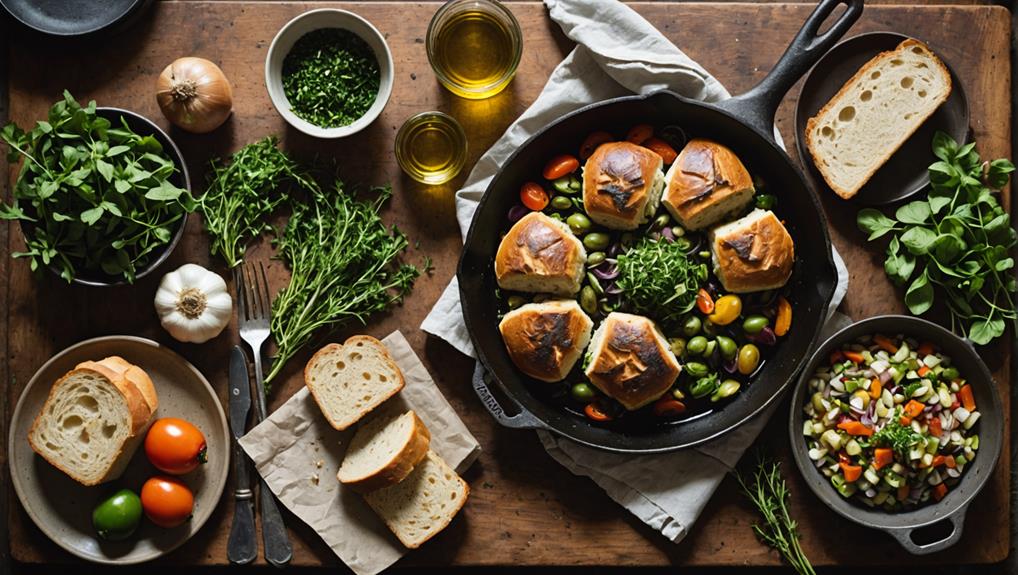
When you sauté, braise, and poach, you not only enhance flavors but also transform textures and elevate your dishes to new heights. Each of these rustic French cooking techniques brings something unique to the table, whether it's the caramelized richness of sautéing or the tender succulence achieved through braising. Poaching, with its gentle immersion, maintains the integrity of delicate ingredients. Understanding how to master these methods can greatly impact your culinary repertoire, but what specific tips and tricks can help you achieve the best results?
Need cookware for your meal? Toolbox, a Pear to Pear rental marketplace, might be worth a look.
Quick Takeaways
- Sautéing enhances flavors by caramelizing natural sugars, ideal for vegetables and proteins while locking in moisture.
- Braising transforms tough meats into tender dishes through searing and slow cooking with aromatic vegetables and liquid.
- Poaching gently cooks delicate ingredients in simmering liquid, preserving textures and enhancing flavors with herbs or spices.
- Olive oil is a key ingredient, adding richness and depth to rustic French dishes during sautéing and braising.
Sautéing for Flavor Enhancement
Sautéing is a powerful cooking technique that transforms simple ingredients into a symphony of flavors by quickly caramelizing their natural sugars over high heat. This method is particularly beloved in rustic French cuisine, where the focus is on pure, vibrant flavors. Using olive oil as your fat of choice brings a delightful richness and enhances the overall taste of your dish.
To achieve the best results, always preheat your pan and guarantee your ingredients are added in a single layer. This promotes even cooking and browning, allowing those essential ingredients to shine. As you stir or toss the food, you'll notice how the Maillard reaction works its magic, creating a tempting aroma that fills your kitchen.
Sautéing is ideal for vegetables and proteins alike, effortlessly locking in moisture while developing complex flavors. Imagine sautéed mushrooms, glistening with olive oil, or tender chicken pieces kissed by the heat. Each bite promises to elevate your dining experience, making the meal memorable for everyone you serve.
Embrace this technique, and you'll soon discover the joy of crafting flavorful dishes that reflect the heart of rustic French cooking.
Braising for Tenderness
Building on the vibrant flavors achieved through sautéing, braising offers a transformative technique that turns tougher cuts of meat into tender, melt-in-your-mouth delights by combining both high-heat searing and slow, moist cooking.
This method begins with searing your meat at a high temperature, developing a rich, brown crust through the Maillard reaction, which is essential for depth of flavor.
Once seared, you'll add aromatic vegetables like onions and carrots, followed by a small amount of liquid—perhaps broth or wine. Cover the pot and let it simmer over low heat or in the oven for several hours. This slow cooking process breaks down collagen and connective tissues, resulting in incredible tenderness.
Classic French dishes like Coq au Vin and Beef Bourguignon exemplify the beauty of braising, where the meat absorbs the cooking liquid's flavors, creating a sumptuous sauce to serve alongside.
Mastering this technique is key to rustic French cuisine, allowing you to impress your guests with hearty, flavorful meals that showcase the art of braising. You'll find that each bite tells the story of patience and care in your cooking.
Poaching for Delicate Textures
Poaching gently immerses ingredients in simmering liquid, preserving their delicate textures and enhancing their natural flavors with a subtle touch. This technique is particularly ideal for crafting exquisite French dishes, where the goal is to showcase fresh ingredients in their finest form. By maintaining a poaching temperature between 160°F and 180°F, you guarantee that proteins like fish, eggs, and poultry remain tender without losing moisture.
When you choose your poaching liquid, consider using aromatic herbs, spices, or even a splash of wine for added depth. These elements not only elevate the flavors but also complement the dish's overall profile, embodying the essence of haute cuisine. For instance, a perfectly poached egg served with hollandaise sauce can transform breakfast into a gourmet experience.
Pairing your poached creations with complementary sauces, like beurre blanc for fish, adds another layer of sophistication. As you embrace poaching, you'll find it's an art that delivers delicate textures while allowing you to impress your guests with elegant, flavorful meals that reflect the heart of French culinary tradition.
Common Questions
What Are the 7 French Cuisine Techniques?
In French cuisine, you'll master techniques like sautéing, braising, poaching, roasting, emulsifying, blanching, and confit. Each method brings unique flavors and textures, allowing you to create delightful dishes that impress your guests and elevate your cooking.
What Are the Six Foundations of French Cooking?
Did you know that over 80% of French cuisine relies on six foundational sauces? Mastering Béchamel, Velouté, Espagnole, Tomato, Hollandaise, and Mayonnaise lets you elevate your cooking, impressing guests with rich flavors and delightful textures.
What Are the Three Secrets of French Cooking?
The three secrets of French cooking are mastering mise en place, focusing on high-quality ingredients, and perfecting sauces. These elements help you create memorable meals that impress and delight those you serve.
What Are 4 Characteristics of French Cooking?
French cooking's characteristics include high-quality ingredients, balanced flavors, aesthetic presentation, and a focus on techniques like sautéing. You'll create dishes that not only taste amazing but also look visually stunning for your guests.
Wrapping Up
In the world of rustic French cooking, mastering sautéing, braising, and poaching is like opening a treasure chest of flavors.
Each technique dances with your ingredients, transforming the ordinary into the extraordinary.
Whether you're coaxing out rich caramel notes, tenderizing hearty meats, or preserving the gentle essence of fresh produce, these methods invite you to savor every bite.
So grab your apron, and let the magic of these timeless techniques whisk you away into a culinary adventure!