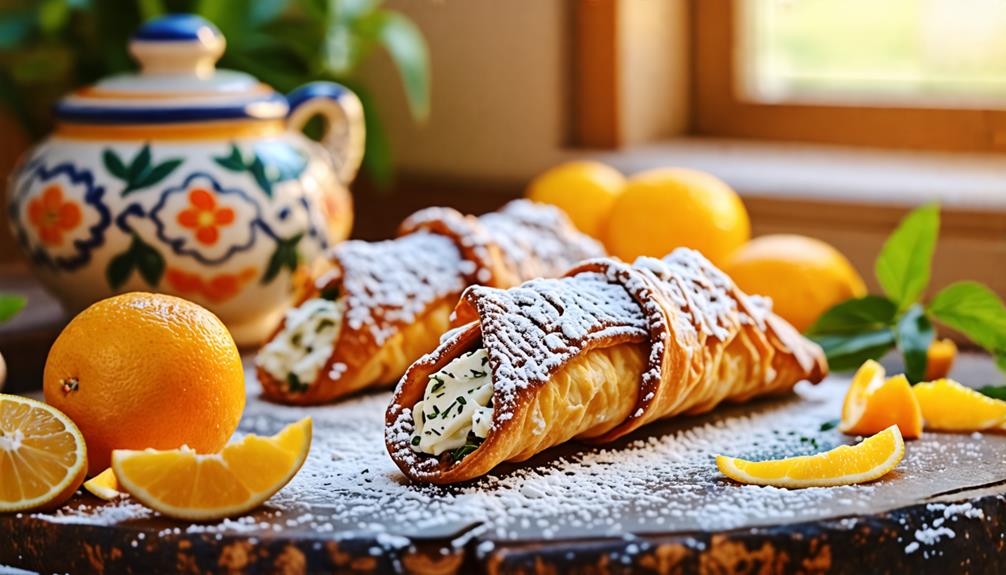
Many people might not realize that Malta's culinary landscape is deeply intertwined with its history of trade and cultural exchange. This connection profoundly influences the authenticity of its cannoli recipe, which boasts unique ingredients and preparation techniques that set it apart from its Sicilian counterparts. By examining the specific choices in flavors and methods, one can uncover the story behind each bite. What makes this Maltese version so distinct, and how do these elements create a link to the island's rich heritage?
Need cookware for your meal? Toolbox, a Pear to Pear rental marketplace, might be worth a look.
Quick Takeaways
- The recipe uses full-fat sheep's milk ricotta, essential for achieving the rich flavor and creamy texture characteristic of authentic Maltese cannoli.
- Incorporation of traditional ingredients like Marsala wine and vinegar in the dough ensures a unique flavor and optimal shell texture.
- Flavor variations, such as candied citrus peel and dark chocolate, reflect local preferences and enhance the authenticity of the filling.
- The preparation methods, including precise frying temperatures and dough consistency, align with traditional techniques passed down through generations.
- The distinct spelling "kannoli" emphasizes its cultural significance, showcasing Malta's culinary heritage and connection to Sicilian traditions.
Overview of Maltese Cannoli
Maltese cannoli, or "kannoli," is a beloved dessert that captures the essence of Malta's rich culinary heritage. This traditional treat features a sweetened ricotta filling, encased in a deep-fried, bow-shaped shell that reflects the island's Sicilian influences. The distinct spelling "kannoli" signifies its cultural adaptation, showcasing Malta's unique take on a classic dessert.
Authentic Maltese kannoli often surprises the palate with delightful flavor variations, incorporating local ingredients like chocolate, nuts, and candied peel. These additions not only enhance the taste but also highlight the importance of local produce in Maltese cuisine.
The preparation of kannoli brings families together, as they gather for festive occasions and family celebrations, reinforcing its role in Maltese cultural traditions. Each bite of this delectable dessert serves as a reminder of the familial connections and shared heritage that Maltese people cherish.
The act of preparing and sharing kannoli is more than just a culinary endeavor; it's a celebration of life, love, and the rich traditions that bind generations together. Serving this delightful dessert at gatherings guarantees that the Maltese heritage continues to thrive in homes around the world.
Historical Significance of Cannoli
Celebrating the rich history of cannoli reveals its deep-rooted significance in Italian culture, especially during festive occasions like Carnival. Originating from Sicily, these delightful pastries symbolize indulgence and joy, often enjoyed in vibrant celebrations. The earliest written mention of cannoli dates back to the 18th century, particularly linked to the town of Caltanisetta, marking their long-standing presence in Italian cuisine.
Legends suggest that nuns in Caltanisetta were the ingenious creators of cannoli, combining religious traditions with culinary artistry. This historical backdrop not only enriches the dessert's narrative but also highlights its authentic roots within Italian communities.
The term "cannoli," meaning "little tubes" in Italian, aptly describes the pastry's unique shape, which has captivated palates for generations.
Over time, cannoli have evolved, showcasing various fillings and flavors, yet they remain an essential element in both traditional Italian and Italian-American festivities. By serving cannoli, one shares a piece of history, a symbol of celebration, and a proof of the enduring legacy of authentic Italian cuisine.
This beloved treat continues to bring people together, reminding all of the joyous moments that food can create.
Key Ingredients for Authenticity
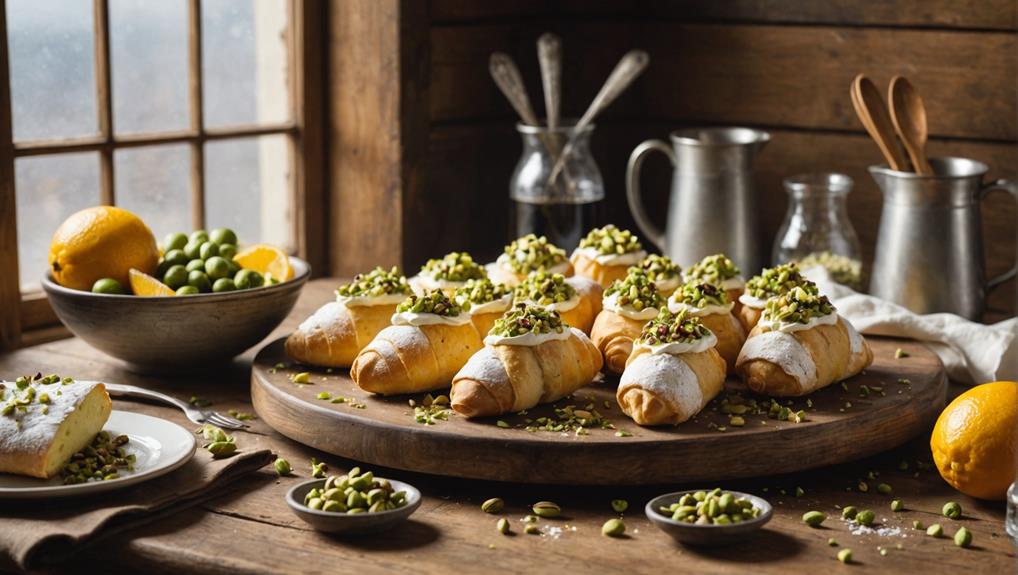
Crafting authentic cannoli hinges on selecting the right ingredients that not only elevate the flavor but also preserve the pastry's traditional essence.
At the heart of this delightful treat is full-fat sheep's milk ricotta, renowned for its rich flavor and creamy texture. This ingredient sets Maltese cannoli apart from others that typically use cow's milk ricotta.
The dough for the shells benefits immensely from the inclusion of Marsala wine, which imparts a unique flavor while ensuring a tender, flaky texture. A touch of vinegar further enhances the dough's elasticity, preventing the shells from becoming overly hard after frying.
To create that signature filling, many bakers incorporate candied citrus peel and dark chocolate, reflecting the traditional Maltese palate that cherishes these vibrant flavors.
Each bite delivers a delightful contrast, enriching the overall taste experience.
Traditional Preparation Methods
When it comes to preparing authentic cannoli, the process is as important as the ingredients themselves. Traditional preparation methods begin with creating the perfect cannoli shells. The dough is rolled out to a thin layer using a rolling pin, guaranteeing it's delicate yet sturdy enough to hold the luscious ricotta filling.
Once rolled, the dough is shaped into bows and sealed with egg whites, preventing any unwelcome surprises during frying. Maintaining the right frying temperature is essential, typically around 180-200°C (350-400°F). This guarantees the cannoli shells achieve a beautiful golden-brown color while remaining crispy.
The delicate balance of heat allows for a perfect shell that complements the rich, creamy filling made from full-fat ricotta cheese. After frying, a dusting of icing sugar adds a final touch of elegance and sweetness, elevating the visual appeal of the dish.
Each step in this traditional preparation method is designed to celebrate the rich heritage of Maltese cannoli, making it not just a dessert but a cherished experience to share with others. The result is a delightful treat that embodies authenticity and joy, perfect for serving at any special occasion.
Regional Variations and Influences
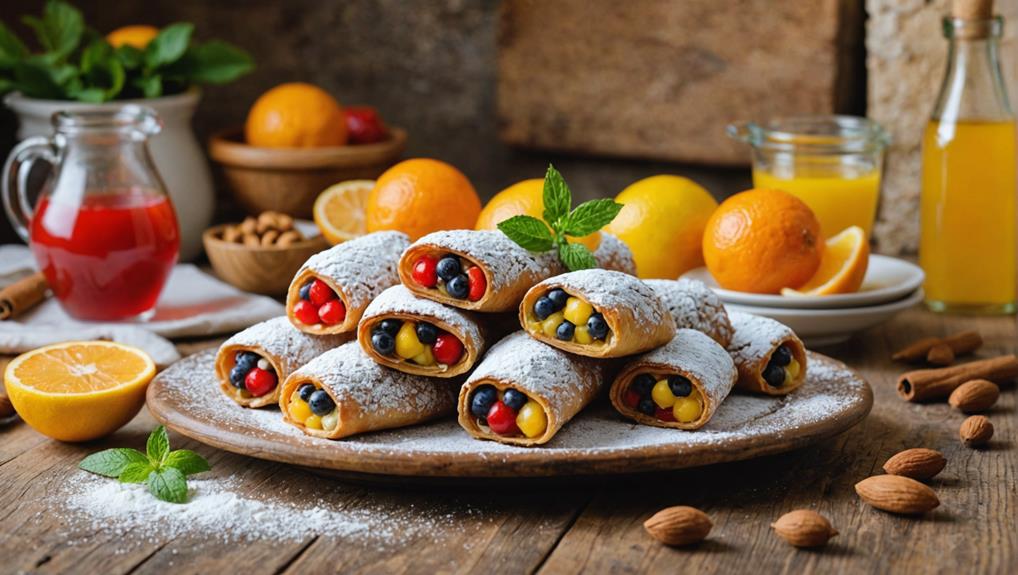
Maltese kannoli showcase a rich tapestry of historical culinary connections, particularly influenced by Sicilian traditions established during centuries of shared rule.
The unique local ingredient preferences, such as sweetened ricotta often mixed with chocolate and nuts, reflect Malta's distinct culinary identity.
Additionally, while preparation methods may echo Sicilian practices, the emphasis on full-fat ricotta elevates the flavor profile, creating a dessert that's both familiar and uniquely Maltese.
Historical Culinary Connections
While the roots of kannoli trace back to Sicily, Malta's version, known as "kannoli," reveals a rich tapestry of historical influences that have shaped its unique identity. The distinct spelling underscores its cultural significance, reflecting the historical ties between Malta and Sicily, especially during the Arab and Norman rule from 827 to 1091 AD.
Maltese kannoli typically features sweetened ricotta, much like its Sicilian counterpart, yet it often incorporates local flavors such as chocolate and nuts, showcasing Malta's culinary traditions. The preparation of kannoli in Malta emphasizes the use of full-fat ricotta, ensuring a creamy, rich filling that honors its Sicilian roots while enhancing its authenticity.
Malta's cuisine is a delightful blend of various influences, including British, Spanish, and French, contributing to a diverse food landscape that sets the stage for its beloved kannoli.
Each bite of a Maltese kannoli offers a glimpse into its storied past, making it not just a dessert but a culinary connection to the island's vibrant history. By enjoying this treat, one partakes in a tradition that celebrates the cultural amalgamation and shared heritage of the Mediterranean.
Local Ingredient Preferences
Local ingredient preferences play an essential role in shaping the unique flavors of kannoli, with each bite revealing a rich tapestry of regional influences.
In Malta, full-fat ricotta cheese sourced from local producers lends an unparalleled creaminess that distinguishes these treats from their cow's milk counterparts. The use of citrus zest adds a revitalizing brightness, a nod to the island's Mediterranean climate, while local nuts introduce a delightful crunch.
Maltese culinary creativity shines through in the fillings, often featuring ingredients like chocolate, candied fruit, or even local honey, ensuring each kannoli is a celebration of authentic flavors.
The pastry dough, too, showcases local character by incorporating Marsala, a wine that deepens the taste and connects the dish to Malta's esteemed wine production.
Additionally, the regional influences of Sicilian cuisine are evident, as historical ties between the two areas have shaped these culinary traditions.
This blend of local ingredients not only honors Maltese heritage but also creates a delightful experience for those enthusiastic to savor a true taste of Malta, making these kannoli an exceptional offering for any gathering.
Preparation Method Differences
Exploring the preparation methods for kannoli reveals a fascinating blend of regional variations and influences that shape these beloved pastries.
In Malta, the dough often incorporates vinegar or liqueurs, a technique borrowed from both Sicilian and Maltese culinary traditions. This unique approach lends a distinct tang to the pastry, setting it apart from its Sicilian counterpart.
When it comes to the filling, Maltese chefs favor full-fat cow's milk ricotta, which offers a creamier texture and milder flavor compared to the sheep's milk ricotta commonly used in Sicily. This choice, along with the use of local spices, enhances the overall taste profile.
Additionally, while traditional Sicilian fillings might stick to ricotta and candied fruit, Maltese variations often embrace creativity, featuring alternative fillings like chocolate, nuts, or flavored creams.
Frying techniques also showcase regional influences. Maltese cooks sometimes utilize a wok or other unconventional methods, adapting their approach to fit the island's diverse culinary landscape.
This combination of ingredients and methods highlights the unique preparation of Maltese kannoli, making them a delightful treat that reflects the island's rich agricultural practices and cultural heritage.
Cooking Techniques for Perfect Shells
To create the ideal cannoli shells, achieving the right dough consistency and mastering frying temperature are essential.
Rolling the dough to a thin 1/8-inch thickness secures a delightful crispness, while precise temperature control during frying assures a golden-brown finish.
Dough Consistency and Handling
Getting the dough just right is the cornerstone of crafting authentic Maltese cannoli shells. The ideal dough consistency is smooth and pliable, allowing for easy rolling and shaping around molds. When preparing the pastry dough, it's vital to roll it thinly to about 1/8 inch. This thickness creates crispy fried shells that maintain their shape during the frying process, ensuring a delightful crunch with every bite.
Before rolling, it's important to rest the dough for at least 30 minutes, covered to prevent drying out. This resting period enhances flexibility, making handling much easier. A light dusting of flour on the work surface and rolling pin is important; it prevents sticking and allows the dough to be maneuvered without tearing.
When wrapping the dough around the molds, care is key. Applying excessive pressure can lead to fragile shells that may break during frying. Instead, gently and evenly wrap the dough, ensuring it clings well without compromising its integrity.
Mastering these techniques will elevate the cannoli-making experience, allowing hosts to serve delightful treats that are sure to impress their guests.
Frying Temperature Control
Once the dough is perfectly prepared and shaped, the next step in crafting authentic Maltese cannoli involves mastering the frying process. The key to achieving those golden-brown, crispy cannoli shells lies in precise oil temperature control. Maintaining the oil temperature between 180°C to 200°C (350°F to 400°F) is essential; this guarantees the shells fry evenly without burning.
To achieve the desired crispiness, here are some vital tips:
- Use a kitchen thermometer to monitor oil temperature accurately, preventing fluctuations that could lead to greasy cannoli.
- Fry cannoli shells individually; this allows them ample space to cook evenly and crisp up without overcrowding the pot.
- Adjust frying time based on shell thickness—thinner shells typically take 2-4 minutes, while thicker ones may require a bit longer.
If the oil temperature is too low, the shells absorb excess oil, leading to a greasy texture. Conversely, if it's too hot, they burn before cooking through.
Filling Options and Flavor Enhancements
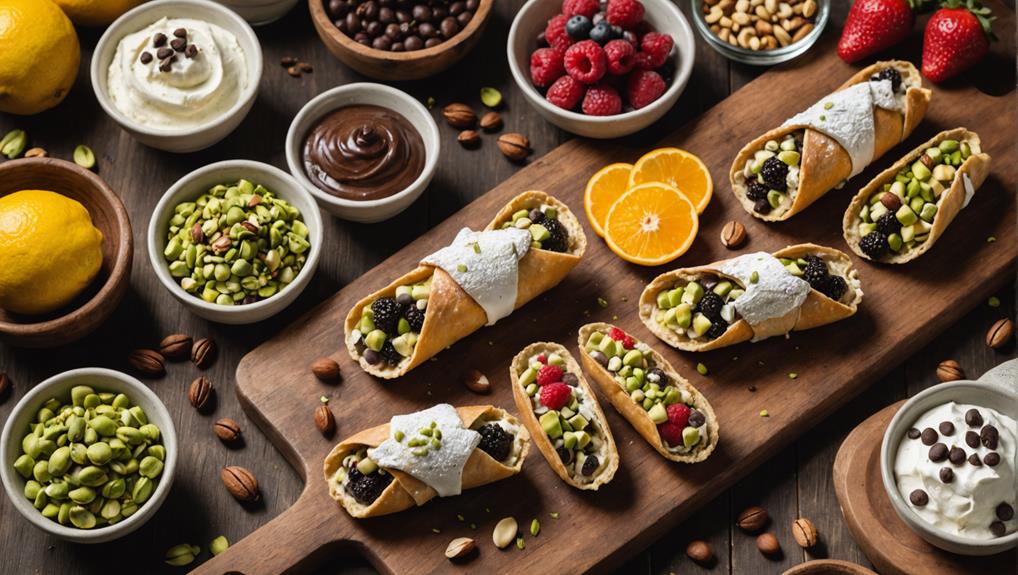
The filling of a Maltese kannoli is where the magic happens, turning a simple pastry into a delightful indulgence. This traditional filling, crafted from sweetened full-fat ricotta, offers a creamy base that elevates the entire dessert. Unlike lower-fat alternatives, this rich ricotta enhances both flavor and texture, creating a luscious experience for anyone fortunate enough to enjoy it.
In addition to the classic filling, flavor enhancements bring a vibrant twist to the dish. A hint of citrus zest, whether from lemon or orange, adds a revitalizing brightness that balances the richness of the ricotta. For those looking to add even more depth, mixing in chocolate chips or candied peel introduces delightful surprises with every bite.
Some variations take it a step further by incorporating floral notes through rose or orange flower water, reminiscent of Mediterranean desserts.
To provide a satisfying crunch, crushed nuts like pistachios or almonds can be folded into the filling or sprinkled on top. These options not only enhance the flavor but also create a visually appealing treat, ensuring that every serving of Maltese kannoli is a true celebration of culinary artistry.
Cultural Connections to Kannoli
Maltese kannoli, with its rich filling and vibrant flavors, serves as a delicious representation of the island's unique cultural heritage. This delightful dessert, a variant of Sicilian cannoli, reflects Malta's historical ties to Sicily, showcasing a blend of culinary traditions that have evolved over centuries. The distinct spelling "kannoli" emphasizes its cultural significance, highlighting its roots in Maltese heritage.
Many families treasure kannoli for its connection to special occasions and gatherings, and its presence on festive tables evokes feelings of nostalgia and community. The traditional filling, sweetened ricotta, is often enhanced with local ingredients, creating a unique taste that symbolizes the fusion of flavors in Maltese cuisine.
- Family recipes passed down through generations guarantee that culinary traditions remain alive.
- Kannoli brings people together during celebrations, reinforcing familial bonds.
- Its rich flavors tell stories of Malta's diverse history and cultural influences.
Tips for Serving and Presentation
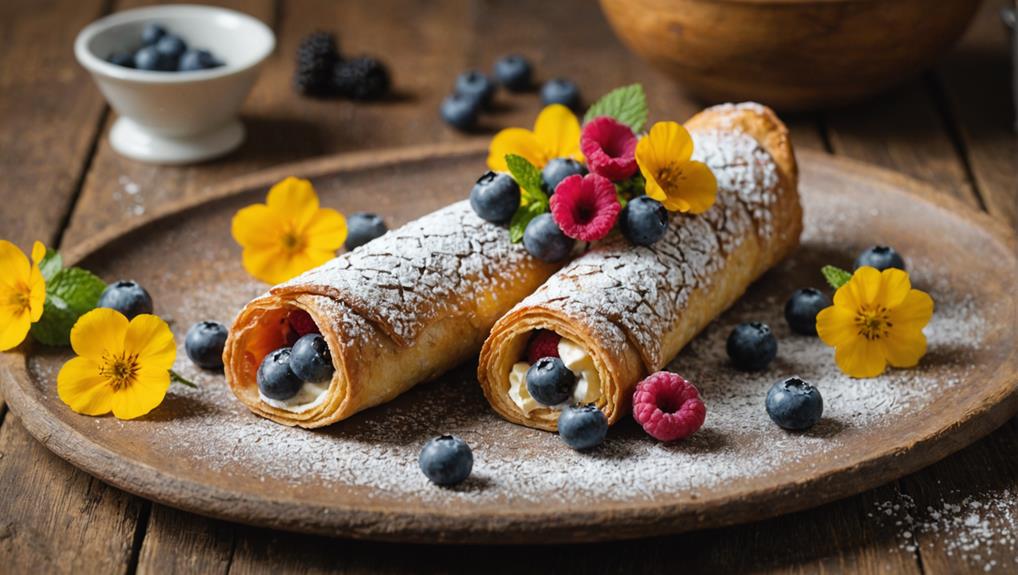
Creating an unforgettable experience with kannoli hinges on thoughtful serving and presentation. To guarantee the best texture and flavor, serve Maltese cannoli immediately after filling, preserving the crispness of the shell and preventing sogginess.
Just before serving, dust the filled cannoli with icing sugar for an elegant touch that enhances visual appeal and adds a hint of sweetness.
For a beautiful display, consider garnishing the ends of the cannoli with chopped pistachios or almonds. This not only introduces a delightful crunch but also elevates the dish's overall aesthetic.
Pair the cannoli with a strong espresso or cappuccino; the rich coffee complements the dessert's sweetness, creating a traditional Italian dining experience.
Present the cannoli on a decorative platter, perhaps accompanied by candied fruit or a drizzle of chocolate sauce. This inviting visual display entices guests and accentuates the authenticity of the dish.
Legacy of Maltese Culinary Traditions
Maltese culinary traditions thrive on the rich tapestry of the island's history, with recipes like kannoli serving as a bridge between generations.
These cherished dishes not only preserve techniques but also embody the cultural identity and shared memories of families.
As Maltese cuisine evolves, it continues to celebrate its heritage while adapting to modern tastes, ensuring that the essence of community remains at its core.
Generational Recipe Preservation
Preserving culinary traditions has become an essential aspect of Maltese culture, with family recipes acting as cherished heirlooms passed down through generations. The authenticity of dishes like kannoli is safeguarded through this generational recipe preservation, ensuring that each bite carries the weight of cultural identity and culinary heritage.
Families often engage in the traditional preparation techniques that make these recipes truly special. These techniques aren't merely about cooking; they embody a way of life and connection among generations.
Key elements include:
- Locally sourced ingredients: Full-fat ricotta and other fresh components are vital for that authentic taste.
- Family gatherings: The act of making kannoli often turns into a beloved family event, fostering bonds and shared memories.
- Immigrant traditions: Maltese families abroad recreate these recipes, bridging their past with their present and keeping their culinary heritage alive.
Through these practices, the act of making kannoli transcends mere cooking; it becomes a celebration of Maltese culture, strengthening emotional connections and community ties.
Each cannoli crafted is a reflection of the enduring legacy of Maltese culinary traditions, cherished and preserved for future generations.
Cultural Identity and Heritage
The rich tapestry of Maltese culinary traditions reflects a deep cultural identity shaped by historical influences and local pride. Maltese kannoli, a delightful variation of Sicilian cannoli, showcases the island's unique heritage, influenced by Arab and Norman rule. The distinct spelling "kannoli" underscores the pride Maltese people take in their culinary differences, celebrating flavors that are authentically their own.
Filled with sweetened ricotta, often from full-fat sheep's milk, these pastries emphasize the significance of quality ingredients, ensuring that each bite bursts with rich flavors. Family recipes, treasured and passed down through generations, serve as a crucial link to Maltese identity, connecting individuals to their ancestors and the land.
Moreover, the preparation and enjoyment of kannoli during family gatherings and local festivities highlight their role in fostering community bonds. Sharing these treats strengthens ties among friends and family, creating lasting memories and celebrating a rich culinary legacy.
Ultimately, Maltese kannoli is more than a dessert; it's a delicious embodiment of cultural heritage, bringing people together while preserving the authentic flavors of Malta for future generations.
Common Questions
What Is an Authentic Cannoli Made Of?
An authentic cannoli boasts a crispy shell made from flour, sugar, and fat, complemented by a rich filling of sheep's milk ricotta. Flavorings like vanilla and chocolate chips elevate its delightful taste, making it irresistible.
What Is the Cultural Significance of the Cannoli?
The cannoli embodies cultural significance, representing communal joy and heritage. Families gather to celebrate occasions, sharing stories and recipes. This beloved dessert fosters connections, bridging generations while preserving the rich culinary traditions of Malta and Sicily.
What Nationality Makes Cannoli?
Cannoli, cherished by many, originate from Italy, specifically Sicily. While Italians perfected this delightful pastry, Maltese culture embraced it too, crafting their own version, known as "kannoli," infusing unique flavors that captivate every palate.
What Is the Difference Between Sicilian and Regular Cannoli?
The difference between Sicilian and regular cannoli lies in their fillings, shells, and garnishes. Sicilian versions often use sheep's milk ricotta, Marsala wine, and distinctive toppings, showcasing a rich, authentic flavor profile unique to the region.
Wrapping Up
In the heart of Malta, each bite of these authentic cannoli tells a story, weaving together rich flavors and cherished memories. The delicate crunch of the shell gives way to the creamy, sweet filling, transporting taste buds on a nostalgic journey through time. As families gather to share these delightful treats, they celebrate not just the food, but the enduring legacy of tradition and love that binds them together, ensuring that the spirit of Maltese culinary artistry lives on.