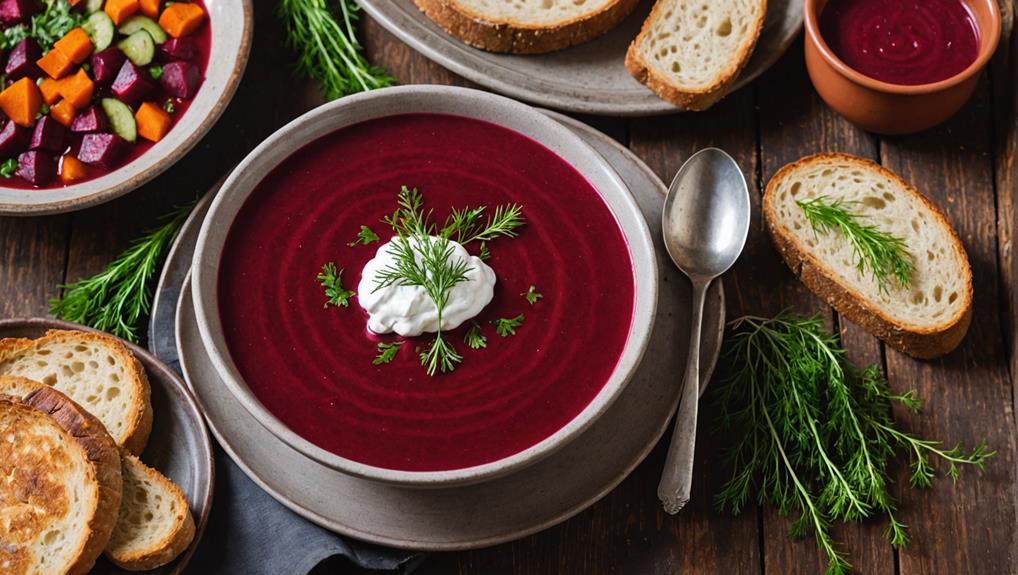
Isn't it fascinating how a humble root vegetable can transform into a beloved dish across cultures? In Eastern Europe, beet soup takes on various forms, each telling a story of tradition and local ingredients. From the hearty Ukrainian borscht to the chilled Lithuanian šaltibarščiai, these variations not only satisfy the palate but also connect people to their heritage. You might be surprised by the unique twists each country adds. Let's explore these five distinct versions and uncover what makes each one special.
Need cookware for your meal? Toolbox, a Pear to Pear rental marketplace, might be worth a look.
Quick Takeaways
- Ukrainian Borscht: A hearty soup made with beets, cabbage, and potatoes, served hot or cold, often topped with sour cream and dill.
- Russian Beetroot Soup: Rich beef broth soup featuring beets and cabbage, typically served hot, with cold variations like kholodnik available in summer.
- Polish Barszcz Czerwony: A traditional beet soup commonly enjoyed on Christmas Eve, often served with uszka dumplings and enhanced with vinegar or lemon juice.
- Lithuanian Šaltibarščiai: A refreshing chilled beet soup made with sour cream and buttermilk, garnished with cucumbers and boiled eggs, perfect for summer.
Ukrainian Borscht
Ukrainian borscht, a vibrant and hearty beet soup, invites you to savor its rich flavors and comforting warmth, making it a beloved staple in homes across Ukraine. This delightful dish typically features beets, cabbage, potatoes, carrots, onions, and garlic, all simmered together to create a nutritious meal.
When you follow a Ukrainian borscht recipe, you'll discover how meat stock adds depth to the flavor, but you can also opt for a meatless version using vegetable broth and beans for a hearty twist.
As you prepare this beetroot soup, don't forget the finishing touches! A generous dollop of sour cream adds creaminess, while fresh dill brings a burst of freshness that elevates each bite.
Perfect for family gatherings, borscht not only nourishes the body but also nurtures the spirit, symbolizing heritage and community. Whether served hot or cold, this Eastern European classic warms hearts and homes alike.
Russian Beetroot Soup
Rich in tradition and flavor, Russian beetroot soup, or borscht, captivates with its vibrant hue and hearty ingredients, making it a staple in many Russian households. This beloved dish showcases the deep red color from beets, combined with a medley of vegetables and savory meats, creating a warm embrace in every bowl.
To elevate your borscht experience, consider these key ingredients:
- Beets: The star of the show, providing that signature red color.
- Cabbage: Adding a crunchy texture and subtle sweetness.
- Carrots: Enhancing both flavor and nutrition.
- Beef broth: Forming a rich, savory base.
Traditionally served hot, you might also discover a revitalizing cold version called kholodnik during summer. Each spoonful, accompanied by garlic pampushky or rye bread, invites you to savor the essence of Eastern Europe.
Whether you're gathering friends or family, borscht is more than just a meal; it's a heartfelt connection to culture, flavor, and togetherness.
Polish Barszcz Czerwony
Polish Barszcz Czerwony tantalizes the senses with its striking red hue and a harmonious blend of sweet, earthy flavors, making it a cherished dish at family gatherings and festive celebrations. This traditional beet soup is a staple in Polish cuisine, often served hot and garnished with a dollop of sour cream and a sprinkle of fresh herbs like dill or parsley.
The vibrant color of Barszcz Czerwony comes from beets, complemented by the earthy flavor of potatoes, carrots, and onions. Some variations even incorporate meat or mushroom stock for a vegetarian delight. A splash of vinegar or lemon juice adds a delightful acidity, balancing the sweetness of the beets.
During Christmas Eve, this soup holds special cultural significance, often accompanied by uszka—small dumplings filled with mushrooms or meat. As you serve this delightful beet soup, you're not just offering a meal; you're sharing a piece of Polish heritage that brings families together, celebrating traditions and creating lasting memories.
Whether for a holiday feast or a cozy family gathering, Polish Barszcz Czerwony is sure to warm hearts and satisfy appetites.
Lithuanian Šaltibarščiai
Following the warm comfort of Polish Barszcz Czerwony, you might find yourself intrigued by the invigorating and vibrant flavors of Lithuanian šaltibarščiai, a delightful cold beet soup that perfectly captures the essence of summer. This rejuvenating dish showcases young beets, adding a stunning pink hue to your table.
When you prepare šaltibarščiai, you'll enjoy a blend of ingredients that not only tantalize the taste buds but also provide nutritional benefits. Here are some key components:
- Cooked and grated beets for that vibrant color and earthy flavor
- Sour cream and buttermilk for a creamy, tangy base
- Chilled potatoes and radishes, adding texture and crunch
- Fresh dill for a burst of aromatic freshness
Served chilled, this soup is often garnished with chopped cucumbers and boiled eggs, making it a perfect dish for warm days.
With its richness in vitamins and fiber, šaltibarščiai not only delights the palate but also nourishes the body, embodying the Lithuanian embrace of fresh, seasonal ingredients.
Romanian Borscht Variations
Romanian borscht, or 'bors de sfeclă,' bursts with vibrant flavors from beets, cabbage, and a medley of meats, making it a comforting staple that showcases the region's culinary diversity. This traditional dish stands out with its unique ingredient: fermented wheat bran. This addition gives the borscht a distinctive sourness that balances the sweetness of the beets beautifully.
When preparing Romanian borscht, you'll often find a hearty mix of ingredients. While beets and cabbage form the base, many variations include potatoes and carrots, adding depth and texture. Smoked meats, such as sausage or bacon, infuse the soup with rich, savory notes that elevate its flavor profile.
Typically served hot, Romanian borscht can also be enjoyed cold during the summer months, making it an adaptable dish for any season. Don't forget to top each bowl with a dollop of sour cream, which adds a creamy finish that ties all the flavors together.
Pair your borscht with a side of polenta or crusty bread for a complete meal that reflects Romania's agricultural heritage. Your guests will appreciate this delicious, wholesome dish at any gathering!
Common Questions
Are There Different Types of Borscht?
Yes, there are various types of borscht, each uniquely reflecting regional ingredients and flavors. You'll find versions with mutton, poultry, or even a cool cold option, ensuring something delicious for everyone at your table.
What Is the Difference Between Russian and Ukrainian Borscht?
When you compare Russian and Ukrainian borscht, you'll notice Ukrainian borscht is richer in beets and flavors, while Russian borscht leans toward a lighter broth, often featuring different meats and toppings to enhance the experience.
What Is the Difference Between Polish and Ukrainian Borscht?
When it comes to borscht, you've got two flavors to savor. Polish borscht offers a sweeter, clearer soup, while Ukrainian borscht packs a robust punch with hearty vegetables and meats. Each one's distinct, satisfying your guests' appetites!
What Is Borscht Made of in East Europe Soup?
Borscht in Eastern Europe features vibrant beets, hearty cabbage, potatoes, and aromatic onions. You'll often find it enriched with meat broth, garlic, dill, and a touch of vinegar, creating a comforting, flavorful experience for everyone.
Wrapping Up
As you savor these traditional Eastern European beet soups, you're not just tasting a dish; you're experiencing a vibrant tapestry of culture and history woven together with each spoonful.
Each variation tells a story, inviting you to share in the warmth and comfort of family traditions.
So, whether it's the hearty Ukrainian borscht or the revitalizing Lithuanian šaltibarščiai, let these soups nourish your body and soul, turning your meal into a cozy gathering around the hearth of heritage.