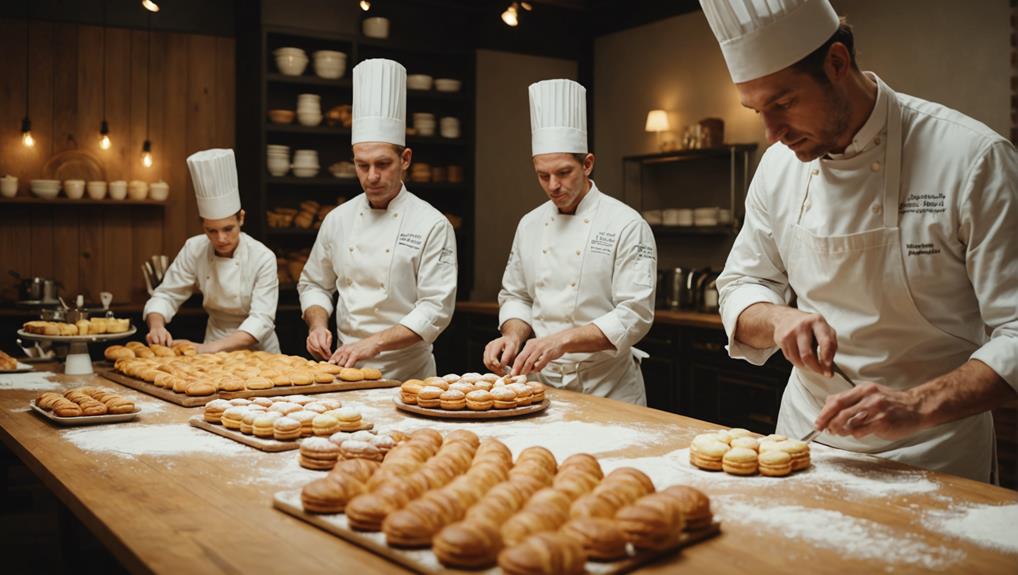
When you think about mastering classic French pastries, it's clear that certain techniques are non-negotiable. You'll want to get comfortable with pâte choux for those airy éclairs and pâte feuilletée for the perfect flaky layers. Understanding the nuances of meringue and various doughs, like pâte brisée and pâte sablée, can elevate your baking considerably. But there's more to it than just the basics. Let's explore some essential skills that can transform your pastry creations into something truly remarkable. What's the first technique you should focus on?
Need cookware for your meal? Toolbox, a Pear to Pear rental marketplace, might be worth a look.
Quick Takeaways
- Master pâte choux for airy pastries like éclairs and profiteroles, combining water, butter, flour, and eggs in a cohesive paste.
- Learn pâte feuilletée techniques to create flaky layers through meticulous dough and butter layering, essential for impressive pastries.
- Perfect meringue by whisking egg whites and sugar to stable peaks, utilizing French, Italian, or Swiss methods for various desserts.
- Develop whipped cream techniques, focusing on achieving the right peak for mousses and pastries while balancing fat and liquid for stability.
Pâte Choux Basics
Pâte choux, a magical pastry dough, transforms simple ingredients into airy delights perfect for both sweet and savory creations. This remarkable dough begins with equal parts water and butter, brought to a gentle boil before flour and eggs join the mix.
As you stir vigorously, you'll create a smooth, glossy mixture known as choux paste. It's crucial to cook this paste until it pulls away from the pan, forming a cohesive ball that signals it's ready for piping.
With pâte choux, you can craft classic French pastries like éclairs and profiteroles, each waiting to be filled with luscious crème pâtissière or whipped cream. You'll also discover its savory side, with gougères showcasing the dough's versatility. Imagine serving warm cheese puffs at your next gathering, delighting your guests with every bite.
Mastering pâte choux is an essential pastry technique in French patisserie. As you hone this skill, you'll unveil a world of culinary possibilities, allowing you to serve elegant, homemade treats that impress and satisfy.
Your journey into the domain of classic French pastries begins with this extraordinary dough, setting the stage for countless delectable creations.
Mastering Pâte Viennoise
When you master Pâté Viennoise, you open up a world of sweetness and a tender texture that elevates your breakfast pastries.
This dough's unique balance not only lends itself to delightful flavors but also allows for creative shapes and forms to suit any occasion.
Embracing its versatility, you can craft everything from luscious brioche to elegant rolls, making your mornings truly special.
Sweetness and Texture Balance
Mastering the balance of sweetness and texture in Pâté Viennoise transforms your pastries into delightful morning treats that tantalize the senses. This sweetened, leavened dough is enriched with butter, sugar, and eggs, creating a soft, bread-like consistency that's perfect for breakfast.
However, achieving the ideal sweetness is essential; too much sugar can lead to a dense pastry, diminishing that airy, light texture you desire.
Pay close attention to the fermentation process. Allowing the dough to rest properly not only develops its flavor but also enhances that sought-after structure. A longer resting period can work wonders, giving your pastries an exquisite rise and a golden-brown crust that beckons to be enjoyed.
Experiment with different fillings or toppings to elevate your Pâté Viennoise while maintaining that harmonious balance of sweetness and texture. Whether you choose a rich chocolate filling or a zesty fruit topping, keeping the foundational elements in check guarantees every bite is a celebration.
With practice and passion, you'll create irresistible pastries that bring joy to those you serve, making every morning a little sweeter.
Versatile Breakfast Applications
With its rich, buttery flavor and airy texture, Pâté Viennoise becomes a canvas for endless breakfast creativity, inviting you to explore delightful combinations that awaken your morning routine. This sweetened, leavened dough, often found in classic brioche, is perfect for crafting a variety of mouthwatering breakfast applications that impress your guests and elevate your hosting game.
Consider these versatile options for showcasing your mastery of pâtes Viennoises:
- Fruit-Stuffed Brioche Rolls: Fill with seasonal fruits and a hint of spice for a fresh twist.
- Savory Breakfast Loaves: Incorporate cheese and herbs for a delightful, savory treat.
- Cinnamon Swirl Rolls: Create a rich filling with cinnamon and sugar, topped with a sweet glaze.
As you embrace these applications, remember the importance of proper fermentation techniques. Allow your dough to rise until it doubles in size, ensuring a light and airy finish that will leave your guests craving more.
Enjoy the journey of breakfast creativity!
Techniques for Pâte Feuilletée
Creating pâte feuilletée requires meticulous attention to detail, as you layer dough and butter through a delicate process of folding and rolling to achieve that irresistible, flaky texture.
Start by ensuring your butter and dough are cold; this is essential to keeping the layers distinct. Roll your dough to about 0.5 cm thick and introduce butter in a block form.
Now, the magic happens with the folding technique. Perform three to four 'turns', rolling out and folding the dough methodically each time. After each turn, let the dough rest in the refrigerator. This resting period allows the gluten to relax, ensuring your pastry won't shrink when it bakes.
When you finally bake your pâte feuilletée, look for that golden-brown color, signifying that the layers have puffed up beautifully. The steam from the butter will have worked its wonders, creating those delightful airy pockets.
As you serve your creation, you'll know that your commitment to mastering these techniques has resulted in a stunning pastry that's sure to impress and delight your guests. Enjoy the art of creating something truly exquisite!
Understanding Pâtes Battues
Pâtes battues, or beaten dough, are the heart of many classic French desserts, embodying the delicate balance of air and structure that transforms simple ingredients into airy, tantalizing cakes and cookies. Mastering these techniques is essential for anyone who wishes to impress with French desserts.
To achieve that perfect texture, focus on these key techniques every pastry chef should know:
- Incorporate Air: Whisk egg whites until they form stiff peaks, allowing air to create that signature lightness.
- Folding: Gently fold in flour to preserve the airiness, ensuring your batter remains fluffy and light.
- Timing: Be mindful of when to bake; too long or too short can affect the final texture.
When you master pâtes battues, you open the door to delightful creations like pâte génoise and pâte biscuit, serving as the foundation for desserts like opera cakes and tiramisu.
Your guests will savor each bite, experiencing the culmination of your skill and passion for French pastries. Embrace these techniques, and elevate your dessert game to new heights!
Essential Pâtes Friables
Essential pâtes friables form the backbone of delightful tarts and quiches, offering a crumbly yet cohesive texture that elevates your pastry creations. At the heart of these doughs is pâte brisée, a simple blend of flour, water, salt, and butter that's incredibly versatile. When you master this classic French pastry, you reveal the potential for an array of delectable desserts.
For those sweeter cravings, consider pâte sablée, which adds sugar and eggs to the mix, resulting in a rich, tender crust perfect for tarts and cookies. The secret to achieving that ideal flaky texture lies in the chilling process; don't skip this step! It prevents shrinkage during baking, ensuring your crust maintains its beautiful shape.
As you explore the world of pâtes friables, you'll find they're essential for crafting iconic dishes like tarte au citron and savory quiches. With practice, you'll create pastry bases that impress every guest at your table, transforming simple ingredients into stunning masterpieces. Embrace the art of pâtes friables, and watch your pastry skills soar!
Meringue Mastery
Mastering meringue opens the door to a domain of airy textures and elegant desserts, transforming simple egg whites and sugar into a sublime creation that dazzles the palate.
In the sphere of French pastry, meringue is a foundational technique worth mastering. There are three main types—French, Italian, and Swiss—each with its unique charm. French meringue, while delightful, demands precision, as even a hint of fat can sabotage your efforts.
Here are some essential tips for achieving perfect meringue:
- Ratio Matters: Use a sugar-to-egg white ratio of 1:2 for ideal texture.
- Stiff Peaks: Whip egg whites until they form sharp points that stand upright, vital for decorations.
- Watch for Overmixing: Keep an eye on your mixture to avoid a crumbly texture.
With practice, you'll create meringues that elevate your desserts, whether you're topping a pie or crafting delicate cookies.
Your guests will be enchanted by the lightness and elegance of your creations. Enjoy the journey of meringue mastery!
Cream and Emulsion Skills
Mastering whipped cream is your gateway to creating luscious desserts, whether you're aiming for the airy lightness of Crème Chantilly or the silky smoothness of a mousse.
Emulsions, like ganache and buttercream, require your careful attention to balance fat and liquid, ensuring every bite is heavenly.
Whipped Cream Mastery
To create perfectly whipped cream, you need to start with cold, high-quality cream and a spotless mixing bowl, as these details make all the difference in achieving that velvety texture.
Whipped cream, or Crème Chantilly when sweetened, should be whipped to stiff peaks for ideal texture, making it an essential topping for pastries and desserts.
Here are some tips to master this technique:
- Always chill your mixing bowl; even a warm bowl can hinder proper whipping.
- Stop whipping at very soft peaks for mousses and delicate desserts to maintain a light texture.
- If you overwhip, gently stir in a small amount of liquid cream to restore its smoothness.
Emulsion Preparation Essentials
Building on the skill of whipping cream, understanding emulsions is essential for creating the rich textures and flavors that define classic French pastries. Emulsions are the heart of many beloved treats, allowing you to blend fat and water-based substances seamlessly.
When preparing ganache, for instance, whisk together chocolate and cream in stages, ensuring a smooth emulsion without separation. This process highlights the importance of temperature management; warm fats disperse solids evenly, while cooler temperatures maintain the emulsion's integrity.
As you master this technique, you'll find that the right balance creates a luxurious mouthfeel and enhances flavor.
If you encounter an unstable emulsion that has separated, don't fret! Gently whisk in a small amount of warm liquid to help re-establish the bond between fat and water components. This simple fix can salvage your creation and elevate your pastries.
Baking and Piping Essentials
Baking and piping are fundamental skills that transform simple ingredients into exquisite French pastries, requiring both technique and a delicate touch to achieve perfection. Mastering these techniques is essential when creating delightful treats like choux pastry filled with luscious pastry cream.
To elevate your skills, consider these key tips:
- Fill your piping bags only 2/3 full: This gives you better control and ease during piping, guaranteeing a clean and precise application.
- Pre-chill your piping bag and tools: Keeping everything cool helps maintain the right temperature for delicate mixtures, making the piping process smoother.
- Secure your piping tip: Before filling the bag, confirm the tip is secured to prevent leaks, allowing for flawless decoration and filling.
With these essentials, you'll be well on your way to creating beautifully piped pastries that impress and delight all who indulge. Enjoy the artistry that comes with each delicate swirl and dollop!
Chocolate Techniques Explained
Mastering chocolate techniques is vital for any pastry chef enthusiastic to create stunning confections that not only taste divine but also showcase exquisite craftsmanship.
Begin with tempering chocolate, a critical process that involves melting it to specific temperatures and cooling it to form stable cocoa butter crystals. This guarantees your chocolate boasts a glossy finish and a satisfying snap when set.
Next, consider the artistry of chocolate curls. Spread your tempered chocolate onto acetate sheets and use a pastry comb to sculpt beautiful curls. Allow them to set for a minimum of 10 minutes for the ultimate shine—these delicate decorations will elevate your desserts.
Spraying chocolate adds another layer of sophistication. By mixing it with cocoa butter, you achieve a fluid consistency perfect for creating a velvety shell on frozen treats. Quick application is key; you'll want to act fast to prevent the chocolate from solidifying before it coats your dessert.
General Pastry Preparation Tips
To create exquisite pastries, you can't underestimate the power of mise en place; having everything in its place transforms chaos into a seamless baking experience.
Choosing quality ingredients elevates your creations, ensuring each bite bursts with authentic flavor.
When you combine these elements, you're not just baking—you're crafting a masterpiece.
Importance of Mise En Place
In the world of pastry, having everything in its place isn't just a suggestion—it's the foundation for creating masterpieces with precision and flair. The practice of mise en place transforms the chaos of baking into a harmonious dance, guaranteeing that every ingredient and tool is ready for your artistic touch. By embracing this crucial technique, you're setting yourself up for successful results.
Here are some essential tips for an effective mise en place:
- Pre-measure ingredients: Measure and organize all your ingredients before starting to avoid any last-minute scrambles.
- Read the recipe thoroughly: Familiarize yourself with the instructions, identifying specific techniques and timing requirements.
- Gather tools and equipment: Confirm all necessary tools are within reach to streamline your baking process.
Quality Ingredient Selection
Selecting quality ingredients is essential for elevating your pastry creations, as they directly impact flavor, texture, and the overall success of your baked goods.
Start with high-quality butter—European-style butter is your best bet, boasting a higher fat content that enriches both flavor and texture.
Fresh unbleached flour is equally important; it offers superior protein content, ensuring your doughs, like pâte à choux and pâte feuilletée, achieve that perfect structure and chewiness.
Don't forget your eggs! Opt for large, fresh eggs from free-range chickens; they enhance emulsification and moisture, making your pastries irresistibly tender.
For sweetness, pure cane sugar is the way to go. It dissolves effortlessly and delivers a cleaner taste, enhancing your desserts' overall flavor profile.
Common Questions
What Are the 7 Fundamental Types of Pastry?
You'll delight in exploring seven fundamental types of pastry: pâte choux, pâte viennoise, pâte feuilletée, pâtes battues, and pâtes friables. Each offers unique textures and flavors, perfect for crafting exquisite treats that impress your guests.
What Is the French Method of Pastry?
The French method of pastry is like crafting a delicate symphony; precision and quality ingredients create harmony. You'll master techniques that elevate textures and flavors, ensuring every bite delights those you serve with elegance and finesse.
What Is the Most Famous French Pastry?
You'll find the croissant is arguably the most renowned French pastry. Its flaky, buttery layers invite admiration and delight, making it a perfect choice to serve at breakfast or as a delightful afternoon treat.
What Are the Three 3 Basic Rules for Pastry Making?
When making pastries, you'll succeed by measuring ingredients accurately, using quality components, and controlling temperatures. These foundational rules guarantee your creations delight others with perfect flavors and textures, turning every bite into a memorable experience.
Wrapping Up
By mastering these classic French pastry techniques, you'll transform your baking from humble beginnings to a culinary renaissance.
Embrace the delicate art of pâte choux and the flaky perfection of pâte feuilletée, and watch your creations rise like the Eiffel Tower against the Parisian skyline.
With each skill you hone, you're not just following a recipe; you're weaving a story of tradition and passion that'll delight the senses and leave a lasting impression on everyone who tastes your work.