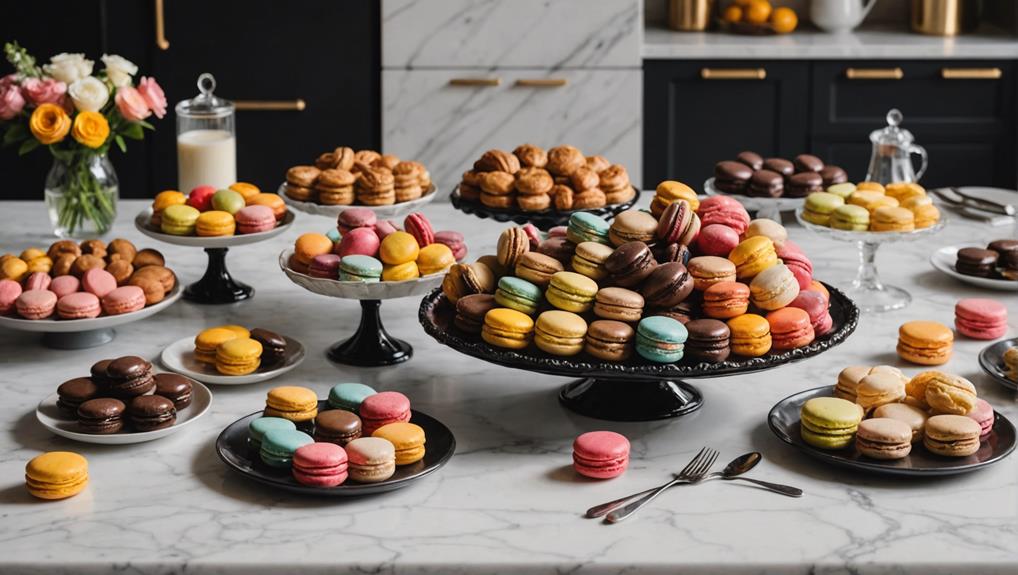
When you think about mastering classic French pastry techniques, it's clear that precision and patience are essential. You'll find yourself crafting everything from flaky pâte brisée to perfectly piped macarons, each requiring a keen understanding of fundamental methods. Temperature control and resting periods are vital for achieving that ideal texture and flavor. But what happens when you throw in a modern twist to these time-honored practices? The results might surprise you, and they could redefine your approach to baking altogether.
Need cookware for your meal? Toolbox, a Pear to Pear rental marketplace, might be worth a look.
Quick Takeaways
- Master pâte brisée for flaky crusts by using cold butter and allowing dough to rest for gluten relaxation.
- Perfect your puff pastry by practicing the lamination technique, ensuring even folding and rolling to create airy layers.
- Achieve flawless macarons through meticulous macaronage, folding dry ingredients into meringue for a smooth batter.
- Control temperatures accurately when making custards like crème brûlée to ensure silky textures and perfect caramelization.
Essential Techniques for French Pastry
Mastering essential techniques for French pastry, like pâte brisée and lamination, is vital to creating flaky, layered desserts that impress.
Start with pâte brisée, where you'll use cold butter and minimal mixing to achieve that desirable flaky texture. Remember, resting the dough is essential; it allows gluten to relax, ensuring a tender crust.
Next, explore the world of puff pastry, the star of lamination. This technique involves folding and rolling butter into your pastry dough multiple times, creating those iconic, airy layers. It requires patience and attention to detail; the temperature of your ingredients and your workspace should remain cool to prevent the butter from melting.
As you refine these essential techniques, don't overlook the importance of precision in your measurements and methods. Each fold, each roll, and each resting period contributes to the final product's quality.
With practice, you'll master the art of French pastry and delight those you serve with beautifully crafted desserts that showcase your skill and dedication. Your journey into the intricate world of French pastry won't only elevate your baking but also bring joy to all who indulge in your creations.
Classic French Pastry Recipes
When you explore classic French pastry recipes, you'll encounter iconic varieties like croissants and macarons that demand precision in technique.
Each pastry showcases essential baking methods, from the delicate lamination of croissant dough to the meticulous macaronage that creates perfect shells.
Mastering these recipes not only enhances your skills but also deepens your appreciation for the art of French pastry.
Iconic Pastry Varieties
French pastries, with their rich history and intricate techniques, invite you to explore a world of flavors and textures that define classic culinary artistry. By mastering the art of these iconic varieties, you can create delicious French pastries that impress and delight.
Start with the croissant, a labor-intensive classic French pastry that requires meticulous lamination of dough with butter. This process, involving multiple folds and chills, results in a light, airy texture.
Then, move on to macarons, where you'll blend almond flour and powdered sugar with whipped aged egg whites, crafting smooth shells that melt in your mouth.
Next, tackle crèeme brûlée, a sumptuous custard dessert that demands precise temperature control for the perfect caramelized sugar topping.
Experience the beauty of Tarte Tatin, an upside-down apple tart, where perfectly caramelized fruit meets flaky pastry.
Finally, try your hand at madeleines, small sponge cakes with a distinctive shell shape, requiring chilled batter for that airy finish.
Each of these pastries showcases the artistry of French baking, offering you the chance to serve others with creations that aren't only visually stunning but also a celebration of flavor and texture.
Essential Baking Techniques
To create classic French pastries, you'll need to master essential baking techniques that assure your results are both authentic and delicious.
Start with pâte brisée, where you'll combine cold butter, flour, and salt without overworking the dough. This guarantees a flaky texture; remember to let it rest to relax the gluten.
Next, tackle pâte feuilletée. This involves a labor-intensive lamination process—rolling and folding dough with butter multiple times to create those airy layers vital for pastries like croissants.
When making macarons, focus on the macaronage technique. Gently fold dry ingredients into whipped meringue until you achieve a smooth batter, perfect for piping uniform circles. Precision is key here, as is the temperature control during custard preparation for desserts like crème brûlée. This assures a silky texture, while caramelizing the sugar topping evenly creates that signature crunchy layer.
For a stunning tarte Tatin, caramelize sugar in a skillet before adding apples, then cover with puff pastry. This technique enhances the dessert's characteristic flavor and texture, assuring your pastries are both impressive and delightful to serve.
Crafting Croissants and Macarons
To master crafting croissants, you'll need to perfect the lamination process, transforming layers of dough and butter into that signature flakiness.
For macarons, achieving the ideal macaronage is essential; it's all about folding ingredients to the right consistency before piping.
Each pastry demands precision and patience, but the results are undeniably rewarding.
Croissant Dough Preparation
Crafting croissant dough requires precision and attention to detail, starting with the careful combination of 500g of strong flour, 10g of salt, 50g of sugar, and 10g of instant yeast in a mixing bowl.
Once you add 300ml of cold water, mix until a dough forms. Knead it until smooth, then chill the dough in the refrigerator for at least 30 minutes. This step is essential for relaxing the gluten, a key aspect of croissant dough preparation.
Next, prepare the butter layer using 250g of cold, unsalted butter. Pound it into a flat square between parchment paper, ensuring it remains cold and pliable for effective lamination.
Roll out the rested dough into a rectangle, encasing the butter in the center by folding the dough over it. Execute a series of folds and chilling periods to develop the vital layers, the building blocks of pastry.
After several turns and chilling sessions, shape the dough into triangles, rolling them tightly. Allow them to proof at room temperature for 2-3 hours, until they double in size, creating the flaky, buttery croissants that pastry chefs aim to perfect.
Macaron Shell Technique
Achieving perfect macaron shells hinges on the meticulous combination of sifted almond flour and powdered sugar, ensuring a smooth texture vital for the final product.
To make your macaron dough, start with 120g of almond flour and 200g of powdered sugar, sifting them well to eliminate any lumps. The key to successful macaronage is folding these dry ingredients into a well-prepared meringue until the batter flows like molten lava; this indicates it's ready for piping.
Once your batter reaches the right consistency, pipe uniform circles on parchment paper, aiming for 3-4 cm in diameter. Allow these piped shells to rest for 30 minutes to form a skin, which is essential for their rise during baking.
Bake your macarons at a steady temperature of 150°C (300°F) for 15-18 minutes, taking care not to overcook them to maintain that chewy texture inside—this is what pastry is known for.
After baking, let the shells cool completely before gently removing them from the parchment to avoid cracking.
Now, pair them with your favorite ganache or buttercream filling for a delightful treat that's sure to impress!
Baking Techniques and Presentation
Mastering baking techniques and presentation is vital for creating exceptional French pastries that not only taste divine but also captivate the eye.
Start by following precise French pastry recipes, verifying you use a thermometer to maintain accurate oven temperatures. This precision is essential; even slight deviations can lead to disappointing results.
For instance, when crafting a Tarte Tatin, caramelize sugar until it reaches a golden hue before adding apples and covering them with puff pastry. Bake at 200°C (400°F) for 25-30 minutes to achieve the ideal texture.
Likewise, your Madeleines require you to chill the batter for at least an hour and bake at 190°C (375°F) for 10-12 minutes to guarantee that signature hump and rise.
Presentation plays a significant role in impressing your friends. Dust your Madeleines with powdered sugar right after baking for that refined touch.
You can also experiment with plating techniques, such as geometric designs or drizzles, to create a glossy finish that elevates your pastries. These techniques not only enhance the visual appeal but also contribute to a memorable dining experience.
Modern Twists and Further Exploration
Innovative flavor combinations and creative adaptations can transform traditional French pastries into modern culinary masterpieces. To elevate your repertoire, experiment with different flavors by infusing classics with unexpected ingredients. Consider incorporating lavender into macarons or matcha into croissants to create modern twists that surprise the palate while retaining the essence of the Art of French Pastry.
Don't overlook dietary preferences; adapt your recipes to include vegan options. Substitute eggs and dairy with plant-based alternatives, ensuring your pastries remain delicious and inclusive. This approach not only broadens your audience but also showcases your versatility as a pastry chef.
Visual appeal is equally essential. Engage in creative plating techniques, utilizing geometric designs, edible flowers, and artistic drizzles to enhance the overall dining experience. These elements can transform a simple dessert into a visual feast.
Best Practices for Pastry Success
To guarantee pastry success, you'll want to prioritize cleanliness and organization in your workspace, as these factors are essential for a smooth and efficient baking process. Remember, pastry requires precision, so use a kitchen scale to weigh your ingredients accurately. Even slight deviations can greatly alter the texture and flavor of your finished product.
When it comes to mixing, make a well in your dry ingredients before adding wet ones. This technique helps incorporate everything evenly. Don't forget to chill your dough adequately; keeping the butter firm is critical for achieving that flaky texture you desire in pastries like croissants and pâte feuilletée.
Monitor your oven temperature with a thermometer to guarantee consistent results. Oven inaccuracies can lead to disappointing outcomes, either undercooked or overcooked pastries.
Finally, practice patience. Allow enough resting time for your doughs and batters. This step is essential for gluten relaxation, which ultimately contributes to the overall success of your pastries.
Common Questions
What Are the Classic French Pastries?
Classic French pastries include croissants, macarons, crème brûlée, tarte Tatin, and pâte à choux. Each demands unique techniques, ensuring you create delightful treats that impress your guests with their exquisite textures and flavors.
What Is the French Method of Pastry?
The French method of pastry demands precision and technique. You'll master doughs like pâte brisée, temper chocolate for gloss, and control temperature meticulously to guarantee your pastries achieve the perfect texture and presentation every time.
What Is the Most Popular Pastry in France?
You've probably heard that the croissant reigns supreme in France. Its flaky layers and buttery goodness capture hearts daily. When you savor one, you're indulging in a piece of French culinary heritage and artistry.
What Are Three 3 Examples of Classical Pastries?
When you explore classical pastries, consider the flaky croissant, delicate macaron, and rich crème brûlée. Each offers unique textures and flavors, perfect for impressing your guests with a touch of French culinary artistry.
Wrapping Up
Mastering classic French pastry techniques isn't just about following recipes; it's a journey of understanding the science behind each step.
It's often said that practice makes perfect, but the truth lies in the balance of precision and creativity.
As you refine your skills, embrace the nuances of temperature and texture, and don't shy away from experimenting with flavors.
By marrying tradition with innovation, you'll not only enhance your baking but also reveal new dimensions in the art of patisserie.