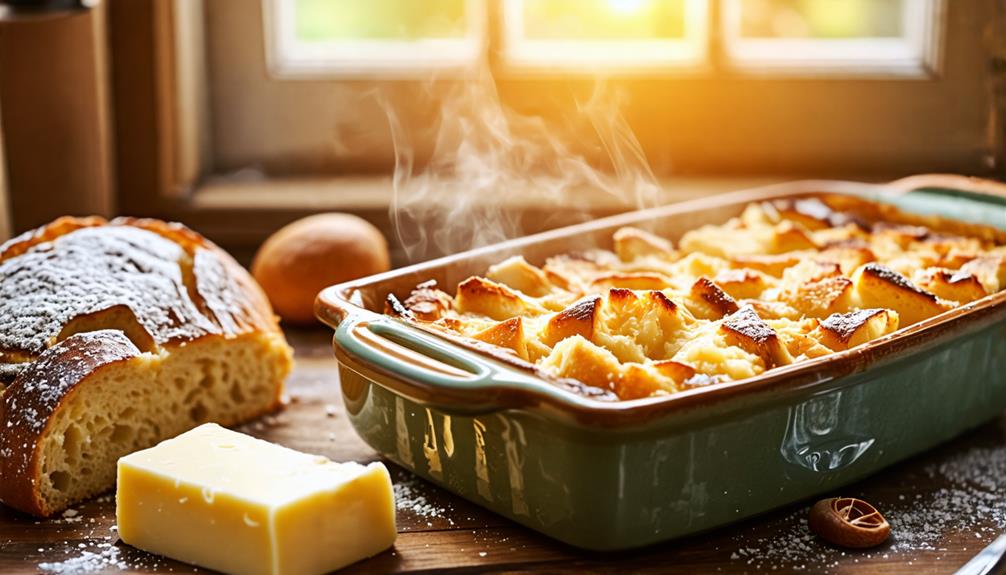
Did you know that bread and butter pudding has been a cherished dessert in British households since the 11th century? Its authenticity stems not just from its age but from the humble ingredients and practical origins that reflect a bygone era. This dessert, often crafted from day-old bread, showcases how resourcefulness can lead to delicious outcomes. But what makes this dish a true representation of cultural heritage and culinary tradition? Let's explore the elements that define its authenticity and the story behind every comforting bite.
Need cookware for your meal? Toolbox, a Pear to Pear rental marketplace, might be worth a look.
Things to Note
- Bread and butter pudding originates from the 11th century, reflecting its deep-rooted historical significance in British cuisine.
- It utilizes day-old or stale bread, showcasing resourcefulness and minimizing food waste, a core principle of authentic cooking.
- The recipe emphasizes simple, accessible ingredients like milk, eggs, and sugar, highlighting its humble yet satisfying nature.
- Variations across cultures maintain the essence of the dish, adapting local ingredients while preserving its traditional roots.
Overview of Bread and Butter Pudding
Bread and butter pudding is a delightful British dessert that layers buttered bread in a rich custard mixture, making it a comforting treat for any occasion.
This classic pudding is a fantastic way to use day-old or stale bread, ensuring nothing goes to waste while creating something truly delicious. You'll find that the bread absorbs the custard beautifully, yielding a crispy top and a light, custardy texture underneath.
To prepare this pudding, you'll need simple, yet essential ingredients: white bread, butter, milk, eggs, light brown sugar, and flavorings like vanilla, nutmeg, and lemon zest. Adding dried fruits can elevate the flavors even more.
It's a budget-friendly dish, perfect for those looking to serve a heartfelt dessert without breaking the bank. Baking it at 350°F (180°C) for 30-40 minutes results in a warm, inviting pudding, ideal for sharing with friends and family.
When you serve bread and butter pudding, consider pairing it with whipped cream or fresh berries to enhance the overall experience. Your guests will appreciate the effort, and you'll create memorable moments around the table.
Historical Significance
Originating in the 11th century, bread and butter pudding reflects the resourcefulness of lower-class cooks in England, who sought to minimize food waste by transforming stale bread into a comforting dessert. Known as 'poor man's pudding,' this dish embodies the spirit of frugality while delivering warmth and satisfaction.
The earliest recorded recipe for a bread pudding-like dish appeared in Eliza Smith's 'The Compleat Housewife' in 1728, solidifying its place in British culinary history. As it gained popularity during the Victorian era, bread and butter pudding became a staple in households, showcasing its adaptability across cultures.
You'll find variations around the world, from France's 'pain perdu' to Egypt's 'Om Ali,' all emphasizing the same principles of resourcefulness and sustainability. This historical significance not only highlights the dish's humble beginnings but also serves as a reminder of the importance of using what you have to create something delightful.
Essential Ingredients
To create an authentic bread and butter pudding, you'll need a few essential ingredients that work together to deliver its signature flavor and texture.
Begin with day-old bread, ideally white, since it absorbs the custard mixture better than fresh bread, resulting in a moist and delightful dessert. Whole milk is another key player; it adds richness to the custard, enhancing the overall flavor profile.
Next, don't forget the eggs. They provide structure and contribute to the light, airy texture that defines a well-made bread and butter pudding.
For sweetness, you'll want light brown sugar. It not only sweetens the dish but also adds a subtle caramel flavor and helps achieve that beautiful golden crust during baking.
Cooking Instructions
Now that you've gathered all the essential ingredients, let's get started with the cooking instructions for your authentic bread and butter pudding.
Begin by buttering one side of 10 slices of day-old white bread, then cut them into triangles. This step guarantees the bread achieves the perfect texture during baking.
Next, in a mixing bowl, combine 1.5 cups of whole milk, 3 large eggs, 0.5 cup of light brown sugar, a teaspoon of vanilla extract, a pinch of nutmeg, and the zest of one lemon. This mixture forms a delicious egg custard base.
Layer the buttered bread slices in a greased baking dish, adding dried fruits like currants or raisins between the layers for extra flavor. Once you've set up your layers, pour the custard mixture evenly over the bread. Gently press down to help the bread absorb the custard, then let it soak at room temperature for 20 minutes.
Preheat your oven to 350°F (180°C) and bake the pudding for 30-40 minutes. You'll know it's ready when the top turns golden and crispy while the inside stays light and custardy. Enjoy the delightful aroma that fills your kitchen!
Serving Suggestions
When serving your bread and butter pudding, think about the perfect pairings that can enhance its flavor.
Whipped cream, vanilla custard, or a scoop of ice cream can take it to the next level, while fresh berries add a delightful contrast.
Don't forget to get creative with your presentation— a dusting of powdered sugar or a drizzle of caramel can really impress your guests!
Ideal Pairings for Serving
Serving bread and butter pudding warm right after baking brings out its creamy custard texture and rich flavor, making it even more delightful with the right accompaniments.
To elevate your dessert experience, consider a generous drizzle of warm custard or cream. This not only enhances the pudding's sweetness but also adds a luscious moisture that perfectly complements the bread slices.
For a revitalizing touch, serve the pudding alongside fresh berries, like raspberries or strawberries. These vibrant fruits offer a lovely contrast to the richness of the pudding, brightening the overall flavor profile.
If you're looking to take indulgence up a notch, consider pairing your pudding with a scoop of vanilla or rum raisin ice cream. The creaminess of the ice cream blends beautifully with the warm dessert, creating a decadent experience.
Creative Presentation Ideas
To impress your guests, consider presenting bread and butter pudding in individual ramekins, adding a touch of elegance to any gathering. This personal touch not only looks sophisticated but also makes serving easier. Use generous layers of butter to spread on the stale bread before assembling your pudding, ensuring each bite is rich and flavorful.
Garnish your ramekins with a dusting of powdered sugar and a sprig of fresh mint or edible flowers for a pop of color that enhances the visual appeal. Just before serving, drizzle warm homemade custard or a luscious caramel sauce over the top, elevating the flavor and providing that luxurious finish everyone craves.
For an extra surprise, accompany each pudding with a scoop of vanilla ice cream or a dollop of whipped cream. This contrast in temperatures and textures will delight your guests.
Cultural Variations
When you explore bread and butter pudding around the world, you'll find a rich tapestry of variations that reflect local ingredients and cooking methods.
Each culture adds its own twist, making the dish a celebration of regional flavors and traditions.
Understanding these differences not only enriches your culinary experience but also highlights the cultural significance of this beloved dessert.
Global Bread Pudding Variants
Bread pudding takes on delightful forms around the globe, with each culture infusing local ingredients and flavors into this comforting dish.
In Egypt, you might enjoy Om Ali, where bread is browned and combined with milk, raisins, and nuts, creating a rich dessert that speaks to the region's warmth.
The French call it 'pain perdu,' or 'lost bread,' a clever way to revive stale bread by soaking it in custard, perfect for breakfast or dessert.
In the Southern U.S., you can explore 'boudin,' a savory twist that sometimes includes sausage, showcasing the dish's versatility.
Colombian budín brings a cheesy element to the table, baked until golden and delicious, while Australian bread and butter pudding layers buttered bread with custard, often served warm to emphasize its comforting nature.
These variations highlight the rich history of bread, as each culture has taken the basic concept and made it their own.
When serving these delightful bread puddings, you celebrate not just the dish but the stories and traditions that come with it.
Each bite connects you to a global tapestry of flavors and culinary practices.
Regional Ingredients and Techniques
Regional ingredients and techniques transform bread and butter pudding into a diverse dish that reflects local flavors and culinary traditions. When you prepare this delightful dessert, consider how regional choices can elevate it.
Here are some key variations you might explore:
- Bread Choices: While classic recipes use day-old white bread slices, you could swap in brioche or croissants for a richer experience.
- Flavor Enhancements: In Southern U.S. versions, adding bourbon or pecans introduces a local flair, giving your pudding a unique twist.
- Cultural Ingredients: The Egyptian version, Om Ali, layers bread with milk, pistachios, and raisins, showcasing the region's tastes.
- Fruits and Spices: In Colombia, local fruits and spices can add a vibrant touch, emphasizing how adaptable this dish can be.
Cultural Significance in Celebrations
Celebrations around the world often feature bread and butter pudding, highlighting its role as a comforting dish that brings people together and showcases cultural heritage. When you layer bread slices with custard, you transform leftover bread into a delightful dessert that symbolizes resourcefulness and creativity.
In British households, this pudding commonly appears during family gatherings and holidays, reinforcing the bonds that come from sharing food. It's more than just a dish; it's a way to connect with loved ones and honor traditions.
Similarly, in the Southern United States, bread pudding becomes a beloved staple during holiday feasts, often crafted from cherished family recipes handed down through generations.
Cultural variations like the French 'pain perdu' demonstrate that this comforting dessert transcends borders, adapting to local tastes while retaining its celebratory essence.
Frequently Asked Questions
What Is the Origin of Bread and Butter Pudding?
Bread and butter pudding traces its origins back to the 11th century, born out of necessity to use stale bread and reduce food waste.
You'll find its popularity surged in Victorian England, evolving from basic bread puddings.
Early recipes, like Eliza Smith's from 1728, combined buttered bread with currants and custard, creating a comforting dessert.
It's known as a 'poor man's pudding,' reflecting its humble beginnings and budget-friendly nature.
Why Do British People Call Bread Pudding?
You might wonder why British folks call it “bread pudding.”
It's all about tradition and distinction. In the UK, “pudding” refers specifically to dessert, setting it apart from other culinary uses.
When you prepare bread and butter pudding, you're showcasing layers of buttered bread soaked in a rich custard.
This classic dish not only highlights the frugality of using stale bread but also brings a comforting sweetness to any meal you serve.
What Is the Meaning of Butter Pudding?
They say, 'Waste not, want not,' and that's the essence of butter pudding.
This delightful dessert layers buttered bread, often day-old, creating a creamy custard-like texture. You mix milk, eggs, and sugar, with optional flavorings like nutmeg or vanilla, to elevate it.
The result is a sweet, comforting dish, perfect for serving friends or family. It not only satisfies cravings but also makes use of leftover ingredients, showcasing resourcefulness in the kitchen.
What Did Pudding Originally Mean?
Pudding originally referred to a variety of dishes, stemming from the French word 'boudin,' which meant sausage.
Over time, it evolved in England to encompass both sweet and savory dishes.
You'd find early puddings made with ingredients like meat or blood, but by the 18th century, the term expanded to include baked and steamed desserts.
Today, when you serve pudding, you're offering a comforting piece of culinary history that everyone can enjoy.
Conclusion
In the warm embrace of bread and butter pudding, you're not just tasting a dessert; you're savoring centuries of heritage.
Each bite transports you to a time when simplicity reigned, and resourcefulness was a virtue.
As you indulge in its creamy, comforting depths, you connect with a rich tapestry of history and culture, reminding you that even the humblest ingredients can create something truly extraordinary.
This pudding isn't just food; it's a sweet echo of the past, whispering stories of resilience and warmth.