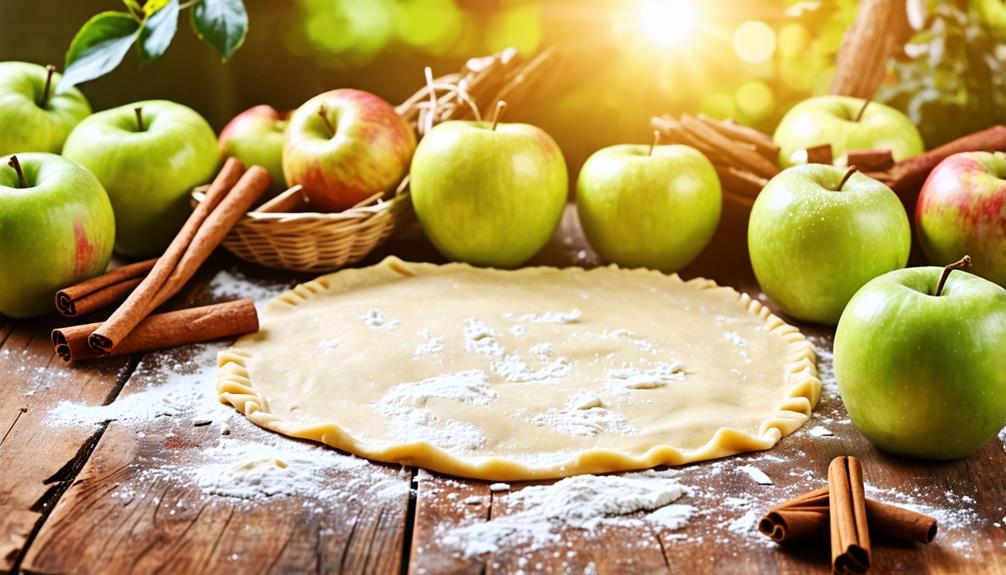
Mastering Austrian apple strudel requires a blend of technique and a keen understanding of ingredients. It's about achieving that perfect, silky dough that wraps around a flavorful filling of tart apples and spices. To elevate your strudel, one must consider vital tips that make all the difference, from kneading to baking. Yet, even seasoned bakers can overlook critical details that lead to disappointment. What are these common pitfalls, and how can they be avoided to guarantee a truly exquisite dessert? The answers might just transform your approach to this classic dish.
Need cookware for your meal? Toolbox, a Pear to Pear rental marketplace, might be worth a look.
Quick Takeaways
- Use tart apple varieties like Granny Smith for a balanced flavor and select fresh, firm apples for the best filling.
- Properly knead and rest the dough to develop gluten, achieving a smooth and elastic texture for rolling.
- Thinly roll the dough until light passes through, ensuring it's paper-thin without tearing for optimal layering.
- Toast breadcrumbs in butter to prevent sogginess and absorb excess moisture from the apple filling.
- Bake the strudel at 375°F for 30-40 minutes, allowing it to cool before slicing for the best texture.
Understanding the Dough
When making Austrian apple strudel, understanding the dough is fundamental to achieving that signature flaky texture. The foundation of this delightful pastry lies in a simple blend of very fine flour, salt, oil, and lukewarm water. Combining these ingredients forms a soft dough, but the magic happens when kneading begins.
Kneading for about ten minutes develops gluten, resulting in a silky and smooth texture crucial for stretching the dough. To enhance elasticity, it's important to slam the dough on the work surface during kneading, which helps create that vital stretch.
After working the dough, allowing it to rest for at least one hour at room temperature—or up to two days in the fridge—improves its handling. This resting period is fundamental, as it allows the gluten to relax, making it easier to roll.
When it's time to roll out the dough, aim for a paper-thin consistency, allowing light to pass through without tearing. Achieving this delicate thickness is the key to the traditional flaky texture of strudel, ensuring each bite is a perfect blend of crispiness and flavor.
With a little patience and practice, anyone can master this fundamental aspect of strudel making.
Choosing the Right Apples
When it comes to crafting the perfect apple strudel, selecting the right apples is vital.
Tart varieties like Granny Smith or Pink Lady provide a delightful balance to the sweetness, while firm apples guarantee a satisfying texture during baking.
Freshness matters too; bruised or blemished apples can ruin the overall taste, so always choose the best quality for a truly exceptional strudel.
Best Apple Varieties
Choosing the right apples is vital for crafting an exceptional Austrian apple strudel, and a mix of varieties can elevate the dish to new heights. To achieve the perfect apple blend, consider the tartness of Granny Smith apples. Their firm texture holds up beautifully during baking, creating a delightful contrast to the sweet filling.
Honeycrisp apples add a rejuvenating crispness and natural sweetness, while Braeburn contributes a unique spicy-sweet flavor that enhances the traditional Austrian taste.
For those wanting a tangy kick, tart apples like Jonathan or Empire are excellent choices. Their sharpness balances the sweetness, making each bite irresistible.
However, it's important to avoid overly soft or mealy apples like Red Delicious, as they can turn mushy and detract from the strudel's texture.
Ultimately, aiming for a mixture of apple varieties not only enhances complexity in flavor but also results in a more flavorful strudel. By carefully selecting the right apples, anyone can guarantee their Austrian apple strudel is a true crowd-pleaser, perfect for serving at gatherings or special occasions.
Flavor and Texture Impact
The essence of flavor and texture in an Austrian apple strudel hinges on the careful selection of apples. For the best results, opt for tart varieties like Granny Smith or Pink Lady. These apples strike a delightful balance between sweetness and acidity, guaranteeing a fascinating filling.
Firm apples are essential, as they maintain their shape during baking, preventing the filling from becoming mushy. For a standard recipe, aim for apples weighing between 1.5 to 2 kg (3.5 to 4.5 lbs).
Uniform peeling and slicing of the apples guarantee even cooking and flavor distribution throughout the strudel. To add a touch of brightness and prevent browning, toss the apples with a bit of lemon juice. This simple step enhances the overall appearance while preserving the apples' freshness.
To elevate the texture and flavor complexity, consider incorporating optional ingredients like sultanas or walnuts. These additions provide delightful chewiness and crunch, making the filling even more enticing.
Ripeness and Freshness Importance
Austrian apple strudel's success relies heavily on the ripeness and freshness of its apples. When preparing this delightful dessert, selecting firm, tart apple varieties like Granny Smith or Pink Lady can create a harmonious balance of sweetness and acidity. Fresh apples, free from bruises or soft spots, are essential; any imperfections can negatively impact both flavor and texture.
To elevate the strudel's complexity, using a mix of different apple varieties is highly recommended. This blend not only enhances the overall taste but also maintains the desired texture during baking. It's best to choose apples that are in season, typically from late summer to early fall, ensuring maximum juiciness and flavor.
Avoid overly ripe apples, as they can become mushy when cooked, compromising the strudel's integrity. The goal is to achieve a filling that's both vibrant and robust, contributing to the strudel's deliciousness.
Preparing the Filling
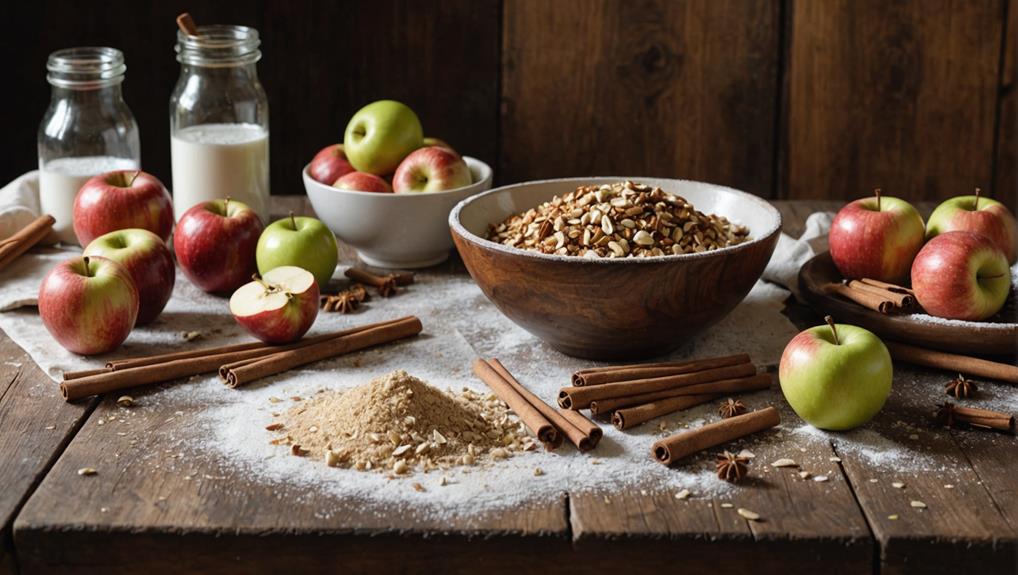
Creating a delicious filling for apple strudel involves a harmonious blend of flavors and textures. Start with a mix of tart apple varieties, like Granny Smith or Pink Lady, to balance sweetness with a revitalizing acidity. Slice the apples thinly, allowing them to cook evenly and release their juices during baking.
To elevate the apple filling, consider soaking raisins in rum. This not only plumps the raisins but also infuses the filling with a rich, aromatic sweetness. Add a splash of lemon juice to brighten the mixture and enhance the apples' natural flavor.
Next, toast breadcrumbs in melted butter until they turn sandy and lightly golden. This step is essential, as it helps absorb the moisture released by the apples, preventing a soggy strudel. Mixing the breadcrumbs into the apple filling provides a delightful texture that complements the tender fruit.
For an extra layer of warmth, don't forget to sprinkle in a pinch of ground cloves. This simple addition deepens the flavor profile, making the filling irresistible.
With these elements combined, the apple filling transforms into a truly exquisite centerpiece for your strudel.
Tips for Rolling Dough
When it comes to rolling dough for apple strudel, a clean, lightly floured surface is essential.
Regularly flouring both the surface and the dough prevents sticking and allows for a smoother process.
As the dough thins out, gentle stretching with your hands will help achieve that delicate paper-thin consistency, ensuring a perfect strudel every time.
Flour Surface Regularly
To achieve the perfect apple strudel, mastering the art of rolling dough is essential, and regularly flouring the surface plays a key role in this process. A light dusting of flour on the surface before rolling keeps the strudel dough from sticking, allowing for an even distribution that's critical for a smooth texture.
When using the rolling pin, it's important to sprinkle a moderate amount of flour on the dough itself. This helps maintain elasticity and prevents tearing while aiming for that desired paper-thin consistency.
As one rolls the dough, re-flouring the surface and the dough intermittently is important. This practice keeps the dough manageable and prevents it from becoming overly wet or sticky. Aim for a diameter of 13 to 15 inches, ensuring the dough remains elastic and easy to stretch further if needed.
Once the desired thinness is achieved, a quick check by holding the dough up to the light can confirm its suitability; it should be thin enough to see through without tearing.
With these steps, anyone can create a beautiful, flaky apple strudel that's sure to impress.
Stretch for Thinness
Achieving the perfect thinness in apple strudel dough is essential, and a few effective techniques can make all the difference. To create that delicate, paper-thin consistency, one should aim for a diameter of 13-15 inches while keeping the dough elastic and manageable.
Start by using a lightly floured surface and flour the dough intermittently to prevent sticking, which is vital during the stretching phase. Instead of relying solely on a rolling pin, gently pull the dough from the center outward. This technique enhances the dough's elasticity and helps achieve those thin slices needed for an authentic strudel.
It's also wise to remove any rings or jewelry before handling the dough, as these can create unwanted holes that compromise the texture. If the dough becomes too sticky, a light dusting of flour can help, but be cautious not to over-flour, as this can alter the dough's consistency.
Achieving Paper-Thin Layers
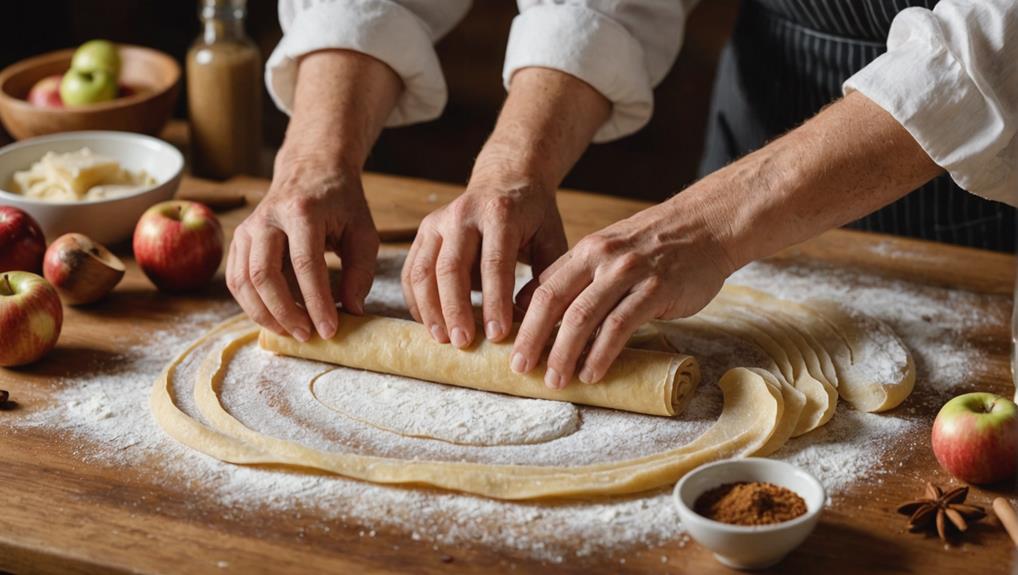
Mastering the art of creating paper-thin layers in Austrian apple strudel can transform an ordinary dessert into a culinary masterpiece. To achieve this delicate texture, it's crucial to start with a well-prepared dough. After mixing, let the dough rest for at least 30 minutes; this relaxes the gluten, making it easier to stretch without tearing.
When it's time to roll out the dough, find a clean, lightly floured surface. Flour both the surface and the dough intermittently to prevent sticking. Instead of using a rolling pin, gently stretch the dough with your hands, allowing gravity to assist you in achieving a thin consistency while maintaining elasticity. Aim for a diameter of 13-15 inches, ensuring the dough is thin enough to see your hand through it.
Avoid over-kneading, which can toughen the texture. Instead, focus on creating a silky, smooth ball before resting.
- Allow the dough to rest for enhanced elasticity.
- Use a lightly floured surface for rolling.
- Stretch the dough gently with your hands.
- Aim for a 13-15 inch diameter.
- Keep the dough elastic to prevent tearing.
Assembling the Strudel
Assembling the strudel requires careful attention to detail, ensuring that the dough and filling come together flawlessly.
The baker brushes melted butter onto one side of the stretched dough, enhancing flavor while preventing sogginess from the apple filling.
With a layer of butter-sugar breadcrumbs to absorb moisture, the process continues by spreading the filling and rolling it tightly, creating a delightful treat that's as beautiful as it's delicious.
Proper Dough Preparation
When it comes to preparing the dough for a perfect Austrian apple strudel, the key is in the delicate handling of the pastry. The process begins with stretching the dough until it reaches a paper-thin consistency, guaranteeing it remains elastic and manageable without tearing. This careful manipulation is essential for achieving that signature flaky texture.
Next, one half of the stretched dough gets brushed with melted butter, enhancing its flakiness. On the unbuttered side, a layer of butter-sugar breadcrumbs is spread to absorb moisture from the filling. Before adding the apple-raisin filling, it's important to cut off the thick ends of the dough, creating even edges. Leaving a margin of 1 to 1.5 inches, the filling is then distributed over the breadcrumbs.
As the assembly continues, one must carefully roll the strudel from the filled side, tucking in the edges of the dough to secure the filling. Finally, placing the rolled strudel seam-side down on a baking sheet and brushing the entire surface with melted butter guarantees a beautiful golden brown finish during baking.
- Stretch dough to paper-thin
- Brush with melted butter
- Add butter-sugar breadcrumbs
- Cut thick edges
- Roll and tuck securely
Layering the Filling
With the dough perfectly prepared, it's time to bring the strudel to life by layering the filling.
First, the baker brushes one half of the stretched dough with melted butter, enhancing both flavor and moisture retention. On the unbuttered side, a generous layer of buttered breadcrumbs follows, vital for absorbing moisture from the apples and preventing a soggy bottom—an essential step in crafting an authentic Austrian Apple Strudel.
Next, the apple-raisin filling is evenly distributed over the breadcrumbs, but it's important to leave a 1 to 1.5-inch margin along the edges. This margin allows for easy rolling later on.
Afterward, any thick ends of the dough should be trimmed to guarantee a more uniform shape, which contributes to an even bake and visually appealing presentation.
Baking to Perfection
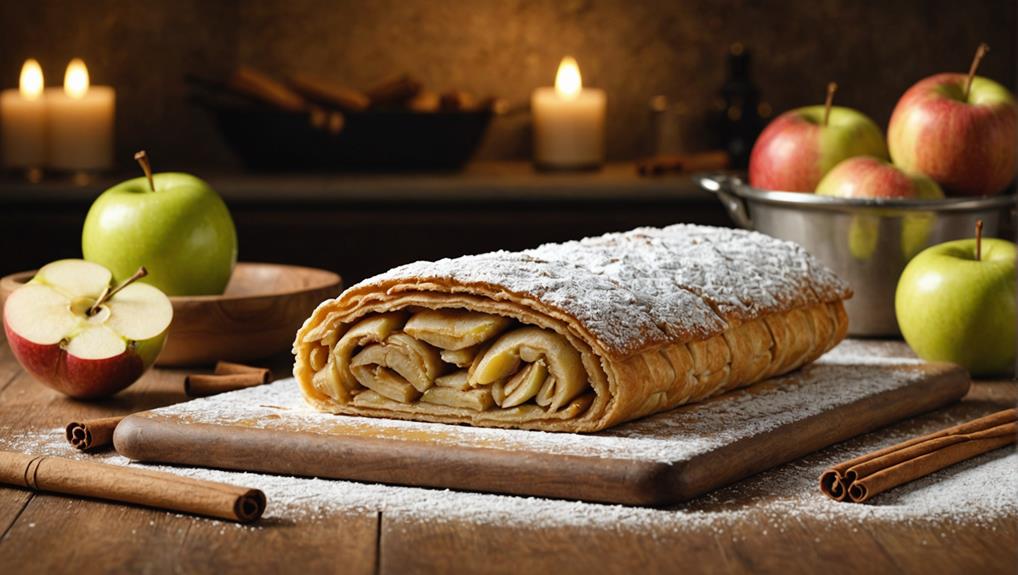
To achieve baking perfection, it's vital to start with a properly preheated oven set to 375°F (190°C). This temperature guarantees even baking, allowing the strudel to develop that coveted golden-brown finish.
Once the dough is rolled to a paper-thin consistency, it's important to brush each layer with melted butter before adding the filling. This technique not only enhances the strudel's crispiness but also adds rich flavor.
After assembling the strudel, place it on a baking sheet and slide it into the oven. The strudel should bake for 30-40 minutes, and rotating it halfway through secures even browning on all sides.
Patience is key; allowing the strudel to cool for about 20 minutes post-baking helps the filling set, resulting in a delightful texture when served.
- Preheat your oven for best results.
- Roll the dough thin for a flaky texture.
- Use melted butter between layers for added flavor.
- Rotate the strudel halfway through baking.
- Let it cool to enhance taste and texture.
With these tips, anyone can master the art of baking a perfect Austrian apple strudel.
Enhancing Flavor Profiles
Elevating the flavor profiles of Austrian apple strudel transforms this classic dessert into a truly memorable experience. To achieve this, a blend of spices like cinnamon, nutmeg, and ground cloves can be incorporated into the apple filling, enriching its warmth and complexity.
For a balanced taste, using a mix of sweet and tart apples, such as Granny Smith and Pink Lady, creates a delightful contrast between sweetness and a hint of tang.
To add depth, consider mixing in raisins or sultanas soaked in rum or water, providing chewiness and enhancing the overall flavor.
Toasting breadcrumbs in butter until golden brown before spreading them on the dough introduces a rich, nutty essence while absorbing moisture from the apples, resulting in a perfectly textured filling.
For those seeking a delightful crunch, chopped walnuts can be folded into the apple filling. This not only adds an appealing texture but also complements the soft apples beautifully.
Serving Suggestions
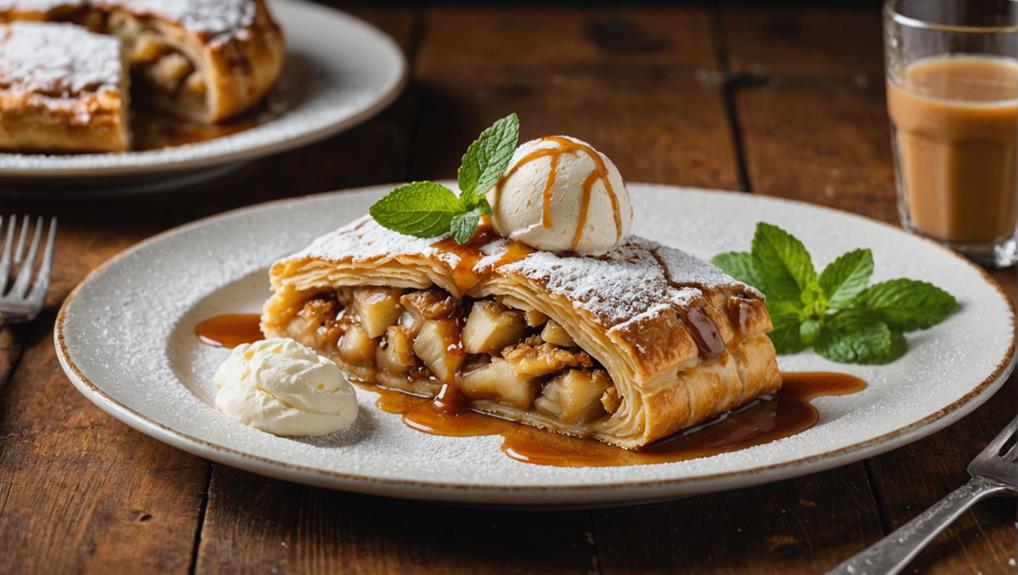
After perfecting the flavor profiles of Austrian apple strudel, the next step is to contemplate how to present this delectable dish for maximum enjoyment. The right serving suggestions can elevate the experience, turning your homemade apple strudel into a showstopper at any gathering.
To enhance the visual and culinary appeal of your strudel, consider the following serving ideas:
- Dust the baked apple strudel with powdered sugar for a sweet finish that looks inviting.
- Serve warm slices alongside a scoop of creamy vanilla ice cream, which beautifully complements the warm spices and tender apples.
- Pair each bite of strudel with freshly whipped cream, adding richness and smoothness that balances the pastry's texture.
- Drizzle caramel sauce over the strudel for an extra layer of sweetness, enhancing the tartness of the apples.
- Garnish with fresh mint leaves for a pop of color and a revitalizing burst of flavor.
These thoughtful touches not only enhance the taste but also create an unforgettable presentation that your guests will appreciate.
Common Mistakes to Avoid
Many aspiring bakers encounter pitfalls when crafting the perfect Austrian apple strudel, often leading to disappointing results. One common mistake is using cold ingredients when making the dough; lukewarm water is essential for achieving the right elasticity.
Additionally, rushing the resting period can sabotage the texture. Allowing the dough to rest for at least 30 minutes, or even up to two days in the refrigerator, helps develop the gluten structure important for a tender strudel.
Bakers should also be wary of moisture content. Too many wet ingredients, particularly from apples, can result in a soggy strudel. To combat this, sprinkling breadcrumbs on the filling is crucial, as they absorb excess moisture and help maintain a flaky texture.
Moreover, over-kneading the dough can make it tough, so it's best to knead just until smooth and silky.
Common Questions
Why Is My Strudel Soggy?
When a strudel turns soggy, it's often due to overly moist filling or thick dough. Properly drying apples, using toasted breadcrumbs, and ensuring a thin dough can prevent moisture from ruining this delightful treat.
What Is an Interesting Fact About Apple Strudel?
Apple strudel, with its delicate layers, reflects centuries of culinary tradition. Its name means "whirlpool," symbolizing the spiraled pastry. This delightful dessert showcases the fusion of Ottoman pastry techniques and Austrian flavors, enchanting palates worldwide.
Should Apple Strudel Be Served Warm?
Absolutely, apple strudel's best served warm. The warmth enhances its flavors, making the apples sweeter and the butter richer. Plus, it pairs perfectly with melting vanilla ice cream or whipped cream, creating a delightful experience.
What Is Apfelstrudel in English?
Apfelstrudel, often called "apple strudel," captivates with its delicate, flaky layers and spiced apple filling. This beloved pastry showcases Austria's culinary artistry, inviting everyone to indulge in its warm, comforting embrace at any gathering.
Wrapping Up
With these ten essential tips, anyone can transform their kitchen into a strudel paradise. Mastering the art of Austrian apple strudel isn't just about the ingredients; it's a delightful journey that turns simple apples into a heavenly dessert experience. By embracing the nuances of dough, filling, and baking, home bakers can create a golden crust that rivals the sun. Serve it warm and dusted with powdered sugar, and watch as it steals the spotlight at any gathering.