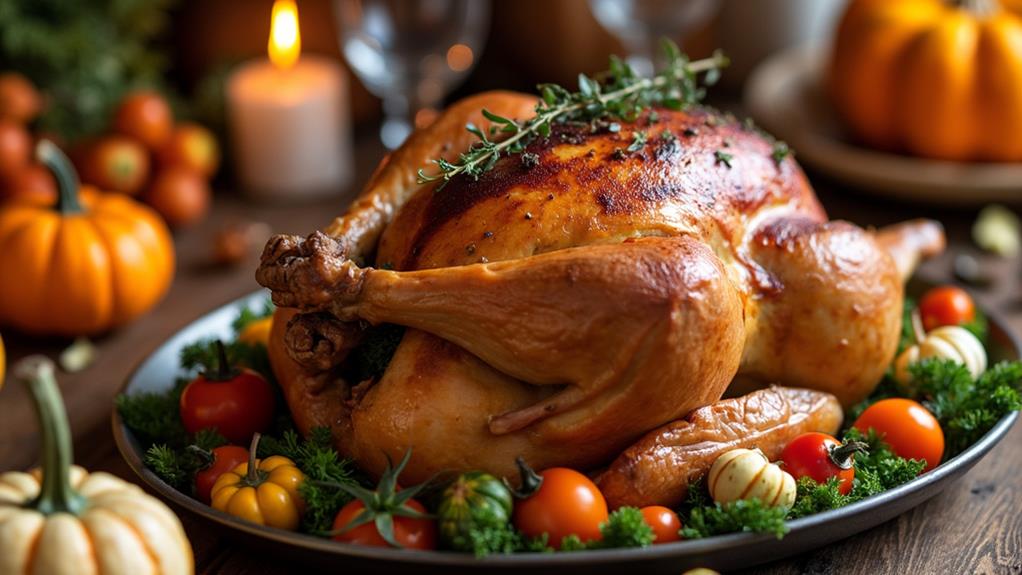
According to the USDA, nearly 88% of Americans serve turkey during Thanksgiving, making it a staple of the holiday feast. For beginners, preparing this centerpiece can feel overwhelming, but a few fundamental tips can simplify the process considerably. From selecting the right size to mastering the art of seasoning, each step is essential for achieving a moist and flavorful turkey. With the right guidance, anyone can navigate these challenges and elevate their Thanksgiving meal. What key techniques should novices keep in mind to guarantee their turkey is a success this holiday season?
Need cookware for your meal? Toolbox, a Pear to Pear rental marketplace, might be worth a look.
Quick Takeaways
- Choose a turkey size of 1 to 1.5 pounds per person; a 10-12 pound turkey is ideal for up to eight guests.
- Thaw frozen turkey in the refrigerator for 24 hours per 5 pounds for food safety.
- Season the turkey with salt, pepper, and herb butter for enhanced flavor, including aromatics in the cavity.
- Roast at a steady 325°F, cooking for 13-15 minutes per pound until the internal temperature reaches 165°F.
- Allow the turkey to rest for at least 30 minutes after cooking to redistribute juices before carving.
Choosing the Right Turkey
Choosing the right turkey is vital for a successful Thanksgiving feast, and a good rule of thumb is to plan for about 1 to 1.5 pounds of turkey per person. For gatherings of up to eight people, a 10-12 pound turkey is ideal.
If the guest list exceeds sixteen, consider buying two smaller turkeys instead of one large bird. This not only enhances cooking consistency but also elevates the flavor.
When deciding which turkey to buy, consider whether you prefer fresh or frozen. Fresh turkeys, which require no thawing, should be purchased a few days in advance.
Look for organic or free-range options, as these birds tend to be more flavorful, thanks to their diet and outdoor access.
It's important to check for USDA certification and choose a turkey with a plump breast and minimal discoloration, ensuring quality and freshness.
As you prepare your turkey, don't forget to enhance its flavor with fresh herbs like rosemary, thyme, or sage. These simple additions can make a world of difference, delighting your guests and creating a memorable Thanksgiving experience.
Thawing Process Explained
Understanding the thawing process is essential for preparing a safe and delicious Thanksgiving turkey.
There are two primary methods: thawing in the refrigerator, which can take about 24 hours for every 5 pounds, and the quicker cold water method that requires changing water every 30 minutes.
Knowing the timeframes for each method helps guarantee your turkey is ready to cook when you need it.
Thawing Methods Overview
Thawing a turkey properly is vital for ensuring it cooks evenly and safely. There are two primary methods to evaluate when thawing a frozen turkey: refrigerator thawing and cold water thawing.
Thawing in the refrigerator is the safest option, requiring about 24 hours for every 5 pounds of turkey. This method maintains a consistent temperature, which promotes food safety.
For those needing a quicker solution, submerging the turkey in cold water can be effective. It takes about 30 minutes per pound, but it's important to change the water every 30 minutes to keep the temperature safe and prevent bacteria growth.
Avoid thawing a turkey at room temperature, as this can lead to dangerous food safety issues. If time is really tight, cooking a frozen turkey is possible—just roast it at 325°F for about 50% longer than the usual cooking time.
No matter which method is chosen, always check the turkey's internal temperature with a thermometer, ensuring it reaches a safe 165°F before serving. Proper thawing not only enhances the turkey's flavor and texture but also keeps everyone safe during the Thanksgiving feast.
Timeframes for Thawing
After exploring the best methods for thawing a turkey, it's important to contemplate the specific timeframes involved in the process. Thawing a frozen turkey in the fridge requires approximately 24 hours for every 5 pounds. For instance, a 10-pound turkey will need about 2 days (48 hours) to fully thaw, while a larger 20-pound turkey will take around 4 days.
Planning ahead is vital to guarantee your turkey's ready on time.
If time's of the essence, consider the cold water method. This faster approach allows for thawing at about 30 minutes per pound, but remember to change the water every 30 minutes to maintain safety.
Regardless of the method chosen, it's important to allow the turkey to rest at room temperature for about 30 minutes before cooking. This step promotes even cooking and enhances the final result.
Lastly, always check the turkey's cavity after thawing for any giblets or the neck. These hidden items can affect cooking if left inside.
Essential Cooking Equipment
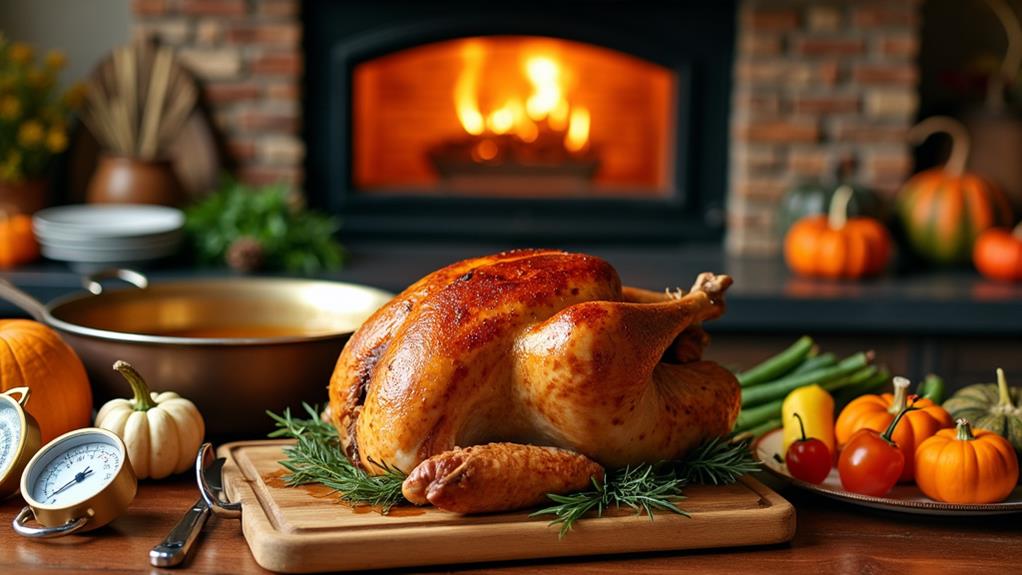
When it comes to preparing a Thanksgiving turkey, having the right cooking equipment can make all the difference in achieving that perfectly roasted bird. A sturdy roasting pan with a rack is vital; it allows for even cooking and lets the fat drip away, promoting that coveted crispy skin.
Alongside the pan, a reliable meat thermometer is essential to guarantee the turkey reaches the safe internal temperature of 165°F. This prevents the dreaded undercooking or overcooking, giving guests a safe and delicious meal.
For the final presentation, a quality carving knife is necessary. A sharp knife provides clean cuts, helping to maintain the integrity of the meat while serving your guests.
To enhance the cooking process, consider using a probe thermometer, allowing you to monitor the turkey's internal temperature without opening the oven. This helps keep the heat steady, reducing cooking time.
Optional items like a baster or a gravy separator can also elevate the experience, keeping the turkey moist and enabling you to create flavorful gravy from the drippings.
With the right tools, you'll be well on your way to impressing everyone at the Thanksgiving table.
Preparing the Turkey
With the right cooking equipment in place, the next step is preparing the turkey for roasting.
Begin by selecting a turkey that weighs about 1 to 1.5 pounds per person, ensuring plenty of servings and leftovers. If using a frozen turkey, thaw it in the refrigerator, allowing approximately 24 hours for every 5 pounds. For larger birds, this might mean 3-4 days of careful thawing to maintain food safety.
Once thawed, remove the giblets and neck from the cavity.
It's essential to pat the turkey dry with paper towels; this step is critical for achieving that coveted crispy skin.
After drying, it's time to season the turkey. Generously sprinkle salt and pepper inside and out, enhancing the flavor profile. For an extra touch, consider using a herb butter mixture beneath the skin, which infuses the meat with delightful flavors.
Seasoning Techniques
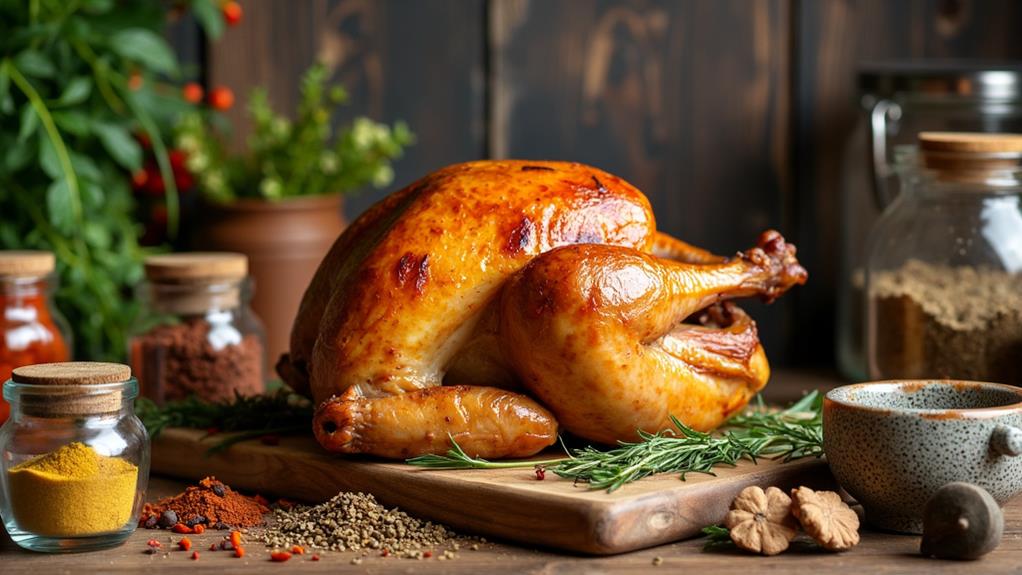
Seasoning a turkey is an essential step that transforms a simple bird into a flavorful centerpiece for the Thanksgiving table. To achieve a robust flavor, one should use a mixture of salt, pepper, and fresh herbs like rosemary, thyme, and sage. This blend should be applied both inside the cavity and generously on the skin.
An effective technique involves loosening the skin over the turkey breasts and spreading herb butter underneath. This not only infuses the meat with moisture but also adds delightful flavor during roasting.
For an extra layer of depth, the cavity can be stuffed with aromatics such as quartered lemon, onion, and additional herbs. These ingredients will release their enticing flavors as the turkey cooks, enhancing the overall taste.
Another valuable method is dry brining. A day before cooking, rub salt and spices onto the skin, allowing the turkey to absorb moisture and intensify its flavor without taking up precious refrigerator space.
Cooking Temperature Guidelines
Achieving the perfect turkey requires careful attention to cooking temperatures, ensuring both safety and flavor. The key to a delightful Thanksgiving feast lies in knowing when the turkey is done cooking. The target internal temperature for a fully cooked turkey is 165°F, measured at the thickest part of the thigh and the breast.
To guarantee ideal safety and juiciness, it's best to remove the turkey from the oven when it reaches 160°F; it will continue to cook while resting.
Here are some essential cooking temperature guidelines to keep in mind:
- Unstuffed turkeys typically need 13-15 minutes per pound at 325°F.
- Stuffed turkeys may require additional time, so keep that in mind.
- Use a probe thermometer for accurate internal temperature readings.
- Remember to let the turkey rest for at least 30 minutes after cooking.
- This resting period allows juices to redistribute, enhancing flavor and moisture.
Basting and Roasting Tips
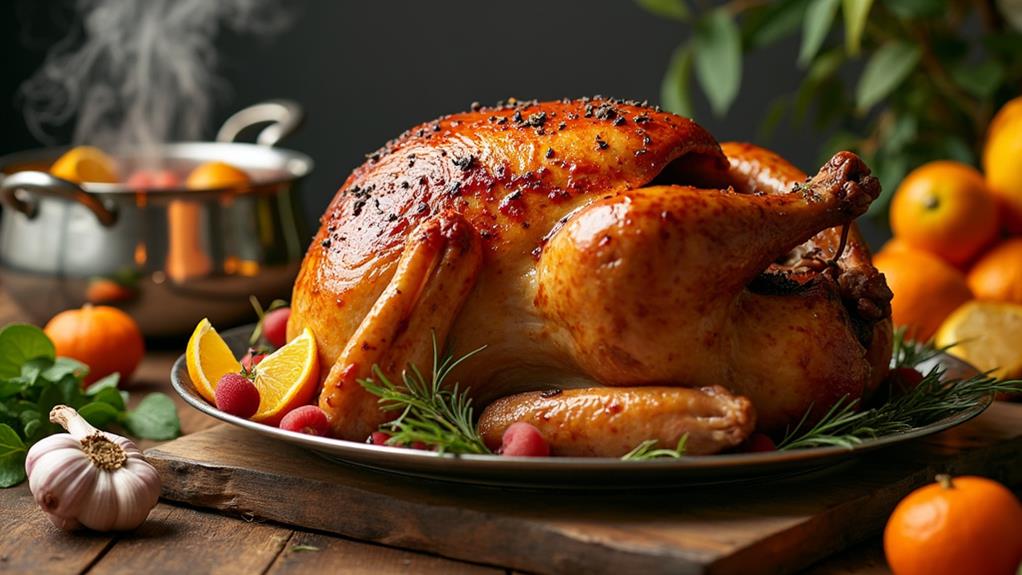
When it comes to preparing the perfect Thanksgiving turkey, mastering the basting technique can enhance moisture and flavor, though it's not always necessary for store-bought birds.
Roasting at the ideal temperature of 325°F guarantees even cooking and juicy meat, while allowing the turkey to rest for at least 30 minutes afterward redistributes the juices for maximum taste.
With these tips, anyone can achieve a beautifully roasted turkey that's sure to impress at the holiday table.
Importance of Basting Technique
Basting a turkey serves as a flavorful enhancement that many home cooks cherish during the Thanksgiving feast. This technique involves spooning the bird's own juices or melted butter over the meat every 30 minutes, but it's vital to minimize opening the oven door to maintain consistent cooking temperatures.
Frequent interruptions can lead to extended cooking times and impact the quality of the turkey skin.
Here are some key points to remember about basting:
- Basting can improve moisture and flavor, but it's not essential for quality store-bought turkeys.
- A baster or ladle is ideal for minimizing time spent with the oven door open.
- High-heat roasting (around 400°F for the first hour) can reduce the need for basting.
- The internal temperature of the turkey is paramount; aim for at least 165°F in the thickest parts.
- Crispy skin is achievable without excessive basting, preserving both flavor and moisture.
Optimal Roasting Temperature
To achieve a perfectly roasted turkey, it's essential to set the oven to a steady 325°F, which promotes even cooking throughout the bird. This temperature guarantees that the turkey reaches a safe internal temperature of 165°F in the thickest part of the thigh and breast, making it safe for your guests to enjoy.
When roasting, aim for approximately 13-15 minutes per pound, keeping in mind that unstuffed turkeys cook faster than their stuffed counterparts.
While basting is often debated, it's generally not necessary. However, if you decide to baste your turkey, do so every 30 minutes. This technique helps retain moisture without markedly increasing cooking time.
If the skin begins to brown too quickly, covering the breast with foil can prevent it from burning, allowing the rest of the turkey to finish roasting perfectly.
Resting Time Benefits
After removing the turkey from the oven, many cooks overlook the importance of resting time, which can greatly enhance the final dish.
Allowing the turkey to rest for at least 30 minutes post-cooking is crucial, as it enables the juices to redistribute throughout the meat. This results in moister meat when it's finally carved and served to guests.
In addition to resting, basting can be a useful technique, but with high-heat roasting methods that seal in juices, it may not be necessary.
To achieve the best results, consider these tips:
- Always use a reliable meat thermometer to ascertain the thickest part of the breast reaches 165°F.
- Start roasting at 400°F for the first hour to create crispy skin.
- Reduce the temperature to 350°F for even cooking.
- Avoid opening the oven door frequently to maintain temperature and texture.
- Remember that resting time is just as crucial as cooking time for great flavor.
Resting the Turkey
Allowing the turkey to rest is an important step that shouldn't be overlooked. After cooking, it's vital to let the turkey sit for at least 30 minutes. This resting time allows the juices to redistribute throughout the meat, resulting in a moist turkey that's bursting with flavor when it's finally served.
If you've prepared a larger turkey, consider extending the resting time up to 60 minutes to maintain ideal temperature and juiciness.
During this period, cover the turkey loosely with foil. This technique retains heat while making sure the skin doesn't become soggy, preserving that gorgeous, golden-brown appearance.
Avoid the temptation to slice into the turkey immediately after cooking; doing so can cause precious juices to escape, leading to a dry result that no one wants at the Thanksgiving table.
For food safety, keep the resting turkey in a warm area but make sure the temperature doesn't exceed 140°F, as this can promote bacterial growth.
Carving for Serving
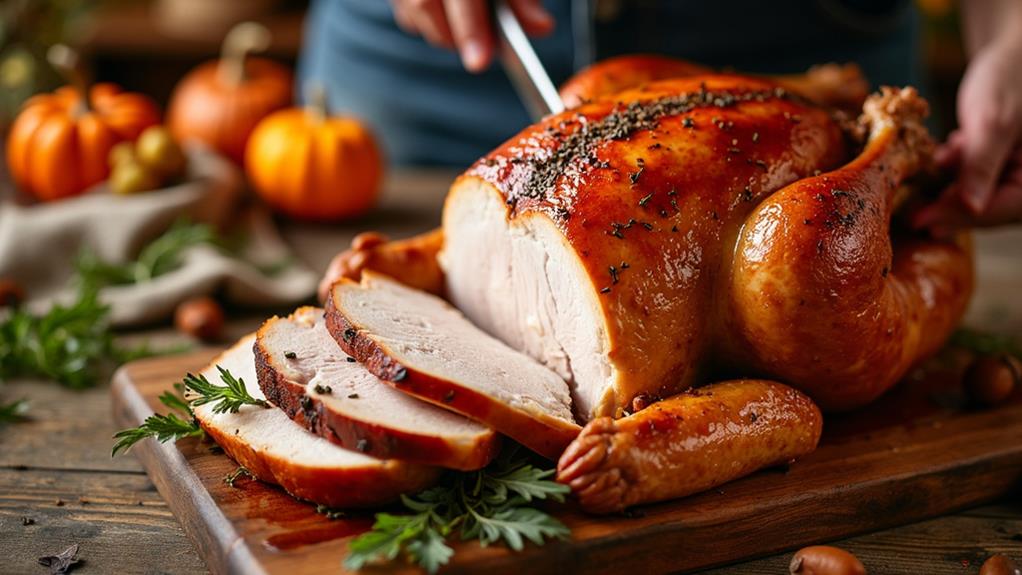
Carving a turkey is an art that enhances the overall Thanksgiving experience, transforming the beautifully roasted bird into a feast for the eyes as well as the palate.
To achieve perfectly carved turkey, it's crucial to let the turkey rest for at least 30 minutes after cooking. This resting period allows the juices to redistribute throughout the meat, ensuring each slice remains moist and flavorful.
To carve your turkey like a pro, follow these tips:
- Use a sharp carving knife to slice through the meat effortlessly.
- Grab a carving fork to stabilize the turkey while you work.
- Begin with the legs and thighs, cutting through the skin and separating the joints.
- For the breast meat, start at the top and slice downwards, following the grain for tenderness.
- Arrange the carved turkey attractively on a platter, garnishing with fresh herbs for a festive touch.
With these techniques, your carved turkey won't only taste delicious but also look stunning on the table, impressing your guests and making the Thanksgiving feast even more memorable.
Storing Leftovers Safely
When it comes to storing leftover turkey, timing and technique are essential.
Ensuring the turkey cools properly and is placed in airtight containers within two hours can prevent unwanted bacteria and keep the meat fresh.
Plus, following reheating guidelines guarantees a safe and delicious meal whenever the cravings hit.
Proper Cooling Techniques
Leftovers can be a delightful reminder of a Thanksgiving feast, but proper cooling techniques are vital to keep them safe and delicious. To guarantee leftover turkey remains fresh and free from harmful bacteria, it's important to act quickly. Storing the turkey in airtight containers within two hours of cooking helps maintain its quality and safety.
Here are some key cooling techniques to remember:
- Refrigerate promptly: Store leftover turkey in the fridge within two hours to prevent bacterial growth.
- Temperature matters: Keep the refrigerator temperature below 40°F (4°C) to guarantee food safety.
- Slice for speed: Consider slicing leftover turkey into smaller portions to facilitate quicker cooling and even reheating.
- Freezing for later: If you plan to keep leftovers longer, freeze the turkey within the same two-hour window, where it can safely last up to three months.
- Reheat properly: Always ensure that leftover turkey reaches an internal temperature of 165°F (74°C) before serving to eliminate any potential foodborne pathogens.
Airtight Container Storage
After cooling turkey properly, the next step is guaranteeing it's stored in airtight containers. This essential action not only protects the leftover turkey from unwanted bacteria but also helps maintain its freshness.
Ideally, folks should transfer the turkey into shallow containers within two hours of cooking. Shallow containers allow the turkey to cool more quickly and evenly, making refrigeration safer.
Leftover turkey can be safely stored in the refrigerator for up to four days. After that, if there's still some turkey left, it's wise to take into account freezing it for longer-term storage. To keep track of when the turkey was stored, labeling each container with the date can be incredibly helpful. This way, everyone can enjoy their delicious leftovers while guaranteeing they stay within safe consumption timeframes.
When it's time to serve again, remember that the turkey must reach an internal temperature of 165°F for safe eating. By following these simple guidelines for airtight container storage, hosts can guarantee their Thanksgiving feast remains a joy to share with family and friends, minimizing waste and maximizing flavor.
Reheating Guidelines
Reheating turkey leftovers properly is vital for both safety and flavor. To guarantee that everyone enjoys the deliciousness of Thanksgiving turkey without worrying about food safety, it's important to follow some key guidelines.
- Store turkey leftovers in airtight containers within 2 hours of cooking.
- Refrigerate turkey for up to 4 days, keeping it below 40°F.
- For longer storage, freeze turkey in airtight containers or freezer bags for up to 4 months.
When reheating, make certain the internal temperature reaches 165°F to effectively kill any potential bacteria. For best results, reheat only the portion needed and consider adding gravy or broth to keep the turkey moist.
Following these steps not only preserves the turkey's flavor but also guarantees safety for everyone at the table. By properly reheating, hosts can serve up delightful meals that evoke the warmth of Thanksgiving gatherings, allowing family and friends to relive the joyous occasion.
Common Questions
How Do You Prepare a Turkey for the First Time?
When preparing a turkey for the first time, one should start by selecting the right size, aiming for 1 to 1.5 pounds per person.
Thawing takes time, so allow about 24 hours for every 5 pounds. After removing the neck and giblets, pat the turkey dry and season it well.
Preheat the oven to 325°F and roast for roughly 15 minutes per pound, ensuring it reaches 165°F before resting for 30 minutes.
Is It Better to Cook Turkey at 325 or 350?
When deciding whether to cook turkey at 325°F or 350°F, it's important to take into account the outcome.
Cooking at 325°F guarantees even, tender meat without drying out, requiring about 13-15 minutes per pound.
On the other hand, 350°F speeds up the process, needing just 10-13 minutes per pound, but risks overcooking.
Regardless of the temperature, reaching an internal temperature of 165°F is vital for safety, leading to a deliciously satisfying meal for everyone.
Should You Bake a Turkey Covered or Uncovered?
When deciding whether to bake a turkey covered or uncovered, it's best to strike a balance.
Covering the turkey with foil during the first half of cooking prevents over-browning while guaranteeing even heat distribution.
Once the initial cooking time passes, removing the foil allows the skin to crisp up beautifully.
Baking at 325°F guarantees a tender, juicy turkey, with a perfect cooking time of about 13-15 minutes per pound for best results.
How Long Should Turkey Sit Out Before Cooking?
Before cooking, a turkey should sit out at room temperature for about 30 minutes to 1 hour. This practice helps guarantee even cooking and allows the skin to dry slightly, promoting a crispier texture.
If the turkey's cold or moist, seasonings won't stick well, affecting flavor absorption. However, it's essential not to leave it out for more than 2 hours to prevent bacteria growth, so timing's key for a safe, delicious meal.
Wrapping Up
To summarize, mastering the art of Thanksgiving turkey isn't just about following steps; it's about embracing a tradition that brings family together. Many believe that resting the turkey is optional, but it's essential for juicy meat. The science behind this lies in allowing the juices to redistribute, ensuring every slice is flavorful. So, as beginners immerse themselves in this culinary adventure, they'll discover that with patience and practice, they can create a memorable feast that's worth celebrating.