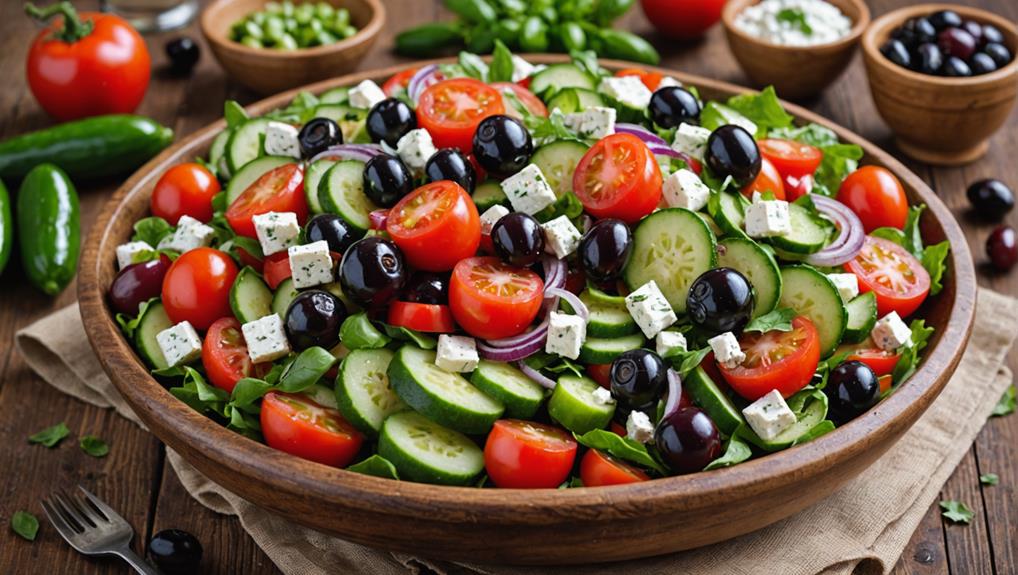
When you think about crafting a Cretan Greek salad, you might picture vibrant colors and fresh flavors coming together effortlessly. You'll want to start with the right base—crispy barley rusks that soak up delicious juices without losing their texture. Then, consider what fresh ingredients you'll incorporate, like ripe tomatoes and tangy feta. Each element plays an essential role in balancing flavors and textures, but there's more to this dish than meets the eye. Curious about how to perfect your Cretan Greek salad and uncover its unique variations?
Need cookware for your meal? Toolbox, a Pear to Pear rental marketplace, might be worth a look.
Quick Takeaways
- Start with barley rusks, soaking them briefly in water to soften for a crunchy base.
- Use fresh, vine-ripened tomatoes, grated or diced, for a juicy flavor foundation.
- Add thinly sliced red onion and optional cucumbers for a refreshing crunch.
- Crumble feta cheese on top for creaminess, and drizzle with extra virgin olive oil.
Key Ingredients for Cretan Salad
When crafting a Cretan salad, you'll want to focus on a few key ingredients that bring vibrant flavors and textures to the dish.
At the heart of this salad is barley, specifically barley rusks known as paximadia. These crunchy morsels provide a satisfying base and a healthy dose of fiber.
Next, make sure to include fresh, vine-ripened tomatoes, which add juiciness and a burst of flavor that perfectly complements the other elements.
Feta cheese, ideally sourced from Cretan producers, lends a creamy texture and a salty punch that balances the freshness of the vegetables.
Don't forget the extra virgin olive oil; it enriches the salad with its smoothness and healthy fats, enhancing every bite.
Adding thinly sliced red onion introduces a sharpness that contrasts beautifully with the creamy Feta and sweet tomatoes.
Unique Cretan Variations
Have you ever tried the unique twists on Cretan salad that elevate this classic dish into something even more delightful? One standout is the Cretan Dakos Salad, where you'll discover a base of barley rusks soaked in vibrant tomato juice. This creates a delightful crunch that pairs beautifully with fresh vegetables and creamy feta cheese, a staple in traditional Cretan cuisine.
To enhance the flavor profile, many Cretan variations incorporate red wine vinegar, adding a tangy kick that perfectly contrasts with the rich, local ingredients. You can also experiment with unique flavors by including local delicacies like Mizithra cheese or adding capers and purslane. These elements not only enhance the taste but also reflect the region's culinary heritage.
If you're feeling adventurous, consider creating a heartier version known as Kritiki Salata, which includes potatoes and boiled eggs. This variation makes the salad more filling and satisfying, perfect for serving at gatherings.
Preparation and Assembly Steps
Start by soaking the barley rusks in water for just a few minutes to soften them, guaranteeing they soak up all the delicious flavors while still maintaining a satisfying crunch.
Next, grate or finely dice fresh tomatoes, letting those juicy bits mingle with the high-quality extra-virgin olive oil and seasonings to create a flavorful base for your Horiatiki.
In a large bowl, combine your chopped vegetables—think crisp cucumbers, zesty red onions, and briny capers. The mix adds delightful texture and tanginess.
Once the vegetables are ready, crumble feta cheese over the top of the salad mixture. This creamy addition contrasts beautifully with the fresh produce and enhances the overall flavor profile.
Now, it's time to bring it all together. Drizzle the salad with extra-virgin olive oil and sprinkle generously with dried oregano. This step elevates your dish, infusing it with that classic Greek essence.
Gently toss all the ingredients to guarantee everything is evenly coated in the salad dressing.
Serve this vibrant Cretan Greek salad with pride, and watch your guests enjoy a taste of the Mediterranean!
Nutritional Benefits of Ingredients
Discover the impressive nutritional benefits of the ingredients in a Cretan Greek salad, as each component contributes to a deliciously healthy dish that nourishes both body and soul.
Fresh tomatoes, with their vibrant red hue, are packed with vitamins A and C, offering antioxidants that support your immune function and enhance skin health.
Cucumbers, composed of 95% water, provide a reviving, low-calorie choice that aids digestion thanks to their dietary fiber content.
When you add feta cheese, you're introducing a rich source of protein and calcium, essential for maintaining strong bones and muscle function.
Drizzling extra-virgin olive oil elevates your salad with heart-healthy monounsaturated fats, which help reduce bad cholesterol levels and deliver anti-inflammatory benefits.
Finally, barley rusks offer dietary fiber, particularly beta-glucan, known for lowering cholesterol levels and promoting heart health.
Together, these ingredients create a colorful and nutritious dish that not only pleases the palate but also supports your overall well-being.
Serving Suggestions and Pairings
Cretan Greek salad, with its vibrant colors and fresh flavors, pairs beautifully with grilled meats like chicken thighs or lamb, creating a delightful culinary experience that enhances any meal. This dish, also known as Horiatiki, is best served alongside a glass of chilled white wine, such as Assyrtiko, which complements the salad's tangy and herbaceous notes.
For a complete Mediterranean feast, consider adding tzatziki or hummus for an extra layer of creaminess. Whole wheat artisan bread, like a crusty sourdough, is perfect for soaking up every bite of the salad's delicious juices. Let it sit for a moment to absorb the flavors, making each mouthful even more satisfying.
If you're hosting, serving Dakos as part of a meze platter elevates the experience. Include olives, cheeses, and roasted vegetables for a diverse spread that encourages sharing and conversation.
These Greek recipes not only highlight the freshness of your ingredients but also create a warm, inviting atmosphere at your table. Your guests will appreciate the thoughtful pairings, making your meal memorable and enjoyable for everyone involved.
Common Questions
What Is a Traditional Greek Salad Made Of?
A traditional Greek salad combines ripe tomatoes, crisp cucumbers, zesty red onions, vibrant green peppers, and briny Kalamata olives. Crumbled feta and a drizzle of olive oil elevate the flavors, creating a revitalizing, hearty dish.
What Is a Substitute for Cretan Rusks?
If you're looking for a substitute for Cretan rusks, try whole grain crispbread for crunch, toasted sourdough for rustic flavor, or gluten-free crackers to accommodate dietary needs. Each option brings its unique touch to your dish!
How Do You Keep Greek Salad From Getting Soggy?
To keep your Greek salad from getting soggy, use firm tomatoes, drain them beforehand, and add cucumbers and onions just before serving. Incorporate barley rusks for crunch, and dress it lightly right before serving.
What Is Greek Salad Dressing Made Of?
Greek salad dressing bursts with vibrant flavors—extra-virgin olive oil mingles with tangy red wine vinegar and zesty lemon juice. Dried oregano, salt, and pepper enhance it, creating a delightful complement to your fresh ingredients.
Wrapping Up
Now that you know the key ingredients and steps to create a traditional Cretan Greek salad, why not bring a taste of the Mediterranean to your table?
Imagine biting into the crisp rusks, juicy tomatoes, and creamy feta, all drizzled with fragrant olive oil.
This vibrant dish not only delights your taste buds but also nourishes your body.
So gather your fresh ingredients, and let each bite transport you to the sun-soaked shores of Crete!