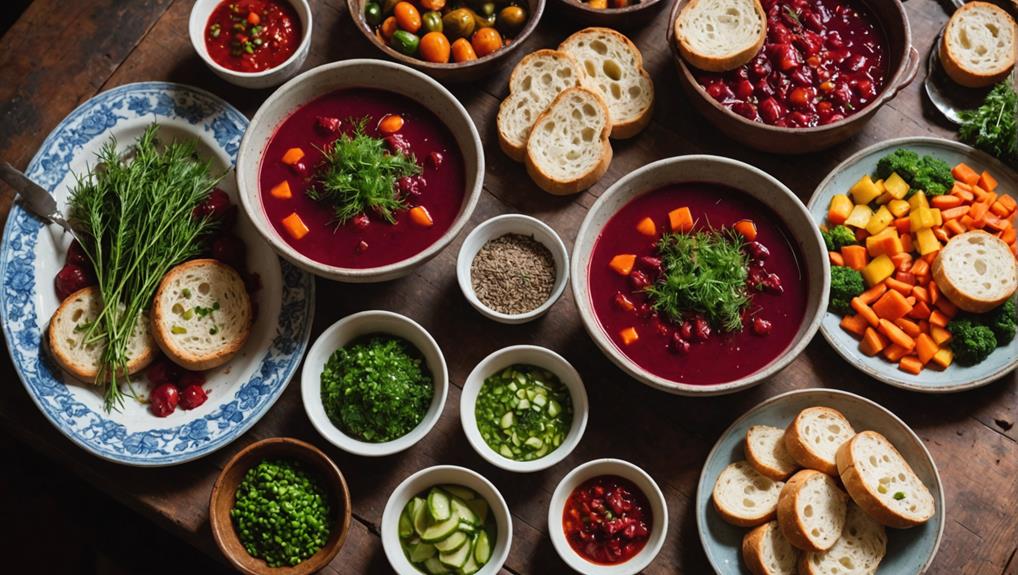
Did you know that borscht has over 40 regional variations across Eastern Europe? This iconic dish not only highlights the culinary diversity of the region but also reflects deep cultural traditions. Whether you're a fan of the classic Ukrainian red borscht or intrigued by the tangy notes of Russian green borscht, there's a recipe that might pique your interest. As you explore these ten best traditional borscht recipes, you'll uncover unique ingredients and cooking methods that tell a story of their own. What flavors and histories will you discover in each bowl?
Need cookware for your meal? Toolbox, a Pear to Pear rental marketplace, might be worth a look.
Quick Takeaways
- Classic Ukrainian Red Borscht features beets, cabbage, and beef broth, garnished with sour cream and dill for a sweet and sour flavor.
- Polish Beet Borscht highlights natural sweetness with a clear broth, often served with uszka dumplings, and can be enjoyed hot or chilled.
- Romanian Borscht incorporates fermented flavors with beets, beef, and vegetables, garnished with dill and parsley for added freshness.
- Russian Green Borscht uses sorrel for tanginess, simmered with potatoes and carrots, and is served warm or chilled with sour cream.
Classic Ukrainian Red Borscht
Classic Ukrainian Red Borscht bursts with vibrant color and flavor, showcasing beets as the star ingredient while harmoniously blending in hearty vegetables and savory meat. This traditional Ukrainian borscht recipe typically starts with a rich beef broth, simmered for at least an hour to develop a depth of flavor that elevates each bite. The beets not only lend their striking red hue but also bring a natural sweetness that beautifully contrasts with the soup's tangy elements.
As you prepare your borscht, you'll incorporate cabbage, potatoes, and carrots, each contributing texture and nutrition. The sweet and sour flavor profile is key; balancing the beets' sweetness with a splash of vinegar or lemon juice creates a delightful complexity.
When serving, don't forget the finishing touches—a dollop of sour cream adds creaminess, while fresh dill provides a fragrant herbaceous note that ties everything together.
This dish is perfect for sharing with family and friends, offering warmth and comfort. Whether you choose to stick to the traditional recipe or adapt it for vegetarians, you'll create a memorable meal that showcases the rich culinary heritage of Ukraine.
Polish Beet Borscht Variations
Polish beet borscht, or 'barszcz,' offers a delightful twist on traditional recipes, emphasizing a clear broth that highlights the natural sweetness of beets with a zesty hint of lemon. This vibrant soup can be crafted using fresh beets or a combination of those and fermented beet juice, giving you a unique sweet and sour profile that tantalizes the taste buds.
When preparing polish beet borscht, consider adding elements like mushrooms and potatoes to enrich the flavor and texture. For a heartier variation, you might include sausage, enhancing the dish's comforting qualities. Barszcz is often served with 'uszka,' small dumplings filled with mushrooms or meat, making it a festive centerpiece for special occasions like Christmas.
You can enjoy this traditional soup hot or cold; the chilled version, known as 'chłodnik,' shines during warm months, garnished with a dollop of sour cream and fresh dill. Whichever way you choose to serve it, polish beet borscht will surely impress your guests, showcasing the delightful flavors of Eastern European cuisine.
Russian Green Borscht Recipe
Experience the vibrant flavors of Russian Green Borscht, a revitalizing soup that bursts with the tangy essence of sorrel, complemented by hearty vegetables and a rich meat broth.
This delightful dish, known as 'Zelyony Borscht,' showcases a unique green hue, setting it apart from the traditional red borscht made with beets.
To prepare this nourishing soup, start by simmering a meat broth that serves as the foundation. As you cook, add chopped sorrel leaves, boiled potatoes, and carrots, allowing them to simmer until tender.
Don't forget to season your creation with salt and pepper to taste, ensuring every spoonful is full of flavor.
Once your green borscht is ready, serve it warm or chilled, especially during summer. To elevate the dish even further, garnish each bowl with a dollop of sour cream and a sprinkle of fresh dill.
This adds both richness and a beautiful presentation, making it perfect for sharing with family and friends. Packed with nutrients from the sorrel, this hearty dish not only satisfies hunger but also nourishes the body, making it an excellent choice for any meal.
Lithuanian Borscht With Sorrel
When you taste Lithuanian borscht, or šaltibarščiai, you'll immediately notice the unique tartness of sorrel that sets this soup apart.
This vibrant cold dish not only boasts a beautiful pink hue but also pairs perfectly with fresh ingredients like cucumbers and radishes.
Traditionally served chilled with a swirl of sour cream, it's a revitalizing choice that captures the essence of summer dining.
Sorrel's Unique Flavor Profile
Sorrel brings a delightful tartness to Lithuanian borscht, creating a rejuvenating contrast to the earthy sweetness of beets and transforming the soup into a vibrant culinary experience. This leafy green herb doesn't just elevate the flavor profile; it also adds a stunning vibrant green hue that makes the dish visually appealing.
As you prepare your traditional borscht, the incorporation of sorrel showcases the beauty of Eastern European cuisine—how local ingredients can redefine classic recipes. Rich in vitamin C and antioxidants, sorrel serves as a nutritious addition, enhancing both the taste and health benefits of your soup.
To fully capture its distinct sour taste, it's best to add sorrel towards the end of the cooking process. This way, you preserve its freshness and keep its vibrant hue intact. If you're opting for a cold version of the soup, consider using raw sorrel for an extra burst of flavor.
As you serve your Lithuanian borscht, you'll not only impress your guests with its inviting colors and flavors but also share a piece of culinary tradition that celebrates the unique characteristics of sorrel.
Traditional Serving Suggestions
Serving Lithuanian borscht, or šaltibarščiai, chilled with a swirl of sour cream not only enhances its creamy texture but also beautifully contrasts the soup's vibrant pink hue and tangy flavors. This revitalizing dish is perfect for warm days, making it a delightful choice for summer meals or picnics.
To elevate your traditional serving, consider garnishing with fresh dill and chives; these herbs add aromatic notes that complement the soup's tartness. You can serve the chilled borscht in elegant bowls, allowing the stunning color to shine through.
Accompany your borscht with boiled potatoes, which you can either serve on the side or dice and mix directly into the soup. The soft, comforting texture of the potatoes balances the vibrant pink color and enhances the overall experience.
For a truly authentic touch, you might even provide additional sour cream on the table, allowing guests to customize their servings. This traditional presentation not only showcases the rich culinary heritage of Lithuania but also invites everyone to enjoy the deliciousness of this unique and revitalizing dish.
Romanian Borscht With Meat
When you think of Romanian borscht with meat, imagine a hearty blend of tender beef or pork simmered with vibrant beets, carrots, and cabbage.
This dish not only bursts with color but also showcases the unique tanginess of fermented borscht, creating a flavor profile that's truly unforgettable.
As you explore the key ingredients and cooking techniques, you'll discover how to craft this comforting soup that's perfect for any occasion.
Key Ingredients Overview
Romanian borscht with meat is a hearty dish that combines tender beef or pork with a medley of vibrant vegetables like beets, carrots, potatoes, and cabbage, creating a flavorful and nourishing soup. Each ingredient plays a crucial role, contributing not only to the taste but also to the visual appeal of the dish.
Here's a closer look at the key ingredients that elevate this borscht:
- Beef or Pork: Provides rich flavor and protein to the soup, making it satisfying.
- Beets: Infuse the borscht with a vibrant color and a natural sweetness that balances the flavors.
- Souring Agents: Ingredients like fermented borscht or vinegar add a delightful tanginess that enhances the overall taste.
Incorporating tomato paste deepens the flavor, giving Romanian borscht a unique character that sets it apart from other regional variations.
With each spoonful, you'll experience a comforting blend of flavors, perfect for serving family and friends on chilly days.
Cooking Techniques Explained
To create a delicious Romanian borscht with meat, you'll want to master a few key cooking techniques that bring out the rich flavors and vibrant colors of this comforting dish.
Start by sautéing onions, carrots, and bell peppers in oil until they're tender and fragrant. This step builds a flavorful base for your borscht soup. Next, add your choice of beef or pork, allowing it to brown slightly before pouring in your stock.
Now, it's time to add beets—both grated beets and diced pieces will enhance the soup's signature red hue. Don't forget the minced garlic, which adds a lovely depth of flavor. After mixing in these ingredients, let your borscht simmer for an additional 30 minutes. This process melds the flavors beautifully, creating a sweet-sour profile.
To finish, incorporate the fermented borscht for that tangy kick and sprinkle in chopped dill for freshness. Serve your borscht soup hot, topped with a dollop of sour cream to enrich the experience. Your guests will surely appreciate this traditional dish, full of warmth and flavor!
Hungarian Borscht With Paprika
Hungarian borscht, or 'bortsch,' captivates with its vibrant red hue and rich flavors, thanks to the sweet Hungarian paprika that elevates this hearty dish. The base of this delightful soup is built on beets, providing a nutritious foundation. You can enhance its heartiness by adding potatoes, carrots, and cabbage, or even some smoked sausage for an extra layer of flavor.
When preparing this dish, keep these key elements in mind:
- Sweet Hungarian paprika: It's essential for that signature taste.
- Aromatic caraway seeds: These complement the sweetness of the beets beautifully.
- Dollop of sour cream: A must for balancing the flavors while adding creaminess.
Serve your Hungarian borscht hot, garnished with fresh herbs like dill or parsley. As you ladle this vibrant soup into bowls, your guests will be drawn in by its enticing aroma and colorful presentation.
With each spoonful, they'll appreciate the rich history and flavors that make Hungarian borscht a beloved dish throughout Eastern Europe.
Ukrainian Vegetarian Borscht
Ukrainian vegetarian borscht bursts with color and flavor, featuring key ingredients like beets, potatoes, and cabbage simmered in rich vegetable stock.
By sautéing the beets first, you reveal their natural sweetness, creating a delightful base for your soup.
Plus, adding white cannellini beans not only boosts protein but also gives the dish a creamy texture that's satisfying and wholesome.
Key Ingredients Overview
The vibrant medley of beets, potatoes, carrots, cabbage, and onions forms the heart of vegetarian borscht, creating a dish that's as visually stunning as it's flavorful. Each ingredient plays a vital role, contributing to the rich tapestry of tastes and textures that make this soup a beloved favorite.
Here are the key ingredients that elevate your borscht to perfection:
- Beets: The star of the dish, providing a deep red hue and earthy sweetness.
- Potatoes: Adding heartiness and a comforting texture to the mix.
- Carrots: Introducing a subtle sweetness that balances the dish.
To create a well-rounded vegetarian borscht, you'll want to use vegetable stock as your base, ensuring it caters to meat-free diets.
A splash of vinegar or lemon juice will add a tangy note, harmonizing beautifully with the sweetness of the beets.
Don't forget the cabbage, which adds crunch and depth, making your borscht not just a meal, but a vibrant experience.
Serve it warm, and watch everyone gather around for seconds!
Cooking Techniques Explained
Mastering the art of cooking Ukrainian vegetarian borscht involves a careful blend of techniques that highlight the natural flavors of each ingredient.
Start by finely chopping onions and carrots, then sautéing them in oil until they're tender and fragrant. This creates a deep flavor base. Next, grate your beets; you can add them directly to the pot without sautéing for a fresher taste.
Once your beets are in, pour in vegetable broth to create a rich, hearty soup. Incorporate seasonings like vinegar and sugar to balance the sweetness of the beets with a delightful tang.
As the soup simmers, it's essential to add the cabbage towards the end of cooking. This way, the cabbage wilts perfectly without becoming mushy, preserving a lovely texture.
Just before serving, stir in fresh dill for a burst of flavor. Ladling the borscht into bowls, don't forget a generous dollop of sour cream on top—it adds creaminess and richness that elevate the dish.
With these cooking techniques, your Ukrainian vegetarian borscht will surely impress everyone at the table!
Belarusian Borscht With Beans
Belarusian borscht with beans offers a delightful blend of earthy beets, crisp cabbage, and creamy cannellini beans, creating a vibrant and satisfying dish that warms you from the inside out. This hearty soup, often made vegetarian-friendly with vegetable broth, showcases a medley of flavors that delight the palate.
When preparing this dish, consider these key elements:
- Fresh Ingredients: Use vibrant beets, crunchy cabbage, and sweet carrots for the best flavor.
- Flavor Balance: Incorporate fresh dill, garlic, and a splash of vinegar to achieve that perfect sweet-and-sour taste.
- Nutritious Additions: Feel free to add potatoes for an extra layer of heartiness.
This borscht isn't just a meal; it's a comforting experience, especially during colder months. As you gather around the table, the colorful presentation and savory aroma will surely impress your guests, making it a dish you'll want to serve time and again.
Enjoy the warmth and nourishment that this traditional Belarusian borscht brings!
Moldovan Sweet and Sour Borscht
Moldovan Sweet and Sour Borscht tantalizes your taste buds with its perfect harmony of earthy beets, zesty vinegar, and a hint of sugar, creating a vibrant dish that's both comforting and invigorating.
This delightful soup showcases the rich culinary tradition of Moldova, combining classic ingredients like cabbage, carrots, and potatoes with the depth of smoked meats or bacon.
As you prepare this dish, you'll appreciate how the beets lend a beautiful ruby hue while the vinegar adds a tangy brightness that balances the sweetness. Fresh herbs like dill and parsley elevate the aroma, making it a feast for the senses.
When serving Moldovan Sweet and Sour Borscht, don't forget that dollop of sour cream on top—it brings creaminess that perfectly complements the dish's flavors.
Pair it with warm, homemade bread or cornbread, and you'll create a meal that warms the heart and satisfies the soul.
Whether enjoyed hot on a chilly day or even cold during warmer months, this borscht variation is sure to impress your family and friends, making it a beloved staple at your table.
Enjoy this vibrant creation and share the love of Moldovan cuisine!
Cold Summer Borscht Recipe
Experience the invigorating delight of Cold Summer Borscht, a vibrant soup that combines raw grated beets with crisp cucumbers and fragrant dill for a perfect warm-weather meal.
This revitalizing variation of traditional borscht is served chilled, making it an ideal choice for hot days. Its bright pink hue, derived from fresh beets, will surely entice your guests.
To create this delightful dish, consider the following:
- Fresh beets: Use raw grated beets for that signature color and flavor.
- Boiled potatoes: Add diced boiled potatoes for heartiness and texture.
- Sour cream: A dollop on top enriches the soup, providing a creamy texture.
This cold summer borscht isn't only visually appealing but also nutritious, offering a light yet satisfying meal.
You can also incorporate hard-boiled eggs or buttermilk for added depth and tanginess.
With its delightful blend of flavors, this vibrant soup is sure to impress your family and friends, making every gathering a memorable one.
Enjoy serving this revitalizing dish during the warmer months!
Common Questions
What Is the Difference Between Russian and Ukrainian Borscht?
When you compare Russian and Ukrainian borscht, you'll notice Ukrainian borscht's sweeter, heartier blend of beets and meats, while Russian borscht leans towards a tangy, simpler profile, often served chilled or with fewer ingredients.
Which Country Has the Best Borscht?
You won't believe the culinary battle over borscht! Each country claims the crown, but ultimately, it's your taste buds that decide. Immerse yourself in cultural flavors and experience the heartwarming embrace of this beloved dish.
What Is the Difference Between Polish and Ukrainian Borscht?
Polish borscht's lighter, clearer broth contrasts with Ukrainian borscht's hearty, meat-rich profile. You'll find Polish versions often paired with dumplings, while Ukrainian ones shine with sour cream and fresh herbs, enhancing their comforting flavors.
What Is Borscht Made of in East Europe Soup?
Borscht, in Eastern Europe, combines vibrant beets, hearty vegetables, and your choice of meat or beans. You'll enhance its flavor with garlic, dill, and vinegar, creating a deliciously balanced, comforting soup that warms the soul.
Wrapping Up
Borscht isn't just a dish; it's a celebration of culture and community across Eastern Europe.
Did you know that nearly 80% of Ukrainians enjoy borscht at least once a week?
Whether you prefer the sweet tang of classic red borscht or the invigorating zest of a cold summer version, each bowl tells a story of tradition and love.
Immerse yourself in these recipes, and experience the warmth and richness of Eastern European culinary heritage right in your kitchen!