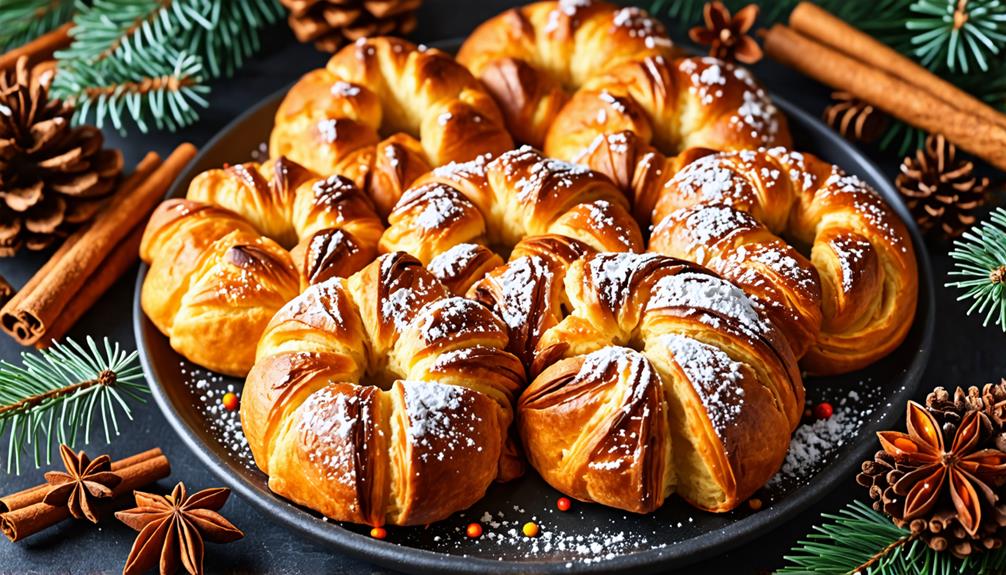
It's a curious coincidence that while exploring traditional holiday treats, one stumbles upon Pains d'Épices, France's unique gingerbread cookie. This festive delight stands out not just for its rich blend of spices and distinct rye flour base, but also for its ability to adapt to modern baking methods. A closer look reveals intriguing historical roots and serving suggestions that elevate it beyond mere dessert. What makes this cookie a beloved staple during the festive season, and how does its preparation reflect the cultural nuances of French cuisine?
Need cookware for your meal? Toolbox, a Pear to Pear rental marketplace, might be worth a look.
Quick Takeaways
- Pains d'épices is a French gingerbread made primarily with 100% rye flour, giving it a distinct texture and flavor.
- The recipe typically features spices like ginger, cinnamon, and cloves, resulting in a rich flavor profile.
- Traditionally baked at low temperatures for extended periods, modern recipes allow for quicker baking at higher temperatures.
- It pairs well with hot beverages and can be served warm with toppings like whipped cream or ice cream.
- Regional adaptations and historical roots make Pains d'épices a cherished holiday symbol in France, celebrating its rich cultural significance.
Recipe Overview
The enticing aroma of freshly baked gingerbread wafts through the kitchen, inviting everyone to indulge in this holiday classic. Pains d'épices, France's unique gingerbread, stands out with its rich flavor profile, featuring a harmonious blend of spices like ginger, cinnamon, and cloves. Made with 100% rye flour, this festive treat offers a distinct texture that sets it apart from typical gingerbread recipes.
Traditionally, Pains d'épices is baked at low temperatures for extended durations, allowing the flavors to meld beautifully. However, modern adaptations provide quicker preparations by increasing the baking temperature while preserving that dense, sturdy crumb.
For those looking to elevate their creation, incorporating ingredients like candied ginger or dried fruits can impart a delightful fruitcake-like flavor without the heaviness.
Perfect for the holiday season, this gingerbread not only makes an excellent gift but also pairs wonderfully with hot beverages. Whether served sliced and toasted or warm alongside whipped cream or ice cream, Pains d'épices brings joy and warmth to any gathering.
Its inviting flavors and comforting texture make it a beloved centerpiece for festive celebrations.
Baking Techniques
Baking the perfect Pains d'épices requires a few essential techniques to guarantee a delightful result. Traditionally, this festive gingerbread cookie is baked at low temperatures for several hours, allowing the flavors to meld beautifully. However, modern adaptations enable home bakers to enjoy quicker baking at higher temperatures, making it more accessible.
To achieve a moist and fluffy texture, incorporating baking powder into the dough is key. It not only improves the rise of the bread but also contributes to that lightness everyone craves. Using high-quality spices, such as ground ginger and ground cinnamon, is vital for crafting a balanced flavor profile that elevates the cookie.
Bakers should also pay attention to their mixing techniques. Gradually incorporating unsalted butter into the wet ingredients can enhance the dough's overall texture, ensuring a successful bake.
Additionally, opting for light-colored aluminum pans promotes even baking, while dark metal pans require a slight temperature reduction to prevent over-browning. By mastering these baking techniques, anyone can serve up a delightful Pains d'épices that's sure to impress family and friends during the festive season.
Historical Context
Understanding the rich historical context of Pains d'épices enhances the appreciation for this festive gingerbread cookie. This classic French gingerbread traces its origins back to ancient China, where it began as honey bread. After the Crusades, the recipe made its way to Europe, particularly through Flanders, and by 1596, King Henri IV established it as a staple in France. He highlighted the use of rye flour, ensuring that traditional baking techniques were preserved.
During the Renaissance, the spice trade flourished, introducing a variety of spices that became essential to gingerbread's flavor profile, especially in regions like Burgundy. Originally crafted in monastic kitchens, Pains d'épices was a luxurious treat during the medieval period, made with precious spices by dedicated monks.
As time passed, regional adaptations emerged across France, each incorporating local ingredients and flavors, which further solidified the cookie's cultural significance during the holiday season.
Today, Pains d'épices remains a cherished symbol of festive gatherings, inviting families to share its rich history while enjoying the delightful blend of spices that define this beloved cookie.
Serving Suggestions
Festive gatherings come alive with the delightful pairing of Pains d'épices and comforting beverages like hot tea, coffee, or rich hot chocolate. These beverages enhance the spiced flavor profile of the gingerbread, providing warmth and comfort during chilly celebrations.
For a revitalizing twist, serve Pains d'épices alongside clementine oranges, as their bright citrus notes beautifully complement the dense sweetness of the cookie.
For those seeking indulgence, warm Pains d'épices topped with whipped cream or vanilla ice cream transform the treat into a decadent dessert option. The rich textures create a perfect harmony, making it an irresistible choice for guests.
Additionally, incorporating Pains d'épices into a cheese platter adds a unique flair; their balanced sweetness pairs surprisingly well with stronger French cheeses, offering a delightful contrast.
To elevate the flavor experience further, consider serving fig jam or apple compote alongside the Pains d'épices. These fruity accompaniments provide a luxurious touch, enriching the overall tasting experience.
With these serving suggestions, hosts can guarantee that their festive gatherings are memorable and filled with delicious, comforting flavors that everyone will savor.
Author Background
Virginia Willis stands out as a luminary in the culinary world, seamlessly blending her Southern roots with French culinary traditions. As a James Beard Award-winning food writer, she captivates audiences with her expertise in creating delightful recipes that celebrate both cultures.
With seven cookbooks to her name, Virginia shares her passion for homemade sweets, showcasing innovative twists on traditional desserts, including festive cookies with royal icing.
Based in Atlanta, she emphasizes the importance of quality ingredients, like granulated sugar and baking soda, in her baking endeavors. During the festive season, Virginia encourages home bakers to experiment with sugar and spices to create memorable treats that can be shared with loved ones.
Her engaging cooking demonstrations for Food Network Kitchen continue to inspire many, while her personal website and social media platforms foster a connection with a global audience, inviting everyone to partake in the joy of baking.
Through her work, Virginia Willis not only celebrates the art of cooking but also nurtures a sense of community among those who share her love for delicious food and heartfelt gatherings.
Community Engagement
How do communities come together to celebrate the joy of baking during the holiday season? The answer often lies in vibrant community engagement. Holiday baking events invite individuals to gather, share their cherished pains d'épices recipes, and swap delightful stories about their baking journeys. These gatherings foster connections and create a sense of belonging among participants.
Social media platforms amplify this spirit, with hashtags like #PainDEpices sparking conversations among bakers. Online baking groups and forums provide spaces for enthusiasts to discuss ingredient variations, share techniques, and adapt traditional recipes to local tastes. This collaborative environment enriches the baking experience, allowing everyone to contribute their unique flair.
Cookie swaps and local markets further enhance community ties, as bakers showcase their personalized twists on pains d'épices. Each shared cookie becomes a token of connection, strengthening relationships among neighbors and friends.
Recipe blogs play an essential role, too; feedback and ratings create a dynamic dialogue where bakers exchange successes and challenges, promoting a supportive culture of shared learning. Ultimately, community engagement in holiday baking transforms individual efforts into collective joy, making the season brighter for all involved.
Common Questions
What Are the Key Ingredients in Pain D'épices?
When exploring the key ingredients of pain d'épices, one finds a delightful blend of flavors.
This traditional treat features honey, which sweetens the dough, and various spices like cinnamon, ginger, and nutmeg, adding warmth and character.
Flour and milk contribute to the texture, while a touch of orange zest brings a revitalizing citrus note.
Together, these elements create a fragrant, spiced cake that's perfect for sharing during festive occasions.
How Does Pain D'épices Differ From Traditional Gingerbread?
Golden brown and fragrant, pain d'épices captivates with its rich, spiced aroma.
Unlike traditional gingerbread, which often leans heavily on molasses and brown sugar, pain d'épices showcases honey as its sweetener, lending a unique depth.
Its texture is softer, almost cake-like, while the addition of spices like anise and nutmeg creates a complex flavor profile.
This delightful treat invites gatherings, offering warmth and comfort to those lucky enough to indulge.
Can Pain D'épices Be Made Gluten-Free?
Yes, pain d'épices can definitely be made gluten-free.
A skilled baker can substitute traditional flour with gluten-free alternatives like almond flour or a gluten-free all-purpose blend. These substitutions maintain the cake's delightful texture and rich flavors.
What Are Common Variations of Pain D'épices?
Many people enjoy gingerbread, with over 80% of households in France indulging in festive treats during the holidays.
Variations of pain d'épices often include honey, orange zest, or even nuts, each adding a unique flavor profile.
Some bakers infuse their recipes with spices like star anise or cardamom, enhancing the warmth and aroma.
These delightful twists not only elevate the traditional recipe but also make for memorable gifts to share with loved ones.
How Should Pain D'épices Be Stored for Freshness?
To keep pain d'épices fresh, one should store it in an airtight container at room temperature.
This method preserves its moisture and flavor, ensuring it remains soft and aromatic.
If longer storage is needed, wrapping it tightly in plastic wrap and placing it in the freezer can extend its shelf life.
When ready to enjoy, simply thaw it at room temperature, and it'll taste as delightful as the day it was baked.
Wrapping Up
To conclude, pains d'épices stands as a scrumptious staple of French festivities, showcasing a superb symphony of spices and textures. With its rye flour foundation and delightful additions, this delectable dessert dazzles taste buds and warms hearts. Whether enjoyed as a cozy companion to a cup of tea or transformed into a tantalizing treat with whipped cream, it promises to please palates. Embracing tradition and modernity, this gingerbread gem continues to charm culinary enthusiasts everywhere.