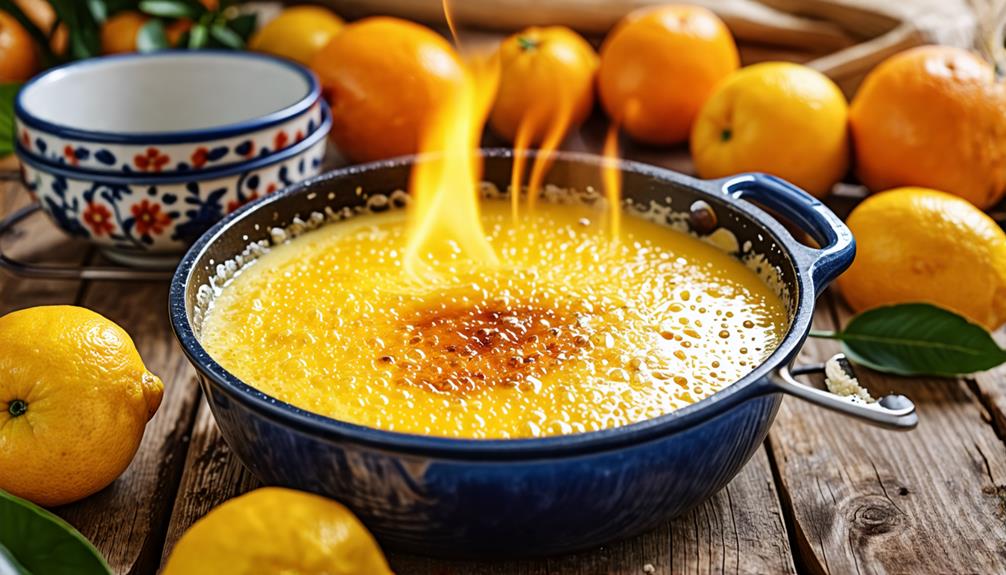
In Spain, Crema Catalana is a beloved dessert enjoyed by nearly 90% of households, showcasing its cultural significance. This creamy custard, often compared to crème brûlée, holds a unique charm with its caramelized top and zesty undertones. Understanding how to craft this traditional treat can elevate any culinary repertoire. By following a simple yet precise set of steps, anyone can master this dish. The process begins with essential ingredients and techniques that are vital for achieving the perfect texture and flavor—an exploration of which will reveal some helpful tips for a successful outcome.
Need cookware for your meal? Toolbox, a Pear to Pear rental marketplace, might be worth a look.
Quick Takeaways
- Infuse 250 ml of whole milk with a cinnamon stick and lemon zest by simmering gently for 5-10 minutes for enhanced flavor.
- Whisk four large egg yolks with 100 grams of sugar until frothy, then temper by gradually adding the warm milk mixture.
- Strain the combined mixture through a fine mesh sieve to ensure a smooth custard consistency before returning it to the saucepan.
- Cook the custard over medium-low heat while stirring constantly until thickened, then pour into ramekins and chill for at least 4 hours.
- Caramelize the sugar on top using a kitchen torch or broiler, serving immediately for a crispy crust.
Overview of Crema Catalana
Crema Catalana captivates dessert lovers with its rich history and delightful flavors. This traditional Spanish dessert hails from Catalonia and boasts origins that stretch back to the 14th century, making it one of Europe's oldest custard treats.
Unlike its French counterpart, the crè me brûlée, which relies on heavy cream, Crema Catalana uses milk, resulting in a lighter, less sweet custard that perfectly balances indulgence and subtlety.
The enchanting flavors come from a combination of a cinnamon stick and the zest of lemon, giving the dessert a unique aromatic profile that tantalizes the senses. Traditionally prepared on March 19, during the celebration of Crema de Sant Josep, this dish features a crispy caramelized sugar crust that adds a satisfying crunch just before serving.
Presented in individual ramekins, Crema Catalana not only delights the palate but also enhances the aesthetic of any dining table, making it an ideal choice for festive occasions and elegant dinner parties.
This dessert's rich heritage and exquisite taste guarantee it remains a beloved staple, inviting everyone to savor a truly authentic Catalan experience.
Essential Ingredients
Crafting the perfect Crema Catalana starts with a carefully selected array of essential ingredients that work in harmony to create its signature taste and texture.
At the heart of this delightful custard lies 500 ml of whole milk, which forms the creamy base. The richness of the milk is beautifully complemented by four large egg yolks, serving as the primary thickening agent that gives the dessert its luxurious consistency.
To elevate the flavor profile, a single cinnamon stick infuses the mixture with a warm, aromatic essence, while the peel of one lemon adds a bright citrus note that cuts through the sweetness. This combination of flavors is essential for achieving the authentic taste of Crema Catalana.
Granulated sugar, measured at 100 grams, plays a dual role in the recipe. It sweetens the custard, ensuring a delightful balance, and becomes the key ingredient for caramelizing the top, creating that iconic crispy crust that contrasts perfectly with the smooth custard beneath.
With these essential ingredients, anyone can initiate the journey to create a traditional Catalan dessert that's sure to impress.
Preparing the Milk Mixture
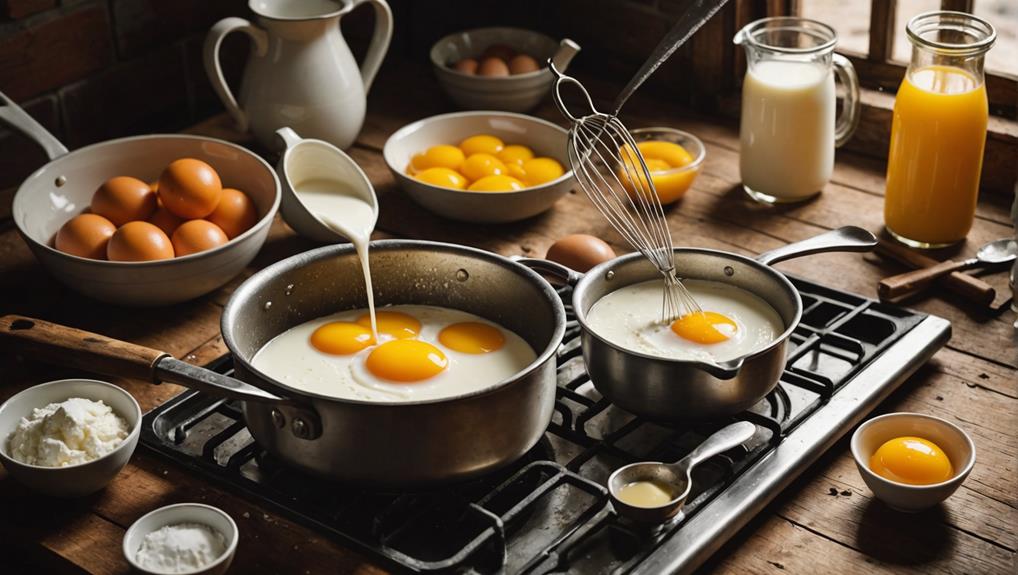
To create the perfect base for Catalan Crema Catalana, selecting high-quality whole milk is essential.
Infusing the milk with lemon peel and a cinnamon stick not only enhances the flavor but also elevates the dessert's aromatic profile.
Maintaining a gentle simmer while carefully stirring prevents scorching and guarantees a smooth, rich custard base.
Milk Selection and Quality
What makes the milk choice so important in preparing the perfect Crema Catalana? The answer lies in the creamy texture that whole milk provides, which is essential for achieving that velvety custard. When selecting milk, it's critical to prioritize quality, as this directly influences the final flavor profile.
- Opt for organic or high-quality whole milk to avoid additives.
- Use fresh milk at room temperature to guarantee even heating.
- Infuse with a cinnamon stick and citrus zest for depth of flavor.
Careful attention to these details enhances the infusion process, allowing the warm milk to mingle gently with the cinnamon and citrus, enriching the overall taste.
Simmering the milk with these flavorings over medium-low heat for about 10 minutes allows for maximum extraction without boiling, setting the stage for a delightful dessert. The result is a rich, aromatic base that serves as the heart of Crema Catalana, ensuring every spoonful is a creamy delight.
Infusion Techniques for Flavor
While preparing the milk mixture for Crema Catalana, the infusion technique plays a pivotal role in developing a rich and aromatic custard base. To start, one should combine 250 ml of whole milk with a cinnamon stick and strips of lemon and orange zest in a saucepan. This mixture sets the stage for an exquisite flavor profile.
Next, the cook places the saucepan over medium-low heat, allowing the milk to simmer gently. This careful heating guarantees the flavors infuse beautifully without boiling, which could compromise the taste. Stirring occasionally prevents sticking and promotes an even infusion of the cinnamon and citrus notes.
After about 5-10 minutes, the milk becomes fragrant and aromatic. At this point, it's crucial to remove the mixture from heat, allowing the flavors to meld perfectly.
To guarantee a smooth custard base, one should strain the infused milk through a fine mesh sieve, eliminating any solid remnants of zest or cinnamon. This step assures a velvety texture, setting the foundation for a delightful Crema Catalana that will surely impress anyone fortunate enough to enjoy it.
Temperature Control During Heating
After infusing the milk with those delightful flavors, controlling the temperature during heating becomes essential to achieving the perfect custard. The key lies in using medium-low heat to gently warm the milk mixture, guaranteeing it never reaches a boil.
Boiling can curdle the egg yolks, ruining the creamy texture that's so important for Crema Catalana.
To promote success, consider these critical points:
- Use a thermometer: Monitor the temperature, aiming for around 180°F (82°C) before incorporating the egg yolks.
- Whisking constantly: Stir the milk mixture continuously to promote even heating and prevent scorching at the bottom of the saucepan.
- Timing is essential: When the milk steams but doesn't boil, it's the ideal moment to slowly blend it with the egg mixture, whisking continuously to maintain a smooth custard.
Whisking the Egg Yolks
To kick off the process of crafting a luscious Crema Catalana, whisking the egg yolks is an essential step that sets the foundation for the custard's creamy texture. Start with four large egg yolks, which will serve as the primary thickening agent.
In a mixing bowl, whisk the egg yolks together with 100 grams (1/2 cup) of granulated sugar until the mixture becomes frothy and pale in color. This transformation indicates that the sugar is well incorporated, enhancing the overall sweetness of the custard.
It's important to whisk vigorously to fully emulsify the egg yolks, ensuring a smooth and creamy texture in the final dessert. Adding one tablespoon of cornstarch to the egg yolk and sugar mixture provides additional thickening power and helps prevent curdling during cooking.
As you prepare to incorporate hot milk into this mixture, continuous whisking is crucial during the tempering process. This careful technique avoids cooking the yolks too quickly, which can lead to unwanted lumps.
Combining Mixtures
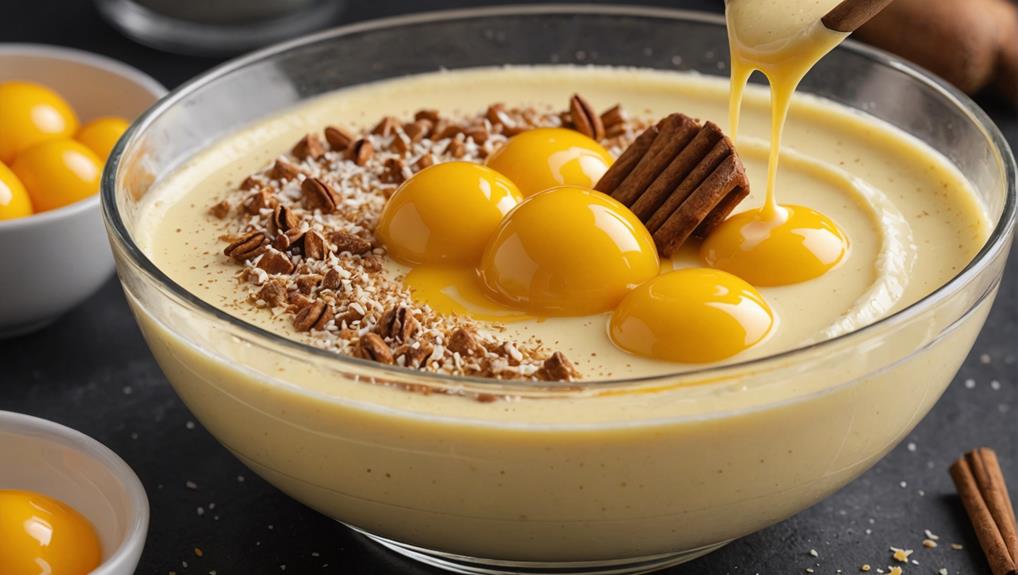
The magic of Crema Catalana truly begins when the rich egg yolk mixture meets the warm, fragrant milk infusion. First, one must whisk together four large egg yolks, granulated sugar, and cornstarch until the blend is smooth and creamy.
Gradually, the warm milk—infused with a cinnamon stick and lemon zest—is poured into the egg mixture, all while continuously whisking to prevent curdling.
To guarantee a silky texture, it's vital to strain the combined mixture through a fine mesh sieve, removing any lumps or undissolved cornstarch. Once the mixture is smooth, it returns to a saucepan for cooking. Here, stirring constantly over medium-low heat allows the custard to thicken, creating that luxurious consistency everyone loves.
- The blending of flavors creates an exquisite taste experience.
- Straining assures a velvety finish, elevating the dish.
- Pouring into individual ramekins offers a delightful presentation.
After thickening, the custard is ready to be poured into individual ramekins, where it will cool before refrigerating for at least two hours to set properly. This step is vital for serving a dessert that impresses.
Cooking the Custard
To create a rich and flavorful custard, the infusion techniques play an essential role.
Heating whole milk with a cinnamon stick and lemon zest not only enhances the taste but also sets the stage for a creamy texture.
As the egg yolks, sugar, and cornstarch blend seamlessly, whisking continuously guarantees a smooth consistency, preventing any unwanted curdles.
Infusion Techniques for Flavor
Infusing flavor into Crema Catalana elevates its creamy custard to a whole new level, and the process starts by gently simmering whole milk with a cinnamon stick and vibrant strips of lemon zest. This gentle infusion allows the citrus oils and aromatic properties of the cinnamon to meld beautifully, enhancing the overall flavor profile of the dessert.
It's vital to avoid boiling the milk mixture, as this can scorch the milk and alter the taste of the custard. After about 10 minutes of simmering, the milk transforms into warm infused milk, rich with flavor.
Once infused, strain the milk through a fine mesh sieve to remove the cinnamon stick and zest, ensuring a smooth custard texture.
When combining the tempered egg yolk mixture with the warm infused milk, it's important to whisk continuously to prevent curdling, which results in a creamy custard base.
- The right balance of spices creates a delightful experience.
- Consistency is key to achieving the perfect custard.
- Patience in the process yields the best results.
With these techniques, anyone can serve a beautifully flavored Crema Catalana that's sure to impress.
Whisking for Smooth Texture
While cooking the custard, whisking is essential for achieving that coveted smooth texture. To start, one must whisk together the sugar, cornstarch, and egg yolks until the mixture appears smooth and frothy, creating a solid base for a creamy custard.
Next, it's important to gradually incorporate the warm infused milk into the egg mixture. Whisking continuously during this step prevents the eggs from curdling, ensuring a harmonious blend.
As the custard begins to heat, maintaining a low temperature is vital. Stirring constantly while cooking the custard helps achieve that desired smooth texture without lumps. Should any lumps form during the process, straining the custard through a fine mesh sieve quickly resolves the issue, resulting in a silky consistency.
Whisking throughout the cooking process, especially during the initial heating, plays a significant role in preventing separation. It fosters the creamy texture that defines a traditional Catalan crema catalana.
When done right, this custard becomes a delightful treat, ready to impress those gathered around the table, making every effort in the kitchen worthwhile.
Cooling and Chilling
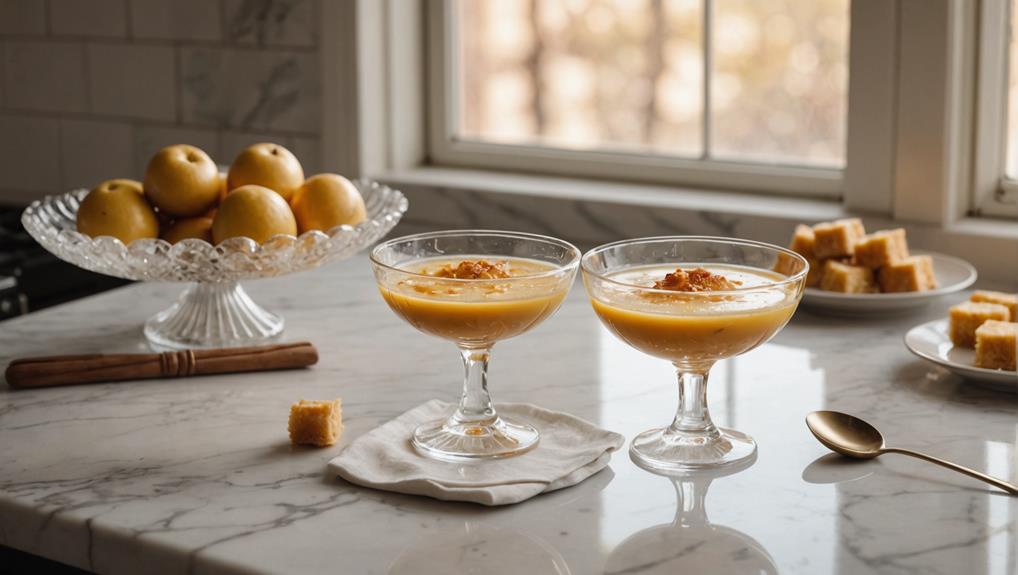
Once the custard mixture is cooked to perfection, it's vital to pour it into individual ramekins, allowing each serving to cool and chill evenly. This step not only enhances presentation but also guarantees that every bite of the Crema Catalana has the same luxurious texture.
To achieve the best results, consider these key points:
- Cover the ramekins with plastic wrap or a lid to prevent a skin from forming on the custard's surface during cooling.
- Chill the custard in the refrigerator for at least 4 hours; this time allows it to set properly, creating that coveted smooth texture.
- For convenience, you can prepare the custard up to 2-3 days in advance, making it easier to serve when guests arrive.
Proper cooling is essential for the custard to develop its flavor and consistency.
Remember, the custard should be completely cool before moving on to the next step of caramelization.
Caramelizing the Sugar
After allowing the custard to chill thoroughly, the next exciting step is caramelizing the sugar on top, which transforms Crema Catalana into a visually stunning and delectable dessert.
To achieve this, the chef should sprinkle a thin, even layer of granulated sugar over the chilled custard in individual ramekins. For a quick and efficient method, using a kitchen torch is ideal. Holding the flame about 4 inches above the sugar, the chef moves in circular motions until the sugar melts and turns a deep brown color, indicating proper caramelization.
Alternatively, the oven's broiler can be employed, but this requires close monitoring to prevent burning. Typically, this method takes about 5-10 minutes.
Regardless of the technique, the goal is to create a hard, crispy sugar crust that beautifully contrasts with the creamy custard underneath. It's crucial to serve the Crema Catalana immediately after caramelization to make certain the sugar crust remains crispy.
This delightful texture enhances the overall flavor experience, making each bite a celebration of tradition and craftsmanship.
Serving Suggestions
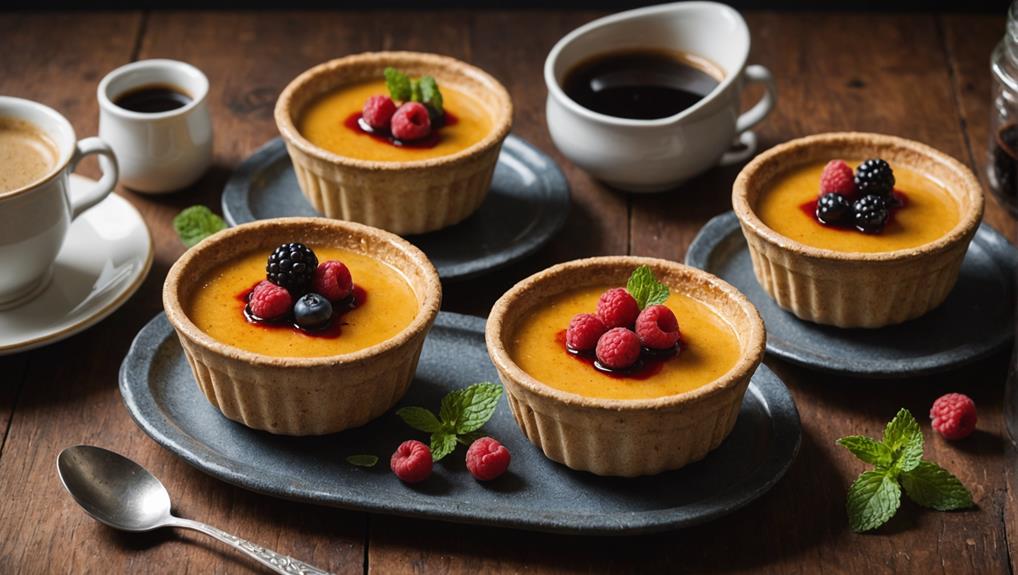
Serving Crema Catalana is an art that enhances both its visual appeal and flavor. To truly appreciate this classic Spanish dessert, it's crucial to serve it immediately after caramelization. This guarantees that the contrast between the warm, crispy sugar crust and the cool, creamy custard remains intact.
Individual clay ramekins not only showcase the dessert beautifully but also add to its traditional aesthetic.
For an elevated dining experience, consider these serving suggestions:
- Pair with fresh fruits, such as vibrant berries or zesty citrus slices, which add a revitalizing element and complement the rich custard.
- Accompany with a light dessert wine, like Moscatel or Pedro Ximénez, whose sweetness pairs perfectly with the dessert's flavors.
- Present the Crema Catalana as a centerpiece at gatherings, celebrating its cultural significance, especially for those who appreciate authentic Catalan cuisine.
Tips for Best Results
To achieve the best results when crafting Crema Catalana, careful attention to detail is necessary throughout the process. Start by using whole milk for the crema catalana recipe, as it guarantees a rich, creamy consistency that substitutes simply can't replicate.
When it comes to infusing the milk, consider adding lemon zest and a cinnamon stick while heating; this adds a delightful depth of flavor to the custard.
Next, temper the egg yolks by gradually whisking in the hot milk. This step is essential to prevent curdling, resulting in a silky smooth texture.
Once combined, pour the mixture into ramekins and allow the custard to chill for at least four hours. Proper chilling is critical, as it helps set the custard perfectly.
When it's time to serve, caramelize the sugar by holding the torch about four inches above the custard, moving in circular motions for an even golden crust. This technique prevents burning and enhances presentation.
Common Questions
What Is Crema Catalana Made Of?
Crema Catalana's rich composition includes whole milk for creaminess, egg yolks for thickening, and sugar for sweetness. Aromatic notes from cinnamon and lemon peel elevate its flavor, while cornstarch guarantees a smooth, resilient custard.
How Is Crema Catalana Different From Crème Brûlée?
Crema Catalana's light, zesty charm contrasts sharply with crèeme brûlée's rich indulgence. While the former highlights citrus and cinnamon, the latter revels in creamy decadence, showcasing their unique textures and flavors that delight every palate.
How to Thicken Crema Catalana?
To thicken Crema Catalana, one combines egg yolks and cornstarch. They whisk the yolks with sugar, gradually mix in cornstarch, and cook over low heat until it thickens, ensuring a creamy, smooth custard.
What Is the Difference Between Flan and Crema Catalana?
When friends gather for a celebration, they often debate flan and Crema Catalana. Flan's rich, caramel-topped texture contrasts with Crema Catalana's lighter, cinnamon-infused essence, creating a delightful culinary experience that showcases their unique cultural origins.
Wrapping Up
Crafting Crema Catalana is like weaving a tapestry of flavors; each step adds to the rich, sweet finale. Once the luscious custard is chilled and the sugar caramelized into a crackling crown, it transforms into a work of art. Just as a skilled artisan patiently perfects their craft, so too does this dessert require care and passion. With every creamy spoonful, one can savor the essence of Catalonia, creating a delightful experience that lingers long after the last bite.