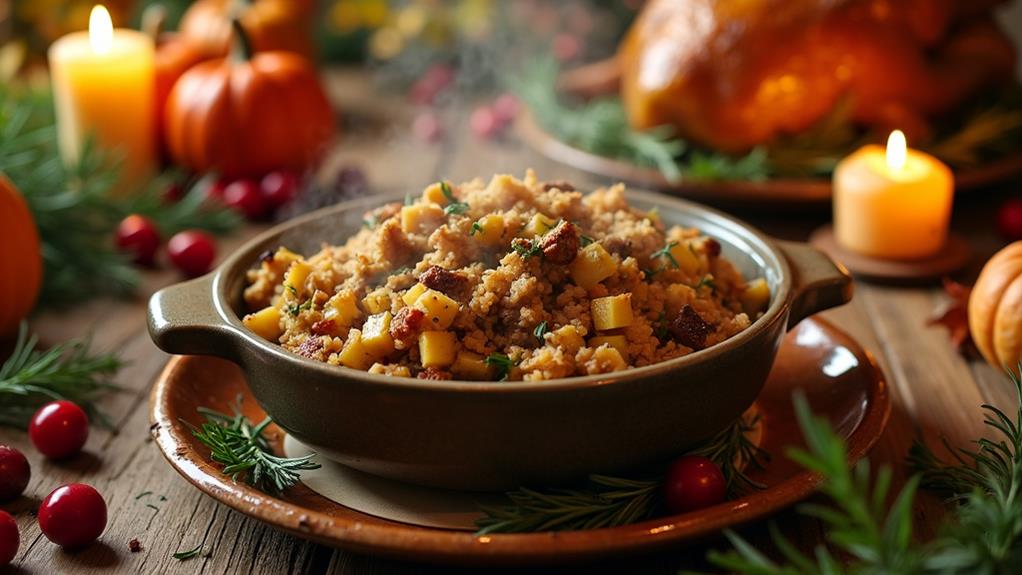
When Sarah decided to host her first Thanksgiving, she turned to her grandmother's classic stuffing recipe, which featured day-old bread, sautéed onions, and fragrant herbs. As she gathered the ingredients, she wondered how this simple dish could transform her holiday table. With its rich texture and ability to absorb flavors, stuffing often becomes the heart of the meal. Yet, the question remains: what variations and techniques can elevate this traditional favorite into something truly memorable for guests?
Need cookware for your meal? Toolbox, a Pear to Pear rental marketplace, might be worth a look.
Quick Takeaways
- Use day-old bread for the perfect texture, allowing it to absorb flavors without becoming soggy.
- Sauté onions and celery in butter to create a flavorful aromatic base for your stuffing.
- Incorporate fresh herbs like parsley, rosemary, sage, and thyme to enhance the flavor profile of your stuffing.
- Bind the mixture with chicken broth and eggs to achieve richness and cohesion in the final product.
- Bake covered initially to retain moisture, then uncover for the last 10 minutes for a crispy top.
Traditional Stuffing Ingredients
When crafting the perfect Thanksgiving stuffing, the foundation lies in traditional stuffing ingredients that create a harmonious blend of flavors and textures. It all begins with day-old bread, essential for achieving that ideal texture and moisture level. This bread serves as the canvas, soaking up all the delicious flavors to come.
Next, onions and celery take center stage. Sautéed in butter until softened, they form a flavorful base, infusing the stuffing with aromatic goodness.
To elevate the dish further, fresh herbs like parsley, rosemary, sage, and thyme are added, each contributing its unique touch to the flavor profile.
Moisture is vital, and that's where chicken broth comes into play. It binds the ingredients together while enriching the stuffing with a savory essence.
Finally, eggs are incorporated to help bind everything, adding richness and ensuring a cohesive dish.
The combination of these traditional stuffing ingredients results in a homemade stuffing that's not just a side dish but a cherished part of the Thanksgiving feast. Each bite evokes warmth, nostalgia, and the spirit of togetherness, making it a delight to serve family and friends.
Step-by-Step Preparation
With the traditional stuffing ingredients prepared, it's time to move on to the step-by-step preparation that brings the dish to life.
First, verify that the day-old bread cubes are dried out, either by air-drying over 2-3 days or by baking them at 200°F for 1-2 hours. This step is vital for achieving the perfect texture that absorbs broth without becoming soggy.
Next, follow these essential steps to create a heartwarming stuffing for Thanksgiving:
- Sauté diced onions and celery in butter until softened, forming a flavorful base that fills the kitchen with irresistible aromas.
- In a large bowl, combine the sautéed vegetables with dried bread, fresh herbs like thyme and sage, and enough chicken or turkey broth to moisten the mixture thoroughly.
- Whisk together eggs and a bit of broth, then mix them into the stuffing to bind the ingredients evenly.
Baking and Serving Tips
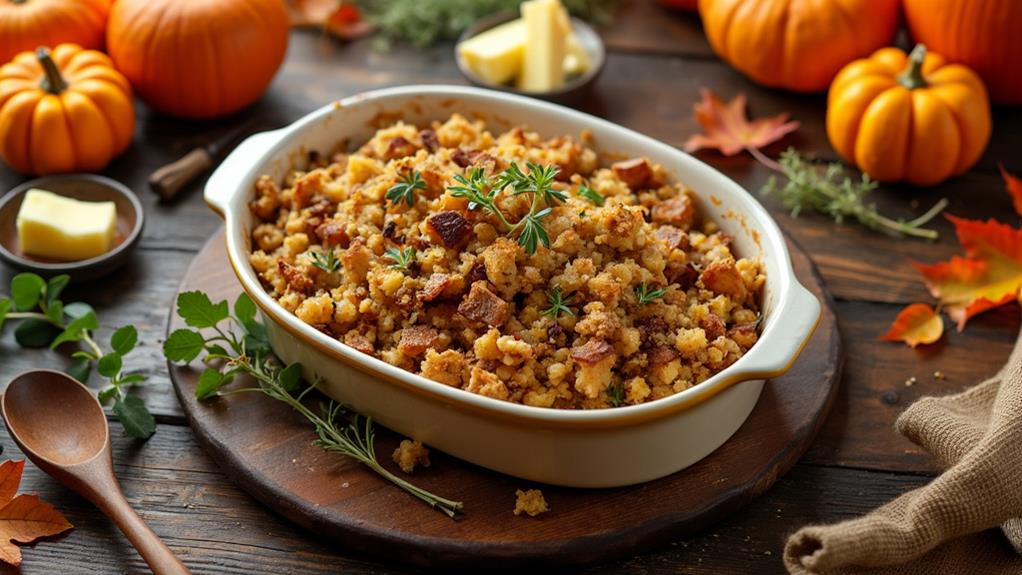
Baking the stuffing to perfection is vital for delivering a delightful Thanksgiving dish. To make the best stuffing, start by allowing the assembled mixture to sit at room temperature for about 30 minutes before baking. This step enhances the flavors and guarantees an even texture.
When ready, transfer the stuffing to a baking sheet, cover it, and bake for the first 35 minutes to retain moisture. After this time, uncover and bake for an additional 10 minutes to achieve that coveted crispy top.
For those preparing ahead, refrigerate unbaked stuffing overnight. Just before baking, consider tossing to combine the ingredients once more and adding additional broth to maintain moisture. It's essential to verify the internal temperature of the stuffing reaches 160°F for safe consumption.
To enhance both appearance and taste, dot the top with additional butter before the final baking phase. This simple touch elevates the dish, creating a golden crust that invites guests to dig in.
Storing and Freezing Stuffing
After that perfect bake, storing and freezing stuffing properly guarantees it remains delicious for days to come. For those who want to savor every bite of their Thanksgiving creation, they should follow these essential tips:
1. Refrigerate promptly: After cooling completely, transfer the stuffing to an airtight container.
It'll stay fresh in the refrigerator for up to 4-5 days, ensuring that each serving is just as delightful as the first.
2. Freeze for later: For longer storage, place stuffing in a freezer-safe dish, cover it tightly with aluminum foil, and it can last for up to 3 months.
This way, the joy of Thanksgiving can be enjoyed even when the holiday is over.
3. Reheat with care: When ready to enjoy frozen stuffing, thaw it overnight in the refrigerator.
Bake at 350°F for about 20 minutes, adding a splash of broth if needed to retain moisture and flavor.
Creative Leftover Ideas
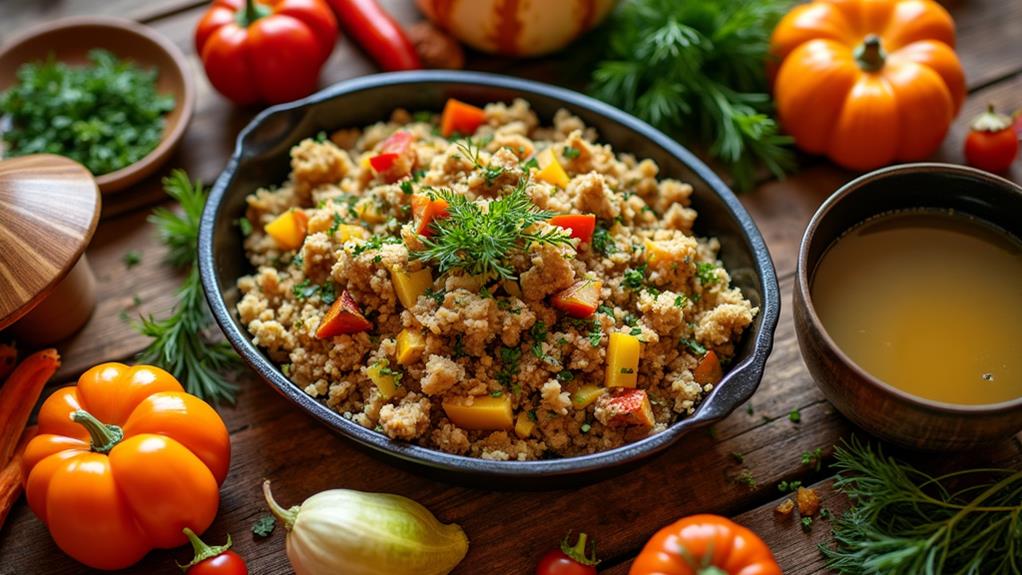
Leftover stuffing doesn't have to be a mundane afterthought; it can be the star of creative new dishes that delight the palate. One delightful option is to transform leftover stuffing into a savory breakfast hash. By sautéing it with diced potatoes, onions, and eggs, you can whip up a hearty meal that's perfect for starting the day.
For a fun twist on brunch, try making stuffing waffles. Simply mix leftover stuffing with eggs and cook it in a waffle maker for a crispy, delicious treat.
Another crowd-pleaser is the Thanksgiving sandwich, where layers of leftover stuffing, turkey, and cranberry sauce create a mouthwatering combination that guarantees a delicious bite.
Additionally, incorporate stuffing into stuffed bell peppers. Mix it with ground meat or beans, stuff the peppers, and bake until tender for a comforting meal.
If there's still leftover stuffing after these creative endeavors, consider freezing it in airtight containers or freezer bags. This allows for easy reheating and enjoyment later, helping to guarantee that no delicious morsel goes to waste.
Embrace these creative leftover ideas and keep the Thanksgiving spirit alive long after the holiday!
Common Questions
What Is Traditional Stuffing Made Of?
Traditional stuffing's rich flavor and satisfying texture stem from a blend of day-old bread, sautéed onions, and celery.
Fresh herbs like parsley, sage, rosemary, and thyme infuse it with aromatic goodness. Moisture comes from chicken or turkey broth, binding the ingredients together, while eggs provide structure.
Seasoned with a mix of spices, the stuffing is baked to perfection, forming a golden-brown crust that delights the senses and enhances any meal.
What Is the Best Stuffing Mix for Thanksgiving?
As the golden leaves of autumn swirl around, the search for the perfect stuffing mix begins. Cooks often find that high-quality blends of dried bread cubes and savory herbs create a symphony of flavors.
Options like cornbread or herb-flavored mixes add warmth and comfort. By choosing natural ingredients, they guarantee every bite resonates with love.
Embracing dietary preferences, gluten-free or vegetarian mixes make it easy to welcome everyone to the table, sharing joy and gratitude.
Is Stuffing Better With or Without Eggs?
When deciding if stuffing's better with or without eggs, one must consider texture and flavor.
Eggs bind ingredients, creating a cohesive dish that holds up beautifully during cooking. They add moisture and richness, enhancing overall taste. Additionally, eggs contribute protein, making stuffing more nutritious.
While omitting them might lead to a looser texture, adjustments can be made. Ultimately, including eggs often brings a nostalgic touch to gatherings, making it a cherished choice for many.
Is It Better to Make Stuffing With Fresh or Dry Bread?
When pondering whether to use fresh or dry bread for stuffing, one might imagine a culinary showdown.
She knows that dry bread shines, absorbing broth without turning mushy, creating a delightful texture. Day-old favorites like sourdough offer robust flavor, while fresh bread can be dried in the oven for versatility.
A blend of both can elevate the dish, marrying softness with sturdiness, ensuring the stuffing's a crowd-pleaser at any gathering.
Wrapping Up
As the aroma of classic homemade stuffing wafts through the kitchen, it beckons loved ones to gather around the table, ready to savor a slice of tradition. This beloved dish, with its golden crust and savory filling, transforms any Thanksgiving feast into a warm embrace of flavors. With simple ingredients and a dash of love, stuffing not only captures the essence of holiday togetherness but also inspires creative ways to enjoy leftovers, ensuring the joy lingers long after the meal.