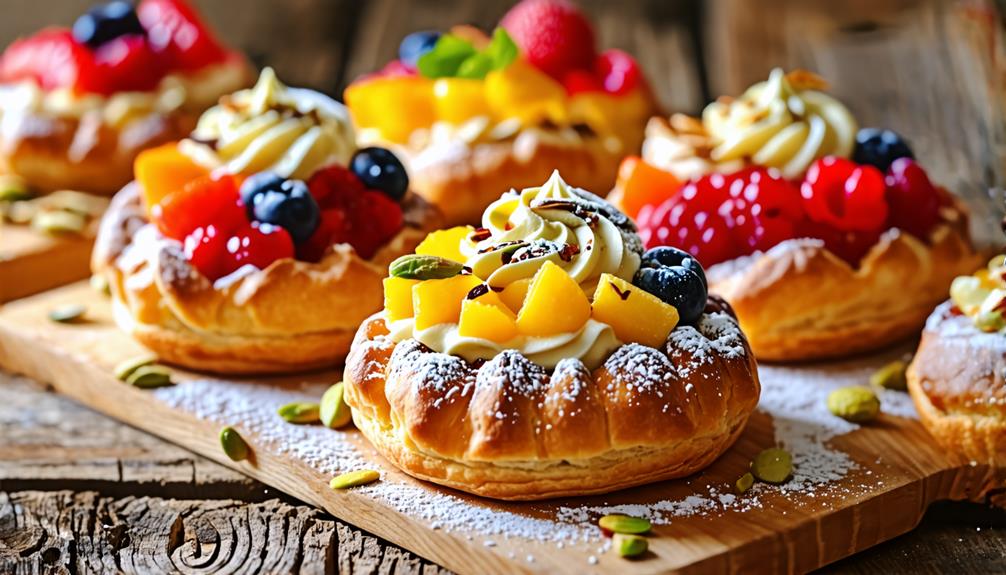
There's a theory that traditional Danish pastries can't be improved upon, yet many bakers are proving otherwise with unique twists. By incorporating unexpected flavors and innovative techniques, they're transforming these classic treats into modern delights. The question arises: what happens when seasonal ingredients and bold combinations meet time-honored recipes? Exploring this fusion of tradition and creativity might reveal a new appreciation for these beloved pastries, as well as inspire both home bakers and culinary enthusiasts to rethink their approach.
Need cookware for your meal? Toolbox, a Pear to Pear rental marketplace, might be worth a look.
Quick Takeaways
- Incorporate seasonal fruit fillings like blueberries or raspberries to enhance the sweetness and freshness of Danish pastries.
- Experiment with unique fillings such as pistachio paste or matcha cream for innovative flavor profiles.
- Utilize alternative doughs, like gluten-free or phyllo, for unique textures in traditional pastries.
- Creative shaping techniques, like braiding or knotting, can modernize the presentation of Danish pastries.
- Engage in community baking events to share and discover unique recipes and filling variations, fostering creativity among bakers.
Overview of Danish Pastries
Danish pastries, with their irresistible flaky layers and buttery richness, have become a cherished staple in many cultures worldwide. Originating in Denmark, these delightful treats are often enjoyed during breakfast or as satisfying snacks.
The magic behind traditional Danish pastry lies in its laminated dough, a meticulous process that involves folding layers of butter into the dough. This technique creates a light, airy texture that melts in the mouth.
Among the popular variations, spandauer features a luscious filling of fruit or custard, while tebirkes boasts a topping of poppy seeds, often complemented by a sweet marzipan filling. Each bite reveals a unique harmony of flavors and textures, making them irresistible to pastry lovers everywhere.
The name "Danish pastry" gained traction in the United States during the 19th century, yet its roots remain deeply embedded in Danish culinary traditions. Typically garnished with icing, nuts, or seeds, these pastries add an extra layer of indulgence.
Whether served at a gathering or enjoyed alone, Danish pastries bring joy and satisfaction, elevating any occasion with their exquisite taste and charming presentation.
Creative Flavor Combinations
Exploring creative flavor combinations can elevate the experience of enjoying Danish pastries to new heights. Traditional puff pastry becomes a canvas for innovation when bakers dare to think outside the box. Here are some delightful ideas to inspire your next pastry creation:
- Seasonal fruit fillings: Incorporate fresh blueberries or strawberries for a burst of natural sweetness.
- Unique fillings: Experiment with pistachio paste or matcha cream to introduce intriguing flavor profiles.
- Sweet and savory contrasts: Pair a creamy cheese filling with caramelized onions or herbs for a delightful twist.
By infusing the dough with spices like cardamom or nutmeg, bakers can create aromatic pastries that pay homage to Danish heritage.
Unconventional toppings, such as crushed lavender or citrus zest, not only enhance the visual appeal but also add an aromatic finish that intrigues the senses.
These creative flavor combinations transform classic Danish pastries into memorable treats, perfect for serving guests at any gathering.
With a little imagination and willingness to experiment, anyone can create pastries that aren't just delicious but also an experience to savor.
Techniques for Modern Twists
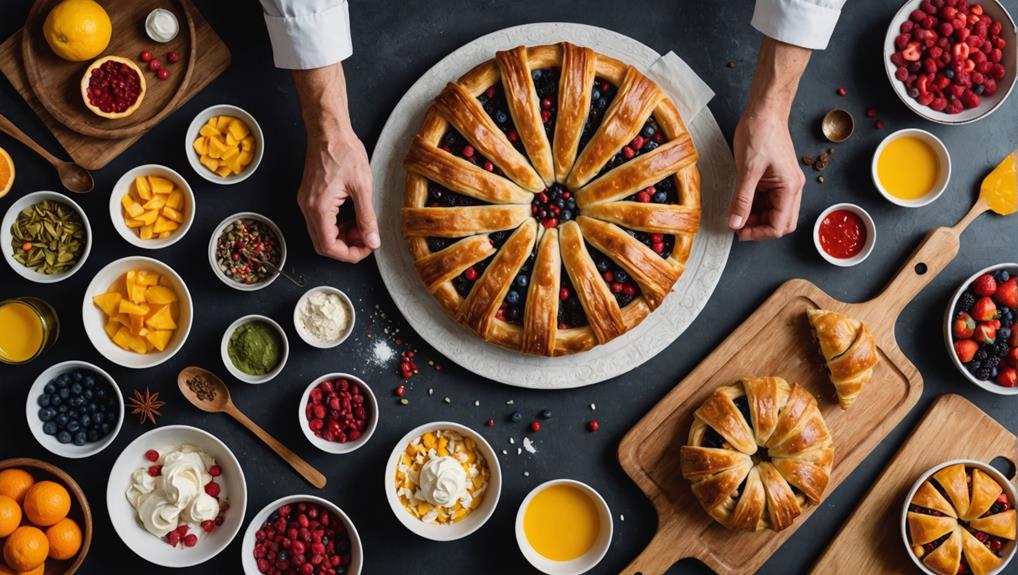
Bakers today are reimagining traditional Danish pastries by incorporating innovative techniques that breathe new life into these beloved treats. By experimenting with alternative doughs, such as phyllo or gluten-free options, they create unique textures while preserving the essence of classic Danish pastry. This approach allows for a delightful crunch that contrasts beautifully with the tender layers of pastry.
In addition, modern bakers are embracing seasonal ingredients, like pumpkin puree in the fall or fresh berries in the summer, enhancing the freshness and appeal of their creations. These seasonal touches not only celebrate the changing seasons but also connect with diners in a meaningful way.
Furthermore, creative shaping techniques, such as braiding or knotting, give a contemporary twist to the classic presentation of Danish pastries. These eye-catching designs invite curiosity and elevate the dining experience.
Unique Filling Ideas
While traditional fillings like custard and fruit preserves remain popular, the world of Danish pastries opens up to a myriad of unique filling ideas that excite the palate. By experimenting with the base Danish pastry dough, bakers can create delightful variations that impress guests at any gathering.
- Almond paste or marzipan for a nutty richness
- Seasonal fruits like blueberries or raspberries for a fresh twist
- Savory blends, such as cream cheese and herbs, for a bold contrast
Incorporating almond paste into pastries like Frøsnapper adds a luxurious, nutty flavor that complements the flaky texture.
For a fresh and fruity experience, seasonal fruits can enhance the sweetness, enticing anyone with a fondness for nature's bounty.
On the other hand, savory fillings, such as a cream cheese and herb mixture, offer a delightful departure from traditional sweetness, perfect for those who crave something different.
Additionally, flavored cream cheese, like lemon or vanilla, can introduce unexpected layers of taste.
And for chocolate lovers, a rich filling of chocolate or Nutella transforms a classic treat into an indulgent delight.
These unique filling ideas guarantee that Danish pastries continue to captivate and satisfy.
Presentation Styles for Pastries
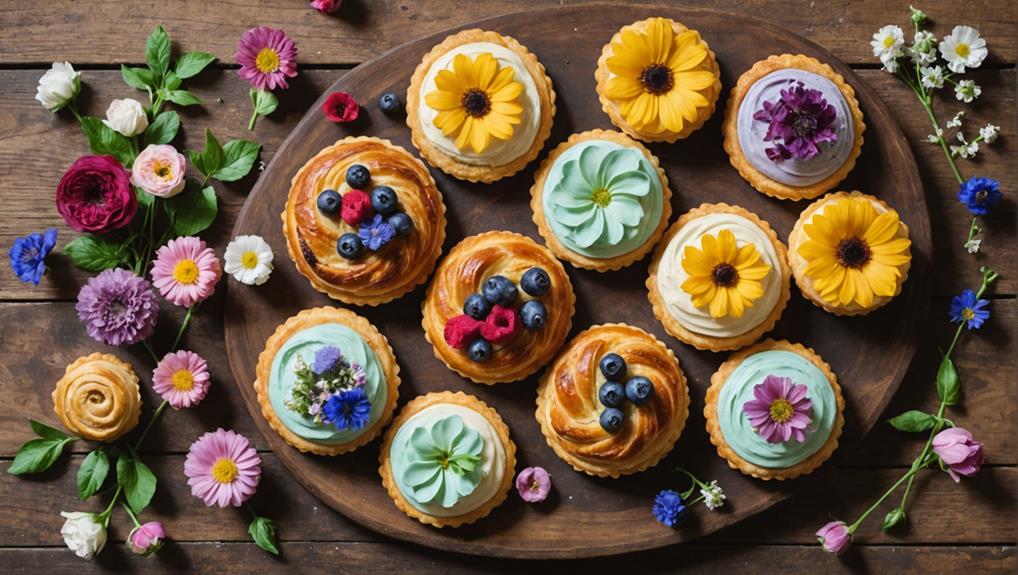
When it comes to presenting Danish pastries, the art of elegant plating can transform a simple treat into a visual masterpiece.
By incorporating creative garnishing ideas and showcasing seasonal ingredients, bakers can highlight the pastries' textures and flavors while enchanting their guests.
This approach not only elevates the overall experience but also makes each pastry a feast for the eyes.
Elegant Plating Techniques
Elevating the presentation of Danish pastries transforms them from simple treats into exquisite culinary art. By incorporating thoughtful plating techniques, one can create a stunning visual experience that delights guests and enhances any gathering.
- Use contrasting colors in garnishes to bring your pastries to life.
- Incorporate height with tiered stands for an eye-catching display.
- Drizzle glazes artistically for a polished finish.
Serving these delicate pastries on decorative plates or slate boards, lined with parchment paper or cloth napkins, adds texture and sophistication. Fresh berries or edible flowers can elevate the visual appeal, providing a vibrant contrast to the buttery pastry layers.
To create depth, stack pastries or arrange them in an elegant spiral. A drizzle of glaze cascading down the sides not only enhances aesthetics but also invites indulgence.
Finally, a dusting of powdered sugar or a sprinkle of nuts, such as poppy and sesame seeds, can add the perfect finishing touch, creating a harmonious blend of elegance and flavor.
With these elegant plating techniques, Danish pastries evolve into a centerpiece that beckons guests to partake in their beauty and deliciousness.
Creative Garnishing Ideas
Elegant plating techniques set the stage for creative garnishing ideas that can truly elevate Danish pastries. To enhance the visual appeal, one can use edible flowers or fresh fruit slices as vibrant garnishes, adding a revitalizing pop of color. Drizzling melted chocolate or icing in artistic patterns not only beautifies the pastries but also enriches their flavor, creating a feast for the eyes and palate alike.
Additionally, sprinkling finely chopped nuts or seeds, like pistachios or almonds, introduces a gourmet touch and delightful texture, enticing guests to indulge. A delicate dusting of powdered sugar or cocoa powder finishes the pastries with elegance, complementing their sweetness and providing a refined look.
The presentation of the pastries plays a vital role in their overall impact. Arranging them on elegant platters or tiered stands transforms the display into an inviting centerpiece, showcasing their flaky layers and charming toppings.
This thoughtful approach to garnishing and presentation guarantees that each Danish pastry not only tastes exquisite but also captivates those fortunate enough to enjoy them. Elevating the experience of serving others becomes a true delight in every bite.
Seasonal Ingredient Showcases
As the seasons change, so do the flavors and colors that can invigorate Danish pastries, making them a delight to both the eye and the palate. By incorporating seasonal ingredients, bakers can elevate traditional recipes and create unique flavor profiles that celebrate each season's bounty.
- Summer: Fresh berries add a burst of color and sweetness to pastries like Frøsnappers.
- Autumn: Spiced apples bring warmth and heartiness, perfect for cozy gatherings.
- Winter: Seasonal spices, such as cardamom, lend a festive touch to traditional treats.
Utilizing locally sourced ingredients during their peak season promotes sustainability and guarantees the freshest taste. Presenting these pastries with edible flowers or vibrant fruit glazes can transform them into stunning centerpieces for special occasions.
Themed decorations, like festive shapes or seasonal colors, not only enhance the visual appeal but also invite guests to indulge in a sensory experience.
In this way, Danish pastries become more than just desserts; they transform into seasonal showcases, reflecting the essence of each time of year and offering a delightful experience for all who partake.
Baking Tips for Success
Baking Danish pastries can be a rewarding experience, but success hinges on mastering a few essential techniques.
First, proper lamination of the dough is important. Alternating layers of dough and butter creates that signature flaky texture. When rolling out the dough, a light hand is necessary; too much pressure can compress those precious layers.
Next, don't underestimate the significance of proofing time. Allow at least 2 hours for the yeast to work its magic, ensuring your pastries rise beautifully and achieve that airy structure everyone loves.
Before popping your creations in the oven, brush pastries with an egg wash. This step not only enhances their visual appeal with a gorgeous golden color but also adds a glossy finish that makes them irresistible.
Lastly, always preheat your oven to the required temperature. A hot oven is critical, as it allows your pastries to rise quickly and develop a crispy exterior, locking in that delightful texture.
Community Recipes and Sharing
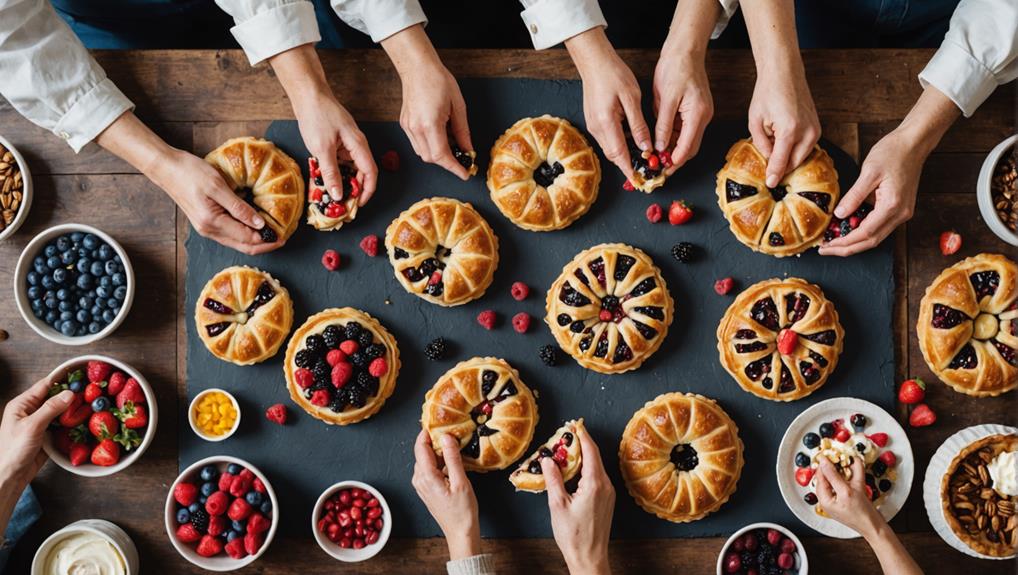
In the vibrant world of Danish pastries, home bakers enthusiastically share their unique recipes and innovative filling variations, sparking a wave of creativity.
Community baking events foster connections among enthusiasts, allowing them to exchange tips and techniques that elevate their pastry-making skills.
With an engaging platform for feedback and collaboration, aspiring bakers find inspiration and support as they explore the delightful art of crafting these beloved treats.
Recipe Sharing Experiences
Community recipes play a vital role in the world of Danish pastries, inviting bakers to showcase their unique interpretations of this beloved treat. This collaborative spirit not only fuels creativity but also enriches the baking community, allowing everyone to contribute and learn from each other.
- Bakers can explore seasonal ingredients, enhancing their pastries with fresh flavors.
- Participants share their personal twists, leading to a diverse array of recipes.
- Feedback from fellow bakers helps refine techniques and inspire new ideas.
Through these recipe sharing experiences, bakers cultivate a culture of innovation. Submitting variations encourages experimentation, as individuals feel empowered to add their flair to traditional recipes.
This dynamic exchange fosters an environment where every contribution is valued, making each recipe a reflection of personal taste and creativity.
Moreover, the act of sharing goes beyond just baking; it builds connections among community members. As bakers discuss their experiences and modifications, they inspire one another to dive deeper into their pastry-making endeavors.
In this way, the community not only preserves the art of Danish pastries but also celebrates the joy of creativity and collaboration in the kitchen.
Creative Filling Variations
Countless bakers have embraced the art of creative filling variations, transforming traditional Danish pastries into innovative culinary delights. From fruit jams bursting with flavor to zesty lemon curd, the possibilities are endless. Some adventurous home bakers even experiment with Nutella or savory options like cheese and spinach, broadening the traditional flavor profile.
Leveraging seasonal ingredients enhances these pastries further. In summer, fresh berries add a vibrant touch, while spiced pumpkin in the fall brings warmth and comfort. Many community members share their personal recipes, merging traditional fillings with modern twists, such as chocolate-hazelnut spread paired with raspberry cream cheese.
Creative filling variations also include delightful surprises like herbs and spices. Infusing rosemary or cardamom into the filling can elevate the taste experience, adding an unexpected yet welcome dimension.
The community thrives on sharing tips for making fillings from scratch, encouraging bakers to recreate authentic flavors while adding their personal touch. In this way, each pastry becomes not just a treat, but a canvas for creativity, inviting others to savor the rich tapestry of flavors that modern bakers bring to the beloved Danish pastry tradition.
Community Baking Events
Gathering together for community baking events sparks a joyful exchange of culinary creativity among local bakers. These gatherings create an inviting atmosphere where bakers can share their passion for traditional Danish pastries while exploring innovative twists through unique fillings.
- Participants often bring their own special recipes, showcasing diverse flavor combinations.
- Recipe contests add excitement, inviting bakers to compete for the title of best pastry.
- New friendships blossom as bakers bond over their shared love of baking.
At these community baking events, participants learn from each other, exchanging tips and techniques to enhance their skills. The supportive environment encourages bakers to step outside their comfort zones, experimenting with ingredients that might surprise even the most seasoned pastry enthusiasts.
The emphasis on unique fillings not only enriches the array of pastries but also strengthens local connections, promoting the cultural significance of Danish pastries within the community.
As bakers share their creations, they find joy in serving others, making each event a celebration of talent and community spirit. Ultimately, these gatherings nurture creativity, foster collaboration, and keep the cherished tradition of Danish pastries alive and thriving.
Common Questions
What Is the Most Traditional Danish Pastry?
The most traditional Danish pastry is the wienerbrød. It features flaky, layered dough enriched with butter, often filled with custard or fruit. This delightful pastry is perfect for sharing during Denmark's beloved coffee time, "kaffetid."
What Is Interesting About Danish Pastry?
What makes Danish pastries so delightful? Their flaky layers, rich buttery taste, and unique flavor combinations captivate everyone. These treats not only please the palate but also bring people together during festive celebrations, fostering shared joy.
What Is a Twisted Pastry Called?
A twisted pastry's called "Frøsnappere" in Denmark. These delightful treats boast a flaky texture and rich fillings, showcasing expert twisting techniques that create airy layers, making them perfect for breakfast or snacking with friends.
What Makes Danish Pastry Different?
"Variety is the spice of life," and Danish pastry stands out due to its flaky, laminated dough, yeast-leavened lightness, and delightful fillings. These elements create a unique, festive treat that elevates any gathering.
Wrapping Up
In the vibrant world of Danish pastries, tradition meets innovation like a dance of flavors and textures. By embracing unique fillings and modern techniques, bakers can create delightful surprises that tantalize the taste buds. Whether it's a tangy matcha cream or a sweet pistachio twist, these pastries invite everyone to indulge in their creativity. So, roll up your sleeves and let your imagination soar—because the art of Danish baking is limited only by your culinary dreams.