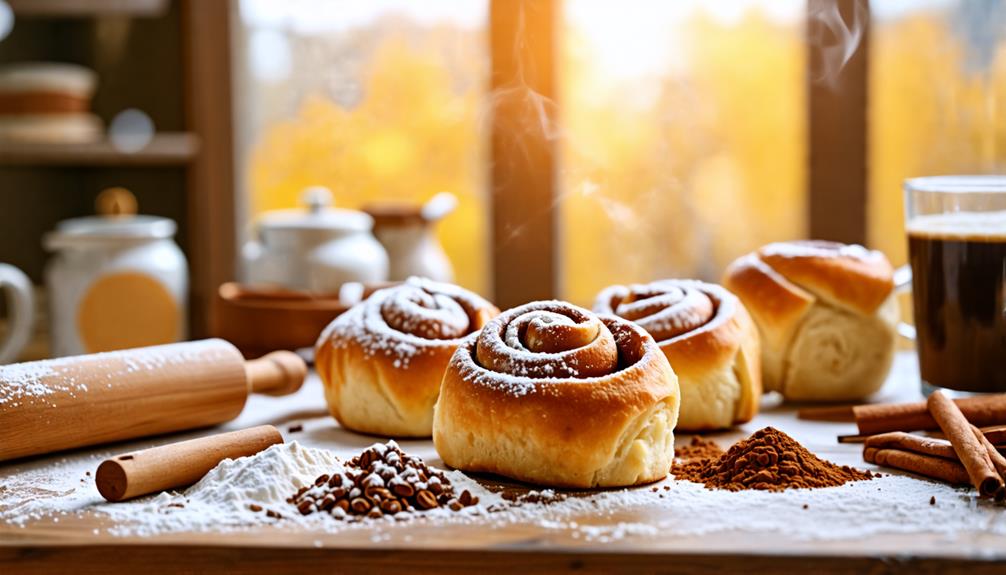
In a recent culinary workshop, a chef demonstrated the art of crafting traditional Scandinavian cinnamon rolls, or kanelbullar, capturing the attention of attendees with their rich aroma and unique flavor. This process, rooted in cultural significance, involves a few essential ingredients and techniques that can make or break the final product. However, the journey from dough preparation to the final bake is filled with nuances that many overlook. What are these critical steps that guarantee a perfect roll, and how can one adapt them for personal taste?
Need cookware for your meal? Toolbox, a Pear to Pear rental marketplace, might be worth a look.
Quick Takeaways
- Use all-purpose flour, granulated sugar, warmed milk, ground cardamom, and room temperature butter for authentic dough preparation.
- Activate yeast in warm milk with sugar, then combine with dry ingredients to form a soft dough.
- Roll the dough into a rectangle, add filling, fold, cut, twist, and shape into knots or spirals before rising.
- Brush shaped rolls with egg wash and sprinkle pearl sugar before baking at 375°F for perfect golden-brown kanelbullar.
- Store baked rolls in an airtight container for up to three days or freeze for up to two months for later enjoyment.
Cultural Background of Kanelbullar
Kanelbullar, or Swedish cinnamon buns, hold a special place in the hearts of many Swedes, particularly on October 4th, when the nation celebrates National Cinnamon Roll Day. These delightful pastries are more than just sweet treats; they embody a rich cultural significance tied to family heritage and community bonding.
The unique flavor of kanelbullar comes from the addition of cardamom, which sets them apart from typical American cinnamon rolls and adds a warm, aromatic essence.
Traditionally, kanelbullar are crafted in a twisted shape, showcasing a culinary technique that reflects Swedish baking traditions. This artistic presentation not only enhances their visual appeal but also symbolizes the care and craftsmanship involved in their preparation.
During fika, a cherished coffee break in Sweden, kanelbullar are often served, creating an opportunity for friends and family to gather, relax, and savor life's simple pleasures.
As bakers pass down recipes through generations, they preserve the legacy of kanelbullar, ensuring that this beloved pastry continues to be a cornerstone of Swedish cuisine. Celebrating National Cinnamon Roll Day allows everyone to honor these delicious buns and the meaningful traditions they represent.
Essential Ingredients for Success
To achieve the perfect kanelbullar, bakers need to gather several key ingredients that contribute to the rolls' unique flavor and texture. The foundation of these delightful treats is all-purpose flour, providing the necessary structure. Granulated sugar sweetens the dough, while whole milk, warmed to about 110°F (43°C), activates the instant yeast, guaranteeing a lovely rise.
Ground cardamom is vital for that distinctive Scandinavian flavor, infusing the rolls with a warm, aromatic essence. Using room temperature butter in both the dough and filling is important; it guarantees even distribution and prevents melting that could compromise texture.
For a finishing touch, pearl sugar is sprinkled on top, offering a delightful crunch that complements the soft, sweet rolls beneath.
Those looking to craft a plant-based version can easily substitute almond milk and vegan butter, while binding alternatives like flaxseed or applesauce work beautifully in place of eggs.
Step-by-Step Dough Preparation
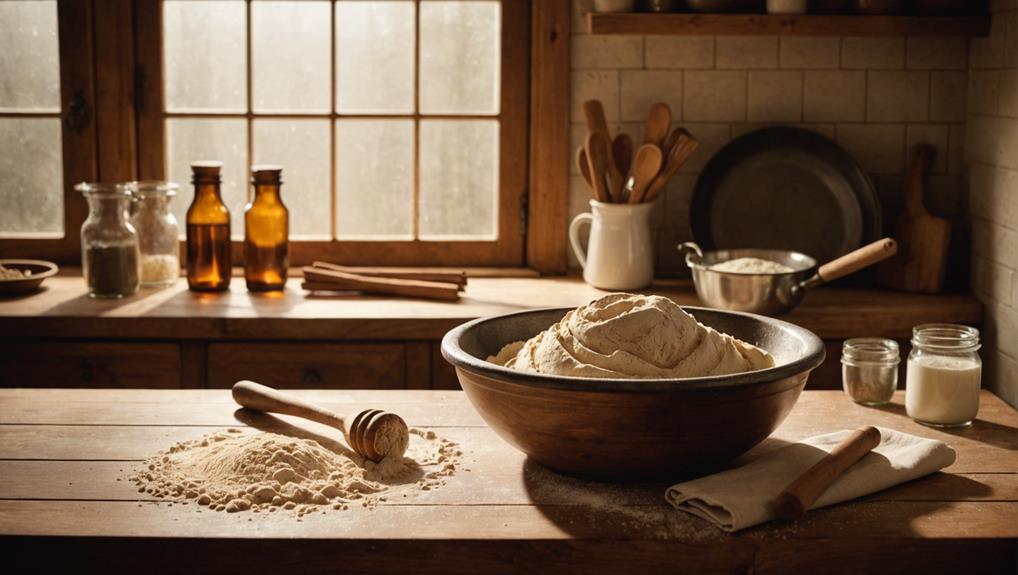
Creating the perfect dough is the cornerstone of any successful cinnamon roll endeavor. It all begins by activating the yeast in warmed milk, heated to 110°F, mixed with a bit of sugar. This bubbly mixture is essential for achieving that delightful rise.
Next, in a mixing bowl, combine all-purpose flour, sugar, ground cardamom, and salt to create the dry ingredients.
Once the dry mixture is ready, add the activated yeast and softened butter, stirring until a soft dough forms. The real magic happens when kneading begins; for 7-10 minutes, the dough transforms into a smooth, elastic texture. This step is vital, as it develops the gluten, ensuring a tender roll.
After kneading, place the dough in a warm place, covering it to rise for 1-2 hours until it doubles in size. This fermentation process enhances flavor and texture.
Shaping and Baking Techniques
Shaping cinnamon rolls is where the fun truly begins, turning the soft dough into delightful spirals that promise a sweet indulgence.
First, roll the dough into a rectangular shape, approximately 16×20 inches, guaranteeing an even distribution of the cinnamon filling. Spread the filling generously and fold the dough like a business letter, creating layers that intensify the flavor.
Next, cut the folded dough into strips, about 2 inches wide. Twist each strip gently before shaping them into traditional knots or spirals, bringing a charming aesthetic to the rolls.
Once shaped, it's vital to allow the buns to rise for an additional 30-45 minutes under a covered towel. This step guarantees they become light and fluffy, perfect for baking.
Before placing them in the oven, brush the risen buns with an egg wash for a shiny finish and sprinkle pearl sugar over the top for added sweetness and texture.
Bake at 375°F (191°C) for 15-18 minutes, watching for that beautiful golden brown hue. As the aroma fills the kitchen, anticipation builds for these delectable cinnamon rolls, ready to be served and savored.
Creative Variations to Explore

Cinnamon rolls aren't just a one-note treat; they provide a canvas for culinary creativity that can transform breakfast or dessert into an exciting experience.
To elevate traditional kanelbullar, experiment with fillings like Nutella, marzipan, or fruit preserves, each adding a unique flavor profile that delights the palate. For those seeking a vegan twist, simply swap dairy milk with plant-based alternatives and use vegan butter in the dough and filling, ensuring everyone can enjoy these treats.
Adding texture and richness can be as simple as incorporating nuts or chocolate chips into the filling, harmonizing beautifully with the classic cinnamon and cardamom flavors.
For a fresh taste, consider using flavored sugars such as vanilla turbinado or brown sugar, either within the rolls or as a delightful topping.
If adventurous hosts want to surprise their guests, they can create a savory version by replacing sweet fillings with a medley of herbs, cheese, and garlic.
This innovative approach transforms the beloved bun into a delightful appetizer, showcasing versatility that transcends traditional expectations. Each variation invites creativity and the joy of sharing unique treats with others.
Proper Storage and Reheating
To keep those delightful cinnamon rolls fresh, proper storage is key. They can sit at room temperature in an airtight container for up to three days or be frozen for longer enjoyment.
When it's time to savor them again, knowing the best reheating techniques guarantees they're just as warm and delicious as when they first came out of the oven.
Best Storage Practices
When it comes to enjoying cinnamon rolls at their best, proper storage and reheating techniques can make all the difference. To keep Scandinavian cinnamon rolls fresh, store them in an airtight container or zipped bag at room temperature for up to three days.
If there's a need for longer storage, freeze them, and they'll maintain flavor and texture for up to two months.
For ideal reheating, bake frozen rolls at 350°F (180°C) for 5-10 minutes until warmed through, ensuring they regain their soft texture.
If stored in the refrigerator, it's wise to under-bake the rolls slightly before cooling them completely; this helps retain moisture and prevents drying out. Consume refrigerated rolls within a week for the best taste.
To refresh previously baked rolls, pop them in a preheated oven for 5-10 minutes, or microwave for a quick warm-up of 10-15 seconds.
For an extra touch, consider brushing the rolls with simple syrup or melted butter after reheating. This not only enhances their sweetness but also adds a delightful level of moisture, making each bite irresistibly enjoyable.
Freezing for Future Use
The joy of savoring fresh cinnamon rolls can be extended far beyond their initial baking through proper freezing techniques. To guarantee every bite retains its delightful flavor and texture, bakers should consider under-baking the rolls slightly before they cool completely. This step allows the cinnamon rolls to freeze beautifully without losing their essence.
Once cooled, store them in ziplock bags or airtight containers, keeping individual rolls separate for easy reheating and portion control. To prevent moisture buildup, which can lead to sogginess, the rolls should be well-cooled before freezing.
For an extra touch of sweetness and moisture, brushing the rolls with simple syrup after baking can enhance their flavor when reheated. They can be stored in the freezer for up to two months, making them a convenient treat to enjoy later.
When it's time to indulge, simply bake the frozen rolls at 350°F (180°C) for about five minutes. This method allows them to warm through while achieving a slightly crispy exterior, making every bite a delightful experience, perfect for serving friends and family.
With these storage strategies, cinnamon rolls remain a cherished treat, ready to brighten any occasion.
Reheating Techniques Explained
How can one revive the delightful taste and texture of cinnamon rolls after they've been stored? To guarantee these treats maintain their deliciousness, proper storage is essential. Cooled Scandinavian cinnamon rolls should be kept in airtight containers or ziplock bags, allowing them to last up to a week at room temperature or two months in the freezer.
When it's time to enjoy them again, reheating is key. For frozen rolls, preheat the oven to 350°F (180°C) and bake for about five minutes to restore warmth and texture without drying them out. For those craving a crispy exterior, a higher temperature of 400°F (204°C) for a few minutes will do the trick. Conversely, a gentler reheat at 300°F (149°C) preserves their softness.
If the rolls have been in the refrigerator, let them reach room temperature first for even warming. To enhance both moisture and flavor, brush the rolls with melted butter before reheating. This simple step makes them taste freshly baked, guaranteeing that every bite is a delightful experience worth sharing.
Community Experiences and Insights
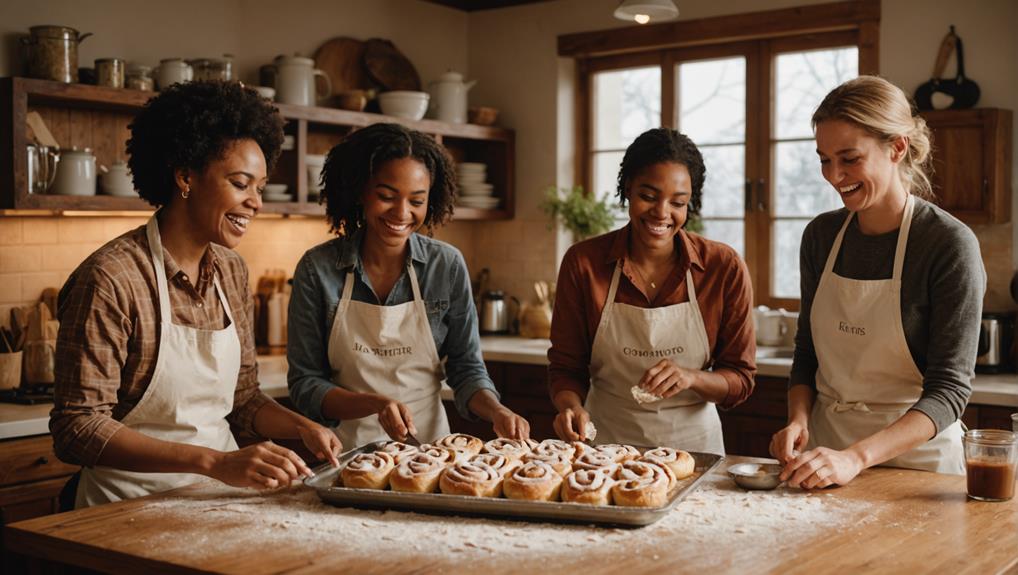
Baking traditional Scandinavian cinnamon rolls not only brings warmth to the kitchen but also fosters a deep sense of connection to heritage and family traditions. Many bakers find joy in sharing stories while preparing kanelbullar, elevating their communal experiences.
The unique flavor profile, highlighted by cardamom, sets these rolls apart from sweeter American versions, creating an irresistible treat that's perfect for gatherings.
Community discussions often revolve around the following:
- Recipe Variations: Bakers exchange creative adaptations, encouraging experimentation while preserving the essence of the traditional recipe.
- Troubleshooting Tips: Common issues, like dough rising failures and filling leaks, spark conversations where seasoned bakers provide invaluable advice.
- Cultural Significance: Celebrated on October 4th as National Cinnamon Roll Day, these rolls symbolize communal enjoyment and shared heritage.
- Shared Experiences: The act of baking becomes an opportunity to connect, as families and friends come together to enjoy the fruits of their labor.
In embracing these community insights, bakers not only enhance their skills but also deepen their appreciation for the rich cultural significance of kanelbullar.
Common Questions
What Is the Difference Between Swedish and American Cinnamon Rolls?
The difference between Swedish and American cinnamon rolls lies in their preparation and flavor. Kanelbullar features cardamom dough and pearl sugar, while American rolls are sweeter, often topped with icing, creating a distinct culinary experience.
What Are Swedish Cinnamon Buns Made Of?
Swedish cinnamon buns, or kanelbullar, feature a delightful blend of all-purpose flour, sugar, and butter, enhanced with cardamom. Their sweet filling combines butter, sugar, and cinnamon, topped with crunchy pearl sugar for added texture.
Are Cinnamon Rolls Danish or Swedish?
In an era where pastries reigned supreme, cinnamon rolls possess dual heritage; Swedish kanelbullar feature soft cardamom dough, while Danish kanelsnegle flaunt flaky layers. Each celebrates unique cultural identities, delighting taste buds across Scandinavia.
Why Are Cinnamon Rolls Popular in Sweden?
Cinnamon rolls enjoy immense popularity in Sweden due to their delightful flavor and cultural significance. They're a staple during fika, fostering community, and are widely baked at home and sold in bakeries, enhancing social experiences.
Wrapping Up
In the end, one might think that mastering kanelbullar is all about precision and technique, yet the true magic lies in the warmth of shared experiences. As the aroma of cinnamon and cardamom fills the air, it's easy to forget the meticulous steps taken. Instead, it becomes a celebration of togetherness, where even the most imperfect rolls can evoke smiles. So, while the recipe may guide the way, it's the laughter and love that truly bake these delightful treats.