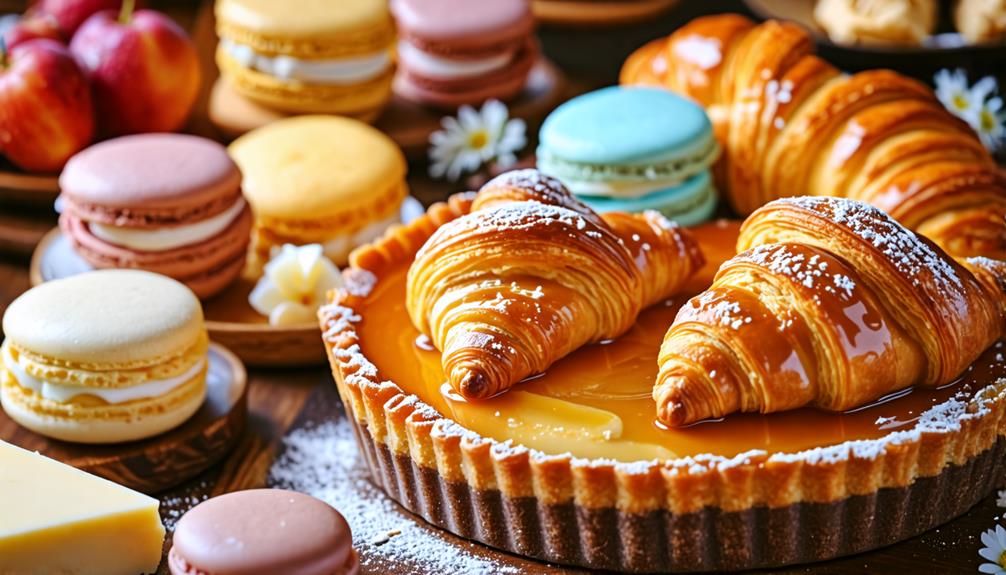
In the world of baking, mastering classic French pastries stands as a benchmark for many aspiring chefs. This guide offers a thorough exploration of essential tools, techniques, and authentic recipes that illuminate the intricacies behind creations like macarons and éclairs. By emphasizing precision and providing historical context, it equips bakers with the knowledge to elevate their skills. Yet, the question remains: what common pitfalls might they encounter on their journey to pastry perfection, and how can they effectively overcome these challenges?
Need cookware for your meal? Toolbox, a Pear to Pear rental marketplace, might be worth a look.
Quick Takeaways
- Essential baking tools like stand mixers and pastry molds are crucial for mastering classic French pastries.
- Understand foundational ingredients and techniques, including laminating dough and preparing choux pastry for authentic results.
- Step-by-step recipes with visual aids offer guidance for making intricate pastries like macarons and éclairs.
- Seasonal ingredients enhance flavor profiles, ensuring freshness and a connection to nature in your pastries.
- Avoid common mistakes, such as inaccurate measurements and overmixing, to achieve perfect textures in your creations.
Essential Tools for Baking
When it comes to baking classic French pastries, having the right tools is fundamental for achieving the perfect texture and flavor. A pastry chef understands that efficiency and precision are key. A stand mixer plays an important role in whipping egg whites and mixing dough, guaranteeing consistent results every time.
To achieve the delicate measurements critical in pastry-making, a food scale is indispensable. Equally important is a high-quality rolling pin, which allows for an even thickness in dough, particularly for flaky pastries like pâte feuilletée and tart crusts.
For those final touches, a pastry brush is necessary for applying egg washes or glazes, creating that coveted golden-brown finish. Investing in good-quality pastry molds and pans, such as fluted tart pans and éclairs molds, guarantees that pastries maintain their shape and presentation during baking.
Classic French Pastries Overview
Classic French pastries embody a rich tapestry of essential ingredients and techniques that every baker should master.
From the delicate macarons to the luxurious mille-feuille, each pastry tells a story rooted in historical significance and culinary artistry.
Understanding these iconic treats not only enhances baking skills but also fosters an appreciation for their evolution within French culture.
Essential Ingredients and Techniques
In the world of French pastry, essential ingredients and techniques play a pivotal role in crafting those iconic delights. Classic French pastries rely on foundational ingredients like flour, butter, sugar, and eggs, with variations such as almond flour and chocolate enriching flavor and texture. Mastering these essential ingredients sets the stage for success in the kitchen.
Techniques are equally important. For instance, laminating dough, a key method for creating flaky layers in croissants and puff pastry, requires precision and patience. Similarly, delicate pastries like macarons and éclairs demand exact measurements and techniques to achieve the perfect consistency.
Choux pastry, integral to both profiteroles and éclairs, involves cooking water, butter, and flour before incorporating eggs to develop a light, airy texture that puffs beautifully during baking.
Familiarity with French pastry terminology, such as pâte sucrée for sweet tart crusts and crème pâtissière for pastry cream, aids bakers in steering through recipes effectively. In addition, mastering essential techniques like tempering chocolate and creating caramel for tarte Tatin elevates classic French pastries, ensuring professional-level results that delight those fortunate enough to enjoy them.
Iconic Pastries to Master
There's a world of iconic French pastries waiting to be mastered, each offering a unique blend of textures and flavors that reflect centuries of culinary artistry.
For those enthusiastic to elevate their baking repertoire, four classic French pastries stand out:
- Macarons: These delicate, meringue-based cookies boast crisp shells and rich fillings, crafted from egg whites, powdered sugar, and almond flour. A true test of precision.
- Éclairs: Originating from the 19th century, these long choux pastries are filled with cream and topped with glossy chocolate icing. Their lightness contrasts beautifully with the richness of the filling.
- Mille-feuille: Translated as "a thousand leaves," this pastry consists of layers of puff pastry and pastry cream. It demands meticulous layering and baking techniques to achieve that perfect texture.
- Tarte Tatin: An upside-down caramelized apple tart, this pastry showcases a harmonious balance of sweet and tart flavors, requiring skill in both pastry and caramel preparation.
Mastering these classic French pastries not only enhances one's baking skills but also connects bakers with profound French culinary traditions that continue to delight palates worldwide.
Historical Significance of Pastries
The rich tapestry of French pastry history reveals a fascinating interplay between culture and culinary innovation. In the 16th century, Catherine de Medici's chefs introduced French pastry to the court, establishing a tradition that would flourish over the centuries.
Significantly, the profiterole, perfected by Jean Avice in the 18th century, showcased the evolution of filled choux pastry and expanded the classic repertoire of desserts.
As time progressed, the religieuse emerged in the 19th century, a pastry reflecting religious themes with its name translating to "nun." This illustrates how French pastry often intertwines with cultural narratives.
The mille-feuille, or "a thousand leaves," exemplifies the intricate layers of pastry that define French techniques, first documented by François Pierre de la Varenne in 1651. Its delicate layers captivate both the eye and palate.
Step-by-Step Recipe Guide
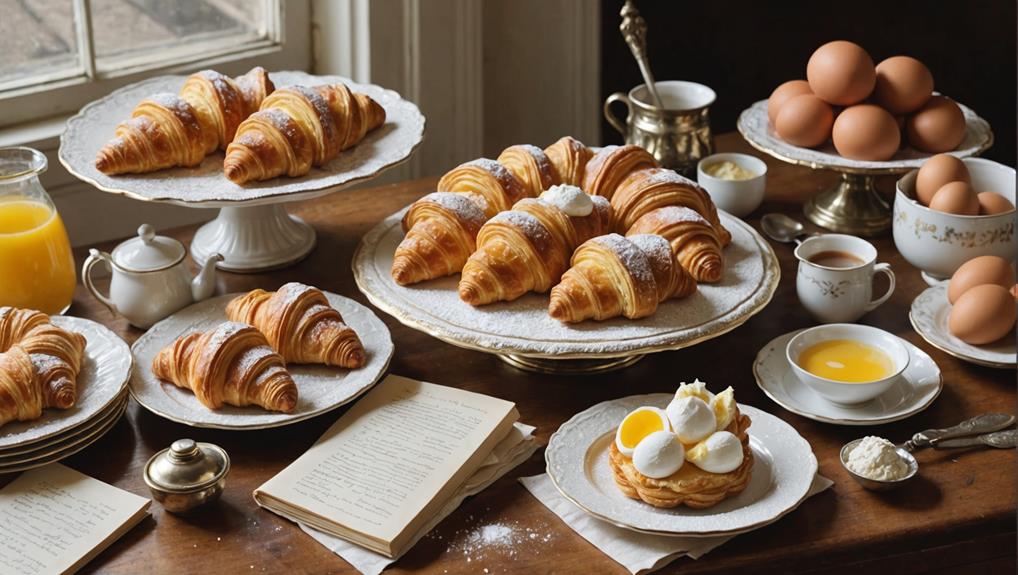
Baking classic French pastries can seem intimidating, but with a well-structured step-by-step recipe guide, anyone can master these delectable treats. Each recipe is designed to empower bakers, providing precise measurements in both U.S. and metric units for accuracy.
Clear instructions break down complex techniques, making it accessible for novices keen to impress.
To guarantee a successful baking experience, the guide includes:
- Essential tools and ingredients: A thorough list to prepare your kitchen for pastry-making.
- Historical context: Insight into French baking terminology and the origins of each pastry.
- Visual aids: Accompanying photographs illustrate expected results, guiding bakers throughout the process.
- Special notes: Tips on make-ahead options and common pitfalls bolster confidence, assuring authentic results.
Tips for Perfecting Techniques
While mastering classic French pastries can be intimidating, honing specific techniques elevates the baking process and secures delicious results. For instance, when crafting delicate croissants or mille-feuille, the technique of folding and turning dough is vital. Proper lamination guarantees even butter distribution, creating those coveted flaky layers.
When preparing macarons, achieving the perfect meringue is essential. Bakers should beat egg whites until stiff peaks form, then gently fold in dry ingredients to prevent deflation.
For éclairs and profiteroles, attention to detail while making pâte à choux is key. Cook the dough on the stove until it forms a smooth ball that pulls away from the sides of the pan, securing the right texture.
To fill these pastries with a rich and creamy delight, a stable crème pâtissière is necessary. Cook the mixture until it thickens and cool it properly before filling.
Finally, don't underestimate the importance of baking temperature; starting at a high temperature creates steam that lifts pastries, especially for palmiers and pain au chocolat.
Flavor Profiles and Pairings
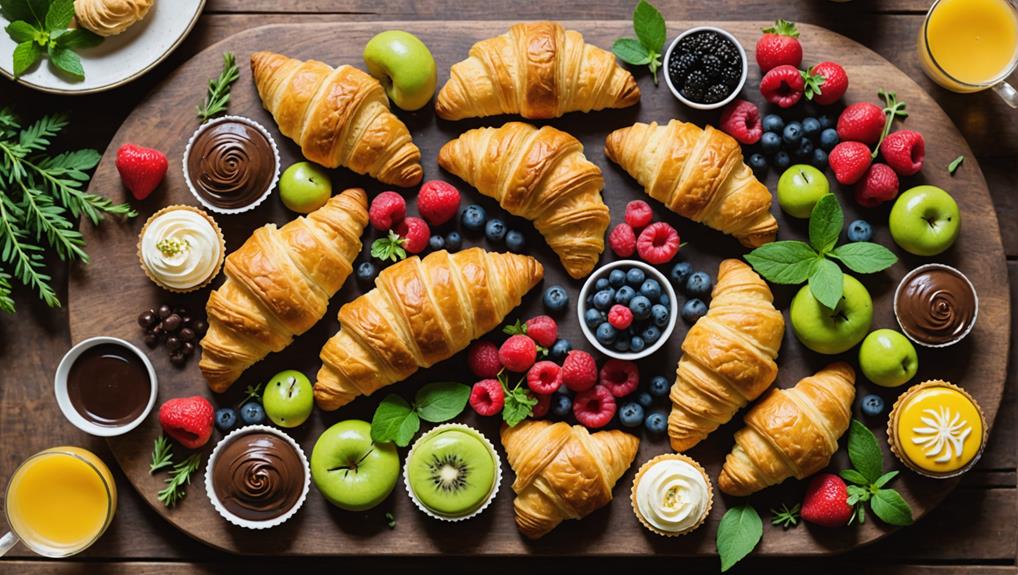
Classic French pastries thrive on a harmonious blend of flavors, where rich components meet bright accents.
Exploring seasonal ingredients and classic pairings enhances the overall experience, inviting the palate to appreciate the nuances of each creation.
From the zesty notes of citrus tarts to the earthy richness of nut-infused desserts, the right combinations can elevate any pastry to new heights.
Flavor Combinations to Explore
French pastries invite a symphony of flavors that elevate the dessert experience to new heights. The art of crafting a perfect tarte or pastry lies in exploring rich flavor combinations that tantalize the palate.
Here are four exceptional pairings to contemplate:
- Chocolate and Hazelnut: This classic combination enriches desserts like the iconic Paris-Brest, where the nuttiness complements the chocolate's depth.
- Citrus and Cream: Incorporating lemon or orange zest into a Mille Feuille adds brightness, cutting through the cream's richness and balancing sweetness.
- Seasonal Fruits and Spices: Combine peaches with cardamom or cinnamon in a Tarte Tatin to create a delightful contrast, enhancing the natural sweetness of the fruit.
- Savory and Sweet: Experimenting with herbs or cheese in a Tarte Flambée can yield unexpected yet harmonious flavors, showcasing the versatility of French culinary traditions.
These flavor combinations not only enhance the overall taste but also create a memorable experience for those you serve.
Mastering these pairings will transform any classic French pastry into a true work of art.
Seasonal Ingredients to Utilize
Utilizing seasonal ingredients not only enhances the flavor profiles of classic pastries but also celebrates the rhythm of nature throughout the year. For instance, incorporating seasonal fruits such as apples in autumn or strawberries in summer invigorates pastries like Tarte Tatin and Éclairs, yielding a fresh and vibrant taste.
The use of herbs and spices, like cardamom and orange zest in a Cardamom, Orange, and Pear Tarte Tatin, adds aromatic depth and complexity, elevating the overall experience.
In winter, brightening flavors with citrus fruits becomes essential. A Lemon Tart or grapefruit icing on Madeleines contrasts beautifully with rich, buttery textures, offering a revitalizing palate cleanser.
Additionally, supporting local agriculture by using seasonal produce, such as berries for Peach Melba, guarantees the freshest ingredients, resulting in superior flavor.
Classic Pastry Pairings
Many renowned pastries shine even brighter when paired with complementary flavors that enhance their unique characteristics. The art of pairing flavors can elevate any French pastry made with precision, transforming baked goods into unforgettable experiences.
Here are some classic pastry pairings to take into account:
- Macarons: These delicate treats flourish with raspberry, pistachio, or salted caramel, enhancing their sweetness and texture.
- Profiteroles: Traditionally filled with whipped cream, they reach new heights when drizzled with chocolate ganache or rich caramel sauces.
- Éclairs: The creamy filling can be elevated with coffee or vanilla, while a glossy chocolate icing adds elegance and richness.
- Madeleines: Known for their light, buttery texture, these pastries pair beautifully with citrus notes like lemon or orange zest, providing a revitalizing contrast.
Additionally, the mille-feuille, with its flaky layers, shines when served with fresh fruits like strawberries or raspberries, adding color and flavor.
Common Mistakes to Avoid
When tackling the delicate art of pastry making, it's crucial to avoid common pitfalls that can sabotage even the most experienced bakers. One critical mistake is inaccurate measurements; for instance, slight deviations in flour and sugar can drastically impact textures and rises, especially in macarons and éclairs.
Additionally, overmixing choux pastry leads to deflated profiteroles and éclairs, resulting in a dense final product instead of the desired airy lightness.
When preparing puff pastry, maintaining a cool temperature is imperative. Overheating the dough can prevent the formation of those flaky layers that are the hallmark of pastries like mille-feuille.
Moreover, always allow baked pastries to cool completely on a wire rack. This simple step prevents sogginess, preserving the intended texture of cannelés and fruit tarts.
Lastly, the quality of ingredients matters immensely. Using fresh eggs and high-quality butter guarantees vibrant flavor and excellent results, while stale or inferior ingredients can diminish the overall quality of classic French pastries.
Serving and Presentation Ideas
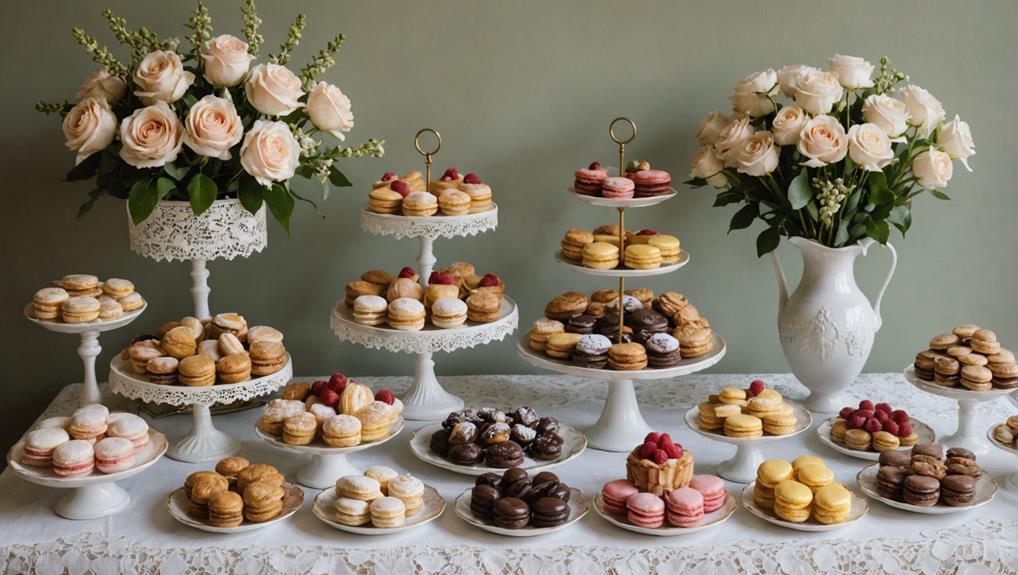
Elevating the presentation of classic French pastries can truly transform a simple dessert into a stunning centerpiece.
Thoughtful serving ideas not only enhance visual appeal but also elevate the dining experience for guests. Here are some creative suggestions:
- Macarons: Arrange these colorful delights in a tiered display, showcasing their vibrant hues and delicate textures, perfect for special occasions.
- Éclairs: Serve these elegant pastries on a long platter, garnished with fresh berries or edible flowers to create a sophisticated dessert table.
- Madeleines: Present these traditional treats in a vintage teacup or shell-shaped dish, highlighting their charm and making them a delightful addition to afternoon tea.
- Fruit Tarts: Use a glass dome to cover a lemon tart or a tarte tatin, showcasing the glossy fruit glaze while keeping them fresh and inviting until served.
Common Questions
What Is the Most Famous French Pastry?
In culinary discussions, the éclair often emerges as the most renowned French pastry. Its oblong shape, creamy filling, and glossy chocolate topping showcase exquisite craftsmanship, delighting palates and enchanting dessert enthusiasts around the world.
What Is the Most Famous French Pastry?
When considering the most famous French pastry, many would argue it's the éclair. This delightful treat captivates with its creamy filling and glossy chocolate icing, making it a beloved choice for dessert enthusiasts everywhere.
What Is the Number One Dessert in France?
Statistically, over 80% of French people enjoy crème brûlée, making it a beloved dessert. Its creamy custard and caramelized sugar contrast captivate taste buds, solidifying its status as France's number one dessert choice.
What Is Classic French Pastry?
Classic French pastries showcase intricate techniques and rich flavors, combining key ingredients like butter, eggs, and sugar. They embody culinary artistry, exemplified in creations like éclairs, macarons, and mille-feuille, enchanting dessert lovers worldwide.
Wrapping Up
Mastering classic French pastries isn't just an art; it's a science. With over 1,000 varieties of French pastries documented, bakers have endless opportunities to experiment and create. By honing essential tools and techniques outlined in this guide, aspiring chefs can elevate their craft, achieving precision in texture and flavor. As they explore the intricate world of French desserts, they'll not only enhance their skills but also delight in the exquisite presentations that define this culinary tradition.