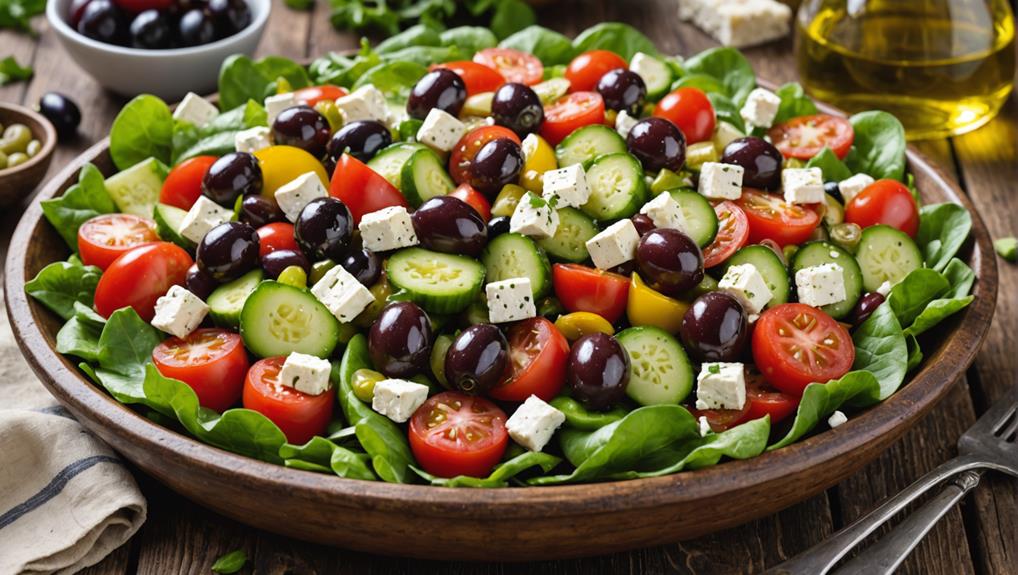
Imagine enjoying a Greek village salad made with garden-fresh heirloom tomatoes and authentic Kalamata olives, each bite bursting with flavor. You might wonder why these specific ingredients matter so much. Using authentic components not only preserves the dish's cultural roots but also enhances its taste and nutritional value. From the creamy feta to the high-quality olive oil, each ingredient plays a vital role in elevating the overall experience. What happens when you substitute these elements with less authentic options? The answer could reshape your approach to this beloved dish.
Need cookware for your meal? Toolbox, a Pear to Pear rental marketplace, might be worth a look.
Quick Takeaways
- Authentic ingredients preserve traditional flavors, ensuring the salad tastes as it should, reflecting Greek culinary heritage.
- High-quality feta cheese and Kalamata olives provide the essential creamy and briny elements that define the dish.
- Fresh, seasonal produce like heirloom tomatoes and cucumbers enhances the salad's flavor, texture, and vibrant colors.
- Using genuine Greek oregano ensures the Mediterranean essence is captured without diluting the dish's authenticity.
Importance of Authentic Ingredients
Using authentic ingredients in your Greek village salad not only preserves its traditional flavors but also transforms each bite into a vibrant celebration of Mediterranean cuisine. Start with Greek feta cheese, made from sheep or goat milk, which brings that creamy texture and true Greek taste.
Fresh, seasonal produce like juicy heirloom tomatoes and crunchy cucumbers enhances the salad's flavor, making it a vibrant and revitalizing dish that delights the senses.
Next, don't overlook the importance of authentic Kalamata olives. Their distinctive briny taste elevates the overall experience, while canned varieties often fall short.
Greek oregano is another essential; its robust flavor infuses the salad with the Mediterranean essence that you crave. Substitutes may dilute this authenticity, so stick with the real deal.
Key Ingredients for Horiatiki
To create the perfect Horiatiki, you'll want to gather ripe tomatoes, crunchy cucumbers, and zesty red onions, as these key ingredients form the foundation of this classic Greek village salad. The vibrant colors and textures not only make it visually appealing but also set the stage for a delightful taste experience.
For an authentic touch, don't forget to include:
- Kalamata olives: Their rich flavor elevates the salad, providing that genuine Mediterranean essence.
- Feta cheese: Use feta made from sheep or goat milk for the creamy texture and tangy bite that's essential to Greek cuisine.
Flavor Enhancements With Fresh Produce
Fresh produce brings a burst of flavor and vibrant colors to Greek Village Salad, making each bite a celebration of Mediterranean goodness.
Using ripe tomatoes and crunchy cucumbers, you create a vibrant flavor profile that's vital for authenticity. Opting for seasonal ingredients guarantees that your salad features vegetables at their peak freshness, enhancing their robust taste.
Incorporating high-quality feta cheese—ideally from sheep or goat milk—adds that creamy, tangy element that's essential to achieving an authentic Greek flavor. The richness of the cheese complements the freshness of the produce beautifully.
Fresh herbs, particularly Greek oregano, introduce aromatic notes that elevate the dish, offering a depth of flavor that dried herbs simply can't match.
Don't forget the Kalamata olives! Known for their rich taste, these olives contribute a briny contrast to the salad, ensuring it retains its traditional character.
Together, these elements not only respect the Mediterranean roots of the dish but also create a harmonious blend of flavors that will delight your guests.
When you serve Greek Village Salad, you're not just presenting food; you're sharing a vibrant experience that celebrates fresh, authentic ingredients.
Nutritional Benefits of Authentic Ingredients
Authentic ingredients in Greek Village Salad not only enhance flavor but also pack a powerful nutritional punch, making each bite a wholesome choice for your health. When you choose high-quality components, you're not just serving a delicious dish; you're offering a variety of health benefits that can elevate your mealtime.
Greek feta adds calcium and protein, boosting the salad's nutritional value.
Fresh vegetables like tomatoes and cucumbers are loaded with vitamins A and C, promoting immune function and skin health.
Extra virgin olive oil provides healthy monounsaturated fats, which can lower heart disease risk.
Kalamata olives bring antioxidants and healthy fats, lending anti-inflammatory benefits and supporting heart health.
The fresh herbs, particularly oregano, not only amplify the flavor but also contribute essential nutrients like vitamin K, vital for bone health and blood clotting.
Preparation Techniques for Best Results
Choosing the right preparation techniques can elevate your Greek Village Salad from a simple dish to a vibrant culinary experience.
Start by selecting ripe, juicy heirloom tomatoes; their robust flavor truly enhances the freshness of your salad. For the cucumbers, opt for English varieties to avoid bitterness, and consider peeling them for an even sweeter taste.
Next, address the onions. Soak them in a mixture of red wine vinegar and water for about 10 minutes. This step mellows their sharpness, making them a delightful addition rather than an overpowering element.
Once you've prepared the vegetables, combine all ingredients in a large bowl, including crumbled feta for that classic Greek touch.
Just before serving, dress your salad with high-quality extra virgin olive oil and a splash more of red wine vinegar. This guarantees maximum flavor absorption.
Gently toss the salad to maintain the integrity of the fresh vegetables and feta cheese, creating a dish that offers vibrant flavors in every bite.
With these preparation techniques, you're set to impress your guests with an authentic Greek salad experience!
Serving and Enjoying Greek Village Salad
When you serve Greek Village Salad, gather everyone around a communal bowl to embrace the vibrant flavors and the joy of sharing.
Fresh ingredients are key, so enjoy the salad right after preparation for that perfect crispness.
Pair it with crusty bread or pita to soak up the delicious juices, making every bite a delightful experience.
Importance of Fresh Ingredients
Fresh ingredients are the heart of a Greek Village Salad, transforming simple vegetables into a vibrant, mouthwatering dish that truly captures the essence of Mediterranean flavors. When you use ripe tomatoes and crisp cucumbers, you elevate the salad to new heights, making it not just a side dish but a celebration of traditional Greek cuisine.
To enhance your salad experience, consider these key points:
- Seasonal Produce: Using vegetables at their peak guarantees maximum flavor and freshness.
- High-Quality Extra Virgin Olive Oil: This adds richness while contributing healthy fats and antioxidants.
Incorporating fresh herbs, like oregano, not only amplifies the flavors but also offers impressive nutritional benefits.
Preparing your Greek Village Salad just before serving keeps the ingredients crisp and vibrant, allowing you and your guests to enjoy their natural flavors fully. Plus, focusing on fresh ingredients aligns with sustainable eating practices, promoting zero-waste methods.
Communal Dining Experience
Serving Greek Village Salad in a large communal bowl invites everyone to plunge in together, creating a lively atmosphere that sparks conversation and connection among diners.
This approach to communal dining encourages you to share, enhancing the overall experience by fostering interaction. With each scoop of the vibrant salad, made with fresh, seasonal ingredients, you're not just enjoying a meal but also celebrating food in its most delightful form.
As you gather around the table, the colorful medley of tomatoes, cucumbers, olives, and feta beckons, while the fragrant, flavorful juices mingle, inviting you to savor every bite. Pairing this delightful salad with homemade bread allows everyone to soak up those delicious juices, further enriching the communal experience.
The joy of sharing Greek Village Salad lies in its ability to unite people. As laughter and stories flow, you'll find that the act of enjoying a meal together goes beyond nourishment; it's about connection, belonging, and creating lasting memories.
Pairing With Other Dishes
The vibrant flavors of Greek Village Salad make it a perfect companion for a variety of dishes, enhancing both the dining experience and the meal's overall appeal. This classic Greek salad isn't just a standalone delight; it shines alongside grilled meats like chicken, pork, and fish, bringing out their savory flavors. It also serves as an invigorating side dish for heartier meals, making it an ideal choice for any gathering.
Consider pairing your Greek Village Salad with:
- Mediterranean-themed dishes like moussaka or spanakopita, for a cohesive culinary experience.
- Pita pockets, allowing your guests to enjoy the salad as a filling or spread, adding a fun twist.
Whether you're hosting a summer barbecue or preparing a light lunch, this salad is a versatile option. Its fresh ingredients and vibrant flavors transport you to the sun-kissed Greek islands, making it a staple in your healthy recipes collection.
Serve it, and watch your guests savor each bite!
Common Questions
What Is a Traditional Greek Salad Made Of?
A traditional Greek salad's vibrant mix includes fresh tomatoes, cucumbers, red onions, and green bell peppers. Don't forget Kalamata olives and creamy feta, all dressed simply with extra virgin olive oil and red wine vinegar.
What Are the Health Benefits of Traditional Greek Salad?
Traditional Greek salad's vibrant mix of fresh vegetables, healthy fats, and feta boosts your heart health, supports digestion, and provides essential nutrients. By serving this dish, you're offering a delicious path to wellness for your guests.
What Is the Difference Between a Greek and Mediterranean Salad?
Imagine biting into a sun-kissed tomato; that's the essence of Greek salad. Unlike Mediterranean salads, Greek versions focus solely on fresh, chunky vegetables and distinctive ingredients like feta, Kalamata olives, and aromatic oregano.
What Is the History of Horiatiki Salad?
Horiatiki salad's history reflects Greece's rural traditions, where fresh, local ingredients thrived. It's a communal dish, enjoyed in summer, celebrating simple flavors that connect you to Mediterranean heritage and foster shared moments with loved ones.
Wrapping Up
In the tantalizing world of Greek village salad, authentic ingredients aren't just a choice; they're a necessity.
Imagine biting into a sun-ripened tomato, the juice cascading as you savor the creamy feta and briny olives. Each ingredient tells a story of tradition and culture, pulling you deeper into the Mediterranean's embrace.
So, when you prepare this vibrant dish, remember: the secret lies in the authenticity, and the flavors waiting to unfold will leave you craving more.