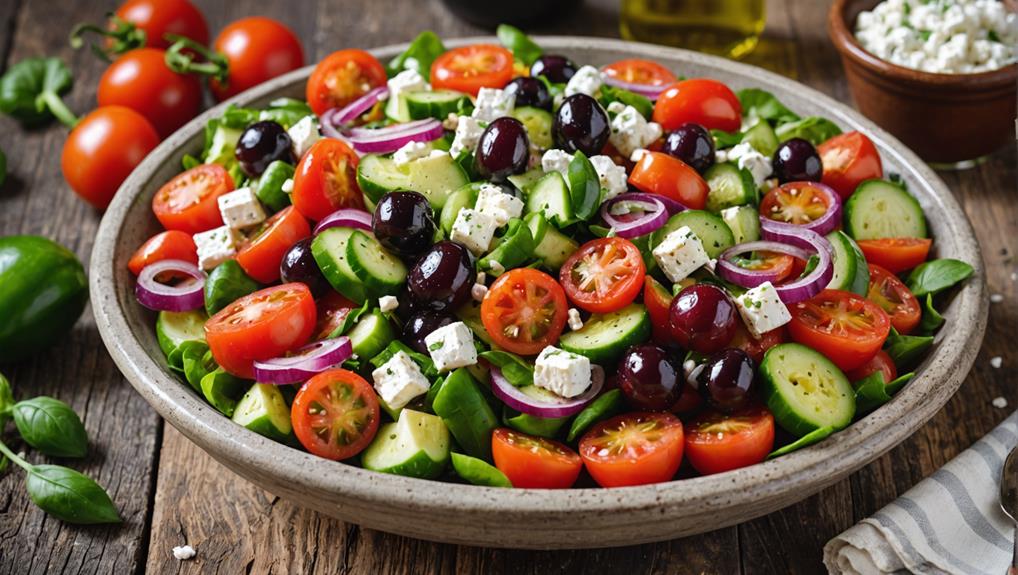
A Greek village salad is like a canvas waiting for vibrant colors to bring it to life. You're probably wondering what ingredients can truly elevate your dish to authenticity. It's not just about tossing vegetables together; it's about selecting the right elements that embody the flavors of Greece. From the crunch of fresh cucumbers to the tang of quality feta, each choice plays a vital role. Curious about how to make each ingredient count? Let's explore the essential tips that will transform your salad into a genuine taste of the Mediterranean.
Need cookware for your meal? Toolbox, a Pear to Pear rental marketplace, might be worth a look.
Quick Takeaways
- Use fresh, organic vegetables like ripe tomatoes, crunchy cucumbers, and soaked red onions for optimal flavor and crispness.
- Choose high-quality Kalamata or Castelvetrano olives to enhance the salad's robust taste and texture.
- Incorporate authentic feta cheese made from sheep's milk, preferably with a 'PDO' designation for guaranteed quality.
- Select fresh herbs like dill and oregano, finely chopped for a more aromatic and flavorful salad.
Choose Fresh Vegetables
When crafting a Greek Village Salad, why not start with the freshest vegetables you can find to elevate the dish's vibrant flavors? Selecting medium tomatoes, like Roma or vine-ripe varieties, guarantees a juicy and flavorful base that will enhance the overall taste. Their natural sweetness beautifully complements the other ingredients.
Next, opt for English cucumbers. Their thinner skin and sweeter flesh add a delightful crunch without any bitterness, creating a revitalizing texture in your salad.
Don't forget the red onion! Its natural sweetness rounds out the flavors, but soaking it in ice water and vinegar for about 10 minutes will mellow its sharpness, making it a perfect addition to your dish.
Select Quality Olives
When you select olives for your Greek Village Salad, choosing the right variety is key to enhancing the dish's flavor.
Kalamata olives are a must for their robust taste, but don't hesitate to explore other types like green or oil-cured black olives for a different twist.
Types of Quality Olives
Selecting quality olives is essential for creating an authentic Greek Village Salad, with options like Kalamata and Castelvetrano offering distinct flavors that elevate your dish.
When it comes to choosing the right olives, here are some excellent varieties to take into account:
- Kalamata olives: The quintessential choice for Greek salads, they boast a dark purple hue and a rich, fruity flavor.
- Green olives: Varieties like Castelvetrano provide a milder, slightly sweet, and nutty taste, perfect for balancing other ingredients.
- Oil-cured black olives: If you're looking for a robust flavor and chewy texture, these can add an intense profile to your salad.
Flavor Profiles and Pairing
Understanding the flavor profiles of different olives can greatly enhance your Greek Village Salad, allowing you to tailor the taste to your preferences and create a truly memorable dish.
Start with Kalamata olives, the traditional choice for this salad. Their rich, fruity flavor and firm texture perfectly complement the freshness of the vegetables. When selecting these olives, prioritize high-quality options packed in brine or oil to avoid overly dry or salty varieties.
Don't hesitate to explore oil-cured black olives for a unique twist. They offer a deeper, more intense flavor that can elevate your salad's overall taste. As you browse, pay attention to the color and size of the olives; darker, plumper ones typically indicate better quality and ripeness.
Always sample a few before purchasing to confirm they meet your desired level of saltiness and flavor profile. This small step can greatly influence your salad's taste, making it not just a dish but an experience.
Sourcing Fresh Ingredients
Finding the perfect olives for your Greek Village Salad involves exploring local markets and specialty stores, where you can uncover high-quality options that truly enhance your dish.
Opt for Kalamata olives, celebrated for their rich flavor and firm texture, making them a staple in Greek cuisine. Always choose olives sold in brine or olive oil, as this method preserves their taste and texture far better than canned varieties.
When you're on the hunt for olives, keep these tips in mind:
- Check ingredient lists: Aim for simple ingredients—just olives, salt, and water.
- Visit Farmers Markets: You'll often find fresh, artisanal olives that support local producers.
- Experiment with varieties: Consider Castelvetrano olives for a unique twist, offering a sweeter flavor.
Use Authentic Feta Cheese
For a truly authentic Greek village salad, you can't skip using high-quality feta cheese made from sheep's milk or a blend of sheep and goat's milk, as its rich, tangy flavor is essential to the dish.
When you choose feta, look for varieties that come in brine; this not only preserves the cheese's moisture but also enhances its taste, making it creamier and more flavorful when crumbled over your salad.
Authentic feta should have a crumbly yet creamy texture that beautifully contrasts with the crisp vegetables you're serving.
Opt for a whole block of high-quality feta sourced from Greece, ideally marked with 'PDO' (Protected Designation of Origin) to guarantee it meets specific production standards.
This approach gives you better control over the size of the cheese crumbles, allowing for a fresher, more delightful addition to your Greek salad.
Incorporate Seasonal Produce
Incorporating fresh, seasonal vegetables like ripe tomatoes, crisp cucumbers, and vibrant bell peppers elevates the flavor of your Greek village salad to new heights. By sourcing these ingredients from local farmers' markets, you verify that you're using high-quality vegetables harvested at their peak ripeness. This not only enhances the freshness but also supports local agriculture.
Consider experimenting with additional seasonal produce to keep your salad exciting and nutritious. Here are some ideas to inspire you:
- Zucchini: Grated or thinly sliced, it adds a delightful crunch.
- Radishes: Their peppery bite complements the sweetness of tomatoes.
- Carrots: Shredded or sliced, they introduce natural sweetness.
Always prioritize organic vegetables to confirm the best taste and health benefits.
Depending on the season, you can also think about incorporating roasted vegetables in the fall to create a comforting twist on your Greek village salad.
Enhance With Fresh Herbs
To take your Greek village salad to the next level, fresh herbs like dill and oregano add aromatic complexity that beautifully enhances the vibrant flavors of your seasonal produce. These traditional Greek herbs not only elevate the dish but also provide a genuine taste that transports everyone to the sun-soaked shores of Greece.
Dill, with its invigorating twist, can brighten your salad in delightful ways. Its distinct flavor mingles perfectly with the crisp vegetables, creating a harmonious balance that tantalizes the palate. Oregano, on the other hand, offers a robust earthiness that ties all the ingredients together, enriching the overall flavor profile.
For the best results, always opt for fresh herbs instead of dried ones. When you chop the herbs finely and distribute them evenly throughout the salad, you allow their aromatic essence to meld seamlessly with every bite.
For an authentic experience, consider sourcing your herbs from local markets or your own garden; they'll have a more intense flavor than store-bought options. This simple enhancement will elevate your dish, impressing your guests with its vibrant and pure tastes.
Opt for Homemade Dressing
When you think about the perfect Greek Village Salad, the dressing is just as essential as the fresh ingredients.
You can easily whip up a simple yet flavorful homemade dressing that enhances the natural tastes of your vegetables.
Fresh Ingredients Matter Most
Fresh, seasonal ingredients transform a Greek Village Salad into a vibrant celebration of Mediterranean flavors, making it essential to choose each component carefully.
Focusing on freshness not only enhances the dish but also promotes healthier eating habits.
To create a classic Greek Salad that dazzles, consider these key ingredients:
- High-quality tomatoes: Opt for Roma or vine-ripe tomatoes for their sweetness and firmness.
- English cucumbers: These add a delightful crunch and sweetness. If using standard cucumbers, peel them to minimize bitterness.
- Red onions: Soak them in ice water and vinegar for 10 minutes to soften their sharpness, creating a well-rounded flavor.
Simple Dressing Techniques
Crafting a simple homemade dressing elevates your Greek Village Salad, enhancing the vibrant flavors of the fresh ingredients while keeping the preparation effortless.
Start by whisking together equal parts red wine vinegar and extra virgin olive oil. This balanced blend forms the foundation of your dressing, perfectly complementing juicy tomatoes and crisp cucumbers.
To capture the essence of the Mediterranean, add a pinch of dried oregano. Its earthy notes will infuse your salad with a distinctly Greek flavor. For a touch of brightness, consider adding a squeeze of fresh lemon juice; this not only enhances the taste but also helps preserve the lively colors of your vegetables.
Allow your dressing to sit for at least 10-15 minutes before tossing it with the salad. This resting period allows the flavors to meld and intensify, ensuring every bite bursts with deliciousness.
When it's time to serve, drizzle the dressing over the salad just before presenting it to your guests. This technique maintains the crispness of the vegetables and the delightful texture of the feta cheese, creating a vibrant dish that everyone will love.
Enjoy sharing this delightful salad with family and friends!
Allow for Flavor Marination
Allowing your Greek Village Salad to marinate for at least 30 minutes transforms the dish, as the vegetables soak up the dressing and spices, creating a burst of flavor in every bite. This marination process not only enhances the flavors but also softens the vegetables, making them more palatable.
If you can, let it marinate for up to 2 hours; this longer period really deepens the taste, especially with salted tomatoes to draw out excess moisture.
To make the most of your marination, consider these tips:
- Refrigerate: Keep the salad chilled to maintain freshness and enhance that invigorating quality.
- Stir Gently: A gentle stir during marination ensures all ingredients are evenly coated in the dressing, allowing flavors to meld beautifully.
- Use Quality Ingredients: Fresh, high-quality vegetables and authentic Greek dressing will elevate your salad's taste.
Common Questions
What Is a Traditional Greek Salad Made Of?
A traditional Greek salad combines juicy tomatoes, crisp cucumbers, tangy red onions, briny Kalamata olives, and creamy feta cheese. Drizzle it with olive oil and sprinkle oregano for a revitalizing, vibrant dish your guests will love.
How Do You Keep Greek Salad From Getting Soggy?
To keep your Greek salad crisp and vibrant, think of it as a canvas. Use firm tomatoes, slice cucumbers just before serving, and keep the dressing separate until it's time to enjoy your masterpiece.
Why Is My Greek Salad Watery?
Your Greek salad turns watery when overly ripe tomatoes release too much juice. Choosing firm tomatoes, salting carefully, and using fresh cucumbers can help you achieve a crisp, vibrant dish everyone will love.
What Is Greek Salad Dressing Made Of?
Greek salad dressing combines extra virgin olive oil, red wine vinegar, and a pinch of dried oregano. You can add lemon juice for brightness and season with salt and pepper to elevate your dish's flavor.
Wrapping Up
By following these tips, you'll create a Greek village salad that sings with flavor, much like a lively gathering in a sun-drenched village square.
Imagine sharing this vibrant dish with friends, each bite transporting you to a warm summer day in Greece, where the laughter mingles with the scent of fresh herbs.
So, gather your ingredients, let them marinate in harmony, and enjoy the taste of authentic Mediterranean life right at your table.