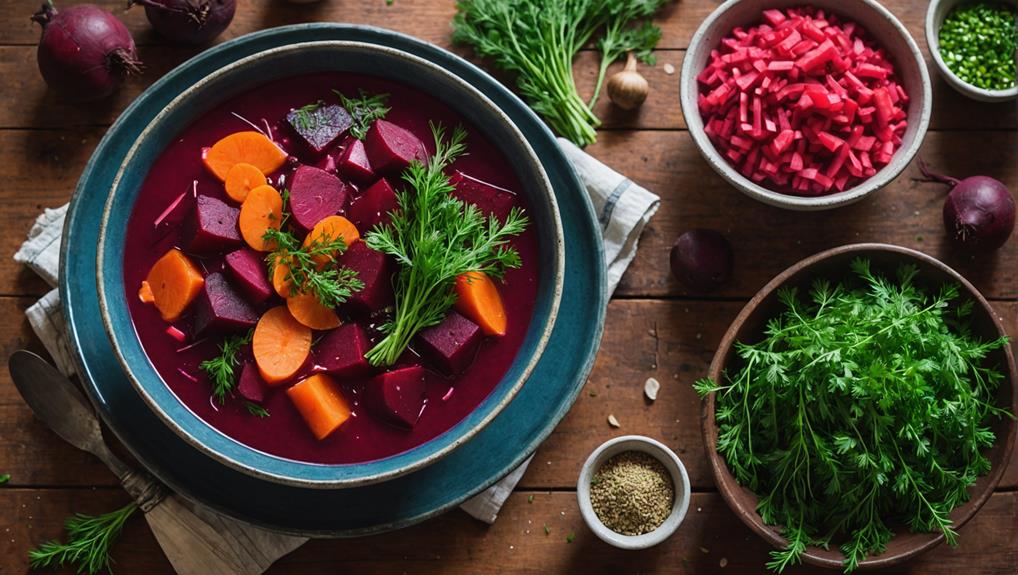
Picture a steaming bowl of borscht, its vibrant crimson hue swirling with hints of dill and garlic, inviting you to savor its complex flavors. Exploring variations of this beloved Eastern European beet soup isn't just about taste; it's a window into the rich tapestry of cultural traditions and regional nuances. Each spoonful tells a story of heritage, adaptation, and community. As you consider the myriad ways to prepare this dish, you might wonder: what secrets do these variations hold that could transform your understanding of borscht?
Need cookware for your meal? Toolbox, a Pear to Pear rental marketplace, might be worth a look.
Quick Takeaways
- Exploring variations of borscht allows you to experience diverse flavors and ingredients reflective of local cultures and traditions.
- Each regional adaptation highlights unique agricultural practices and culinary creativity, showcasing the versatility of beets and other vegetables.
- Borscht serves as a symbol of hospitality and unity, making it an important dish for communal gatherings and celebrations.
- Trying different versions can deepen your appreciation for Eastern European heritage and its connection to food and community.
Historical Roots of Borscht
Borscht, with its origins tracing back to the 16th and 17th centuries, embodies a rich tapestry of Eastern European culinary heritage that reflects the resourcefulness and adaptability of its people. This beloved staple has deep historical roots, emerging as a humble dish that provided nourishment during times of fasting. Initially made with hogweed, the recipe has evolved, showcasing the dish's cultural significance across various Eastern European regions.
As agricultural practices changed, so did the ingredients, leading to countless variations of borscht. Each region added its own twist, using locally available produce and flavors, which allowed families to make the most of their resources. Beets became a primary ingredient, adding both color and flavor, while also symbolizing the ingenuity of home cooks who turned simple ingredients into hearty meals.
Today, borscht isn't just a dish; it's a reflection of Eastern European culinary traditions, a reflection of the resourcefulness of those who prepared it. The journey of borscht from a humble meal to a cherished staple highlights the enduring connection between food, culture, and community, reminding us of the rich histories that shape our dining experiences.
Cultural Importance Across Regions
When you explore the cultural significance of borscht, you'll find it's much more than a simple beet soup; it's a symbol of hospitality and unity across Eastern Europe.
In various regions, borscht is celebrated during festive gatherings and traditions, creating connections among families and communities.
Each bowl tells a story, reflecting local customs and the warmth of shared meals that bring people together.
Regional Celebrations and Traditions
Across Eastern Europe, beet soup variations like borscht play a vital role in regional celebrations, embodying the warmth of hospitality and the strength of community ties during festive gatherings. Whether it's a family gathering or a special occasion, borscht is a centerpiece that connects generations and cultures.
Consider these highlights of borscht's cultural significance:
- Easter Dish: In Poland, white borscht is a staple for Easter celebrations, showcasing its culinary traditions.
- Christmas Eve: Ukrainian families often serve borscht during Christmas Eve feasts, reinforcing family rituals and seasonal festivities.
- Weddings: The regional ritual 'do nevistky – na borshch' in Podillia emphasizes borscht's role in marking significant life events like weddings.
Symbol of Hospitality and Unity
Serving as a beloved culinary centerpiece, beet soup embodies the spirit of hospitality and unity, drawing people together during festive gatherings and special occasions throughout Eastern Europe. Borscht, a symbol of comfort, not only warms the body but also nurtures the soul, fostering deep connections among family and friends.
Its cultural significance shines brightly during family gatherings, particularly on Christmas Eve in Ukrainian tradition, where it's a cherished dish. The phrase 'do nevistky – na borshch' during weddings in Podillia exemplifies how borscht plays a crucial role in communal bonding, marking life's milestones with a shared meal.
UNESCO's recognition of borscht in 2022 highlights its importance in preserving heritage and promoting a shared identity across Eastern European communities. With each regional adaptation incorporating local ingredients and culinary traditions, borscht reflects the uniqueness of each culture while reinforcing a collective pride.
When you serve borscht, often accompanied by sour cream and bread, you're not just presenting a dish; you're offering a warm embrace of hospitality that transcends borders, celebrating the unity that these vibrant culinary practices foster.
Key Ingredients in Borscht Variations
Borscht variations come alive with vibrant beets as the star ingredient, giving the soup its signature color and a natural sweetness that sets the stage for a delightful culinary experience. These earthy roots form the base, while a medley of vegetables enhances the soup's heartiness and flavor.
When you're crafting your borscht, consider including these key ingredients:
- Cabbage: Adds crunch and depth.
- Carrots: Infuse sweetness and color.
- Potatoes: Offer a hearty texture.
Regional variations often bring unique twists, such as smoked meats or beans, showcasing local culinary traditions. To achieve that perfect sweet and sour profile, you might want to incorporate fermented beet juice or a splash of vinegar.
Don't forget the finishing touches! Topping your borscht with a dollop of sour cream, fresh dill, or even hard-boiled eggs can elevate the dish, making it visually appealing and delicious. Each ingredient plays an essential role in creating a memorable bowl of borscht, inviting everyone to savor the flavors and share in the warmth of this beloved soup.
Popular Borscht Types to Try
When you think of borscht, classic red variants often come to mind, but there's so much more to explore.
You'll find invigorating cold options perfect for summer days, as well as unique vegan recipes that keep the vibrant colors and flavors alive.
Each type offers a delightful twist on the traditional, inviting you to experience the rich diversity of this beloved soup.
Classic Red Borscht Variants
Plunge into the world of Classic Red Borscht variants, where each bowl offers a hearty blend of red beets, cabbage, and tender meat, embodying the rich culinary traditions of Ukraine. This iconic soup is more than just a meal; it's a comforting experience steeped in history and cultural significance.
When you serve classic red borscht, you're sharing a beloved staple that invites everyone to the table.
Here are some popular variations of borscht to try:
- Traditional Ukrainian Borscht: A rich beet soup with beef or pork, served with a dollop of sour cream.
- Lviv Borscht: Features a unique blend of vegetables and sometimes includes mushrooms, giving it an earthy flavor.
- Polish Borscht (Barszcz Czysty): A clear version often served with dumplings, showcasing its versatility.
Each variation of borscht reflects regional ingredients and culinary traditions, making it a delightful dish to share with family and friends.
Enjoy exploring these delicious options!
Refreshing Cold Borscht Options
As the warmth of summer arrives, exploring the vibrant and invigorating world of cold borscht offers a delightful twist on this beloved dish, perfect for cooling off while savoring seasonal flavors.
Cold borscht, or 'chłodnik litewski' in Lithuania, serves as a revitalizing summer soup, typically made from beets and served chilled. Its vibrant pink color isn't just eye-catching; it signals the nutritious goodness packed within.
You can enhance the experience by garnishing your borscht with fresh chopped cucumbers, radishes, and dill, providing a crunchy contrast to the smooth base. Ukrainian variations often include a dollop of sour cream, enriching the flavors and creating a creamy texture that balances the sweetness of the beets. Alternatively, Polish recipes use buttermilk or kefir, adding a tangy note that dances on the palate.
With endless variations, you can incorporate seasonal produce such as boiled potatoes and fresh herbs, making each bowl a unique creation.
Serve this light and nutritious meal during those hot summer days, and watch your guests relish every spoonful of this revitalizing delight!
Unique Vegan Borscht Recipes
Immerse yourself in the world of unique vegan borscht recipes, where vibrant vegetables and bold flavors come together to create delightful variations of this classic Eastern European dish.
You'll find that vegan borscht captures the essence of its traditional roots while offering a new, plant-based twist. Here are some popular types to try:
- Classic Vegetable Borscht: Made with beets, potatoes, and cabbage, simmered in vegetable broth and seasoned with herbs like dill and garlic for a rich depth of flavor.
- Chłodnik (Cold Borscht): An invigorating summer dish, this version uses beet juice or fermented beet sour, served chilled with diced cucumbers and radishes for a delightful crunch.
- Sorrel Borscht: Introducing a light tangy variation, this recipe features fresh sorrel leaves, providing a unique citrusy zing alongside the earthy beets.
Each bowl of vegan borscht invites you to explore unique flavors while serving a comforting dish that everyone will love.
Global Adaptations of Borscht
Across the globe, borscht has evolved into a canvas for culinary creativity, adapting to local tastes and ingredients while retaining its signature flavor and vibrant color. Each region brings its own flair, showcasing the dish's versatility within various culinary traditions. In Mexico, for instance, you'll find borscht infused with local spices, while the United States often features hearty versions with beef or enticing vegetarian options.
In Canada, especially among Eastern European immigrant communities, borscht has become a beloved staple at community gatherings, celebrated for its comforting qualities and rich flavors. Lithuanian variations, called šaltibarščiai, offer an invigorating cold twist, made with beet juice, sour cream, and fresh herbs—perfect for summer days.
The Jewish community also plays a significant role in borscht's global adaptations, creating versions that incorporate both meat and dairy, often served alongside traditional sides like boiled potatoes or knishes.
In Armenia and Georgia, local ingredients shine through, highlighting how this dish holds cultural significance across diverse communities. No matter where you are, enjoy the countless variations of borscht that unite people through shared meals and cherished traditions.
Personal Family Recipes and Traditions
Many families treasure their unique borscht recipes, which blend cherished ingredients and cooking techniques passed down through generations. These personal recipes reflect cultural backgrounds and regional influences, making each pot of soup a family heirloom. You might find that your borscht has a special twist, perhaps inspired by your grandmother's secret method or your own modern adaptations.
Consider the following elements that often make these recipes special:
- Local Ingredients: Using fresh, seasonal beets and vegetables from nearby markets.
- Herbs and Spices: Adding unique flavors like dill, garlic, or caraway seeds that reflect your family's heritage.
- Preparation Traditions: Engaging in communal cooking sessions with family, where stories and laughter fill the kitchen.
These variations not only enhance the soup's flavor but also connect you to your family's history, making each bowl a celebration of love, culture, and togetherness.
Common Questions
What Is the Significance of Borscht?
Borscht signifies cultural identity and heritage, especially in Ukraine. It's more than just a dish; it fosters community, connects families during gatherings, and represents centuries of tradition, nurturing both body and soul through shared experiences.
What Are Some Interesting Facts About Borscht?
Did you know borscht's vibrant red hue isn't just stunning? It's packed with nutrients, showcases regional variations, and UNESCO even celebrated it for its cultural significance in uniting families. It's a dish worth exploring!
Are There Different Types of Borscht?
Yes, there are several types of borscht you can explore. From hearty red borscht to tangy white borscht, invigorating cold borscht, and zesty green borscht, each offers unique flavors and showcases diverse culinary traditions. Enjoy!
What Is the History of Cold Beet Soup?
Did you know cold beet soup, or chłodnik, dates back centuries, originally feeding farmers with seasonal produce? Its vibrant flavors and invigorating qualities make it a cherished summer dish, perfect for sharing and enjoying with loved ones.
Wrapping Up
Exploring variations of Eastern European borscht invites you to savor the vibrant colors of beets, to relish the warmth of family traditions, and to connect with the rich tapestry of cultures.
Each bowl tells a story, from the tangy sweetness of Ukrainian borscht to the hearty richness of Polish variations.
As you taste these diverse adaptations, you not only honor their history but also celebrate the unity and hospitality that this beloved soup brings to every table.