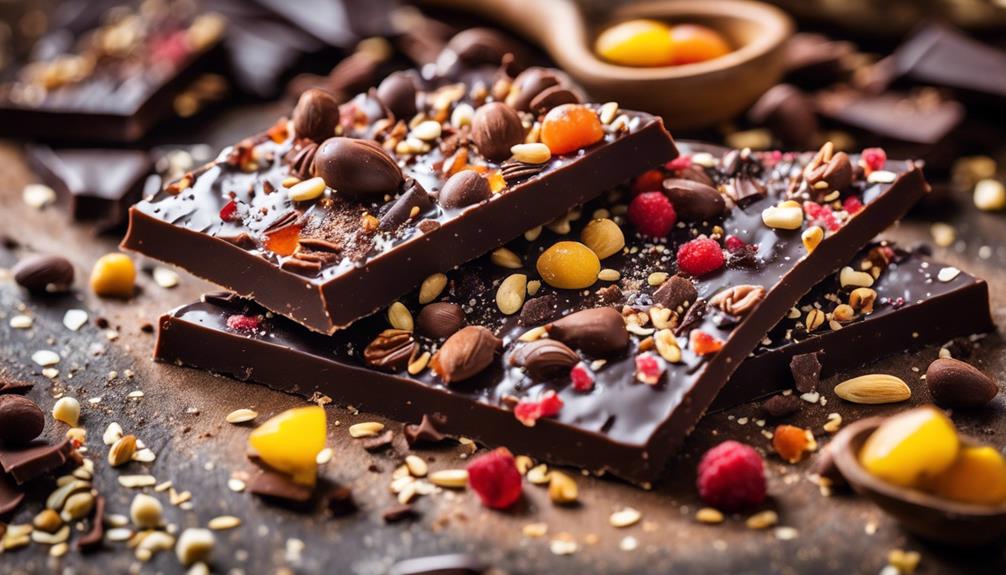
When you're aiming to perfect Belgian chocolate bark, the choice of chocolate is vital—you'll want to select high-quality couverture for the best results. Mastering the melting process, particularly using the double boiler method, can make a significant difference in texture and flavor. As you explore creative toppings, remember that the right combination can elevate your bark to new heights. But there are common pitfalls that many encounter, and knowing how to avoid them could save you time and disappointment. Let's explore these essential tips and guarantee your chocolate bark is truly exceptional.
Need cookware for your meal? Toolbox, a Pear to Pear rental marketplace, might be worth a look.
Quick Takeaways
- Choose high-quality Belgian dark chocolate with at least 63% cocoa for rich flavor and use couverture chocolate for better melting and glossiness.
- Ensure even melting by finely chopping chocolate into uniform pieces and monitor temperatures using a digital candy thermometer.
- Master the tempering process using the seed method to achieve a glossy finish and satisfying snap in your chocolate bark.
- Experiment with creative toppings like dried fruits, nuts, or drizzled white chocolate to enhance flavor and visual appeal.
Choosing the Right Chocolate
When creating your chocolate bark, selecting high-quality Belgian dark chocolate with at least 63% cocoa content guarantees a rich, flavorful base that melts beautifully. This type of chocolate not only enhances the taste but also provides the ideal melting properties, guaranteeing a smooth finish.
Avoid regular chocolate chips; they're loaded with additives that can disrupt the melting process. Instead, opt for couverture chocolate, which is designed for superior melting and a glossy final product.
Brands like Guittard, Ghirardelli, and Trader Joe's offer excellent chocolate options that won't break the bank while still delivering a luxurious flavor. To achieve that silky texture, make certain to chop your chocolate finely into uniform pieces. This step is essential, as it promotes even melting and guarantees a delightful bark.
If you want to simplify your experience, consider using pre-tempered chocolates like Foleys wafers, which eliminate the need for tempering altogether. These chocolates melt seamlessly and create a professional-quality bark that will impress your guests.
Selecting the right chocolate is the cornerstone of your bark-making adventure, so choose wisely and indulge in the decadence of high-quality chocolate.
Melting Techniques for Success
Mastering the art of melting chocolate is crucial for creating a smooth and glossy bark that will delight your taste buds.
To melt chocolate effectively, start by chopping it into small, uniform pieces. This guarantees even melting and helps prevent overheating. You can choose between two popular methods: the microwave or a double boiler.
If you opt for the microwave, heat the chocolate in 15-30 second intervals, stirring frequently until it reaches a temperature of 110-115°F (43-48°C).
Alternatively, for the double boiler method, place a stainless steel bowl over simmering water, making sure the bowl doesn't touch the water. Melt two-thirds of your chocolate, then cool it to 95-100°F (35-38°C). No matter which method you use, a digital candy thermometer is your best friend, helping you monitor the temperature for that perfect consistency.
To achieve smoothness and glossiness in your bark, stir in the remaining chopped chocolate after the initial melt, continuing to stir until fully melted and smooth.
This careful melting technique will guarantee your Belgian chocolate bark isn't just beautiful but also a joy to share.
Proper Tempering Methods
Tempering chocolate is your secret weapon for achieving that perfect glossy finish and satisfying snap.
You'll want to explore popular techniques, like the seed method, to master the art of tempering while keeping a keen eye on temperature.
Plus, testing your chocolate's temper is essential to guarantee that your bark turns out as delicious as it looks!
Importance of Tempering
Achieving that coveted glossy finish and satisfying snap in your chocolate bark hinges on the meticulous process of tempering. Properly tempered chocolate not only looks beautiful but also boasts a stable crystalline structure, which is key to that delightful texture.
Start by melting two-thirds of your chocolate to 120°F for dark varieties or 110°F for milk. This initial melt sets the stage for uniformity, ensuring every bite is equally enjoyable.
Once melted, let it cool slightly. Here's where the seed method comes into play: incorporate small pieces of unmelted chocolate and stir until the mixture reaches about 90°F. This technique helps seed the chocolate with stable crystals, guiding the melted chocolate to temper properly.
Be vigilant about moisture—just a drop can ruin your efforts, causing the chocolate to seize and lose its smooth texture.
The result of your careful tempering will be chocolate that shines with a glossy finish and snaps cleanly when broken, making it perfect for serving to friends and family.
Common Tempering Techniques
When it comes to creating that perfect Belgian chocolate bark, understanding the various common tempering techniques can elevate your chocolate-making skills to new heights.
The seed method is one of the most effective ways to achieve properly tempered chocolate. Start by melting your chocolate to the desired temperature—120°F for dark, 110°F for milk, and 100°F for white—using a reliable digital candy thermometer to guarantee accuracy.
Once melted, add small pieces of unmelted chocolate, stirring gently until the mixture reaches a smooth consistency.
It's essential to avoid moisture during this process; even a drop of water can cause your chocolate to seize and lose its temper. Make sure all your bowls and utensils are completely dry.
When done correctly, your tempered chocolate should snap when broken and showcase a beautiful glossy finish. This indicates that the cocoa butter crystals are stable and evenly distributed, assuring your bark won't only taste divine but also look stunning.
Mastering these tempering techniques will make your chocolate creations truly impressive, perfect for serving to friends and family.
Testing Chocolate Tempering
To guarantee your chocolate is perfectly tempered, you'll want to test its snap and shine, as these indicators reveal the quality of your hard work.
Begin by carefully melting your good chocolate, whether it's dark chocolate or quality chocolate chips. Heat it to the right temperature—110°F-115°F for dark chocolate. Use a digital candy thermometer for precise temperature readings.
Once melted, employ the seed method: add small pieces of unmelted chocolate and stir continuously. As the temperature cools to 88°F-90°F for dark chocolate, keep an eye on the texture. When it's properly tempered, break off a piece. If it snaps crisply, you've succeeded!
Now, inspect the surface for a shiny finish; this gleam is a hallmark of well-tempered chocolate. If your chocolate appears dull or soft, it likely means you rushed the cooling process or didn't maintain proper temperature during tempering.
Give yourself time and patience to perfect this art. Remember, the effort you put into tempering the chocolate directly impacts the enjoyment of your Belgian chocolate bark—both for you and those you serve!
Creative Topping Ideas
Elevating your Belgian chocolate bark is all about experimenting with creative toppings that add both flavor and texture, making each bite a delightful experience.
Start by incorporating dried cranberries for a tart contrast to the sweetness of the chocolate. Pair them with toasted nuts like slivered almonds or hazelnuts, which not only enhance the flavor but also provide a satisfying crunch.
For a balance of sweet and salty, sprinkle some sea salt flakes over the top, or even add pretzel pieces for that perfect crunch. Seasonal toppings can also elevate your bark; think crushed candy canes for a festive touch or freeze-dried fruits for vibrant color and an explosion of flavor.
Don't forget to get playful with your presentation! Drizzle melted white chocolate over dark chocolate bark for a visually stunning effect, or marble together different types of gourmet chocolate.
Finish off with unique touches like crushed cookies or mini marshmallows to create a personalized masterpiece that's sure to impress your guests.
Enjoy the process of experimenting, and soon you'll have a show-stopping chocolate bark that's bursting with creativity!
Storing Your Chocolate Bark
After crafting your delightful Belgian chocolate bark with creative toppings, knowing how to store it properly guarantees that every piece remains as fresh and flavorful as the moment it was made. To preserve that delectable taste and texture, follow these essential tips:
- Airtight Container: Store your chocolate bark in an airtight container at room temperature. This keeps it fresh for up to two weeks, ensuring each bite is just as heavenly as the first.
- Dry Equipment: Before storing, make sure all your containers and utensils are completely dry. Even a hint of moisture can cause the chocolate to seize, ruining your masterpiece.
- Refrigerate if Necessary: If it's warm, wrap the bark in parchment paper or plastic wrap before refrigerating. This prevents condensation, protecting your chocolate from moisture damage.
- Break Into Pieces After Setting: Wait until the bark has fully set and cooled before breaking it into pieces. This avoids crumbling and maintains the beautiful presentation.
For longer storage, you can freeze your chocolate bark for up to three months, but be sure to use a sealed container to guard against odors and moisture.
Enjoy your perfect chocolate treat!
Common Mistakes to Avoid
When making Belgian chocolate bark, you'll want to steer clear of common pitfalls that can ruin your efforts.
Incorrect chocolate tempering, skipping topping preparation, and overheating during melting can all lead to disappointing results.
Let's explore these mistakes so you can create a dazzling bark every time.
Incorrect Chocolate Tempering
Improper chocolate tempering can lead to disappointing results, transforming your once-promising creation into a dull, soft mess that lacks that satisfying snap. To guarantee your Belgian chocolate bark dazzles, keep these common mistakes in mind:
- Neglecting Uniformity: Always chop your chocolate into uniform pieces. This promotes even melting and prevents scorching.
- Ignoring Temperatures: Use a digital candy thermometer to monitor chocolate temperatures closely. Melt it to 110-115°F (43-48°C) and cool it to 88-90°F (31-33°C) for proper tempering.
- Introducing Moisture: Be vigilant! Avoid introducing any moisture into the chocolate. Even a drop of water can lead to a grainy texture, ruining your creation.
- Allowing Chocolate to Cool Too Much: If your chocolate cools below the target range, gently reheat it. A drop in temperature can lead to dullness and a soft texture.
To test your temper, break a piece of chocolate. Properly tempered chocolate should boast a glossy finish and deliver a clean snap when broken.
Skipping Topping Preparation
Many home bakers overlook the importance of prepping toppings in advance, which can lead to a frustrating race against time as chocolate begins to harden. To avoid this dilemma, always prepare your toppings—chop or measure them out before you even melt the chocolate. This simple step will guarantee a smooth assembly process and prevent you from scrambling at the last minute.
Once you've melted and spread chocolate on your baking sheet, it's essential to act quickly. Gently press your toppings into the chocolate immediately after spreading. This maximizes their sticking power and prevents proper adhesion, guaranteeing that each piece of bark is a delightful bite.
Be mindful of your topping ideas; using large or dense toppings without chopping can lead to an uneven texture, detracting from the final product. Consider seasonal or complementary toppings that not only enhance the overall flavor but also make your bark visually appealing.
Overheating During Melting
Overheating chocolate during the melting process can ruin its texture and appearance, so it's crucial to monitor the temperature closely for the best results. To guarantee you melt the chocolate perfectly, follow these key tips:
- Use Controlled Temperature: Aim for a temperature between 110-115°F (43-48°C) during the initial melting phase to prevent overheating chocolate.
- Microwave in Intervals: If you're using a microwave, melt the chocolate in 15-30 second intervals, stirring frequently to promote even melting. This will help you avoid burning.
- Double Boiler Technique: When using a double boiler, maintain a gentle simmer and avoid direct contact between the water and the chocolate. This method helps keep the heat gentle and even.
- Remove from Heat Early: Always remove chocolate from heat when it's about 90% melted. The residual heat will finish the melting process without risking thick chocolate or graininess.
Flavoring and Customization Tips
Elevate your Belgian chocolate bark by experimenting with unique flavoring oils, like peppermint or orange, which can be added to melted chocolate for a burst of taste without changing its smooth texture. Just a few drops can transform your creation into an irresistible treat that'll impress your guests.
To further customize your bark, consider a variety of toppings like crushed pretzels, nuts, or dried fruits. These additions not only create unique flavor profiles but also provide delightful textures that will keep everyone coming back for more.
Don't forget about marbling! Combining different types of chocolate, such as rich dark and creamy white, enhances visual appeal while offering a delicious contrast of flavors.
For an extra touch of gourmet flair, incorporate mix-ins like crystallized ginger or candied orange. Adjust their amounts to suit your taste, ensuring a balanced harmony that complements the rich chocolate.
Gift-Wrapping Chocolate Bark Ideas
Present your delicious Belgian chocolate bark in eye-catching, clear cellophane bags tied with colorful ribbons to showcase its tempting allure while keeping it fresh for your lucky gift recipients. To elevate your gift-wrapping game, consider these creative ideas:
- Decorative Tins: Use elegant tins to present your chocolate bark. Not only do they look stunning, but they also provide excellent transport protection, ensuring your treats arrive intact.
- Seasonal Themes: Embrace the spirit of the season by wrapping your gifts in festive wrapping paper or boxes adorned with holiday designs. This adds a delightful touch that recipients will appreciate.
- Parchment Paper Layers: Layer your chocolate bark pieces between sheets of parchment paper inside your containers. This prevents sticking and keeps each piece looking pristine.
- Personalized Gift Tags: Attach charming gift tags that include storing instructions. This thoughtful detail shows you care about how your recipients enjoy their chocolate bark.
With these ideas, your chocolate bark gifts won't only taste amazing but also look stunning, making them a delight to give and receive!
Common Questions
How to Temper Chocolate for Chocolate Bark?
To temper chocolate for bark, heat it to 110°F-115°F, then cool to 88°F-90°F using the seed method. Make certain your tools are dry, and watch for that glossy finish and satisfying snap. Enjoy!
Why Won't My Chocolate Bark Harden?
If your chocolate bark won't harden, it's likely due to improper tempering or excess moisture. Make sure your workspace is dry, use high-quality chocolate, and maintain a consistent thickness for the best results.
What to Add to Almond Bark to Make It Thinner?
Did you know adding just one tablespoon of coconut oil per cup of chocolate can create a luscious, thinner almond bark? Incorporate cream for richness, and always melt gently for a smooth, delightful texture.
How to Thin Chocolate Bark for Dipping?
To thin chocolate bark for dipping, stir in a tablespoon of coconut oil per 12 ounces of chocolate. Gently heat until it's smooth and pourable, ensuring a delightful coating that'll impress your guests.
Wrapping Up
With these tips in hand, you're ready to whip up some irresistible Belgian chocolate bark that'll have everyone coming back for seconds!
Remember, the devil's in the details—pay attention to your chocolate quality, melting, and toppings for that perfect finish.
Once you've mastered these techniques, you'll be well on your way to creating delightful treats that impress.
So roll up your sleeves and let your creativity shine; your taste buds will thank you!