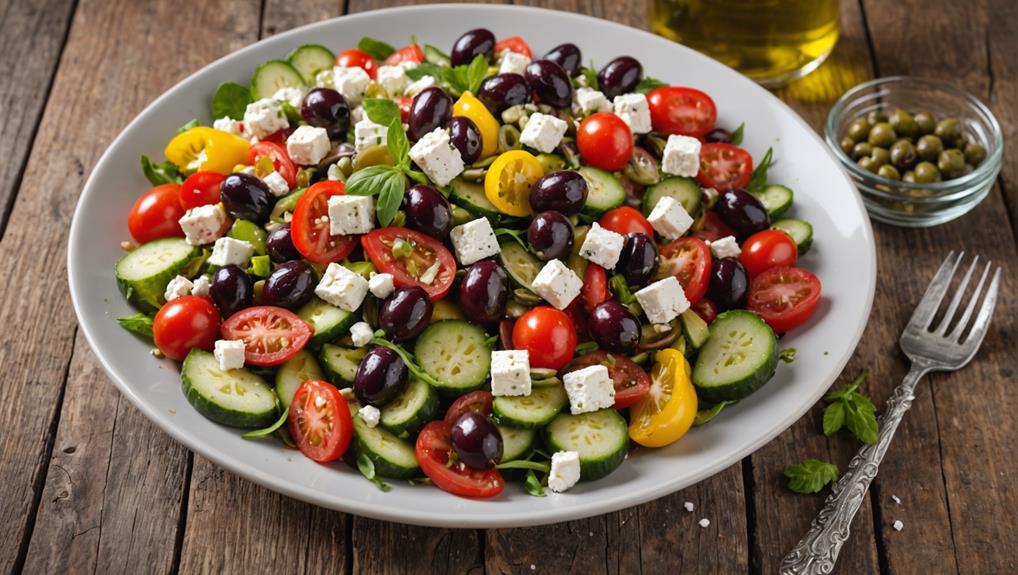
When you explore Greek salad toppings by region, you'll find that each area brings its own unique flair to this classic dish. In Northern Greece, for instance, you might come across roasted red peppers and local cheeses that add a rich depth, while the Cycladic islands surprise you with capers and sun-dried tomatoes. The variations don't stop there; Crete introduces the intriguing texture of barley rusk. What other regional surprises await you? Understanding these local influences can transform your perception of this beloved salad.
Need cookware for your meal? Toolbox, a Pear to Pear rental marketplace, might be worth a look.
Quick Takeaways
- Northern Greece features roasted red peppers, cherry tomatoes, and local cheeses like graviera, enhancing flavor diversity and texture.
- Cycladic Islands often incorporate capers, fresh parsley, and xynomyzithra cheese, adding tanginess and aromatic freshness to the salad.
- Crete highlights dakos, a crunchy barley rusk base, complemented by ripe tomatoes, cucumbers, and local cheeses for creaminess.
- Southern Greece includes capers, dried oregano, and roasted red peppers, creating depth and a sweet-smoky flavor profile in the salad.
Overview of Greek Salad
Bursting with fresh flavors, Greek salad, or Horiatiki, showcases a vibrant mix of juicy tomatoes, crisp cucumbers, creamy feta, and briny olives, all brought together by a drizzle of olive oil and a sprinkle of oregano. This dish epitomizes the essence of Mediterranean ingredients, emphasizing the importance of fresh produce.
When you prepare an authentic Greek salad, you'll notice it doesn't include lettuce; instead, it features chunky, rustic pieces of vegetables that highlight their natural textures and flavors. Traditional Greek salad is simple yet incredibly satisfying, allowing each ingredient to shine.
The creamy feta cheese is often served in whole blocks, inviting your guests to crumble it to their liking. You might even explore regional variations, where local ingredients like capers or parsley can add a unique twist. This salad isn't just a feast for the eyes; it's also a powerhouse of nutrition, packed with vitamins A and C, healthy fats from the olive oil, and antioxidants from the fresh veggies.
When you serve Greek salad, you're offering a taste of Greece, celebrating its culinary heritage and the joy of sharing delicious, wholesome food.
Historical Context of Greek Salad
Greek salad, with its vibrant array of ingredients, has a rich history that reflects the resilience and creativity of the Greek people during challenging times. Emerging in the late 19th century, this dish evolved from simple village meals made of fresh vegetables and bread, especially during economic struggles. As Greek communities urbanized, particularly in Athens, they adapted their culinary traditions to comply with salad tariffs, leading to the signature cut vegetable presentation that's widely recognized today.
For about 60 years, the modern Greek salad has showcased the best of Mediterranean cuisine, emphasizing fresh, seasonal ingredients. Feta cheese became a hallmark of the dish, adding a distinct flavor that elevated its place in Greek gastronomy.
You'll find that regional variations of Greek salad reflect local agricultural practices and cultural influences, resulting in unique twists across different areas of Greece. This diversity not only enriches the culinary landscape but also invites you to explore and celebrate the flavors of Greece, making it a delightful experience for anyone serving or enjoying this classic dish.
Core Ingredients of Greek Salad
When you think of Greek salad, the vibrant combination of ripe tomatoes, crunchy cucumbers, and tangy feta cheese immediately comes to mind.
Each ingredient not only brings a burst of flavor but also showcases the season's best produce.
Let's explore these core components, their regional variations, and the nutritional benefits they offer.
Essential Ingredients Overview
A traditional Horiatiki salad showcases a vibrant mix of ripe tomatoes, crisp cucumbers, zesty red onions, briny Kalamata olives, and creamy feta cheese, all highlighting the essence of Mediterranean freshness. When you prepare this Greek salad recipe, you'll want to focus on using only the most authentic, fresh ingredients to achieve that perfect flavor balance.
The key ingredients work together harmoniously, with feta cheese playing a starring role. Unlike crumbled variations, it's served in large chunks, allowing its rich, tangy taste to shine. To elevate the flavors even further, you'll drizzle high-quality extra virgin olive oil over the salad, providing a luxurious touch that enhances the dish's overall appeal.
Don't forget to sprinkle dried oregano on top; this aromatic herb adds a delightful earthiness that's essential to the traditional flavor profile.
As you serve this delightful dish, you'll appreciate how these core ingredients reflect the simplicity and beauty of Greek cuisine. With each bite, your guests will experience the vibrant freshness and authenticity that make a homemade Greek salad unforgettable. Enjoy sharing this classic dish with family and friends!
Regional Ingredient Variations
Explore the delightful regional variations of Greek salad, where local ingredients bring unique flavors and textures to this beloved dish.
In Northern Greece, you'll find a revitalizing touch of parsley, which adds a vibrant herbaceous note that elevates the classic combination of tomatoes, cucumbers, and onions.
Meanwhile, the Cyclades islands introduce capers, infusing the salad with a briny depth that perfectly complements the Mediterranean essence.
On Paros, you might encounter a twist with the addition of lettuce and black-eyed beans, creating a heartier salad that maintains the dish's integrity while introducing nutritional variety.
Naxos takes it further by substituting traditional feta cheese with the local xynomyzithra, providing a unique flavor profile without straying from the salad's spirit.
Nutritional Benefits Explained
The vibrant mix of fresh vegetables and savory ingredients in Greek salad not only tantalizes your taste buds but also offers a wealth of nutritional benefits that support overall health.
With crisp tomatoes and crunchy cucumbers, you're getting a generous dose of vitamins A and C, which are essential for immune function and glowing skin.
Feta cheese adds a delightful creaminess while providing protein and calcium, vital for strong bones and muscle health.
Drizzle in some extra virgin olive oil, and you're introducing heart-healthy monounsaturated fats that may lower the risk of cardiovascular diseases.
Don't forget the Kalamata olives; they bring healthy fats and antioxidants to the table, helping to combat oxidative stress.
The high fiber content from the fresh vegetables not only aids digestion but also keeps you feeling full longer, making Greek salad a low-calorie meal option that's perfect for weight management.
Northern Greece Variations
In Northern Greece, your Greek salad transforms with unique ingredients that elevate its flavors.
Roasted red peppers add a delightful sweetness, while fresh parsley brightens every bite.
You'll also find local olives and cheeses, each bringing a distinct taste that showcases the region's culinary diversity.
Common Ingredients in North
Roasting red peppers brings a smoky depth to Northern Greek salads, setting the stage for a vibrant mix of fresh ingredients and unique regional flavors. When you prepare a salad from this picturesque area, you'll want to focus on these common ingredients that elevate the dish:
- Roasted Red Peppers: Their charred sweetness adds a wonderful complexity.
- Cherry Tomatoes: Unlike larger varieties, these little gems provide a concentrated burst of flavor that's both sweet and juicy.
- Parsley: This fresh herb not only brightens the salad but also offers a fragrant contrast, enhancing every bite.
- Local Cheeses: Swap out traditional feta for regional options like graviera or kasseri, which bring a distinctive taste that reflects the heart of Northern Greece.
Incorporating seasonal vegetables like artichokes or boiled potatoes can also add texture and heartiness to your salad.
Unique Flavor Combinations
Exploring unique flavor combinations in Northern Greek salads reveals a delightful interplay of sweet, smoky, and nutty elements that elevate this classic dish to new heights.
By incorporating roasted red peppers or cherry tomatoes instead of traditional bell peppers, you'll introduce a rich sweetness and a subtle smokiness that tantalizes the taste buds. Fresh parsley adds a burst of vibrant flavor, enhancing the overall freshness of the salad.
When crafting your salad, consider drizzling it with a Greek salad dressing made with balsamic vinegar, which provides a tangy profile that complements the fresh Mediterranean flavors beautifully. For an added crunch, sprinkle in finely chopped walnuts or almonds, introducing a nutty dimension that contrasts wonderfully with the crisp vegetables.
Don't forget about the local cheeses! Using sharper, aged feta or even yogurt-based cheeses can transform your salad, reflecting the regional dairy practices of Northern Greece.
Together, these elements create a harmonious blend that not only delights the palate but also makes for an impressive dish to serve others at your next gathering. Enjoy the vibrant flavors and textures that make Northern Greek salads truly unique!
Cycladic Island Ingredients
The vibrant flavors of the Cycladic islands come alive in their Greek salads, where briny capers and fresh parsley elevate the dish into a rejuvenating culinary experience.
When you're ready to serve a salad that embodies the essence of these beautiful islands, consider these key ingredients:
- Capers: Their salty burst adds a delightful tang that complements the fresh vegetables beautifully.
- Fresh parsley: This herb provides a vibrant green color and aromatic freshness, making your salad not only tasty but visually appealing.
- Xynomyzithra: Swap out traditional Greek feta cheese for this local cheese variety for a unique, tangy twist that captures the Cycladic spirit.
- Sun-dried tomatoes: These concentrated bursts of flavor enhance your salad, offering a robust sweetness that balances the dish.
Incorporating these ingredients into your Greek salad will surely impress your guests and transport them to the sun-soaked Cycladic islands.
Whether you're hosting a summer gathering or a cozy dinner, these flavors will bring joy and vitality to your table. Enjoy creating a revitalizing dish that reflects the beauty of the Cyclades!
Crete's Unique Salad Features
While the Cycladic islands offer an invigorating take on Greek salad, Crete brings its own unique flair with the beloved 'Dakos,' where crunchy barley rusk forms the perfect foundation for a medley of vibrant, local ingredients.
This Cretan salad is a celebration of freshness, featuring ripe tomatoes, crisp cucumbers, and briny olives that create a symphony of flavors on your plate.
You'll love how local cheese varieties, like mizithra or feta, add a rich, creamy element to every bite.
Drizzling high-quality olive oil over the top elevates the dish, enhancing its fresh and delicious essence.
Don't forget to sprinkle in some capers for that unique briny kick that complements the other ingredients beautifully.
Served as a meze or a light meal, this salad reflects Crete's commitment to wholesome, locally sourced produce.
It's perfect for sharing, inviting your guests to savor the authentic taste of the island.
As you prepare this delightful Cretan salad, you're not just serving food; you're offering a warm taste of Mediterranean culture that's sure to impress everyone at your table.
Southern Greece Additions
Southern Greece brings a delightful twist to the Greek salad, where capers and dried oregano enhance the fresh vegetables and feta, celebrating the region's rich culinary heritage.
If you're looking to elevate your salad, consider these Southern Greek additions:
- Capers: These briny gems pack a punch, adding depth to your salad and complementing the crisp veggies beautifully.
- Dried Oregano: A staple seasoning in Southern Greek cuisine, it infuses your salad with aromatic warmth that highlights the flavors of the fresh ingredients and feta.
- Roasted Red Peppers: Sweet and smoky, roasted red peppers offer a bold contrast, making your salad not just a side dish, but a standout.
- Barley Rusk (Dakos): This crunchy element provides texture and is a wonderful way to soak up the salad's flavors, creating a delightful eating experience.
Seasonal and Local Toppings
Incorporating seasonal and local toppings can transform your Greek salad into a vibrant reflection of the region's bounty, enhancing both flavor and texture.
Imagine starting with fresh parsley from Northern Greece, adding aromatic notes that brighten every bite. You might then sprinkle in capers from the Cyclades, their briny richness creating a delightful contrast.
As you explore the island of Paros, think about including crisp lettuce and black-eyed beans, introducing a satisfying crunch and added nutritional value. If you venture to Naxos, consider substituting feta cheese with the local xynomyzithra, known for its creamy tanginess that elevates the entire dish.
In Crete, don't overlook the rustic charm of barley rusk, a hearty addition that pairs beautifully with local cheese varieties like mizithra or feta.
These seasonal toppings not only celebrate the unique flavors of each region but also connect your guests to the essence of Greek cuisine. By embracing these regional ingredients, you'll create Greek salads that aren't just meals, but a culinary journey that brings everyone together.
Nutritional Benefits of Greek Salad
When you enjoy a Greek salad, you're not just savoring flavors; you're also fueling your body with a powerhouse of nutrients.
Each ingredient, from vibrant vegetables to creamy feta, plays an essential role in supporting your health, offering everything from essential vitamins to heart-healthy fats.
Plus, it's a low-calorie meal option that keeps you satisfied without weighing you down.
Nutrient-Rich Ingredients Overview
Packed with vibrant vegetables and nutrient-dense ingredients, Greek salad offers a delightful mix of flavors while providing a wealth of health benefits. This classic dish from Greek cuisine isn't just a feast for the eyes; it's also an excellent choice for those looking to serve healthy, delicious meals to others.
Here are four key ingredients that make Greek salad a nutrient-rich option:
- Fresh Vegetables: Tomatoes and cucumbers bring essential vitamins A and C, supporting immune function and skin health.
- Feta Cheese: This tangy cheese adds protein and calcium, crucial for muscle health and bone strength.
- Extra Virgin Olive Oil: Packed with healthy fats, it supports heart health and reduces the risk of cardiovascular diseases.
- Fiber-Rich Ingredients: The high fiber content from vegetables aids in digestion and promotes feelings of fullness—perfect for weight management!
Health Benefits Explained
Enjoying a Greek salad not only tantalizes your taste buds but also delivers a powerhouse of nutritional benefits that support your overall health. Packed with fresh vegetables like tomatoes, cucumbers, and bell peppers, this vibrant dish is rich in vitamins A and C, which are essential for immune function and skin health.
The addition of feta cheese brings a delightful creaminess while providing protein and calcium that promote muscle health and strengthen your bones. Plus, the high-quality olive oil drizzled over your salad adds healthy fats that are beneficial for heart health and reducing inflammation.
As you serve this beautiful dish, you'll appreciate that Greek salad is a low-calorie option, with just about 102.9 calories per serving. It's filling yet light, making it perfect for those looking to manage their weight without sacrificing nutrition.
Don't forget the high fiber content from the fresh vegetables, which aids in digestive health and keeps your gut happy.
Low-Calorie Meal Option
Greek salad stands out as a deliciously satisfying low-calorie meal option that not only delights your palate but also nourishes your body with essential nutrients. When you serve this vibrant salad, you're offering a dish that's both wholesome and guilt-free.
Here's why Greek salad is a top choice:
- Low in Calories: With around 102.9 calories per serving, it's perfect for anyone wanting to maintain or lose weight.
- Rich in Vitamins: Packed with vitamins A and C from fresh ingredients, it supports your overall health.
- High in Fiber: The fresh vegetables provide a high fiber content that promotes digestive health and keeps you feeling full longer.
- Heart-Healthy Fats: Olive oil, a key ingredient, contains monounsaturated fats that are beneficial for heart health.
Combining these attributes makes Greek salad a nutrient-dense superfood that you can confidently include in your daily diet.
Whether you're hosting a dinner or preparing a quick lunch, this salad not only offers a burst of flavor but also a treasure trove of health benefits, making it a must-serve dish for your loved ones.
Pairing Greek Salad With Dishes
When you pair Greek salad with grilled meats like chicken gyros or pork souvlaki, the crispness of the salad beautifully balances the savory flavors of the proteins, creating a deliciously satisfying meal. This vibrant dish shines as a side dish that complements whole roasted fish, enhancing the dish with Mediterranean flavors while providing a rejuvenating contrast to the richness of the fish.
For a heartier option, consider serving Greek salad alongside Gigantes Plaki (Greek Baked Beans). This vegetarian delight keeps the Mediterranean theme alive and makes your meal more filling.
If you're hosting a gathering, Greek salad is an ideal first course or a side dish for classic dishes like moussaka or spanakopita, enriching the overall dining experience with its fresh ingredients.
Looking for something casual? Serve your Greek salad with pita pockets for a light, portable meal perfect for picnics or casual dining.
With endless possibilities, Greek salad is a versatile companion to your Mediterranean recipes, ensuring each meal is flavorful and memorable. So, don't hesitate to experiment with these pairings and delight your guests!
Common Questions
Where Does Greek Salad Originate?
Greek salad, or horiatiki, originates from Greece, showcasing the country's agricultural heritage. You'll find it embodies simplicity and freshness, featuring ingredients like tomatoes, cucumbers, feta, and olives, perfect for serving at any gathering.
What Are the Most Popular Salads in Greece?
When you think of Greece, vibrant salads dance in your mind. Greek Salad bursts with fresh veggies and feta, while Cretan salad tempts with barley rusk. Each dish tells a delicious story of tradition and flavor.
What Is the World's Largest Greek Salad?
You'd be amazed to learn about the world's largest Greek salad, created in 2021 in Crete. Weighing 1,350 kilograms, it showcased fresh tomatoes, cucumbers, and feta, celebrating Greek cuisine and communal spirit beautifully.
Why Is Potato Salad in Greek Salad?
You'll find potato salad in Greek salad because it adds heartiness and absorbs the dressing, creating a creamy texture. This twist not only enhances flavor but also makes the dish more filling and satisfying for guests.
Wrapping Up
In exploring the vibrant tapestry of Greek salad toppings, you'll discover a delightful fusion of flavors that mirror the beauty of the regions they hail from.
Each bite tells a story, from the sun-kissed islands to the mountainous terrains of Northern Greece.
So, as you savor your next Greek salad, let the local ingredients transport you to the heart of Greece, where tradition and taste intertwine like the waves gently caressing the shore.
Enjoy this culinary journey!