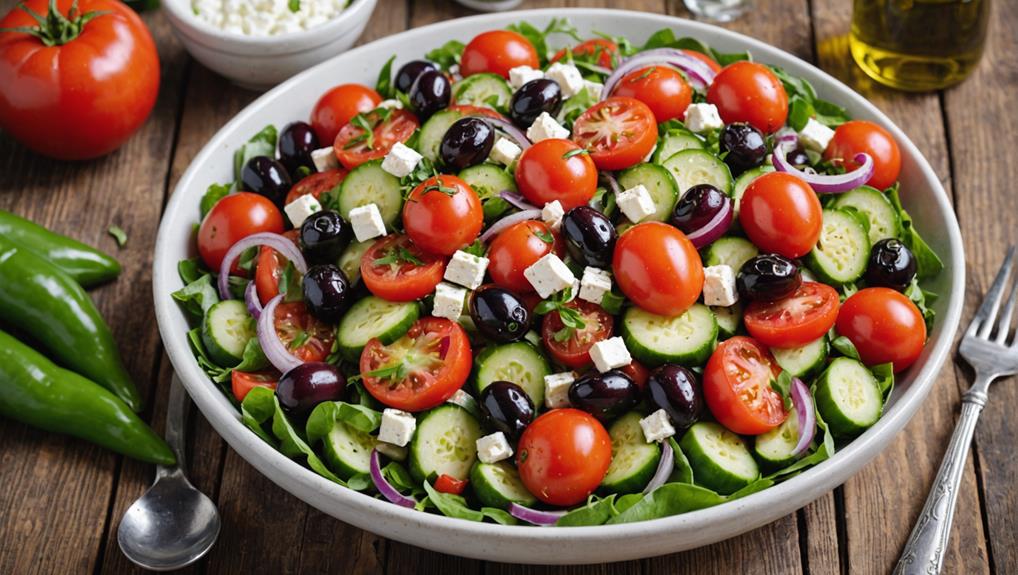
When you think of a Cretan Greek salad, it's vital to appreciate the key components that make it truly exceptional. You've got the crunchy barley rusks, fresh tomatoes, creamy feta, briny olives, and that rich extra virgin olive oil. Each ingredient plays a pivotal role in creating a balanced flavor profile that reflects the Mediterranean essence. But what makes these components stand out from other salads? Understanding their unique contributions can transform your culinary experience, leading you to discover how each element interacts in unexpected ways.
Need cookware for your meal? Toolbox, a Pear to Pear rental marketplace, might be worth a look.
Quick Takeaways
- Barley Rusks (Paximadia) provide a crunchy base, enhancing texture and flavor in the salad.
- Fresh Tomatoes add juiciness and natural sweetness, elevating the overall taste of the dish.
- Creamy Feta Cheese offers a rich, tangy contrast, complementing the freshness of vegetables.
- Briny Olives and Capers introduce savory saltiness and depth, enhancing the Mediterranean flavors.
Barley Rusks (Paximadia)
Barley rusks, or paximadia, are crunchy, double-baked bread that not only pack a flavorful punch but also serve as a nutritious base in Cretan salads. These traditional Cretan staples are made primarily from barley flour, offering a delightful texture that absorbs the vibrant flavors of the ingredients around them.
When you prepare a dakos salad, you'll find that soaking the barley rusks in olive oil or tomato juice transforms them into a satisfying canvas for the other components. The rusks are low in fat and high in fiber, making them a health-conscious choice for your Greek recipes.
Their long shelf-life means you can always keep them on hand for impromptu gatherings or leisurely meals. As you layer your salad, the rusks act as a sturdy foundation, allowing the fresh vegetables and rich olive oil to mingle perfectly.
You'll appreciate how they elevate the dish while providing a unique crunch that contrasts beautifully with the softness of ripe tomatoes and creamy feta. Whether served as part of a festive meal or a casual lunch, barley rusks bring a touch of authentic Cretan flavor that's sure to impress your guests.
Fresh Tomatoes
Fresh, vine-ripened tomatoes are essential for creating a delicious Cretan Greek salad, as their juicy texture and natural sweetness elevate the dish's overall flavor. When you choose the right tomatoes, you'll be well on your way to impressing your guests.
Consider these options:
- Heirloom varieties – Their vibrant colors and intense flavors bring a fresh burst to your salad.
- Grated or diced – This technique releases juices that moisten the Cretan Dakos, creating a delightful blend of textures.
- Seasoning with salt and pepper – This step draws out excess moisture, intensifying the tomato's flavor while perfectly complementing the crumbled feta.
As you assemble your salad, drizzle some olive oil and red wine vinegar for an extra layer of richness.
Don't forget to sprinkle Greek oregano on top; it adds an aromatic touch that ties everything together.
With fresh tomatoes at the heart of your Cretan Greek salad, you'll create a dish that's not only visually stunning but also a savory delight for the palate.
Your guests will appreciate the freshness and authenticity that these tomatoes bring to the table.
Creamy Feta Cheese
Building on the vibrant flavors of fresh tomatoes, creamy feta cheese adds a rich, tangy contrast that elevates your Cretan Greek salad to new heights. This key ingredient, traditionally made from sheep's milk or a blend of sheep's and goat's milk, brings a delightful crumbly texture that complements the crispness of cucumbers and the sweetness of bell peppers.
Opt for local Cretan feta, such as mizithra or anthotiro, to experience the region's culinary heritage. The creamy richness of feta enhances the overall taste profile, making your salad not just a dish, but an experience. Crumbling the feta over the top guarantees even flavor distribution, while also adding visual appeal.
To take your Greek salad up a notch, drizzle it with high-quality olive oil and a splash of red wine vinegar. This combination not only highlights the feta's tanginess but also enhances the nutritional value of the salad.
Packed with protein, calcium, and beneficial fats, creamy feta cheese transforms your dish into a wholesome and satisfying meal, perfect for serving family and friends. Enjoy the deliciousness and health benefits in every bite!
Briny Olives and Capers
Briny olives and capers bring a burst of savory flavor to your Cretan Greek salad, enhancing the dish with their signature saltiness and tang. These ingredients not only elevate the taste but also connect you to the rich Mediterranean diet, which prioritizes local, seasonal ingredients.
Imagine the delightful contrast as you enjoy:
- Kalamata Olives: Their deep purple hue and bold flavor provide a rich, briny kick that balances the sweetness of ripe tomatoes.
- Capers: Tiny, green jewels that pack a punch with their tangy, slightly bitter taste, adding complexity to every forkful.
- Briny Olives: A medley of textures and flavors, these olives offer healthy fats and antioxidants, promoting heart health while making your salad more satisfying.
Extra Virgin Olive Oil
There's nothing quite like drizzling high-quality extra virgin olive oil over your Cretan Greek salad to elevate its flavors and create a delightful harmony among the ingredients. This heart-healthy oil is the star of your dish, made from the first cold pressing of olives, ensuring it retains maximum flavor and nutrients.
With its rich monounsaturated fats, extra virgin olive oil not only tastes divine but also contributes to lowering cholesterol levels and reducing the risk of heart disease. Plus, it's packed with powerful antioxidants, like polyphenols, which help combat oxidative stress and inflammation in your body.
When you pour this luscious oil over your salad, it acts as a natural dressing that enhances the freshness of the ingredients. Imagine how the robust flavors of tomatoes, creamy feta, and fragrant herbs come alive with just a splash of extra virgin olive oil.
Each bite becomes a celebration of tastes and textures, allowing you to serve something truly special. So, next time you prepare your Cretan Greek salad, don't skimp on this essential ingredient; it's the finishing touch that transforms a simple dish into a culinary delight.
Common Questions
What Is a Traditional Greek Salad Made Of?
A traditional Greek salad's vibrant colors and flavors come from ripe tomatoes, crunchy cucumbers, red onions, green bell peppers, Kalamata olives, and feta. It's drizzled with olive oil and sprinkled with oregano for a delightful taste.
Is It OK to Eat Greek Salad Everyday?
Wondering if it's okay to eat Greek salad every day? Absolutely! With its vibrant veggies, healthy fats, and protein, you'll fuel your body while enjoying delicious flavors. Just remember, moderation is key for balanced enjoyment.
What Is a Substitute for Cretan Rusks?
If you're looking for a substitute for Cretan rusks, try toasted whole grain bread or pita chips. For a gluten-free option, crushed rice cakes work great, adding a delightful crunch to your dish.
How Do You Keep Greek Salad From Getting Soggy?
To keep your Greek salad from getting soggy, use firm tomatoes, salt them briefly, incorporate crunchy veggies, and assemble everything just before serving. Drizzle high-quality oil and vinegar sparingly for perfect flavor without excess moisture.
Wrapping Up
To sum up, the enchanting combination of crunchy barley rusks, juicy tomatoes, creamy feta, briny olives, and vibrant olive oil creates a delightful dish that dazzles your taste buds.
Each component contributes to the colorful, complex character of the Cretan Greek salad, making it a must-try masterpiece of Mediterranean magic.
So, why not whip up this wonderful, wholesome salad and savor the sensational flavors that transport you straight to the sun-soaked shores of Crete?