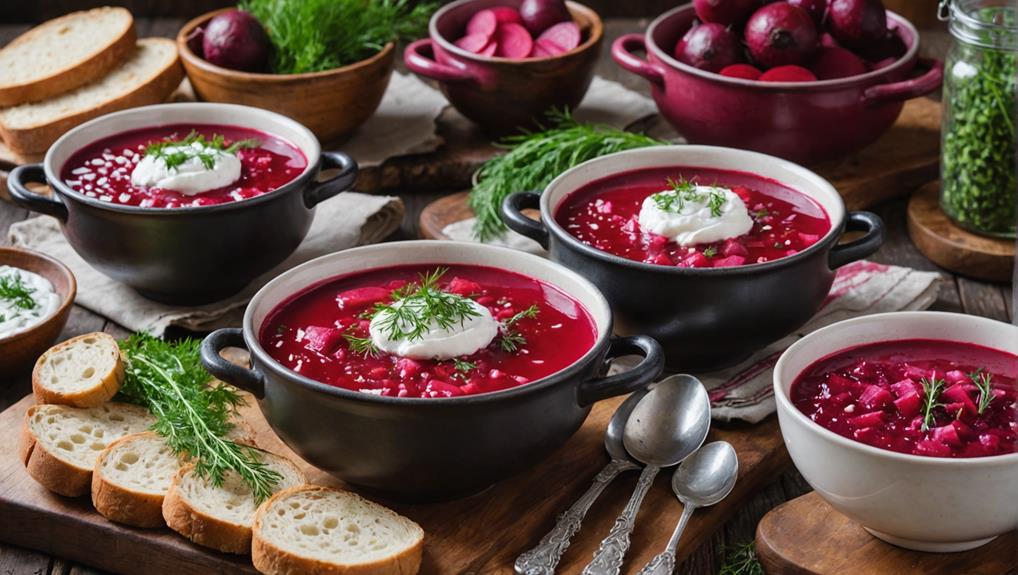
It's interesting how you stumbled upon borscht at that Eastern European festival last summer, only to realize it's a dish steeped in history and variety. You might find yourself intrigued by the distinct nuances of Ukrainian borscht compared to its Polish counterpart or the invigorating twist of a Lithuanian cold version. Each recipe tells a story of culture and tradition, inviting you to explore the flavors that connect generations. What if you could recreate these unique dishes in your own kitchen? The journey into these recipes could lead to some delightful surprises.
Need cookware for your meal? Toolbox, a Pear to Pear rental marketplace, might be worth a look.
Quick Takeaways
- Explore Ukrainian Borscht, featuring beets, cabbage, and savory meats, often served with garlic and dill for added flavor.
- Try Polish Barszcz, a clear broth typically accompanied by festive 'uszka' dumplings, highlighting unique regional traditions.
- Experience Lithuanian Cold Borscht, a refreshing summer dish made with beets, buttermilk, cucumbers, and fresh herbs, perfect for hot days.
- Discover Green Borscht, utilizing sorrel or spinach for a tangy twist, offering a lighter alternative to traditional beet-based soups.
Understanding Borscht Variations
Borscht isn't just one soup; it's a colorful tapestry of variations that reflect the rich culinary traditions of Eastern Europe. When you immerse yourself in the world of borscht, you'll discover the vibrant Ukrainian borscht recipe, where beets take center stage, creating a striking deep red hue. This version often combines beets with hearty vegetable stock, resulting in a comforting, flavorful dish that warms the soul.
For those seeking a lighter twist, green borscht offers a revitalizing alternative. Made without beets, it highlights sorrel or spinach, bringing a tangy brightness that's perfect for summertime. You can enjoy it chilled, making it an ideal dish for gatherings.
Sour cream is a common companion to both types of borscht, adding a creamy richness that balances the soup's flavors beautifully.
With variations across Eastern Europe, each region has its unique spin on this beloved dish. Some recipes even incorporate beans or grains, catering to diverse dietary preferences. Whether you're serving a traditional Ukrainian bowl or a lighter green borscht, each variation invites you to celebrate the communal spirit of sharing food.
Traditional Ukrainian Borscht
Immerse yourself in the deep, rich flavors of traditional Ukrainian borscht, a comforting soup that beautifully showcases the vibrant red of fresh beets. This hearty dish typically starts with a base of tender pork or beef, simmered to perfection, and then enriched with an array of vegetables like cabbage, potatoes, and carrots. Each spoonful bursts with flavor, thanks to the addition of aromatic garlic and fresh dill weed, which elevate the dish and create a beautiful harmony of tastes.
As you prepare this beloved soup, don't forget that the balance of ingredients is key. The sweet earthiness of fresh beets melds with the slight tang of vinegar, making each bowl a delightful experience. When serving, a generous dollop of sour cream adds creaminess and a revitalizing contrast, enhancing the borscht's vibrant colors and flavors.
Traditionally enjoyed during family gatherings, this soup holds deep cultural significance in Ukraine. Whether served hot on a chilly day or chilled during summer, traditional Ukrainian borscht is a versatile dish that brings people together and warms the heart. Enjoy sharing this slice of Eastern European heritage with your loved ones!
Russian Borscht Recipes
When you think of Russian borscht, picture a vibrant soup with a clear beef or pork broth that sets it apart from its thicker Ukrainian cousin.
You'll find a delightful mix of traditional ingredients like beets, cabbage, and potatoes, enhanced by various meats that add depth to the flavor.
Plus, with serving options that range from warm bowls in winter to chilled cups in summer, this dish is as versatile as it's delicious.
Traditional Ingredients Used
Rich in flavor and vibrant in color, traditional Russian borscht showcases a delightful medley of beets, cabbage, and an array of hearty vegetables that come together to create a comforting and satisfying dish.
When preparing this classic soup, you'll want to focus on a few key ingredients that elevate its taste and authenticity:
- Beets: The star of the show, these earthy roots provide that signature deep red hue and a subtly sweet flavor.
- Cabbage: This crunchy vegetable adds texture and a slight tang, balancing the sweetness of the beets.
- Tomatoes: Incorporating diced canned tomatoes or tomato paste enriches the soup with acidity, enhancing its overall depth.
To top it all off, don't forget a generous dollop of sour cream, which adds creaminess and a cool contrast to the warm soup.
Fresh dill is essential as a garnish, contributing an aromatic quality that completes the dish beautifully.
Serve your borscht hot, accompanied by crusty rye bread, and watch as your guests savor every spoonful of this heartwarming Eastern European delight.
Cooking Techniques Variations
Exploring various cooking techniques can transform your borscht from a simple soup into a culinary masterpiece, highlighting the rich flavors and textures that define this beloved dish.
For Russian borscht, start by using a lighter meat stock, which creates a broth-like consistency that's perfect for showcasing the vibrant beets and tender cabbage.
Begin your cooking process by sautéing onions and carrots until they're caramelized. This step enhances the overall taste and adds depth to your borscht.
Once those ingredients are ready, incorporate your choice of meats, such as beef or pork, and let them simmer. As the flavors meld, you can add potatoes for heartiness and even beans or tomatoes for extra flavor variations.
Don't forget to finish your borscht with a generous dollop of sour cream and a sprinkle of fresh dill. This creamy contrast elevates the dish, making it inviting and delicious.
If you're feeling adventurous, try variations like Green Borscht, which swaps beets for sorrel or spinach, giving you a revitalizing tang that's equally delightful.
Embrace these techniques, and your borscht will surely impress those you serve.
Serving Suggestions Differences
Served steaming hot, Russian borscht delights with a creamy dollop of sour cream and a sprinkle of fresh dill, making it a comforting and visually appealing dish.
When you're ready to impress your guests, consider these serving suggestions:
- Pair with Bread: Offer dark rye bread for a rich, hearty contrast, or serve garlic bread (pampushky) for a fragrant twist that complements the soup's flavors beautifully.
- Protein Options: While beef is the classic choice, you can also include tender chunks of pork for a different take. The meat adds depth to the soup, enhancing its comforting nature.
- Garnish Creatively: Elevate your presentation by garnishing with fresh dill or parsley. Not only does it add a pop of color, but it also enhances the dish's aroma, making every spoonful more inviting.
Additionally, if you want a revitalizing alternative in warmer months, consider serving cold borscht, or 'holodnik,' with boiled eggs and fresh cucumbers.
It's a delightful way to enjoy the flavors of borscht while keeping things light and invigorating!
Polish Borscht Creations
When you think of Polish borscht, or 'barszcz,' imagine a vibrant soup bursting with the earthy sweetness of beets, often paired with hearty ingredients like mushrooms and potatoes.
You'll find that traditional cooking methods result in a rich, flavorful broth, whether you're enjoying the classic red variety or the unique white borscht made with fermented rye.
Let's explore how these distinctive ingredients and techniques come together to create a truly unforgettable dish.
Traditional Polish Ingredients
Polish borscht, often vibrant and hearty, commonly features fresh beets, cabbage, and a splash of vinegar, creating a delightful balance of flavors that warms the soul.
When crafting this beloved dish, you can enhance its charm with these traditional ingredients:
- Beets: The star of the show, they provide that signature ruby color and earthy sweetness.
- Cabbage: Adding texture and a subtle crunch, cabbage complements the beets beautifully.
- Sour Cream: A dollop of creamy sour cream rounds out the flavors, adding richness and tang.
You might also consider incorporating dumplings, like uszka, filled with mushrooms or meat, to make the dish even more satisfying.
For added depth, a touch of vinegar elevates the soup with a hint of acidity. Depending on your region, feel free to experiment with variations that might include potatoes, carrots, or even smoked meats.
Serve your Polish borscht hot, garnished with fresh herbs like dill, or chilled during summer months for a revitalizing twist.
This dish isn't just a meal; it's a heartfelt experience you can share with others. Enjoy crafting this traditional delight!
Cooking Methods Overview
Creating a delicious pot of Polish borscht involves a blend of techniques that highlight the vibrant flavors of beets and the rich, comforting essence of the broth.
Start by boiling fresh beets until they're tender. Once cooked, strain the liquid to create a stunning beet soup that forms the base of your borscht.
To deepen the flavor, sauté onions and garlic in a bit of oil until golden, then stir them into your clear beet broth. Depending on your preference, you can add potatoes or shredded cabbage to enhance the dish's heartiness. For a truly authentic experience, consider preparing homemade chicken broth as your foundation; it adds a savory richness that elevates the overall taste.
When serving, don't forget a generous dollop of sour cream to add creaminess and balance the sweetness of the beets. For special occasions, you can accompany your borscht with 'uszka,' delightful little dumplings filled with mushrooms or meat.
Embrace these cooking methods, and you'll be well on your way to serving a memorable Polish borscht that'll impress your guests.
Lithuanian Cold Borscht
Lithuanian Cold Borscht, or Šaltibarščiai, is a rejuvenating and vibrant pink soup that you'll often find gracing tables during the warmer months, thanks to its delightful blend of beets and creamy buttermilk. This invigorating dish is traditionally served cold, making it a perfect choice to cool off on hot days.
Here are three reasons to love this unique soup:
- Flavorful Combination: The beets provide an earthy sweetness, while the buttermilk adds a tangy creaminess, creating a delightful contrast.
- Fresh Ingredients: It's often garnished with crisp diced cucumbers, radishes, and fresh dill, bringing a burst of freshness to each spoonful.
- Health Benefits: Packed with vitamins and antioxidants, this dish supports your well-being, thanks to the nutritious beets and fresh vegetables.
Typically, Lithuanian Cold Borscht is accompanied by hard-boiled eggs and served with boiled potatoes on the side, enhancing its heartiness.
This dish not only nourishes the body but also pleases the palate, making it a fantastic option for serving family and friends during warm weather gatherings.
Unique Ingredients for Borscht
Exploring unique ingredients for borscht opens up a world of flavors, allowing you to elevate this classic dish with unexpected twists that delight the palate.
For instance, adding white beans introduces a creamy texture and a protein boost, making the soup heartier. If you're after a richer flavor, consider incorporating smoked meats like bacon or sausage. The smoky undertones provide depth that perfectly complements the sweetness of the beets.
Fresh herbs can also transform your borscht. While dill is traditional, experimenting with tarragon or thyme can create a distinctive flavor profile that reflects your family's culinary heritage. To add an intriguing tang, try using fermented vegetables like sauerkraut or pickled beets; they offer a delightful contrast to the fresh ingredients.
Don't forget to incorporate unique vegetables, such as parsnips or celery root, alongside the classic potatoes and carrots. These additions not only enhance nutrition but also bring exciting flavors and textures to your borscht.
Vegetarian and Vegan Options
If you're looking to enjoy borscht without the meat, you'll be thrilled to know that vibrant vegetable stocks and hearty meat alternatives can elevate your dish just as much.
Imagine a rich broth made from roasted vegetables, infused with herbs, that perfectly complements the earthy sweetness of beets and the crunch of fresh cabbage.
Plus, you can experiment with different veggies to create a unique flavor profile while still keeping things hearty and satisfying!
Meat Alternatives for Borscht
Borscht can be just as delicious and satisfying without meat, thanks to a variety of plant-based alternatives that enhance its flavor and texture. You'll find that these options not only cater to vegetarian and vegan diets but also create a hearty and vibrant dish that everyone can enjoy.
Here are three fantastic alternatives to evaluate:
- Vegetable Stock: Replace traditional meat broth with vegetable stock. This maintains the depth of flavor while keeping your borscht completely plant-based.
- White Cannellini Beans: Adding white cannellini beans brings a creamy texture and a boost of protein, making your borscht more filling and nutritious.
- Roasted Mushrooms: For an umami kick, incorporate roasted or sautéed mushrooms. They mimic the richness of meat and add a delightful earthiness to your soup.
To create a vegan version, simply omit any animal-derived ingredients like sour cream, and opt for plant-based alternatives or garnish with fresh herbs. You can also throw in lentils for added texture and nutritional benefits.
With these ingredients, your borscht will be a hit with everyone at the table!
Flavorful Vegetable Stock Recipes
Creating a flavorful vegetable stock is an essential step in crafting a delicious borscht, as it infuses the dish with rich, natural flavors that elevate every spoonful. To start, gather fresh vegetables like carrots, celery, onions, and garlic. Chop them up and let them be simmered in water for 30-60 minutes. This process extracts their vibrant flavors, forming a solid base for your borscht.
For an even deeper flavor, don't forget to add herbs such as thyme, bay leaves, and parsley. A few peppercorns can also enhance the overall taste profile. If you're keen on reducing waste, consider using vegetable peels and trimmings in your stock.
If you prefer a vegan option, simply verify you're using plant-based ingredients, keeping the stock free from animal products while still packing a flavor punch. Once your stock is ready, strain it through a fine mesh sieve or cheesecloth to achieve a clear liquid.
You can refrigerate this flavorful vegetable stock for up to a week or freeze it for long-term use. With this stock, your borscht will be a comforting delight!
Serving Suggestions for Borscht
Serving borscht hot with a generous dollop of sour cream not only enhances its creamy texture but also elevates the dish's rich flavors.
To make your borscht experience even more delightful for your guests, consider these serving suggestions:
- Garnish with Fresh Herbs: Sprinkle fresh parsley or dill on top just before serving. This adds a burst of color and aromatic freshness that brightens the dish.
- Pair with Crusty Sides: Serve slices of crusty rye bread alongside your borscht. The bread's robust flavor complements the soup beautifully and makes for a satisfying meal.
- Indulge with Home-Cured Pork Belly: For a truly indulgent twist, add slices of home-cured pork belly (salo) to your serving. Its rich, savory taste pairs wonderfully with the sweetness of the beets.
If you're serving cold borscht during warmer months, consider topping it with plain yogurt or a drizzle of mayonnaise for a revitalizing contrast.
With these simple yet thoughtful serving suggestions, you'll impress your guests, making your borscht not just a meal but an unforgettable experience!
Tips for Storing Borscht
To keep your borscht tasting fresh and flavorful, proper storage is key.
After enjoying a hearty bowl, don't let those leftovers go to waste! Store leftover borscht in an airtight container in the refrigerator, where it'll stay fresh for up to three days.
If you want to save it for later indulgence, consider freezing it. You can freeze borscht in freezer-safe containers for up to two months; just remember to leave some space at the top for expansion.
When you're ready to enjoy that frozen delight, simply reheat frozen borscht by thawing it overnight in the refrigerator.
For the best results, warm it on the stove or in the microwave. If you notice the soup has thickened during storage, don't hesitate to add a splash of water or broth to maintain its desired consistency.
To guarantee ideal flavor and quality, remember to label your containers with the date of freezing. This way, you'll always know when it's best to enjoy your delicious borscht, making every serving as delightful as the first!
Exploring Regional Borscht Styles
Exploring the diverse world of borscht reveals a tapestry of flavors and traditions, each regional variation offering a unique take on this beloved soup. From the heart of Eastern Europe, you'll discover that borscht is more than just a dish; it's a cultural experience.
Here are three regional styles to entice your taste buds:
- Ukrainian Borscht: This vibrant red soup, rich with beets, often includes cabbage, potatoes, and sometimes meat. It's a hearty meal perfect for sharing with loved ones.
- Polish Barszcz: Known for its clear broth and festive flair, it's sometimes served with 'uszka,' delightful dumplings filled with mushrooms or meat, making it a celebratory dish.
- Lithuanian Šaltibarščiai: Served cold, this invigorating summer borscht combines beets, cucumbers, and kefir, offering a unique twist on traditional flavors.
Each of these regional styles showcases the versatility of borscht, and you can elevate your gatherings by serving them with a dollop of sour cream.
Embrace the variety and let your guests savor the rich culinary heritage of Eastern Europe!
Common Questions
What Is the Difference Between Russian and Ukrainian Borscht?
When you explore borscht, you'll notice Ukrainian versions are heartier with beets and meat, while Russian varieties are lighter, vegetable-focused. Each has distinct flavors and toppings, making them uniquely delightful for your guests.
Which Country Has the Best Borscht?
Determining which country has the best borscht is like choosing a favorite child; each nation offers its own delightful interpretation. It's your personal taste and cherished traditions that truly define the ultimate borscht experience.
What Is the Difference Between Polish and Ukrainian Borscht?
Polish borscht offers a clear broth with a sour twist, often featuring mushrooms, while Ukrainian borscht boasts a hearty richness with beets, cabbage, and meats. Both are deliciously complemented by a dollop of sour cream.
What Is Borscht Made of in East Europe Soup?
Imagine a painter's palette, vibrant with beets, carrots, and potatoes. In Eastern Europe's borscht, you'll find tender cabbage, hearty meats, and fragrant herbs, creating a warm symphony of flavors perfect for sharing with loved ones.
Wrapping Up
Borscht might seem intimidating with its various styles and ingredients, but it's truly a celebration of flavor and community.
By exploring these unique recipes, you're not just cooking a meal; you're embracing a rich cultural heritage that brings people together.
Whether you're savoring a warm bowl of Ukrainian borscht or invigorating cold Lithuanian variations, each spoonful tells a story.
So gather your loved ones, and plunge into the vibrant world of borscht—you won't regret it!