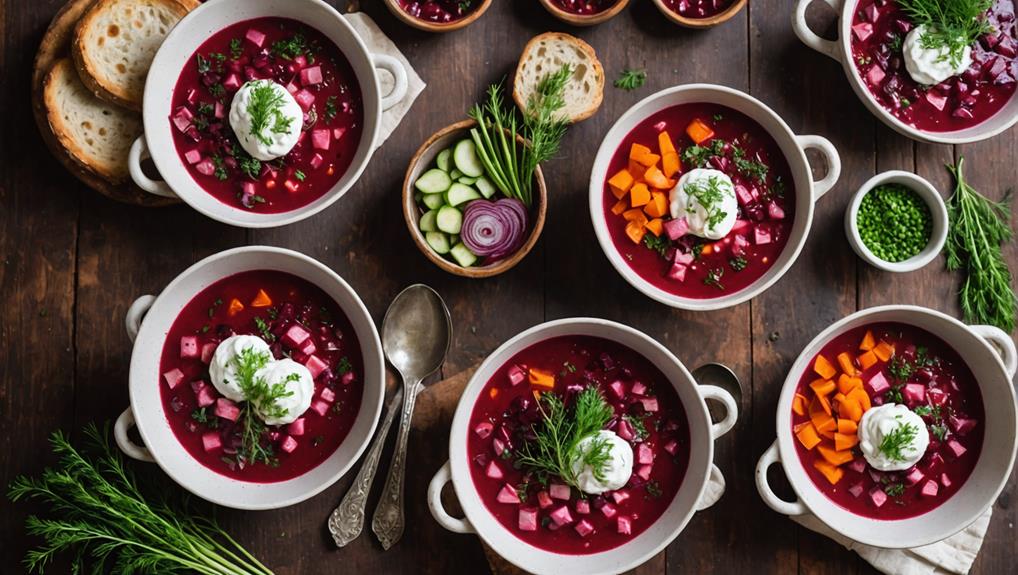
When you think of borscht, you might envision a hearty beet soup, but the variations across Eastern Europe tell a much richer story. Each region has its own twist on this classic dish, influenced by local ingredients and traditions. You might find a chilled version perfect for summer days or a festive recipe that warms family gatherings. Understanding these differences not only enhances your culinary experience but also connects you to the cultural heritage behind the bowl. What if you could try making one of these unique recipes at home?
Need cookware for your meal? Toolbox, a Pear to Pear rental marketplace, might be worth a look.
Quick Takeaways
- Borscht originated in Ukraine, evolving from a wild herb soup to incorporate beets in the 16th century, leading to its iconic status.
- Key ingredients include beets, cabbage, potatoes, and various seasonings, with variations reflecting local ingredients and cultural identities.
- Types of borscht include red, cold, sorrel, and vegetarian versions, showcasing the dish's versatility across different regions.
- Borscht holds cultural significance, often served during family celebrations, holidays, and gatherings, symbolizing unity and tradition.
Origins of Borscht
Borscht, rooted in the rich culinary traditions of Ukraine, has evolved from its humble beginnings as a wild herb soup into a beloved dish that showcases the vibrant flavors of Eastern Europe. Its origins trace back to the Old Slavic word for hogweed, the primary ingredient in early versions. As time passed, borscht transformed greatly, particularly in the 16th century when beets became a staple, adding depth and color to this hearty soup.
For over a thousand years, borscht has held a prominent place in Eastern European cuisine, with various regions proudly claiming unique versions that reflect local ingredients and culinary traditions. Each variation tells a story, showcasing the rich history and cultural significance of this dish. In 2022, borscht was recognized by UNESCO, highlighting its role in fostering family ties and representing Eastern European heritage.
As you explore the diverse ways to prepare borscht, you'll discover not just a recipe, but a connection to generations of cooks who've cherished this dish. By serving borscht, you're sharing a piece of history that continues to resonate with people around the world.
Key Ingredients
Beets stand out as the star ingredient in this vibrant soup, imparting a rich color and natural sweetness that sets the foundation for countless variations of borscht.
When preparing your borscht, consider these key ingredients that elevate the dish:
- Vegetables: Alongside beets, you'll often find cabbage, potatoes, carrots, and onions. These vegetables add depth and texture to the soup, making it hearty and satisfying.
- Broth: Many recipes call for a meat-based broth, like beef or pork, to enhance the flavor. However, vegetarian options swap in additional vegetables and herbs for a lighter touch.
- Seasoning: Don't forget the essential seasonings! Garlic and dill bring aromatic brightness, while vinegar adds a tangy kick that balances the sweetness of the beets.
To finish your borscht, consider a dollop of sour cream for creaminess and extra richness.
These key ingredients work together to create a comforting and flavorful dish that you'll be proud to serve to your family and friends.
Explore various recipes and find the perfect combination that delights your palate!
Types of Borscht
When you think of borscht, the vibrant red version often comes to mind, but there's so much more to explore.
From the invigorating cold borscht perfect for summer days to the unique flavors of sorrel borscht, each type brings its own character to the table.
Let's uncover the delightful variations that make this dish a beloved staple in many cultures.
Iconic Red Borscht Features
Richly colored and deeply flavorful, red borscht stands out as a beloved dish that captures the essence of Ukrainian culinary heritage. This iconic soup, with its vibrant color, is a symbol of national pride and a staple in many Eastern European homes. When you serve red borscht, you're sharing a piece of rich cultural heritage that many cherish.
Here are the key components that define traditional Ukrainian red borscht:
- Key Ingredients: Fresh beets are the star, complemented by potatoes, cabbage, onions, and garlic, creating a delightful balance of sweet and savory flavors.
- Served Hot: This dish is best enjoyed hot, often with a dollop of sour cream on top, which enhances its rich flavor and adds creaminess to every spoonful.
- Variations of Borscht: While the classic meat-based version uses beef or pork, there are vegetarian adaptations available, ensuring everyone can indulge in this comforting dish.
As you explore the culinary traditions surrounding red borscht, you'll find that each bowl tells a story of heritage and warmth, perfect for serving family and friends.
Unique Cold Borscht Variants
Discover the rejuvenating allure of unique cold borscht variants, where vibrant ingredients come together to create a delightful summer dish that's perfect for warm days.
Cold borscht, often known as 'sviży borszcz,' is a revitalizing summer dish that highlights the beauty of seasonal produce. Typically served chilled, it features a harmonious blend of beets, cucumbers, and fresh herbs. You can elevate the dish with ingredients like radishes, dill, and green onions, adding a delightful crunch and a tangy flavor that's hard to resist.
One standout variant is sorrel cold borscht, celebrated for its unique lemony taste that brightens any table. It typically incorporates fresh sorrel leaves and can be garnished with hard-boiled eggs for added protein. In Poland, this dish is often served alongside boiled potatoes, making it a satisfying meal infused with various vegetables like peas and carrots, adding texture and nutrition.
Additionally, cold borscht can easily cater to vegan diets by substituting plant-based yogurt for traditional dairy, making it a versatile option for all your guests.
Embrace the joy of serving this delightful dish at your next gathering!
Cultural Significance
Borscht isn't just a dish; it's a heartfelt symbol of family and tradition in Eastern European culture.
When you gather around the table with loved ones, the vibrant red soup often takes center stage during celebrations, embodying a rich heritage passed down through generations.
From Christmas Eve feasts to wedding rituals, each bowl tells a story of community and connection, making borscht a cherished part of your culinary experience.
Borscht in Family Gatherings
In Eastern European family gatherings, the vibrant hue and hearty flavors of borscht not only nourish the body but also strengthen bonds, embodying a deep sense of hospitality and community during cherished celebrations. This beloved dish is more than just food; it's a symbol of cultural identity and continuity.
Here are three reasons why borscht is essential in these gatherings:
- Heritage Connection: Borscht recipes are often passed down through generations, allowing families to maintain their culinary traditions while creating lasting memories together.
- Celebration Centerpiece: During significant occasions like Christmas Eve and Easter, serving borscht signifies warmth and togetherness, making it a must-have on festive tables.
- Culinary Collaboration: Preparing borscht can be a family affair, with multiple members gathering to chop, stir, and share stories, enhancing the sense of unity and love.
In Ukrainian culture, the act of sharing borscht fosters a deeper connection to one's roots, reinforcing the values of hospitality and community. As you serve this comforting dish, you're not just offering a meal; you're inviting others into a rich tapestry of tradition and celebration.
Cultural Heritage and Traditions
Throughout Eastern Europe, borscht stands as a vibrant emblem of cultural heritage, intricately woven into the fabric of community traditions and familial bonds. This beloved dish isn't just a meal; it's a symbol of home and pride, especially in Ukraine where it often graces family gatherings and celebrations. Recognized by UNESCO in 2022 for its cultural significance, borscht fosters strong community connections through shared recipes and cherished traditions.
Its presence is particularly felt during holiday festivities, especially Christmas Eve, where it takes center stage in festive meals. The variations of borscht across Eastern Europe reflect local ingredients and culinary identity, showcasing how this dish adapts while retaining its core essence.
Unique rituals, such as the 'do nevistky – na borshch' during weddings in Podillia, further emphasize the importance of borscht in communal celebrations.
Celebrations and Rituals Involved
Central to many Eastern European celebrations, borscht not only delights the palate but also embodies the rich tapestry of cultural rituals that bind families and communities together. This vibrant soup plays a pivotal role in various festivities, reflecting its deep-rooted significance in Ukrainian culture and beyond.
Here are three key celebrations where borscht shines:
- Sviata Vecheria: On Christmas Eve, families gather for this traditional twelve-course meal, where borscht is a beloved staple, symbolizing warmth and togetherness.
- Weddings: The ritual 'do nevistky – na borshch' highlights borscht's role in fostering community connections, celebrating new beginnings as families unite.
- Easter: In Poland, white borscht represents renewal and the arrival of spring, making it a cherished dish during this festive period.
These culinary traditions emphasize the cultural importance of borscht, with many families passing down cherished recipes through generations.
Each bowl of borscht isn't just a meal; it's a celebration of heritage, family gatherings, and the connections that enrich our lives.
Health Benefits
Borscht offers a delicious way to boost your health, as its nutrient-rich ingredients pack a punch of fiber, vitamins, and antioxidants that can enhance your overall well-being.
When you serve borscht, you're presenting a vibrant dish filled with beets and a medley of vegetables, each contributing essential nutrients. Beets, in particular, are bursting with antioxidants like betalains, which are known to reduce inflammation and support heart health.
The variety of vegetables in borscht guarantees a rich supply of vitamins C, potassium, and folate, all crucial for bolstering immune function. Plus, this dish is low-calorie, making it an excellent choice for those looking to manage their weight without sacrificing satisfaction. The high vegetable content keeps you feeling full while fueling your body with goodness.
Don't forget about the dietary fiber! The fiber in borscht promotes healthy digestion and can help maintain healthy cholesterol levels.
Making Borscht at Home
Creating borscht at home not only allows you to enjoy its health benefits but also gives you the freedom to tailor the recipe to your taste and dietary needs.
With its strong cultural significance in Eastern European cuisine, making borscht is a rewarding cooking experience that brings diverse culinary traditions to your kitchen.
Here are three key ingredients you'll need for a traditional borscht:
- Beets: The star of the dish, providing that vibrant color and unique flavor.
- Cabbage: Adds texture and complements the sweetness of the beets.
- Potatoes: Create a hearty base, making the soup more filling.
You can experiment with these ingredients based on your preferences—whether you want a classic meat version or a vegan alternative packed with vegetables.
Roasting the beets beforehand enhances their sweetness, resulting in a rich, flavorful broth that warms the soul.
Recipes for borscht are widely available, offering various interpretations to explore.
Common Questions
How Many Different Kinds of Borscht Are There?
There're countless kinds of borscht, each with its uniqueness. You'll find red, white, and cold varieties, along with regional twists like sorrel borscht. Experiment with different recipes to delight your guests with vibrant flavors.
What Is the Difference Between Russian and Ukrainian Borscht?
Ukrainian borscht shines with beets, often includes meat, and is served hot with sour cream. Russian borscht varies more in ingredients and can be served cold, reflecting diverse regional tastes and traditions.
What Is the Difference Between Polish and Ukrainian Borscht?
You'll find Ukrainian borscht rich and hearty, boasting beets and meat, while Polish borscht is lighter, tangy, and often features fermented rye. Each reflects unique cultural traditions, perfect for serving at gatherings or special occasions.
What Is Borscht Made of in East Europe Soup?
Borscht in Eastern Europe typically features beets, cabbage, carrots, and onions, simmered in a rich broth. You'll often enhance its flavor with garlic, dill, and vinegar, creating a delicious, vibrant dish to serve others.
Wrapping Up
In summary, diving into the world of Eastern European borscht is like starting on a flavorful journey through time.
Each bowl not only warms your soul but also connects you to rich traditions and vibrant cultures.
Whether you prefer the hearty red borscht of Ukraine or the invigorating summer variations, each recipe is a treasure waiting to be discovered.
So grab your ingredients, set free your creativity, and let this iconic soup transform your kitchen into a culinary haven!