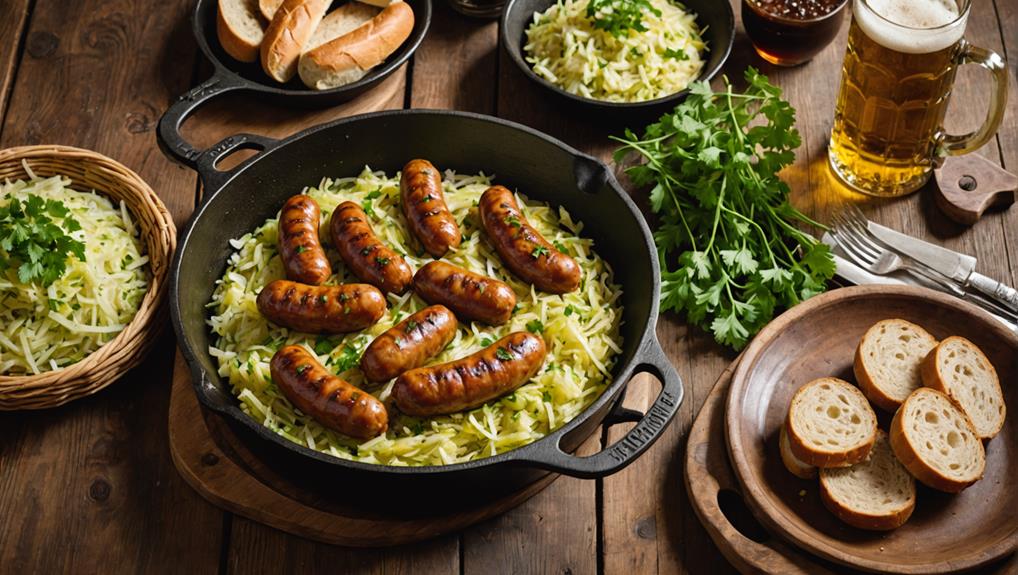
Did you know that over 1 million tons of sauerkraut are consumed in Germany each year? This humble dish, often paired with a variety of sausages, holds a special place in both kitchens and hearts. As you explore traditional recipes, you'll find that each ingredient tells a story of resourcefulness and community. Yet, the nuances in preparation can vary greatly, influencing flavor and texture. What's the secret behind achieving that perfect balance of tangy and savory? Let's uncover the elements that make these dishes so beloved.
Need cookware for your meal? Toolbox, a Pear to Pear rental marketplace, might be worth a look.
Quick Takeaways
- Combine sauerkraut, smoked sausage, and aromatic vegetables like onions and bell peppers for a classic dish with rich flavors.
- Use the stovetop method by sautéing bacon and onion before adding sauerkraut and sausage to simmer for extra depth.
- For a quick option, mix pre-cooked sausage with rinsed sauerkraut and heat in the microwave for a fast meal.
- Enhance flavors by adding sweet elements like brown sugar or apples, and balance with vinegar for acidity.
Recipe Overview
In this hearty recipe overview, you'll discover how traditional German sauerkraut and sausage come together to create a comforting dish that's perfect for chilly evenings. At the heart of this meal is sauerkraut, a tangy fermented cabbage that not only adds flavor but also boasts health benefits thanks to the fermentation process.
When paired with German sausage, especially kielbasa sausage, the dish transforms into a delightful feast. The robust flavors of the sauerkraut meld beautifully with the rich, savory notes of the sausage. You might choose to enhance this dish with spices like caraway seeds or a touch of onion, which can elevate the taste even further.
A common cooking method involves simmering the sauerkraut with these seasonings before layering it with the sausage and baking it until everything is warm and bubbling.
This dish isn't just about taste; it's filling and economical, making it a favorite for families during colder months. Serve it alongside hearty sides like German potato salad or crusty bread, and you'll create a meal that's sure to impress and satisfy your guests.
Essential Ingredients
To create a delicious traditional German sauerkraut and sausage dish, you'll need a few essential ingredients that bring rich flavors and comforting warmth to the table.
Start with sauerkraut, the star of your dish, which provides a tangy base that pairs beautifully with the savory notes of smoked German sausage. This sausage not only adds depth but also infuses the dish with its rich, smoky essence.
Next, consider enhancing the flavor profile with aromatic vegetables like onions and bell peppers. They contribute sweetness and texture, making every bite satisfying.
To elevate the dish even further, sprinkle in some caraway seeds. Their unique, slightly nutty flavor complements the tanginess of the sauerkraut perfectly.
Balance is key, so don't forget to add a touch of brown sugar and vinegar. This combination helps to mellow the acidity of the sauerkraut, offering a delightful hint of sweetness that rounds out the flavors.
If you're using jarred sauerkraut, rinse and drain it beforehand to reduce sodium content.
With these essential ingredients, you're well on your way to serving a hearty meal that your family and friends will love!
Step-by-Step Cooking Instructions
When you're ready to cook, mastering ingredient preparation techniques can elevate your sauerkraut and sausage dish.
You'll learn how to combine flavors effectively while exploring different cooking method variations to suit your taste.
Let's get started on creating a hearty, traditional meal that warms the soul!
Ingredient Preparation Techniques
Gather your ingredients and preheat the oven to 350°F, making certain that your casserole dish is greased to prevent any sticking during baking.
Start by chopping one medium red bell pepper and one medium red onion into bite-sized pieces. Mince three cloves of garlic to infuse your dish with aromatic flavors.
In a large bowl, combine the chopped bell pepper, red onion, and cooked smoked German sausage, which adds a hearty essence to your sauerkraut and sausage recipe. To enhance the flavor, sprinkle in some caraway seeds, a touch of brown sugar, and a splash of vinegar, mixing well to make sure everything is evenly distributed.
Next, take a 16-ounce jar of sauerkraut, rinsing and draining it thoroughly to remove excess salt. Layer the sauerkraut evenly over the sausage and vegetable mixture in your prepared casserole dish. This adds a delightful tang that complements the richness of the sausage.
Once you've assembled everything, cover the dish and bake for 35 to 40 minutes. This allows all the ingredients to heat through and the flavors to meld beautifully, making a comforting meal for your loved ones.
Cooking Method Variations
Exploring different cooking methods can elevate your traditional sauerkraut and sausage dish, offering a variety of flavors and textures that cater to your preferences.
For a classic approach, preheat your oven to 350°F. Combine sliced sausage, sauerkraut, and chopped vegetables in a greased baking dish. Cover and bake for 35-40 minutes until everything's heated through and aromatic.
If you're looking for a stovetop variation, start by cooking bacon and onion in a skillet until they're crisp. Then, add sauerkraut and sausage, letting them simmer for 20-30 minutes to meld those delicious flavors together.
For a quick preparation, simply mix pre-cooked sausage with sauerkraut and vegetables, then heat in the microwave for 5-7 minutes.
If you've got more time, a slow cooker is your friend! Layer sauerkraut, sausage, and your favorite seasonings, cooking on low for 6-8 hours to develop a rich taste.
Lastly, for a smoky twist, grill the sausage over direct heat, serving it alongside warmed sauerkraut. Each method brings its own flair, so feel free to experiment and find your favorite!
Flavor Enhancements and Pairings
To elevate your sauerkraut and sausage dish, consider how sweetness can beautifully balance its savory notes.
Think about pairing it with a honey beer or seasonal sides like spicy applesauce for added flavor contrast.
You'll find that complementary beverages and ingredients can transform your meal into a truly memorable experience.
Sweetness Balancing Techniques
Balancing the sweetness of sauerkraut involves a symphony of flavors, where acidity, savoriness, and spice come together to create a harmonious dish.
When you're preparing your smoked German sausages with sauerkraut, consider using these techniques to elevate your meal:
- Add Vinegar: A splash of white wine vinegar enhances acidity and counters the sweetness, bringing an invigorating tang to your dish.
- Incorporate Savory Ingredients: Sautéed onions or garlic can provide depth and complexity, helping to offset the sweet notes of the sauerkraut.
- Use Smoky or Spicy Sausages: Opt for kielbasa or bratwurst to introduce contrasting flavors that tone down the sweetness of your sauerkraut.
- Serve with Mustard: A side of tangy mustard can add a zesty element, further balancing the sweet flavors of the dish.
Complementary Beverage Choices
When pairing beverages with traditional German sauerkraut and sausage, the right choices can elevate the dish, enhancing its flavors and creating a memorable dining experience.
For a classic touch, you can't go wrong with a chilled glass of crisp white wine, like an invigorating Riesling. Its acidity beautifully contrasts the richness of the sausage and sauerkraut, balancing the flavors on your palate.
If you're leaning towards beer, Franziskaner Weissbier stands out as a fantastic option. Its light, fruity notes and subtle spiciness complement the savory elements of the dish, making each bite even more enjoyable.
For something a bit sweeter, consider honey beer or braggot. This unique choice adds a delightful sweetness that harmonizes with the hearty sausage and tangy sauerkraut.
Seasonal Ingredient Suggestions
Incorporating seasonal ingredients like fresh apples and root vegetables transforms your sauerkraut and sausage dishes, adding delightful sweetness and texture that are perfect for autumn.
These ingredients not only enhance the flavors but also create a warm, inviting meal that's ideal for sharing with friends and family.
Here are some suggestions to elevate your culinary experience:
- Fresh Apples: Add sliced apples for a sweet crunch that balances the tanginess of sauerkraut.
- Root Vegetables: Carrots and parsnips roasted alongside your Italian sausage create hearty sides that enrich the meal.
- Seasonal Herbs: Use thyme and rosemary to deepen the flavor profile, complementing both the sausages and sauerkraut beautifully.
- Autumn Spices: Experiment with nutmeg or cinnamon; these spices add warmth and comfort, perfect for cooler weather.
Pair these seasonal ingredients with locally sourced Italian sausage for an authentic touch.
Don't forget to serve your sauerkraut and sausage alongside hearty sides, like roasted Brussels sprouts or German potato salad, to showcase the richness of autumn's bounty.
Enjoy creating a feast that celebrates the flavors of the season!
Cultural Significance
Sauerkraut and sausage are more than just dishes; they embody a rich tapestry of German culture, symbolizing comfort, family gatherings, and resilience during the harsh winter months. This beloved combination reflects the heart of German culinary traditions, where each bite brings a sense of belonging and nostalgia.
The fermentation of cabbage into sauerkraut isn't just a method of preservation; it's an indication of the resourcefulness inherent in German identity. Families would gather to prepare and store their food, turning what could have been a hardship into a joyful communal activity.
During festive occasions, especially Oktoberfest, these dishes take center stage, highlighting their importance in celebrating cultural identity. You'll find sauerkraut and sausage at nearly every German festival, serving as a bridge that connects generations.
As you prepare these dishes for friends and family, you'll not only share a meal but also the stories and traditions that come with it. Each serving becomes a celebration of heritage, a way to foster connections, and an invitation to experience the warmth of German culture.
This is more than food; it's a heartfelt expression of community and tradition.
Community Feedback and Variations
Community feedback reveals a delightful array of personal twists on traditional German sauerkraut and sausage recipes, showcasing how families adapt these beloved dishes to suit their unique tastes and cherished memories.
You'll often find that the sweetness of sauerkraut can be a topic of lively debate. Some folks love sauerkraut tangy, while others enjoy a touch of sweetness. Here are a few popular variations you might consider:
- Sweeten it Up: Add a bit of brown sugar to balance the tartness, delighting those who prefer a sweeter flavor.
- Sausage Swaps: Don't hesitate to substitute different types of sausage, such as kielbasa or bratwurst, to create your signature dish.
- Flavor Boost: Enhance the sauerkraut by adding apples or a splash of apple cider vinegar for an extra layer of flavor.
- Cooking Techniques: Adjust cooking times based on the sausage you choose to guarantee everything achieves that perfect texture.
These variations not only make the dish your own but also keep the tradition alive, celebrating family heritage while inviting new tastes to the table.
Common Questions
What's the Difference Between German Sauerkraut and Regular Sauerkraut?
When you compare German sauerkraut to regular sauerkraut, you'll notice that the German version's fermentation process creates a crunchier texture and richer flavor, while regular varieties often taste milder and have a softer consistency.
What Is the Tradition of Sauerkraut in Germany?
In Germany, you'll find sauerkraut celebrated for its rich history and cultural significance. It's often enjoyed during festive occasions, offering a unique blend of flavor and nutrition, perfect for serving your guests hearty, traditional meals.
What's the Difference Between Bavarian and Sauerkraut?
Did you know Bavarian sauerkraut often incorporates apples or caraway seeds, creating a sweeter taste? In contrast, traditional sauerkraut's tangy flavor comes solely from cabbage and salt, offering a distinctive experience for your guests.
What Do Germans Eat With Sauerkraut?
When you serve sauerkraut, consider pairing it with hearty meats like pork or sausages. Add potato dumplings or crusty bread for a satisfying meal, and don't forget a tangy mustard to enhance those flavors!
Wrapping Up
As you savor each bite of this comforting dish, you're not just enjoying a meal, but a tapestry woven with threads of tradition and community.
The tangy sauerkraut dances playfully with the savory sausages, creating a symphony of flavors that warms the heart and soul.
Whether gathered around a bustling table or sharing stories over a cozy fire, these recipes invite you to celebrate the essence of German heritage, where food becomes a bridge connecting generations.