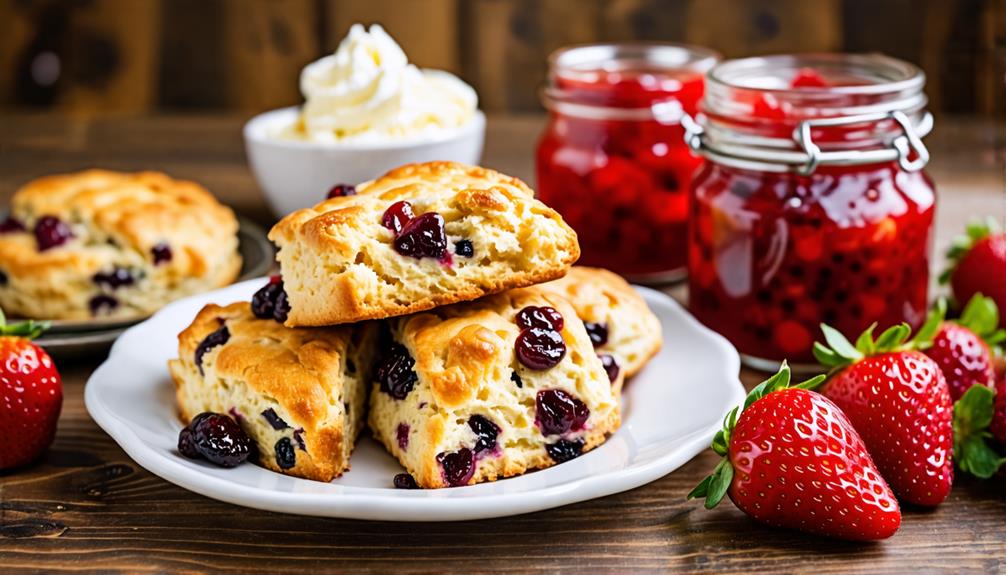
When you consider making British fruit scones, the choice of recipe can greatly impact the outcome. These recipes not only offer an authentic taste but also provide flexibility for various dietary needs. You'll appreciate the straightforward techniques that make the baking process accessible, even if you're a beginner. Plus, the communal aspect of sharing these recipes can enhance your baking experience. But what really sets these recipes apart might surprise you—there's more beneath the surface that can elevate your scone-making game.
Need cookware for your meal? Toolbox, a Pear to Pear rental marketplace, might be worth a look.
Things to Note
- These recipes highlight authentic British flavors that are essential for a traditional afternoon tea experience.
- Versatile ingredient options allow for customization based on dietary preferences or available ingredients.
- Simple preparation techniques ensure that even novice bakers can achieve light and fluffy scones.
- Ideal for various occasions, these scones elevate gatherings from casual to formal with ease.
Authentic British Flavor
When you savor a British fruit scone, you're not just enjoying a treat; you're experiencing a rich tradition that embodies the essence of afternoon tea.
To truly capture the authentic flavor of these delightful pastries, you'll want to stick to classic recipes that highlight the ingredients' natural qualities. Using plain flour and baking powder guarantees that your scones rise beautifully, achieving that signature light and fluffy texture you and your guests will love.
Incorporating sultanas or mixed dried fruits adds a touch of sweetness, beautifully balancing the lightly sweetened dough. But the real magic happens when you serve your freshly baked scones warm. Pair them with clotted cream and a dollop of jam, and you'll elevate your afternoon tea experience to another level. The rich, creamy clotted cream complements the fruity flavors perfectly, making each bite a celebration of British culinary tradition.
Whether you're hosting a charming garden party or a cozy gathering, your guests will appreciate the effort you've put into creating these authentic British fruit scones. They won't just taste good; they'll also connect everyone to the heart of a timeless tradition.
Versatile Ingredient Options
Exploring versatile ingredient options for British fruit scones lets you personalize the recipe to suit your taste and dietary needs. You can easily swap out mixed dried fruits for sultanas or even fresh fruits, enhancing the flavor and texture of your scones. If you're looking for a lighter option, consider adjusting the sugar levels to your preference without undermining the overall integrity of the recipe.
When it comes to flour, you can substitute self-raising flour with plain flour and baking powder, depending on what you have in your pantry. This flexibility means you can whip up a batch anytime. For those with gluten sensitivities, creating gluten-free scones is simple; just use gluten-free self-raising flour and add xanthan gum for the right texture.
Additionally, don't forget about the dairy components! You can use buttermilk or plant-based alternatives, catering to various dietary lifestyles. This adaptability guarantees that everyone at your gathering can enjoy your delectable scones. With these ingredient options, you're well on your way to serving a delightful treat that every guest will appreciate.
Simple Preparation Techniques
To make perfect British fruit scones, start by combining self-raising flour, baking powder, and sugar in a bowl for the dry ingredients.
Next, incorporate cold, unsalted butter into the mix to achieve that lovely crumbly texture.
In a separate bowl, whisk together milk, egg, and any optional flavors like lemon juice or vanilla extract. This guarantees a uniform blend before adding it to your dry ingredients.
Once combined, gently fold in soaked sultanas or other dried fruits into the dough. Remember, you don't want to overwork it—this helps maintain a light and fluffy texture.
When it's time to shape your scones, pat out the dough on a floured surface to about 2.5 cm thick. Avoid rolling it out, as preserving those air pockets is essential for rising during baking.
Ideal for Various Occasions
British fruit scones are perfect for elevating any occasion, from casual gatherings to elegant afternoon teas. When you're planning a get-together, these delightful treats can truly set the tone. Their light, fluffy texture and rich flavors make them a hit at garden parties, picnics, or festive events.
Baking fruit scones isn't only simple but also allows for creativity in toppings. You can serve them with clotted cream and jam, enhancing the experience for your guests. This versatility means you can easily shift from a relaxed snack to a more formal dining experience, making fruit scones suitable for any event on your calendar.
Imagine your friends enjoying freshly baked scones while sipping tea, sharing laughs, and creating memories. With over 27,000 cups of tea consumed at Royal Garden Parties, it's clear that these scones hold a cherished place in British culinary culture.
Community Engagement and Support
Community members actively share their personal experiences and modifications to fruit scone recipes, creating a collaborative and supportive baking environment.
When you engage with this community, you'll find countless baking techniques that enhance your skills and confidence. Many novice bakers report a newfound satisfaction after trying these recipes, thanks to their straightforward instructions and friendly tips from fellow enthusiasts.
The recipe creator values community engagement, actively responding to feedback and encouraging discussions about adjustments. This open dialogue fosters a sense of belonging, allowing you to share your successes and learn from others. Whether it's experimenting with different fruits or tweaking the texture, you'll find encouragement every step of the way.
Users often rave about how quickly their delightful scones disappear, and they enthusiastically share their unique variations. This shared journey not only enhances your baking experience but also motivates others to join in.
As you connect with fellow bakers, you contribute to a nurturing atmosphere where everyone feels empowered to serve others delicious treats, spreading joy through your baking endeavors.
Frequently Asked Questions
What Is the Difference Between British and American Scones?
When you compare British and American scones, you'll notice key differences in texture and serving style.
British scones are light and fluffy, often enjoyed with clotted cream and jam during afternoon tea.
In contrast, American scones are denser and richer, typically served as a breakfast item.
You'll find British scones shaped round, whereas American ones are cut into triangles.
Each has its own charm, making them delightful in their unique ways!
Why Are Scones Important in England?
Scones are important in England because they represent a warm, inviting tradition.
When you serve them, you're not just offering a treat; you're sharing a piece of culture.
They've been part of afternoon tea for centuries, symbolizing hospitality and comfort.
Whether enjoyed with clotted cream and jam or as part of a family gathering, scones create memorable moments, making your gatherings feel special and connected to British heritage.
What Are British Scones Called in America?
They say, 'A rose by any other name would smell as sweet,' but in America, British scones are often called 'biscuits.'
While they might share similar roots, the textures and ingredients set them apart.
You'll find American biscuits flakier and less sweet than their British counterparts.
If you're keen on serving something special, understanding this difference can help you create delightful experiences for your guests during tea or breakfast.
What Do British People Have With Scones?
When you serve scones, you'll want to pair them with clotted cream and fruit preserves, especially strawberry jam. This combination enhances the scone's rich flavor, making it irresistible.
Many also enjoy adding butter or fresh strawberries for a delightful twist. If you're feeling adventurous, try lemon curd or whipped cream as tasty alternatives.
Don't forget to brew a pot of tea, as it's the perfect complement to these treats during afternoon tea!
Conclusion
In choosing these British fruit scone recipes, you're embracing a delightful blend of tradition and versatility.
With their authentic flavor and simple preparation, you can easily whip up a batch for any occasion.
Plus, the supportive community around these recipes makes baking enjoyable for everyone.
So, why not gather your ingredients and start baking?
You'll not only create something delicious but also share a cherished experience with friends and family.
Enjoy every bite!