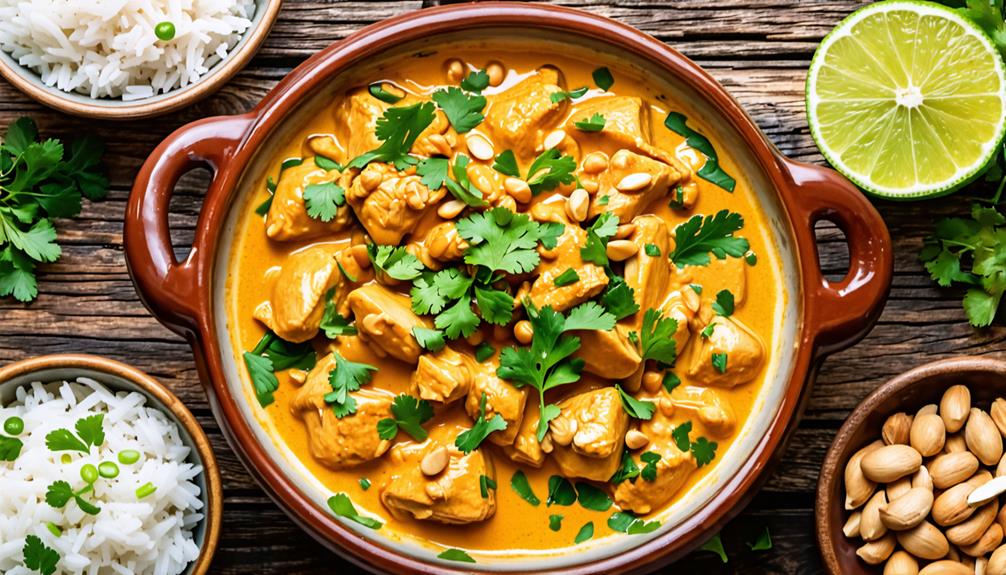
In exploring the world of Thai cuisine, one can't overlook the comfort of Thai Peanut Chicken prepared in a crockpot. This dish, with its rich and creamy peanut sauce, offers a harmonious blend of flavors that captivates the palate. Each of the seven authentic recipes highlights unique ingredients and techniques that reflect the heart of Thai cooking. As home cooks seek simplicity without sacrificing taste, these recipes provide an intriguing solution. However, what sets these dishes apart from typical weeknight meals? The answer lies in the nuances of flavor and preparation that await discovery.
Need cookware for your meal? Toolbox, a Pear to Pear rental marketplace, might be worth a look.
Quick Takeaways
- Explore traditional Thai flavors by using fresh garlic, ginger, and lime juice to enhance your peanut chicken dish.
- Incorporate coconut milk and peanut butter for a creamy, rich texture typical of authentic Thai cuisine.
- Utilize a slow cooker to layer ingredients, allowing the chicken to absorb the flavorful peanut sauce.
- Experiment with spice levels by adding Sriracha or red curry paste for an authentic Thai kick.
- Serve your dish with jasmine rice or rice noodles for a complete and satisfying meal experience.
Overview of Thai Peanut Chicken
In the heart of Thai cuisine, Thai Peanut Chicken stands out with its creamy, rich peanut sauce that tantalizes the taste buds. This delightful dish features tender chicken, often shredded, enveloped in a flavorful sauce crafted from coconut milk, peanut butter, and soy sauce. Each bite bursts with a perfect balance of sweet, salty, and umami elements, heightened by a splash of zesty lime juice.
When prepared in a slow cooker, the ingredients meld beautifully, allowing the chicken to remain moist while absorbing the luscious sauce. It's an ideal option for those who want to serve a comforting meal without spending hours in the kitchen. As it simmers, the aroma of garlic and ginger wafts through the air, inviting everyone to the table.
Thai Peanut Chicken is versatile, pairing beautifully with rice noodles or served over a bed of jasmine rice, making it a hit among both adults and children. To elevate the presentation, garnishing with fresh herbs like cilantro adds a vibrant touch.
This dish not only satisfies cravings but also brings a taste of Thailand into homes, perfect for family gatherings or casual dinners with friends.
Essential Ingredients
To create a mouthwatering Thai Peanut Chicken, a few key flavor components are essential. The combination of boneless chicken, rich coconut milk, and creamy peanut butter sets the foundation for an authentic dish, while seasonings like soy sauce and honey add depth.
Exploring popular ingredient variations, such as fresh vegetables or a splash of red curry paste, can elevate this comforting meal even further.
Key Flavor Components
The heart of Thai Peanut Chicken lies in its vibrant flavor components, which come together to create a delightful culinary experience. At the core of this dish is tender boneless, skinless chicken, simmered to perfection in a lush sauce made from creamy peanut butter and full-fat coconut milk. This combination delivers a rich, satisfying flavor profile that's both comforting and indulgent.
Essential seasonings like low-sodium soy sauce and honey add a delectable balance of salty and sweet notes, capturing the essence of Thai cuisine. Fresh aromatics such as garlic and ginger lend depth, enhancing the overall taste and inviting a warm aroma that fills the kitchen.
Just before serving, a splash of zesty lime juice brightens the dish, cutting through the richness of the peanut sauce and invigorating the palate.
To elevate the presentation and flavor complexity, garnishing with chopped peanuts and fresh cilantro offers a delightful crunch and a burst of freshness. Together, these key flavor components create a harmonious blend that not only pleases the taste buds but also invites shared moments around the dining table, making Thai Peanut Chicken a true crowd-pleaser.
Essential Cooking Techniques
Utilizing essential cooking techniques elevates the preparation of Thai Peanut Chicken, guaranteeing each component shines through in the final dish. For the perfect slow cooker chicken, start by layering the ingredients thoughtfully.
Begin with boneless, skinless chicken, then add the creamy coconut milk and generous spoonfuls of peanut butter for that signature richness. Incorporating aromatics like garlic and ginger early in the cooking process infuses the dish with depth and warmth.
A balance of soy sauce and honey enhances the sweet-savory profile, while rice wine vinegar introduces a subtle tang that rounds out the flavors beautifully. These techniques guarantee a harmonious blend of tastes typical of authentic Thai flavors.
As the dish nears completion, a splash of fresh lime juice just before serving brightens everything up, making each bite a delight. For those adapting the recipe to meet dietary preferences, nut butter substitutes such as almond, cashew, or sunflower seed can be used, though they may alter the flavor slightly.
Mastering these essential cooking techniques will transform any gathering into a memorable experience, as guests savor the rich, complex tastes of this beloved Thai peanut chicken recipe.
Popular Ingredient Variations
Exploring popular ingredient variations can add unique twists to the classic Thai Peanut Chicken recipe. Authentic Thai peanut chicken is known for its rich, creamy sauce made from full-fat coconut milk and creamy peanut butter. To elevate this dish, consider incorporating fresh vegetables, which not only enhance nutrition but also add delightful texture.
Here are some enticing ingredient variations to try:
- Fresh Aromatics: Garlic and ginger are essential for maximizing the dish's aromatic qualities, adding depth and fragrance.
- Sweetness and Depth: A touch of honey and soy sauce balances the flavors, creating a perfect harmony between sweetness and savoriness.
- Spice Level Adjustment: For those who enjoy a kick, adding red curry paste or crushed red pepper flakes allows for customizable heat, making it suitable for every palate.
These variations not only enrich the flavor profile but also invite creativity into your cooking. By experimenting with these ingredients, anyone can create a Thai peanut chicken dish that's both comforting and exciting, perfect for serving family and friends.
Cooking Instructions
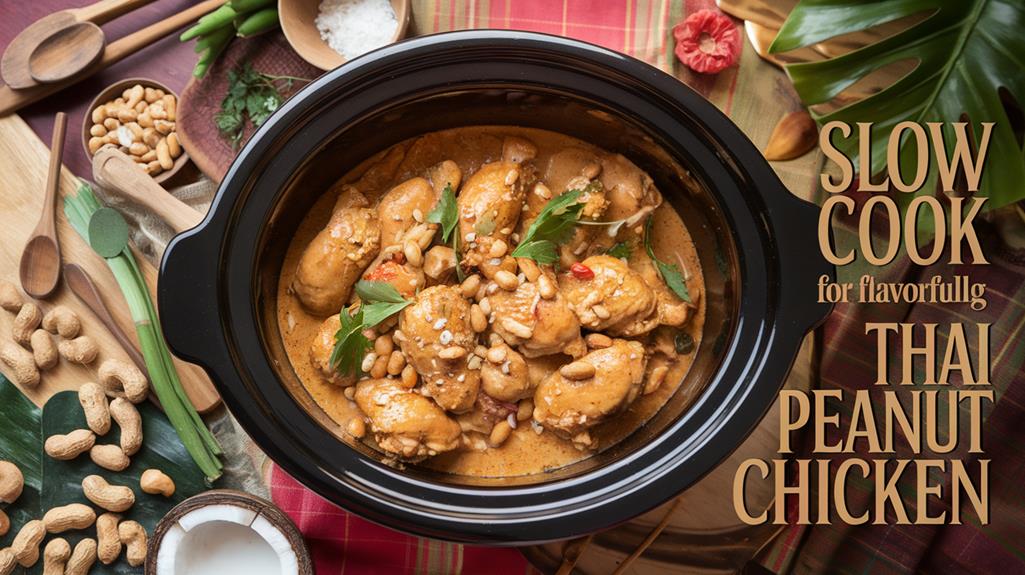
To create a delicious Thai peanut chicken in the crockpot, start by combining essential ingredients in the slow cooker. Pour in creamy coconut milk and stir in smooth peanut butter, soy sauce, honey, rice wine vinegar, ginger, and minced garlic for a rich sauce that promises to tantalize taste buds.
Next, cut boneless, skinless chicken breasts into bite-sized pieces and add them to the sauce mixture, ensuring they're well-coated. Set the slow cooker on LOW and let it work its magic for approximately 4 hours. This gentle heat allows the chicken to become tender and infused with the exquisite flavors of the sauce.
As the cooking time nears completion, thicken the sauce by stirring in a cornstarch slurry—two tablespoons of cornstarch mixed with two tablespoons of water.
For a revitalizing zing, incorporate lime juice right before serving.
Storage and Reheating Tips
When it comes to enjoying leftover Thai Peanut Chicken, proper storage techniques are essential for maintaining its delicious flavor.
By keeping it in an airtight container in the refrigerator, it stays fresh for up to four days, while freezing allows for longer storage.
Reheating is a breeze with either a microwave or stovetop, ensuring the dish is just as satisfying as when it was first cooked.
Proper Storage Techniques
Leftovers of Thai Peanut Chicken can be a delightful treat, but proper storage techniques are vital to keep them fresh and safe.
After enjoying the flavorful meal prepared from Slow Cooker Recipes, it's important to store any remaining portions correctly. Placing the leftovers in an airtight container allows for maximum preservation in the refrigerator, where they'll stay fresh for up to 3-4 days.
For those looking to extend their culinary joy, freezing the Thai Peanut Chicken in a freezer-safe container is an excellent option. This method guarantees the dish remains delightful for up to 3 months. Remember to label the container with the date and contents to maintain organization.
Here are some helpful tips for storage:
- Use an airtight container to keep the leftovers safe from air exposure.
- Freeze in a freezer-safe container for longer shelf life.
- Thaw overnight in the refrigerator before reheating to preserve texture and flavor.
Effective Reheating Methods
Reheating Thai Peanut Chicken effectively guarantees that the meal retains its delicious flavors and appealing texture. Leftovers should be stored in an airtight container in the refrigerator for up to three days, maintaining maximum freshness.
When it's time to enjoy the dish again, the microwave offers a quick reheating method. Simply heat in short intervals, stirring occasionally to avoid overcooking.
For those who prefer a stovetop approach, reheating in a saucepan allows for better temperature control. Adding a splash of coconut milk or water can help restore moisture, preventing dryness. It's essential to avoid high heat, as this can lead to curdling of the coconut milk and toughening of the chicken.
If the leftovers were frozen, remember to thaw them in the refrigerator overnight before reheating. This prevents uneven heating and preserves the texture.
Keeping flavor retention in mind, gentle reheating techniques contribute to a delightful dining experience. By following these effective reheating methods, one can guarantee that Thai Peanut Chicken remains just as delectable as when it was first prepared, ready to impress family and friends alike.
Flavor Variations
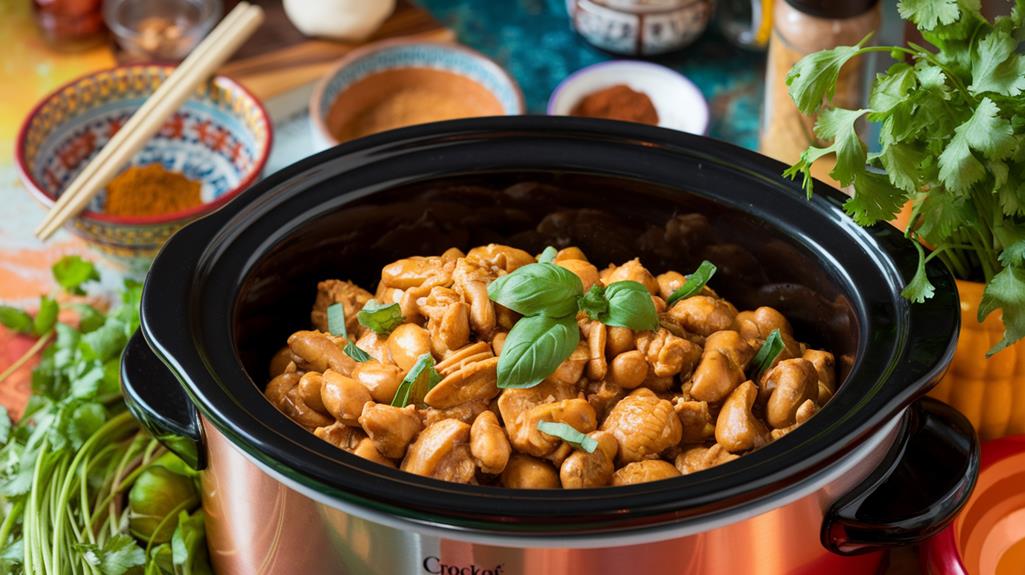
Flavor variations can elevate Thai Peanut Chicken from a comforting classic to an exciting culinary adventure. By thoughtfully incorporating diverse ingredients, one can create a dish that delights the senses.
For those craving a spicy kick, adding red curry paste or Sriracha transforms the recipe into a Spicy Thai Peanut Chicken.
Enhancing the dish with mixed vegetables like bell peppers, carrots, or snap peas not only boosts nutrition but also adds delightful texture, all while keeping the cooking time around 2 hours on low for maximum vegetable integrity.
For a vegetarian twist, swapping chicken for extra firm tofu offers a different yet satisfying flavor experience, all while maintaining that beloved creamy peanut sauce.
Experimenting with various nut butters, like almond or cashew, can subtly alter the taste while preserving the rich, nutty profile.
Finally, garnishing with fresh herbs such as basil or mint just before serving injects a burst of freshness, enhancing the dish's overall complexity.
Consider these variations when preparing your next meal:
- Add Sriracha for spice
- Include mixed vegetables for nutrition
- Use different nut butters for unique flavors
Nutritional Benefits
What makes Thai Peanut Chicken not only delicious but also a nutritious choice? This protein-rich dish packs a powerful punch with approximately 29 grams of protein per serving, making it ideal for muscle maintenance and repair.
The creamy texture of coconut milk contributes healthy fats, boasting around 18 grams of fat primarily from medium-chain triglycerides (MCTs), which are beneficial for providing energy.
Adding peanut butter enhances the dish further, delivering an additional 7 grams of protein along with heart-healthy monounsaturated fats that can help lower bad cholesterol levels.
With a balanced carbohydrate content of about 14 grams per serving, this meal offers sustained energy without causing rapid spikes in blood sugar, making it perfect for those looking to maintain stable energy levels throughout the day.
Moreover, the inclusion of garlic and ginger not only elevates the flavor but also introduces valuable anti-inflammatory properties and antioxidants, supporting overall health and wellness.
Pairing Suggestions
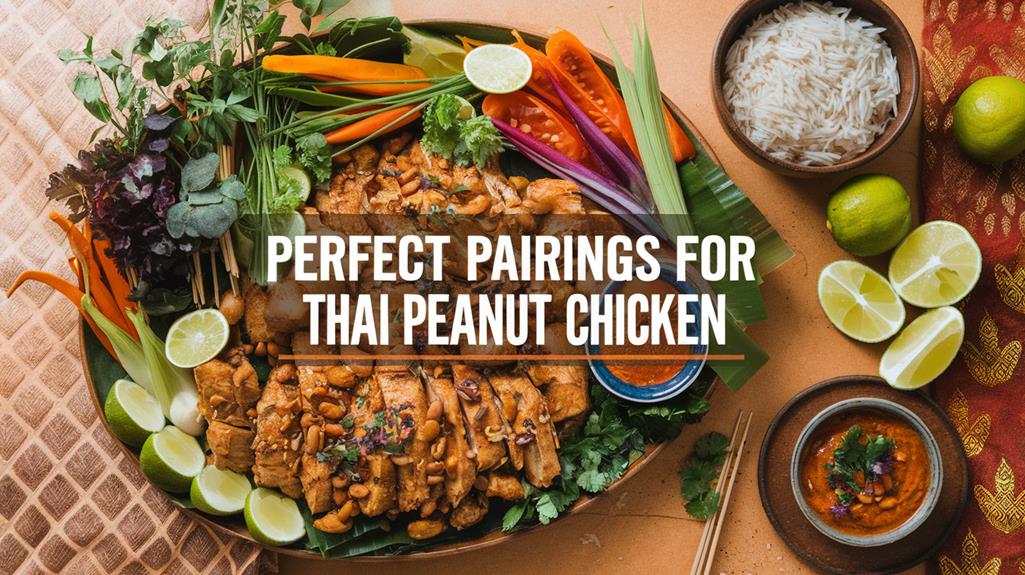
To elevate the experience of enjoying Thai Peanut Chicken, consider pairing it with a variety of complementary sides that enhance its rich flavors and textures. Serving the chicken over steamed jasmine rice or brown rice allows the delicious peanut sauce to be absorbed, creating a delightful harmony of tastes.
For a lighter option, rice noodles make an excellent choice, as they provide a satisfying base for the creamy sauce.
To balance the richness of the dish, fresh vegetables are essential. Crisp cucumber salad or sautéed bok choy adds vitality and a crunch that perfectly contrasts the creamy sauce.
Additionally, incorporating a side of spring rolls or Thai-style vegetable dumplings not only offers diverse textures but also rounds out the meal beautifully.
For a revitalizing twist, include a tangy lime wedge or a sprinkle of cilantro garnish. These bright elements enhance the authentic Thai flavors and leave a lasting impression on your guests.
- Steamed jasmine rice or brown rice
- Fresh cucumber salad or sautéed bok choy
- Spring rolls or Thai-style vegetable dumplings
Common Questions
What Is Thai Peanut Sauce Made Of?
Thai peanut sauce combines creamy peanut butter, soy sauce, and honey to create a rich, nutty flavor.
It often features rice vinegar for a tangy kick, alongside aromatics like garlic and ginger that elevate its taste.
Coconut milk adds a smooth, creamy texture, making the sauce luscious and inviting.
For those seeking a bit more complexity, ingredients like red curry paste or lime juice can introduce spicy and zesty notes, enhancing the overall experience.
Is Peanut Butter Used in Thai Cooking?
Peanut butter's a staple in Thai cooking, adding a deliciously rich, creamy texture to many dishes.
It enhances the balance of sweet, salty, and spicy flavors that characterize Thai cuisine. Chefs often use it in sauces, curries, and stir-fries, where it complements other ingredients beautifully.
Crushed peanuts also serve as a garnish, boosting both flavor and presentation.
With its versatility, peanut butter remains a beloved ingredient in countless Thai recipes.
What if My Thai Peanut Sauce Is Too Thick?
When the sauce feels like a heavy blanket smothering the dish, it's time to lighten it up.
She can gradually stir in warm water or coconut milk, creating a silky texture that dances on the palate.
If she craves thickness again, a cornstarch slurry will do the trick.
What Is Thai Chicken Made Of?
Thai chicken dishes typically feature tender, boneless chicken thighs or breasts, allowing them to soak up the rich flavors of the sauces.
Full-fat coconut milk provides creaminess, while peanut butter adds a delightful richness. A balance of sweet and sour is achieved with honey or lime juice, complemented by aromatics like garlic and ginger.
Colorful vegetables such as bell peppers and snap peas enhance nutrition and texture, making each meal both vibrant and satisfying for guests.
Wrapping Up
To wrap up, these 7 authentic Thai Peanut Chicken Crockpot recipes transform your kitchen into a culinary paradise, bursting with the vibrant flavors of Thailand. With tender chicken enveloped in a creamy, aromatic sauce, each dish promises an explosion of taste that'll make your taste buds dance. Easy to prepare and packed with nutritional benefits, these recipes are perfect for busy evenings. Immerse yourself in this delightful world of Thai cuisine and savor every mouthwatering bite!