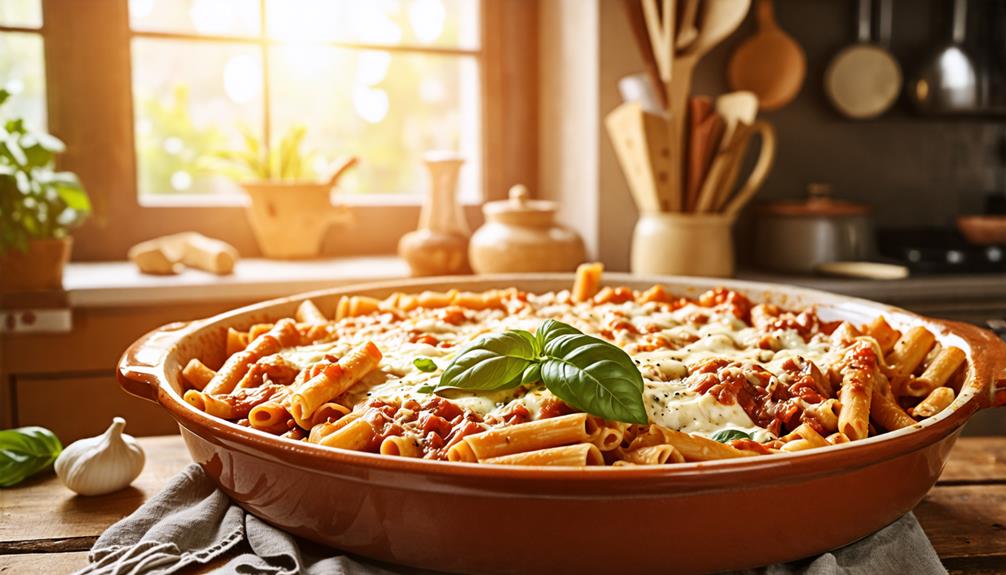
While modern kitchens often prioritize speed and convenience, traditional Italian families still embrace the art of making Baked Ziti as a heartfelt ritual. This dish, rich in history and flavor, serves as a canvas for family stories and regional diversity. Each recipe reflects a unique blend of ingredients and techniques passed through generations, creating a tapestry of culinary heritage. As families gather to prepare this beloved meal, they not only nourish their bodies but also strengthen their connections. What hidden traditions and unique variations might emerge from these cherished gatherings?
Need cookware for your meal? Toolbox, a Pear to Pear rental marketplace, might be worth a look.
Quick Takeaways
- Baked Ziti is traditionally served during Sunday family dinners, symbolizing unity and togetherness in Italian households.
- Families often share and adapt recipes, incorporating unique ingredients that reflect personal and regional variations.
- The dish is central to celebratory occasions, such as weddings and holidays, reinforcing cultural significance and community bonds.
- Cooking Baked Ziti collectively fosters connections, with family members collaborating on preparation while sharing stories and techniques.
- Nostalgic aromas and flavors evoke cherished memories, deepening familial ties and honoring Italian culinary heritage during gatherings.
Historical Significance of Baked Ziti
Baked Ziti, often regarded as a quintessential comfort food, carries with it a rich historical significance that reflects the cultural evolution of Italian cuisine. Known as "Ziti al forno" in Italy, this dish hails from Southern Italy, where it's traditionally served during family gatherings, particularly on Sundays.
Its roots connect to the wedding custom of "maccheroni della zita," symbolizing abundance and celebration. This historical reference highlights the importance of pasta not just as sustenance but as a focal point for communal joy.
The Renaissance period marked a pivotal moment in the development of baked pasta dishes, showcasing how Italian cuisine has adapted and evolved over centuries. For Italian-Americans, Baked Ziti became a staple comfort food, demonstrating a blend of traditional recipes with local ingredients and tastes.
This adaptation emphasizes the dish's versatility and its ability to bring people together, regardless of the variations across different regions. Each region of Italy contributes unique ingredients and preparation methods, reflecting local culinary traditions.
Through Baked Ziti, one can appreciate the rich tapestry of Italian heritage, while also enjoying a dish that's perfect for nourishing both body and soul.
Family Gathering Traditions
Family gatherings often revolve around the cherished tradition of Sunday dinners, where Baked Ziti takes center stage as a symbol of unity and shared heritage.
This communal dish not only nourishes the body but also fosters connection through recipe sharing practices, allowing families to pass down unique variations that reflect their culinary history.
Celebratory feasts, such as weddings, further highlight Baked Ziti's role in marking significant life events, reinforcing the bonds of love and community within Italian-American culture.
Sunday Dinner Rituals
Sunday dinners often become a cherished gathering ritual, with Baked Ziti taking center stage in many Italian households. This beloved pasta casserole not only satisfies appetites but also fosters deep family bonds.
As the week winds down, families unite to prepare Italian Baked Ziti together, each member contributing their favorite ingredients or culinary techniques. This collaborative effort reinforces connections and celebrates their shared cultural heritage.
The preparation of Baked Ziti often involves several homemade dishes, creating a feast that reflects the family's regional origins and culinary traditions. As the dish bakes, the nostalgic aroma wafts through the home, reminding everyone of the cherished moments spent around the dinner table in years past.
It's during these gatherings that stories are shared, laughter fills the air, and generations come together to honor their roots. This ritual transcends mere dining; it becomes a celebration of family, love, and tradition.
Each spoonful of Baked Ziti carries with it the essence of shared experiences, making Sunday dinners not just a meal, but a profound expression of identity and togetherness. In this way, the Italian Sunday dinner remains a cornerstone of family life, enriching relationships and preserving cherished memories.
Recipe Sharing Practices
Gathering around the table to enjoy Baked Ziti often sparks conversations about cherished recipes and the stories behind them. This beloved Italian-American dish serves as more than just comfort food; it symbolizes the heart of family gatherings, especially on Sundays.
Unique baked ziti recipes are often passed down through generations, allowing families to infuse personal touches that reflect their culinary heritage and regional influences. Recipe sharing becomes an integral part of these gatherings, as relatives recount tales of how specific ingredients were sourced or preparation techniques were perfected over time.
Such storytelling reinforces cultural connections, creating a tapestry of memories that bind family members together. During special occasions, like weddings, baked ziti transforms into a celebratory dish, embodying abundance and the joy of sharing meals with loved ones.
Community feedback frequently highlights the emotional ties people have to this dish, evoking nostalgia for those warm, comforting family dinners. As families gather to savor their baked pasta recipes, they not only nourish their bodies but also honor the traditions that shape their identities, fostering a deeper appreciation for the shared culinary experiences that define their heritage.
Celebratory Feast Highlights
Celebrating with Baked Ziti at special occasions creates a vibrant tapestry of flavors and memories, where each dish tells a story of heritage and connection. This beloved Italian baked pasta dish serves as a centerpiece during family gatherings, especially on Sundays, symbolizing unity and shared heritage. Its comforting nature evokes nostalgia, allowing families to reminisce while savoring the delicious flavors.
During celebratory feasts, Baked Ziti is typically prepared in large dishes, making it an ideal choice for feeding extended family and friends. Variations often arise, reflecting regional ingredients and personal preferences, which enhances the festive atmosphere.
Key highlights of this tradition include:
- The use of unique recipes passed down through generations.
- The communal experience of gathering around the oven as the dish bakes.
- The ability to make Baked Ziti in large quantities for effortless entertaining.
- The warmth of sharing a meal that nurtures both body and spirit.
Ultimately, Baked Ziti not only nourishes those who share it but also strengthens the bonds of family, creating lasting memories filled with love and tradition.
Regional Variations of the Recipe
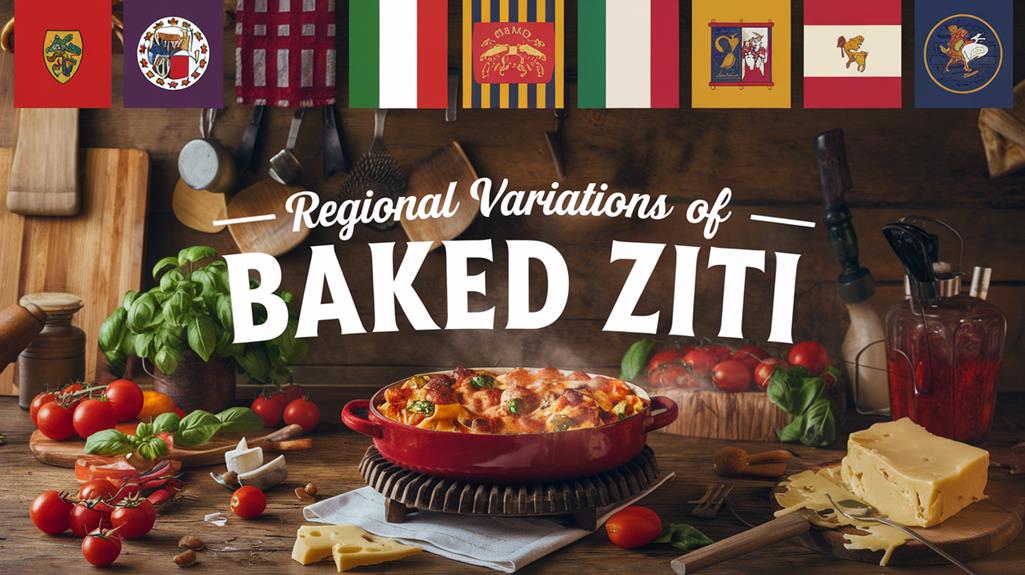
Regional variations of Baked Ziti showcase a rich tapestry of flavors and textures that reflect local traditions.
In Naples, the beloved "Zitoni al Forno" often features small meatballs, elevating the dish for festive occasions.
Meanwhile, Sicilian adaptations introduce scrambled eggs into the cheese mixture, creating a distinctive creamy consistency that sets their version apart.
Neapolitan Meatball Variation
The Neapolitan Meatball Variation of Baked Ziti, or "Zitoni al Forno," showcases a delightful blend of flavors and textures that elevate this beloved dish.
This variation is characterized by its inclusion of small meatballs made from ground beef or pork, which add a rich flavor and satisfying bite. Families in Naples often serve this dish during special occasions, highlighting its cultural significance in their culinary traditions.
Key elements of the Neapolitan variation include:
- A robust tomato sauce crafted from San Marzano tomatoes, offering an authentic taste reflective of the region.
- Creamy béchamel sauce, enhancing moisture and richness throughout the baked ziti.
- Fresh herbs like basil and parsley, which are blended into the meatball mixture and sauce for an aromatic touch.
- Layers of ricotta and Parmesan cheese, contributing to the dish's creamy texture and depth of flavor.
Sicilian Egg Addition
Sicilian variations of baked ziti incorporate a distinctive twist with the addition of scrambled eggs, enriching the dish's flavor and texture. This practice reflects the Sicilian tradition of using eggs in pasta dishes, contributing to the heartiness that makes it perfect for special occasions. By blending scrambled eggs into the ricotta mixture, families achieve a creamy consistency that beautifully complements the pasta and sauce.
The unique texture created by the eggs sets Sicilian baked ziti apart from other regional recipes. Some families enhance this variation further by adding ingredients like peas or breadcrumbs to the ricotta mixture, diversifying the flavor profile and making each dish a personal signature. This adaptability showcases the beauty of traditional Italian recipes, allowing cooks to tailor their baked ziti to local customs and individual preferences.
Ultimately, the Sicilian egg addition transforms baked ziti into a more luxurious dish, elevating the dining experience for family and friends. By understanding and embracing these regional variations, one can appreciate the rich culinary heritage of Italy, ensuring that every gathering is flavorful and memorable.
Preparing Baked Ziti Together
Gathering around the kitchen island, family members transform the simple act of preparing Baked Ziti into a cherished bonding experience. As they roll up their sleeves, teamwork takes center stage. Each person contributes by layering fresh pasta, rich marinara sauce, and a blend of high-quality cheeses, embodying their family's traditional recipe while fostering connection.
The process flows seamlessly, accompanied by laughter and shared stories that echo through the kitchen.
Key elements of this communal affair include:
- Layering: Each ingredient, from the pasta to the marinara sauce, creates a harmonious blend of flavors.
- Fresh Ingredients: Families prioritize using locally sourced cheeses and meats, enhancing the dish's authenticity.
- Culinary Tradition: Elders pass down techniques and stories, enriching the meal with cultural heritage.
- Enjoyment: The aroma of cooking and the joy of teamwork create lasting memories.
As they assemble the dish together, the act of preparing Baked Ziti becomes more than just cooking; it's a celebration of family and tradition, ensuring the recipe lives on for generations to come.
Special Ingredients Passed Down
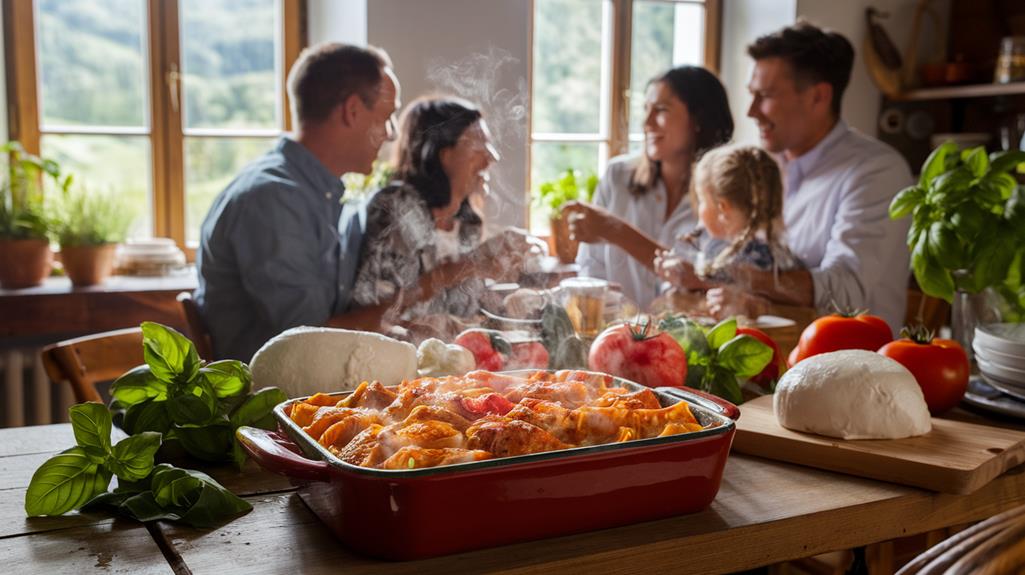
Many families cherish their unique Baked Ziti recipes, often relying on special ingredients passed down through generations. At the heart of these cherished dishes lies homemade marinara sauce crafted from San Marzano tomatoes. These tomatoes, known for their sweetness and low acidity, form a flavorful base that's enhanced with a blend of fresh herbs such as basil, oregano, and parsley—a family secret in many kitchens.
The choice of cheese also plays a crucial role; Pecorino Romano and fresh mozzarella are commonly used to elevate the dish's flavor profile and texture. Ground meats, particularly homemade Italian sausage or meatballs, contribute richness and reflect regional traditions.
Families often prepare ziti pasta in salted water, ensuring each piece is perfectly seasoned before being layered with extra sauce and ricotta. Some families take pride in using artisanal pasta or even hand-cut varieties, adding to the authenticity of their Baked Ziti.
The final touch involves a generous sprinkling of grated cheese, creating a deliciously golden crust reminiscent of baked mac and cheese, which beckons family and friends to gather around the table for a comforting meal.
Celebratory Occasions for Baked Ziti
Baked Ziti often takes center stage at Italian-American holiday gatherings, serving as a symbol of family unity and celebration. This beloved dish not only satisfies appetites but also evokes feelings of nostalgia, becoming a favored centerpiece during special occasions. Its roots trace back to Southern Italy, where Baked Ziti is linked to significant life events, including weddings and family reunions.
This versatile pasta dish is typically prepared for various festive events, reinforcing its cultural importance. Families cherish the chance to gather around a table filled with Baked Ziti, sharing stories and laughter.
The following occasions highlight its significance:
- Christmas and Easter celebrations
- Milestone birthdays and anniversaries
- Weddings, especially as "maccheroni della zita"
- Potlucks and communal feasts
Each serving of Baked Ziti represents more than just a meal; it embodies the spirit of togetherness. By sharing this hearty pasta dish, families honor their heritage and create lasting memories.
As they come together to celebrate life's milestones, Baked Ziti remains a beloved tradition, reminding everyone of the joy found in shared experiences and delicious food.
Sharing Stories and Memories
During family gatherings, the aroma of Baked Ziti often sparks a flurry of cherished memories and stories. This beloved dish, known as "Ziti al forno," transcends mere sustenance; it embodies the essence of Italian traditions. Many families have cherished recipes that have been lovingly passed down through generations, each version reflecting unique regional influences or personal touches.
As families gather to celebrate events, Baked Ziti serves as a centerpiece, reinforcing the bonds that unite them. The act of cooking together creates a tapestry of shared memories, with laughter and stories flowing as freely as the sauce. Each bite evokes personal stories of love, resilience, and the joy of togetherness, transforming a simple meal into a profound ritual.
Throughout these gatherings, the preparation of Baked Ziti becomes a ritual in itself, symbolizing abundance and family unity. Personal narratives often emerge, highlighting how traditions shape the way this dish is crafted and enjoyed.
It's in these moments that families not only savor the flavors but also the legacy of their shared history, reminding them of what truly matters—connection, celebration, and love.
Common Questions
Is Ziti Authentic Italian?
Ziti's authenticity in Italian cuisine often sparks debate. While the dish itself has roots in Southern Italy, particularly Naples, its popular interpretation as "Baked Ziti" is largely an Italian-American adaptation.
This version typically simplifies traditional layering techniques found in classic lasagna. Authenticity varies between regions and families, with some embracing local ingredients and variations, while others stick to the original concept.
Ultimately, it's the personal touch that defines a dish's authenticity for many.
What Culture Is Baked Ziti?
Baked ziti dances between cultures, embodying Italian-American culinary heritage.
Rooted in Southern Italy, it reflects the warmth of family gatherings and communal cooking. This comforting dish, often gracing tables at celebrations, showcases a rich tapestry of flavors and traditions.
As generations pass down recipes, it transforms into a beloved staple, resonating with nostalgia. Through its layers of pasta, cheese, and sauce, baked ziti weaves together stories of connection, resilience, and shared meals.
What Is Baked Ziti Called in Italy?
In Italy, baked ziti is known as "Ziti al forno." This dish showcases the country's rich culinary heritage, particularly from Southern regions like Campania.
Often enjoyed during family gatherings, it features ziti pasta baked with a variety of ingredients, including meatballs and besciamella sauce.
While not as common in Northern Italian cuisine, its presence in Italian-American households highlights the fusion of traditions, making it a beloved comfort food across cultures.
What Is the Difference Between Baked Ziti and Baked Ziti Sicilian?
When one compares baked ziti to its Sicilian counterpart, they uncover a culinary treasure trove.
Baked Ziti Sicilian boasts layers of scrambled eggs, a hearty meat ragu, and sometimes peas, creating a richer, more complex dish.
In contrast, classic baked ziti typically relies on a simple tomato sauce and mozzarella.
The choice of cheese also varies, with Sicilian recipes often favoring local varieties, enhancing its unique character and making it a true feast for the senses.
Wrapping Up
Baked Ziti serves as a vibrant tapestry of Italian familial traditions, weaving together history and culture through shared meals. Remarkably, 75% of Italian-American households consider it a staple at family gatherings, showcasing its significance in uniting loved ones. This beloved dish not only nourishes but also encapsulates generations of stories and recipes passed down through time, ensuring that each bite is infused with the warmth of cherished memories and the essence of home.