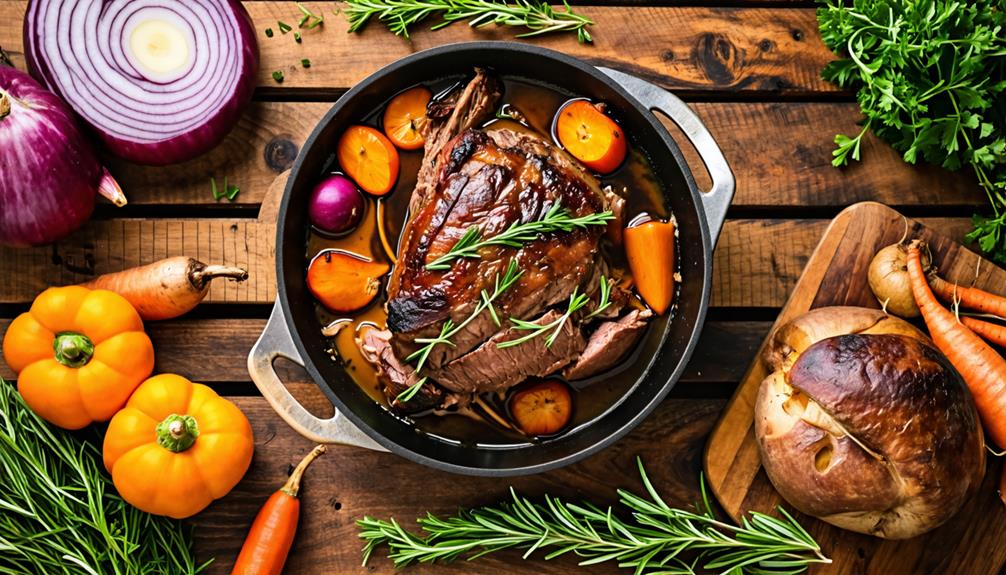
In America's Heartland, pot roast stands as a symbol of comfort and community, drawing families together with its rich flavors and hearty textures. This beloved dish, often prepared using traditional braising techniques, showcases tender cuts of meat paired with a medley of vegetables. Each region offers its own distinctive spin, influenced by local ingredients and culinary traditions. As one explores these variations, it becomes clear that the perfect pot roast isn't just about the recipe; it's about the stories and memories tied to each meal. What secrets lie within these cherished recipes?
Need cookware for your meal? Toolbox, a Pear to Pear rental marketplace, might be worth a look.
Quick Takeaways
- Pot roast is a symbol of American comfort food, often served at family gatherings with root vegetables and rich gravy.
- Braising techniques, including searing and slow cooking, create tender, flavorful pot roasts with a deep brown crust.
- Key ingredients include a well-marbled chuck roast, flavorful vegetables like carrots and potatoes, and aromatic herbs for added depth.
- Regional variations, such as Southern or Southwest styles, incorporate unique ingredients and spices, enhancing the pot roast experience across America.
- Pair pot roast with creamy mashed potatoes, roasted vegetables, and a full-bodied red wine to elevate the meal's enjoyment.
Cultural Significance of Pot Roast
Pot roast stands as a quintessential symbol of American comfort food, deeply woven into the fabric of family traditions. With roots tracing back to the 19th century, this beloved dish showcases the essence of home-cooked meals that bring families together.
Traditionally crafted from tough cuts of beef like chuck or brisket, pot roast thrives on slow cooking methods, resulting in tender, flavorful meat that warms the heart and soul.
The dish isn't just a meal; it represents a cultural heritage that reflects the evolving practices of American home cooking. Often served alongside hearty vegetables like carrots, potatoes, and onions, pot roast plays a pivotal role in family gatherings and special occasions, creating lasting memories around the dinner table.
Its revival in modern kitchens highlights a return to traditional methods, appealing to contemporary tastes while honoring its classic roots.
As families gather to share this comforting dish, they not only enjoy its rich flavors but also connect with their history. Pot roast embodies a nostalgic culinary experience, reminding everyone of the love and warmth that home-cooked meals can bring, reinforcing the bonds that hold families together.
Traditional Cooking Techniques
The preparation of pot roast is a demonstration to the power of traditional cooking techniques that transform tough cuts of beef into tender, flavorful meals. At the heart of pot roast preparation lies the art of braising, a method that involves cooking beef, like chuck or brisket, at low temperatures for several hours. This slow cooking process not only guarantees tenderness but also allows the flavors to meld beautifully.
Before the braising begins, searing the meat is essential. This initial step creates a deep brown crust, adding layers of flavor that elevate the dish. Classic recipes often incorporate aromatics, such as onions and garlic, which are sautéed before introducing the roast. Their fragrant essence permeates the dish, enhancing the overall depth.
Fanny Farmer's early 20th-century recipe exemplified the simplicity of pot roast, using basic ingredients like flour, salt, and thyme. In contrast, James Beard's mid-century adaptation embraced butter, oil, and root vegetables, showcasing a shift toward more complex flavors.
Through these traditional techniques, pot roast remains a cherished meal, inviting warmth and togetherness around the dinner table.
Essential Ingredients Needed
To create a mouthwatering pot roast, selecting the right meat is essential; a 4 lb boneless chuck roast stands out for its marbling and rich flavor.
Adding a medley of flavorful vegetables like carrots, potatoes, and onions not only enhances the dish but also absorbs the savory juices throughout the cooking process.
Key Meat Selections
When it comes to crafting a mouthwatering pot roast, selecting the right cut of meat is vital for achieving that perfect balance of flavor and tenderness. The most popular choice is a 4 lb boneless chuck roast, renowned for its rich flavor and tender texture when slow-cooked. Its marbling allows for succulent bites that melt in your mouth.
Alternatively, brisket makes a fantastic option, offering a distinct richness and slightly different texture that excels in braising. For those seeking an even juicier result, a well-marbled shoulder roast can enhance the dish's overall flavor profile, providing a delightful experience for dinner guests.
Regardless of the cut, seasoning plays a significant role. A blend of salt, pepper, garlic, and fresh herbs is essential to complement the beef, elevating the dish to new heights.
For an extra depth of flavor, consider adding a splash of red wine to the cooking liquid. These cuts of beef, when subjected to slow, moist cooking methods, transform into a fall-apart masterpiece that's perfect for serving and sharing with loved ones.
Flavorful Vegetable Additions
Selecting the right vegetables can elevate a pot roast from good to unforgettable. Carrots and potatoes are essential, bringing not just nutrition but also a sweetness that balances the savory flavors of the beef. Their hearty textures hold up beautifully during the slow cooking process, ensuring each bite is satisfying.
Onions and garlic add an aromatic quality that deepens the overall flavor profile, infusing the dish with warmth and richness. Celery introduces a subtle crunch, enhancing the pot roast's complexity while cooking down alongside the meat.
For an earthy touch, mushrooms can be included; their rich umami notes complement the savory elements beautifully.
Incorporating herbs like thyme and bay leaves is vital, as they infuse both the vegetables and meat with aromatic notes that perfume the entire dish. The combination of these ingredients transforms an ordinary pot roast into an experience that delights the senses.
As the flavors meld together over hours, the result is a comforting meal that's perfect for sharing with loved ones, creating lasting memories around the dining table.
Seasoning and Herbs
Seasoning and herbs play an essential role in crafting a pot roast that's bursting with flavor. To start, salt and pepper form the foundation, enhancing the meat's natural richness. These basic seasonings are vital for drawing out the savory qualities of the roast.
Next, aromatic herbs such as thyme, rosemary, and bay leaves bring a delightful complexity to the dish. Thyme, in particular, pairs beautifully with the beef, infusing each bite with an earthy, fragrant essence. Garlic and onions are indispensable, contributing layers of flavor that elevate the overall profile of the pot roast.
For those looking to deepen the sauce's flavor, incorporating red wine can add a touch of acidity that balances the dish's richness. It melds perfectly with the meat juices, creating a luscious gravy that's perfect for serving over mashed potatoes or bread.
Whether using fresh or dried herbs, the versatility of seasoning allows for personal touches, reflecting regional or seasonal preferences. This adaptability guarantees that every pot roast can be a unique expression of flavor, sure to impress friends and family alike.
Classic Pot Roast Recipe
Searing a 4 lb boneless chuck roast in a heavy, ovenproof casserole ignites the mouthwatering journey to a classic pot roast. This cut of beef, renowned for its tenderness when slow-cooked, forms the heart of a beloved dish that warms any gathering.
After achieving a deep brown crust on the roast, the cook stirs in flour to form a roux, enhancing the flavor profile before introducing tomato paste and a splash of optional red wine.
Next, vibrant vegetables like carrots, potatoes, and onions join the pot, bringing color and nutrition to the meal. Once everything is combined, the casserole is covered with beef broth, ensuring the liquid covers at least half of the roast for ideal braising.
The pot then shifts to the oven, where it cooks for 2 to 2.5 hours, transforming into a tender masterpiece.
The final step is to reduce the cooking juices, creating a rich and savory gravy. This delectable sauce, served alongside creamy mashed potatoes, elevates the classic pot roast recipe into a feast that's sure to impress family and friends alike.
Variations Across Regions
Pot roast is a beloved dish that varies considerably across the United States, with each region infusing its unique culinary traditions and local ingredients into the recipe.
In the South, pot roast often features hearty ingredients like okra and collard greens, showcasing the agricultural staples that define the area's flavor profile.
Meanwhile, the Midwest emphasizes its farming heritage by incorporating root vegetables such as parsnips and turnips, creating a comforting, rustic dish.
Traveling to the Southwest, pot roast takes a bold turn with the addition of spices like cumin and coriander, along with vibrant green chilies, which inject a distinctive kick into this classic meal.
On the East Coast, red wine and fragrant herbs like rosemary and thyme reflect rich European culinary influences, adding depth and sophistication to the roast.
Finally, the West Coast embraces fresh, seasonal produce and often opts for alternative meats, like pork or lamb, aligning with the region's diverse culinary trends.
These regional variations not only highlight the versatility of pot roast but also celebrate the unique flavors and traditions that each area brings to the table, making every bite a delicious journey across America.
Serving Suggestions and Pairings
After exploring the regional variations of pot roast, it's time to contemplate how to elevate this comforting dish through thoughtful serving suggestions and pairings. A well-planned meal can turn a simple pot roast into a memorable dining experience.
- Creamy Mashed Potatoes: These rich, buttery potatoes absorb the savory gravy beautifully, enhancing the overall flavor of the dish. Their creamy texture pairs perfectly with the tender beef, creating a satisfying combination.
- Roasted Vegetables: Brighten your plate with colorful roasted or steamed vegetables like green beans or Brussels sprouts. They add freshness and a delightful crunch, balancing the hearty nature of the pot roast.
- Side Salad: A crisp side salad, such as a classic Caesar or a fresh garden variety, offers a light contrast to the rich pot roast. The textures and flavors will refresh the palate between bites.
To complement this feast, pour a glass of full-bodied red wine, like a Cabernet Sauvignon or Merlot. The bold flavors of the wine beautifully enhance the richness of the pot roast, rounding out a truly heartwarming meal.
Tips for Perfect Pot Roast
To achieve the perfect pot roast, selecting the right cut of meat is essential; a well-marbled chuck roast guarantees tenderness and flavor.
Proper seasoning and cooking time management also play vital roles in maximizing taste and texture.
Choosing the Right Cut
When selecting the perfect cut for a pot roast, understanding the unique qualities of different meats can make all the difference. The right cut not only contributes to tenderness but enhances the overall flavor of the dish.
For an unforgettable pot roast experience, consider these three recommended cuts:
- Chuck Roast: This well-marbled cut is ideal for pot roast. The fat content guarantees a moist and flavorful outcome as it breaks down during slow cooking.
- Brisket: Known for its rich flavor, brisket also contains enough connective tissue to become tender, making it a hearty choice for a satisfying meal.
- Round Roast: While slightly leaner than chuck, a round roast can still yield excellent results when cooked properly, provided it's not overdone.
When choosing your roast, aim for a 3-5 pound cut to allow for even cooking and tenderness. Freshness is key; look for bright red color and firm texture to assure quality.
Avoid lean cuts like sirloin or tenderloin, as they risk becoming dry and tough during the lengthy cooking process. Choosing the right cut sets the stage for a truly delicious pot roast.
Seasoning and Flavoring Tips
Selecting the right cut is just the beginning; the seasoning and flavoring choices can elevate a pot roast from good to unforgettable. A balanced base of salt, black pepper, and garlic powder enhances the beef's natural flavors, adding depth to each bite. Fresh or dried herbs, such as thyme, rosemary, and bay leaves, introduce an aromatic profile that beautifully complements the richness of the meat.
To deepen the overall flavor, a splash of red wine not only adds acidity but also makes the pot roast more savory and robust. Before slow cooking, browning the meat in olive oil creates a rich, caramelized crust that enhances both texture and taste, guaranteeing each slice is a delight.
Don't overlook the vegetables; seasoning carrots and potatoes with salt and pepper guarantees they absorb the flavorful cooking liquid, contributing to the dish's overall taste.
Each element, from the herbs to the vegetables, plays an essential role in crafting a pot roast that's not just satisfying but a centerpiece that invites sharing and enjoyment around the table. With these seasoning and flavoring tips, anyone can create a memorable pot roast experience.
Cooking Time Management
Perfect pot roast requires careful management of cooking time to achieve that tender, melt-in-your-mouth texture everyone craves. To master this dish, home cooks should follow a few essential steps:
- Preheat the oven to 275°F. This low temperature is key for a perfect slow cook, allowing the meat to tenderize beautifully.
- Allow at least 2 hours for the initial cooking of the roast before adding vegetables. This guarantees the meat is well-braised and full of flavor, setting the stage for a delicious meal.
- Plan for a total cooking time of approximately 3-3.5 hours. This includes the time needed for both the roast and vegetables to become tender, assuring everything is harmoniously cooked.
Additionally, don't forget to allow the roast to rest for about 30 minutes after cooking. This significant step helps redistribute the juices, enhancing flavor and moisture.
Utilizing a large Dutch oven also promotes even heat distribution, which is essential for achieving that fall-apart texture. With these tips, anyone can serve a pot roast that will impress family and friends alike!
Gravy Preparation Methods
For a pot roast that truly satisfies, mastering gravy preparation is vital. This rich sauce elevates the dish, ensuring every bite is bursting with flavor. Start by straining the fat from the reserved cooking juices, but remember to keep some fat for added flavor. Combine these juices with beef broth until you have a total of two cups, forming the perfect base for your gravy.
In a saucepan, melt the reserved fat over medium heat to create a roux, which acts as a thickening agent. Once the fat is bubbling, whisk in flour to form a smooth paste. It's important to cook this mixture for a few minutes; doing so eliminates any raw flour taste, allowing the gravy to shine.
Gradually incorporate the juices and broth mixture into the roux, whisking continuously to prevent lumps. As the mixture simmers, it thickens beautifully, transforming into a luscious gravy that clings perfectly to the pot roast.
This delightful addition not only enhances the dish but also invites your guests to savor every mouthful, making the meal an unforgettable experience.
Leftover Ideas and Uses
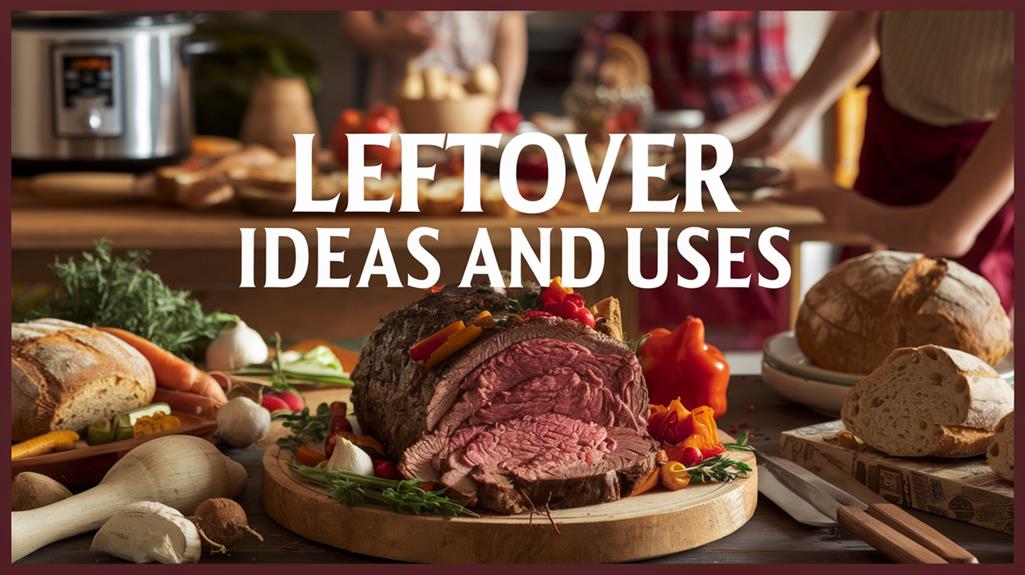
Leftover pot roast offers a treasure trove of culinary possibilities that can delight the taste buds long after the main meal is finished.
With just a bit of creativity, these remnants can be transformed into comforting dishes that serve family and friends alike.
- Hearty Sandwiches: Shred the leftover pot roast and pile it on crusty bread, drizzling with barbecue sauce or horseradish for a robust flavor that'll have everyone coming back for seconds.
- Soups or Stews: Chopped leftover pot roast can elevate any soup or stew, adding depth and protein. Toss it into a pot with fresh vegetables and broth for a warming meal.
- Pot Roast Hash: Dice the meat and mix it with sautéed vegetables to create a flavorful pot roast hash. Serve this delightful dish alongside eggs for a perfect breakfast or brunch.
Leftover pot roast can also be layered under creamy mashed potatoes to create a savory shepherd's pie.
For those particularly busy days, freezing leftover pot roast in airtight containers guarantees delicious meals are always within reach.
Common Questions
What Is the Most Tender Roast for Pot Roast?
When considering the most tender roast for pot roast, a 4-pound boneless chuck roast stands out. Its rich marbling and flavor make it perfect for slow cooking.
Other cuts like brisket and round roast also work well, becoming tender through moist heat methods like braising.
Searing the roast beforehand locks in moisture and enhances the taste.
With a cooking time of 3 to 5 hours, the result is a mouthwatering, fork-tender delight.
Is There a Difference Between Chuck Roast and Chuck Pot Roast?
In the culinary world, chuck roast and chuck pot roast dance closely together, yet they're not quite the same.
Chuck roast refers to the raw cut from the cow's shoulder, while chuck pot roast typically describes a slow-cooked dish featuring that cut, often accompanied by vegetables and broth.
This distinction helps home cooks choose wisely, whether they're preparing a meal from scratch or picking up a pre-seasoned option for convenience.
How Do I Make My Pot Roast Less Tough?
To make pot roast less tough, one should start by choosing the right cut of meat, like chuck roast, which has ample connective tissue.
Searing the roast in a hot pan locks in juices and creates a delicious crust.
Slow cooking at around 300°F for 3-5 hours allows collagen to break down, ensuring tenderness.
Adding acidic ingredients like red wine helps further soften the meat.
Monitoring the internal temperature is vital to avoid overcooking.
What Makes Pot Roast Fall Apart?
When a pot roast emerges from the oven, it contrasts starkly with its initial toughness. The magic lies in low and slow cooking, breaking down collagen into tender gelatin.
At around 275°F, the meat braises in its juices, creating moist flavor. Acidic ingredients like red wine enhance tenderness, while carrots and potatoes absorb fat, enriching the dish.
After 3 to 5 hours, the roast transforms into a delightful, fall-apart masterpiece ready to serve.
Wrapping Up
In the heart of America, pot roast isn't just a meal; it's a tradition that ignites nostalgia and warmth around the dinner table. With its tender meat and vibrant vegetables, it invites families to share stories and create lasting memories. Isn't it time to embrace this comforting classic and explore the diverse regional twists that make it unique? Whether you stick to the classic recipe or experiment with local flavors, pot roast will always be a beloved staple.