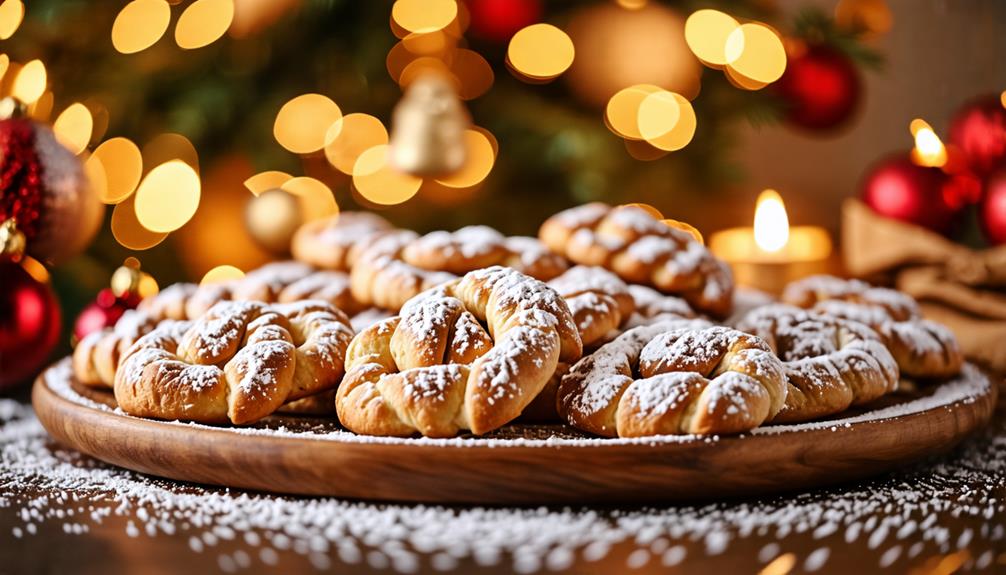
Vanillekipferl, Austria's cherished vanilla crescent cookies, embody the essence of holiday traditions with their delicate texture and rich flavors. Crafted from a buttery shortbread dough and often featuring ground almonds, these cookies have delighted taste buds for over four centuries. Their simple yet refined nature invites both nostalgia and celebration among families during the festive season. As enthusiasts of these treats explore their historical significance and essential ingredients, they may find themselves pondering the secrets behind achieving the perfect batch—what makes them truly special during the holidays?
Need cookware for your meal? Toolbox, a Pear to Pear rental marketplace, might be worth a look.
Quick Takeaways
- Vanillekipferl are traditional Austrian crescent-shaped cookies known for their delicate vanilla flavor and nutty richness.
- They are made from a shortbread dough enriched with ground almonds, walnuts, or hazelnuts.
- The cookies are historically significant, celebrating the Austro-Hungarian Empire's triumph over the Ottoman Empire.
- Coated in vanilla sugar, they are a popular treat during the Christmas season and perfect for gifting.
- Baking tips include using cold butter, chilling the dough, and monitoring baking time to achieve the ideal texture.
Overview of Vanillekipferl
Vanillekipferl, those delightful crescent-shaped cookies, hold a cherished place in Austrian culinary tradition. Renowned for their delicate vanilla flavor, these cookies are a staple of holiday baking, particularly during Christmas. Made from a rich shortbread dough, they often include finely ground almonds, walnuts, or hazelnuts, lending a nutty essence that perfectly complements the sweet vanilla.
Bakers roll the dough into crescent shapes before dusting them with a generous coating of vanilla sugar, enhancing their sweetness and providing an irresistible aroma. Each bite reveals a crumbly texture that melts in the mouth, creating a blissful experience for anyone fortunate enough to savor them.
Though primarily associated with the festive season, Vanillekipferl can be enjoyed year-round in Viennese coffee houses, where they pair beautifully with a warm beverage.
With approximately 94 kcal per cookie, they're a rich treat that balances indulgence with tradition. These cookies not only delight the taste buds but also connect people with the flavors of Austria's culinary heritage, making them a perfect choice for gatherings, gift-giving, or simply treating oneself.
Historical Significance
Austrian history is delicately intertwined with the beloved Vanillekipferl, which traces its origins back around 400 years to Vienna. These iconic cookies were created to celebrate the Austro-Hungarian Empire's triumph over the Ottoman Turks, symbolized by their crescent shape reminiscent of the Ottoman flag. This rich historical significance goes beyond mere culinary delight; it embodies a connection to local customs and significant events.
Vanillekipferl have become a cherished part of Austria's cultural heritage, particularly during the Christmas season. Their presence at holiday celebrations evokes a deep sense of nostalgia for many families, who pass down recipes through generations.
Traditional baking practices surrounding these cookies foster a sense of community, as families gather to create batches filled with love and memories.
Their crescent shape has inspired various regional adaptations, showcasing how traditional recipes can evolve while maintaining cultural roots. As Vanillekipferl continue to grace festive tables, they remind Austrians and those who celebrate alongside them of the importance of history, family, and the joy of sharing delicious treats during the most wonderful time of the year.
Essential Ingredients
To create authentic Vanillekipferl, a handful of essential ingredients is required, each contributing to the cookies' signature flavor and texture. The base of this delightful recipe includes 330 grams of all-purpose flour, which forms the foundation of the dough.
Ground almonds, specifically 140 grams of unpeeled almonds, lend a rich, nutty flavor that elevates these Christmas cookies to new heights. For sweetness, 80 grams of powdered sugar is mixed into the dough, while an additional 90 grams is reserved for dusting the finished treats.
The recipe calls for 250 grams of unsalted butter or vegan butter, ensuring a buttery richness that creates a tender, crumbly texture. A tablespoon of vanilla sugar, or 1.5 sachets, infuses the cookies with a warm, aromatic essence.
For those seeking a fresher alternative, homemade vanilla sugar can be crafted by burying a vanilla bean in granulated sugar for a week or two. Additionally, incorporating high-quality vanilla extract enhances the overall flavor profile.
Once baked, these crescent moons are generously coated in iced sugar, making them the perfect festive treat to share with loved ones during the holiday season.
Baking Tips and Techniques
Creating the perfect Vanillekipferl requires more than just the right ingredients; mastering some key baking techniques can elevate the results considerably.
First, using cold vegan butter is vital for ideal mixing, as this guarantees a flaky texture without altering the dough consistency with unnecessary flour. After mixing, chilling the dough for at least one hour makes it easier to handle and shape into those signature crescent forms.
When shaping each piece, it's important to form a U with rounded ends, aiming for a uniform size. This uniformity not only enhances the presentation but also guarantees even baking, preventing those pesky burnt ends.
As the cookies bake, keeping an eye on them is essential; Vanillekipferl typically take about 12-15 minutes at 350°F (160-170°C) until they're lightly tanned but not overly browned.
Community Feedback and Variations
The community surrounding Vanillekipferl has embraced the cookie, sharing heartfelt feedback and creative variations that highlight its enduring appeal. With a remarkable rating of 4.99 from 145 votes, bakers express nostalgia and satisfaction, often reminiscing about childhood holiday gatherings filled with the sweet aroma of these delightful treats.
Adaptations abound, including eggless versions that retain the signature crumbly texture, showcasing the recipe's versatility. Community feedback reveals personal stories of experimentation, with many bakers substituting different nut flours to achieve unique flavors, such as hazelnuts or pistachios.
For those looking to elevate their Vanillekipferl, the use of homemade vanilla sugar is highly recommended, although it requires 1-2 weeks of preparation to infuse that personal touch.
Additionally, many bakers note that the flavor intensifies beautifully when stored in an airtight container for a few days, making these cookies perfect for holiday gifting.
In sharing their experiences, the community not only celebrates the timeless allure of Vanillekipferl but also fosters a spirit of creativity, ensuring that this iconic cookie continues to warm hearts and homes during the festive season.
Common Questions
Are Vanillekipferl German or Austrian?
When it comes to Vanillekipferl, they're firmly rooted in Austrian tradition.
Originating in Vienna around 400 years ago, these delicate crescent-shaped cookies symbolize Austria's rich cultural heritage.
While they've gained popularity in Germany and other Central European countries, their distinct recipe and historical significance remain tied to Austria.
Enjoyed year-round, particularly in coffee houses, Vanillekipferl not only celebrate Austrian craftsmanship but also evoke a sense of nostalgia and festive warmth during the holidays.
What Is the History of Vanilla Kipferl?
The history of Vanillekipferl is nothing short of legendary. Originating in Vienna around 400 years ago, these crescent-shaped cookies symbolize the triumph of the Austro-Hungarian Empire over the Ottomans.
Traditionally made with ground walnuts, they offer a unique, crumbly texture and have no eggs. Over generations, families have passed down this cherished recipe, making Vanillekipferl a festive staple in Central and Eastern Europe, celebrated for their rich flavor and deep cultural significance.
What Is a Kipferl?
A Kipferl is a delightful, crescent-shaped pastry that's been enjoyed since the 13th century. The name comes from the German word "kipfen," meaning "to bend," which perfectly captures its unique shape.
Made with a variety of ingredients, Kipferl can include nuts, chocolate, or fruit fillings, and they're often dusted with powdered sugar.
These treats hold a special place in Austrian culture, especially during festive seasons, where they bring joy to gatherings and celebrations.
Wrapping Up
In celebrating the warmth of the holidays, Vanillekipferl brings families together, fills homes with delightful aromas, and creates sweet memories that last a lifetime. These iconic cookies, with their rich flavor and crumbly texture, invite sharing, gifting, and indulging. As traditions are passed down and variations arise, each bite captures the essence of Austrian culture and the joy of the season. So, whether baking or savoring, let Vanillekipferl be a cherished part of your festive celebrations.