
In a cozy Bulgarian kitchen, the aroma of freshly baked Banitsa fills the air, capturing the essence of tradition and comfort. This beloved pastry, known for its flaky layers and rich fillings, invites exploration into its authentic recipes that have been passed down through generations. While many may be familiar with the classic feta and egg combination, the culinary possibilities extend far beyond, promising delightful surprises. As one uncovers the techniques and variations that define this dish, the question arises: what makes a Banitsa truly authentic?
Need cookware for your meal? Toolbox, a Pear to Pear rental marketplace, might be worth a look.
Quick Takeaways
- Banitsa is a traditional Bulgarian pastry made with phyllo dough, typically filled with feta cheese, eggs, and yogurt for a savory treat.
- Variations of banitsa include sweet options like Tikvenik with pumpkin, and are often served during festive occasions or family gatherings.
- Essential preparation techniques involve layering phyllo dough with melted butter and evenly distributing the filling for optimal flavor.
- Popular serving suggestions include pairing banitsa with Balkan-style yogurt, roasted bell peppers, or marinated olives for enhanced taste.
- Each family may have unique recipes for banitsa, reflecting cultural heritage and personal preferences in flavors and fillings.
Overview of Banitsa
Celebrating its rich history and delightful flavors, Banitsa stands as a beloved Bulgarian pastry that captures the essence of the country's culinary traditions. This traditional dish features layers of phyllo dough, expertly crafted to create a crispy, golden exterior that encases a savory filling. Typically, the filling consists of a harmonious blend of feta cheese, eggs, and yogurt, providing a creamy, tangy delight that perfectly complements the flaky texture of the phyllo.
Banitsa holds a special place in Bulgarian culture, often enjoyed as a snack or meal at any time of day. Its versatility allows for numerous variations, accommodating different tastes and preferences. Some may include spinach, pumpkin, or various cheeses, showcasing the regional adaptations that enrich this pastry's legacy.
Often served warm or at room temperature, Banitsa is a staple at festive occasions, especially during Christmas celebrations. It's commonly accompanied by a revitalizing yogurt or ayran, enhancing its flavors while providing a delightful contrast.
Whether enjoyed at a family gathering or a festive feast, this remarkable dish embodies the warmth and hospitality of Bulgarian cuisine, making it a true culinary treasure.
Key Ingredients for Banitsa
When it comes to crafting the perfect Banitsa, the choice of phyllo dough plays a vital role in achieving that signature flaky texture.
Equally important is the selection of traditional cheese varieties, especially Sirene, which lends a rich, tangy flavor to the filling.
Essential Phyllo Dough Types
The delicate artistry of phyllo dough plays a vital role in crafting the perfect banitsa, a beloved Bulgarian dessert. This thin unleavened pastry, made from flour, water, and just a hint of oil or vinegar, yields a wonderfully light and crispy texture when baked. Typically sold in sheets, phyllo dough requires careful handling; a single tear can disrupt the layering process essential for a successful dish.
In traditional Bulgarian recipes, layering sheets of phyllo dough with melted butter or oil is fundamental. This technique not only enhances the flavor but also contributes to that sought-after flakiness. Each layer works harmoniously, creating a delightful contrast of textures that will impress anyone at the table.
Variations in phyllo dough thickness can greatly influence the final product. Thicker sheets provide a more substantial bite, while thinner sheets result in an airy, crispier pastry.
For convenience, many home cooks opt for commercial phyllo dough, but making it from scratch offers a more authentic experience. Whichever method one chooses, mastering phyllo dough is essential for anyone looking to serve a delicious banitsa that showcases the beauty of Bulgarian cuisine.
Traditional Cheese Varieties
Creating the perfect banitsa hinges on the selection of traditional cheese varieties, with Sirene taking center stage as the star ingredient. This beloved Bulgarian semi-hard cheese, typically made from sheep's milk, boasts a crumbly texture and a distinctive salty, tangy flavor. Sirene elevates the banitsa, enriching its overall taste and embodying the essence of traditional Bulgarian cuisine.
In many recipes, Bulgarian yogurt complements Sirene by providing a creamy consistency and probiotic goodness. Often combined with eggs and cheese, this mixture results in a rich filling that enhances the banitsa's appeal.
While some may opt for feta cheese as a substitute, the unique fermentation process of Bulgarian Sirene offers an irreplaceable taste that sets it apart.
Chefs often experiment with various cheese types and blends, incorporating ricotta or cottage cheese to create diverse flavor profiles while keeping true to the traditional banitsa filling. This versatility allows for personalization, ensuring every serving delights the palate.
Flavorful Filling Options
With the right cheese mixture setting the stage for banitsa, the filling options expand the dish's appeal even further. The traditional filling features crumbled Bulgarian feta cheese, known for its rich, tangy flavor that's crucial to this beloved pastry. To enhance this mixture, eggs are added, providing richness and binding the ingredients into a creamy texture.
For those wanting an extra layer of flavor, Bulgarian yogurt can replace or complement milk, adding a delightful tanginess that elevates the overall dish. Greek yogurt makes for a suitable alternative as well.
Adventurous cooks can experiment by incorporating sautéed spinach, pumpkin, or other vegetables into the filling, creating variations that surprise and delight guests.
Seasoning is essential; a pinch of salt and ground pepper is standard, but a sprinkle of herbs or spices, like cayenne, can give the banitsa a satisfying kick.
These flavorful filling options guarantee that each bite of banitsa is a harmonious blend of textures and tastes, making it a memorable centerpiece for any gathering.
Preparation Techniques
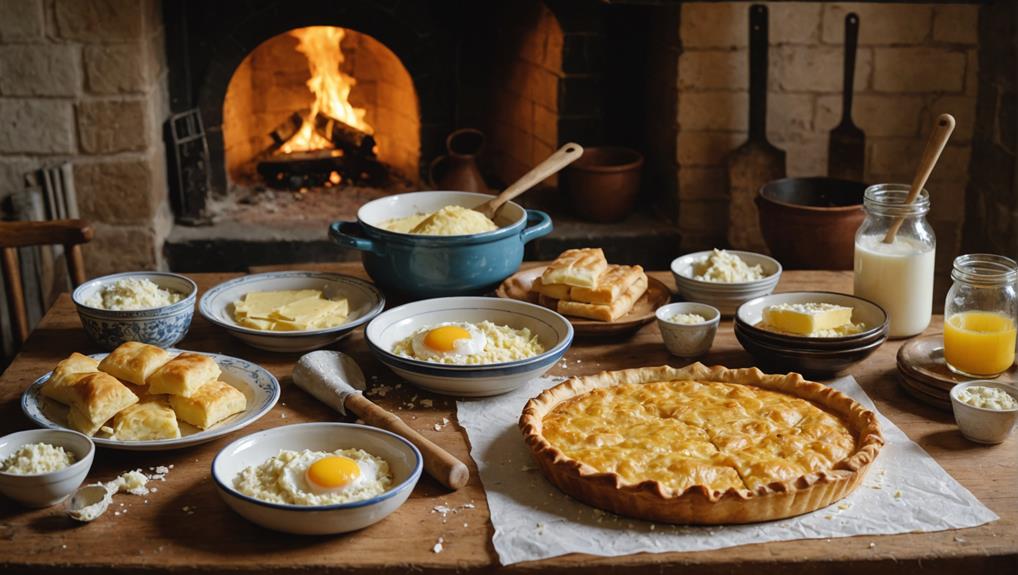
Preparation techniques for authentic Bulgarian Banitsa play a significant role in achieving the perfect balance of flaky texture and rich flavor.
To start, guaranteeing that phyllo sheets are properly thawed and kept covered with a damp towel is essential; this prevents them from drying out during assembly. The filling—a delightful blend of crumbled Bulgarian feta, eggs, yogurt, and a pinch of baking soda—should be mixed thoroughly until creamy for an even distribution of flavor.
When assembling the Banitsa, the technique is key. Layer two sheets of phyllo at a time, generously brushing each with melted butter. This not only adds flavor but also maintains moisture throughout the pastry.
For a visually appealing result, use the coiling technique: roll the phyllo sheets into ropes or spirals and place them in a greased baking dish.
Once assembled, the Banitsa is ready for the oven. Bake it at 375°F for 30-40 minutes until it turns a beautiful golden brown.
After baking, let it rest for 10-20 minutes to enhance the flavor and make slicing easier. This meticulous preparation truly elevates the beloved dish.
Baking Instructions
When it comes to baking banitsa, mastering essential techniques is key to achieving the perfect texture and flavor.
Proper layering of the phyllo sheets, along with careful filling, guarantees each bite is both crispy and rich.
With the right steps, anyone can create a beautifully golden and delicious dessert that captures the essence of this traditional Bulgarian treat.
Essential Baking Techniques
To create a delicious Bulgarian banitsa, mastering essential baking techniques is crucial for achieving that perfect balance of flaky layers and rich filling.
First, preheat the oven to 375°F (190°C) and prepare a baking dish by greasing it with melted butter. This step not only prevents sticking but also contributes to a beautiful golden crust.
Next, it's time to work with phyllo sheets. Layer them thoughtfully in the pan, brushing each sheet with melted butter or a butter-yogurt mixture. This guarantees that every layer remains moist and flavorful, enhancing the banitsa's overall taste.
Meanwhile, prepare the filling by combining crumbled feta cheese, eggs, and yogurt in a bowl, ensuring an even distribution for that consistent texture everyone loves.
Once the layers and filling come together, transfer the assembled banitsa to a baking sheet. Bake for 30-40 minutes, keeping an eye on it until it turns golden brown and crispy. If necessary, rotate the dish for even browning.
After baking, let the banitsa rest covered with a towel for 10-20 minutes. This allows it to retain moisture, making slices easier and more enjoyable to serve.
Layering and Filling Tips
Achieving the perfect layered banitsa involves a careful balance of technique and creativity. To start, the layering process requires meticulous attention to detail. Each phyllo sheet should be brushed generously with melted butter, guaranteeing a flaky texture and preventing any sticking. This step is essential for achieving that delightful crunch everyone loves.
When it comes to the filling, a traditional blend of crumbled feta, eggs, and yogurt should be evenly distributed between the layers. This guarantees consistent flavor and moisture throughout the dish. A popular method for assembly includes rolling the phyllo sheets with the filling into ropes and spiraling them in the baking dish. This not only enhances flavor but also creates a visually stunning presentation.
While assembling, it's wise to cover any exposed phyllo sheets with a damp kitchen towel to prevent drying out and cracking.
Once assembled, bake the banitsa in a preheated oven at 375°F (190°C) until golden brown, which usually takes about 30-40 minutes. Don't forget to rotate the dish halfway through to assure even heat distribution.
Your guests will surely be impressed by the beauty and taste of this authentic Bulgarian delight!
Serving Suggestions
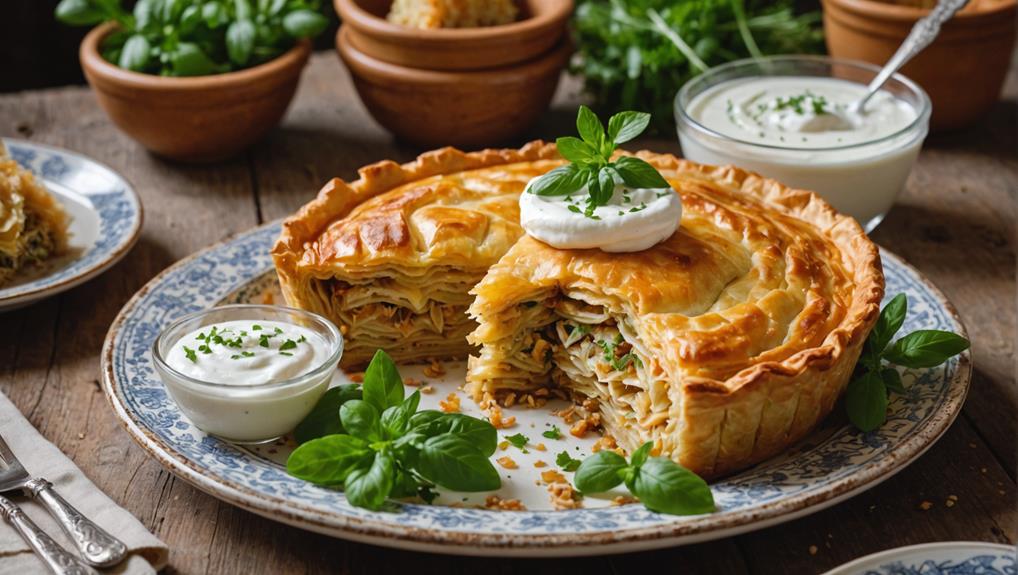
Banitsa is a versatile dish that shines in various dining settings, making it a delightful choice for any occasion. Traditionally, it's served warm and pairs beautifully with Balkan-style yogurt. This addition enhances the banitsa's creamy texture and complements its savory flavor, creating a harmonious balance that guests will love.
For a touch of color and sweetness, roasted bell peppers make an excellent side dish. Their vibrant hues not only brighten the plate but also provide a delightful contrast to the crispy dough of the banitsa. Alternatively, marinated feta-stuffed olives offer a savory bite that enriches the overall tasting experience, making them a perfect accompaniment.
For those looking to elevate brunch, consider serving banitsa alongside spinach-stuffed mushrooms. This hearty option adds depth to the meal and satisfies even the hungriest of appetites.
In Bulgaria, it's common for banitsa to grace breakfast tables, often enjoyed with a comforting cup of coffee.
With these serving suggestions, hosting a meal featuring banitsa becomes a joyous occasion, ensuring that every guest feels warmly welcomed and indulged.
Popular Variations
Across Bulgaria, the beloved banitsa takes on many delicious forms, each variation offering its own unique twist. These adaptations cater to diverse palates, blending sweet and savory elements that delight all who try them.
Here are some popular variations:
- Tikvenik: This sweet banitsa features a filling of grated pumpkin, sugar, and cinnamon, making it a seasonal favorite during the fall.
- Spinach Banitsa: A savory option, it incorporates fresh or cooked spinach with rich feta cheese and eggs, providing a nutritious twist on the traditional recipe.
- Cheese and Herb Banitsa: This version mixes various cheeses, such as ricotta or Bulgarian sirene, with fragrant herbs like dill or parsley, creating an aromatic experience.
- Potato Banitsa: Utilizing mashed or grated potatoes combined with cheese and eggs, this hearty dish is particularly cherished in winter months for its comforting qualities.
Additionally, sweet banitsa variations filled with layers of nuts, sugar, and honey transform this versatile dish into a delightful dessert.
Each of these banitsa variations showcases the rich culinary tradition of Bulgaria, inviting everyone to savor their distinctive flavors.
Community Feedback
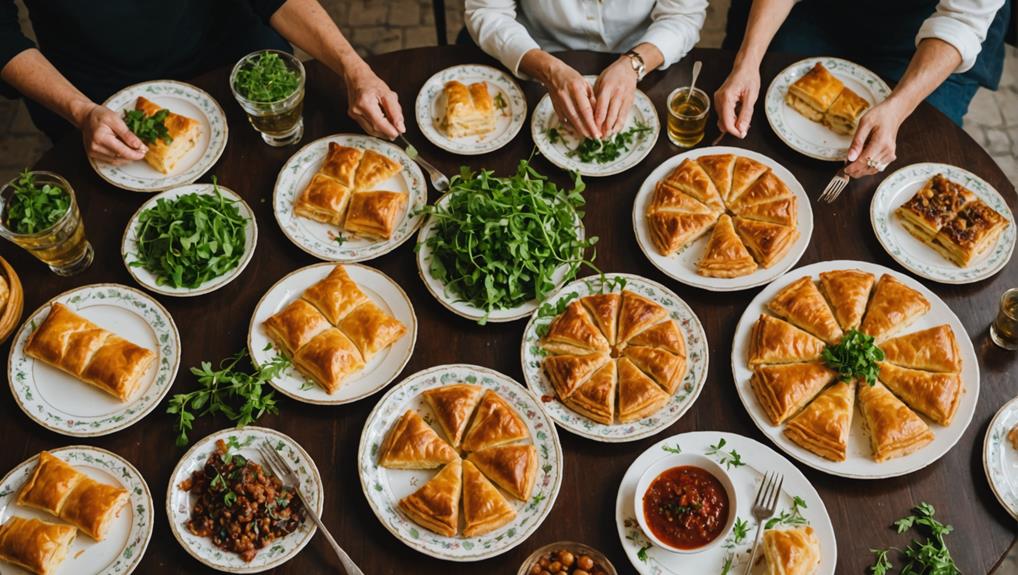
Feedback from the community underscores the enduring popularity of banitsa recipes, with many home cooks celebrating the delightful flavors and textures achieved through traditional methods. Users consistently praise the comforting, flaky pastry and the rich cheese filling that defines this beloved dish.
However, some suggest personal adaptations, like reducing the salt content in the filling for a milder taste, catering to diverse palates.
The community has also embraced variations that elevate banitsa beyond its classic roots. Many share creative twists, such as incorporating spinach or other vegetables, showcasing the dish's versatility.
These adaptations not only maintain the essence of traditional recipes but also invite experimentation, allowing cooks to tailor the banitsa to their own preferences.
Positive reviews frequently highlight banitsa as a crowd-pleasing option, perfect for gatherings and celebrations.
Whether served at casual get-togethers or festive occasions, this dish satisfies a wide range of tastes. The warmth and nostalgia surrounding banitsa resonate deeply with those who prepare it, making it a cherished centerpiece at communal meals, where sharing and enjoyment take center stage.
Cultural Significance
While many dishes evoke a sense of nostalgia, few resonate as deeply in Bulgarian culture as banitsa. This traditional pastry, layered with phyllo and filled with cheese and eggs, symbolizes cultural heritage and plays a pivotal role in festive celebrations. Often associated with Christmas, fortunes are tucked inside, adding a layer of excitement to the occasion.
The significance of banitsa can be appreciated through several key aspects:
- Culinary Tradition: The dish has historical roots dating back to the Ottoman Empire, evolving into a staple of Bulgarian cuisine.
- Family Recipes: Unique recipes are cherished and passed down through generations, each family adding its twist, enriching the cultural tapestry.
- Symbol of Hospitality: Banitsa is enjoyed at any time of day, showcasing the warmth and generosity inherent in Bulgarian culture.
- Cultural Identity: Whether at community gatherings or personal celebrations, banitsa embodies the essence of Bulgarian identity, connecting individuals to their heritage.
In every bite, banitsa reflects the love and traditions that bind Bulgarian families together, making it much more than just a dish.
Related Dessert Recipes
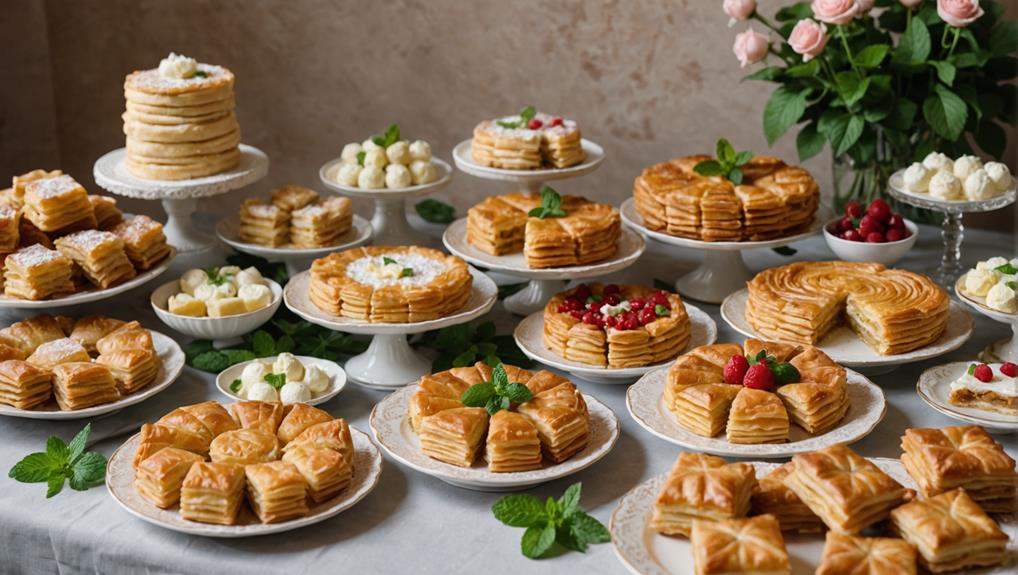
Exploring related dessert recipes opens a world of delightful combinations and innovative flavors that complement the classic banitsa.
From the savory Puff Pastry Spanakopita to the sweet twist of Custard Baklava, these creations showcase the versatility of pastry.
Each dish brings its own unique touch, inviting dessert lovers to savor new experiences while honoring traditional roots.
Traditional Dessert Combinations
Traditional Bulgarian desserts often showcase delightful combinations that blend flavors and textures, making each dish a unique experience. Many of these sweets feature phyllo sheets or pastry, similar to how one might make banitsa.
Here are some beloved traditional dessert combinations that highlight this culinary creativity:
- Baklava: This classic dessert layers phyllo with nuts and a honey syrup, resulting in a sweet and crunchy delight that's hard to resist.
- Custard Baklava: A rich twist on the original, this version includes a creamy custard filling nestled between layers of phyllo, offering indulgence in every bite.
- Honey and Feta Pita: A sweet-savory blend, this dish harmonizes honey with salty Bulgarian cheese instead, creating a memorable treat that surprises the palate.
- Rabanadas: Similar to French toast, these sweet slices of bread soaked in yogurt and eggs make for a comforting dessert, especially during festive occasions.
These traditional Bulgarian desserts not only celebrate culinary heritage but also invite gatherings where family and friends can enjoy the joys of sharing delicious food.
Innovative Flavor Variations
Innovative flavor variations of Bulgarian banitsa desserts showcase the creativity and versatility of this beloved pastry. One delightful option is Puff Pastry Spanakopita, which incorporates spinach and cheese instead of feta, wrapped in flaky phyllo sheets that are buttered before baking until golden. This savory treat brings a taste of Greek cuisine while maintaining the essence of banitsa.
For those with a sweet tooth, Custard Baklava layers phyllo dough with a rich custard filling, drizzled in syrup, offering a luxurious dessert experience. Another unique creation, Honey and Feta Pita, combines creamy feta with honey, creating a harmonious blend of sweet and savory flavors that can be enjoyed warm or chilled.
Puff Pastry Strudel is another enticing variation, showcasing sweet fillings like fruits or nuts, while Puff Pastry Nutella Twists encase Nutella in flaky layers, turning classic pastry techniques into an indulgent dessert.
To keep these dishes fresh, it's crucial to cover with a towel after assembling, ensuring the phyllo stays moist. These innovative variations invite everyone to explore the delightful world of Bulgarian banitsa in new and exciting ways.
Tips for Perfect Banitsa
Creating the perfect banitsa requires attention to detail and a few key techniques that elevate this beloved Bulgarian dessert. Mastering these tips guarantees a deliciously flaky and satisfying treat that will impress anyone you serve.
- Preheat your oven to 375°F (190°C) for ideal baking conditions. This step promotes even browning and crispiness, essential for a well-baked banitsa.
- As you assemble, keep the phyllo dough covered with a damp towel. This prevents it from drying out and cracking, allowing for easy handling.
- Don't skimp on flavor—brush each layer of phyllo with melted butter. This assures a rich, moist texture that enhances the overall experience of the banitsa.
- Once baked, allow the banitsa to rest covered with a towel for 10-20 minutes. This resting period softens the phyllo layers, making it easier to slice and serve.
For the filling, always use Bulgarian or Balkan-style yogurt to maintain an authentic flavor profile.
Common Questions
What Is the Difference Between Burek and Banitsa?
Burek and banitsa differ in ingredients and preparation. While banitsa's filled with cheese and yogurt, featuring phyllo dough, burek offers various fillings, like meat or vegetables, typically using thicker dough for a heartier texture.
What Is Banitsa in English?
Banitsa, often called "cheese pie" in English, captivates with its flaky layers of phyllo dough filled with feta, eggs, and yogurt. This beloved pastry delights taste buds, making it a cherished Bulgarian culinary tradition.
What Are the Different Types of Banitsa?
They say variety's the spice of life, and Banitsa certainly embodies this. Savory options like Spinach and Leek delight the palate, while sweet versions with apples or nuts enchant dessert lovers, ensuring something for everyone.
Why Is Banitsa Special?
Banitsa's special because it embodies Bulgaria's rich heritage, delighting taste buds with its flaky texture and savory fillings. It's a beloved comfort food, often shared during celebrations, fostering connections between family and friends.
Wrapping Up
To sum up, Banitsa isn't just a dish; it's a celebration of Bulgarian culture that brings people together. Did you know that over 90% of Bulgarians enjoy Banitsa during festive occasions? This beloved pastry, with its flaky layers and rich fillings, captures the essence of warmth and hospitality in every bite. Whether enjoyed at family gatherings or as a comforting snack, Banitsa continues to weave its way through the hearts and homes of those who cherish it.