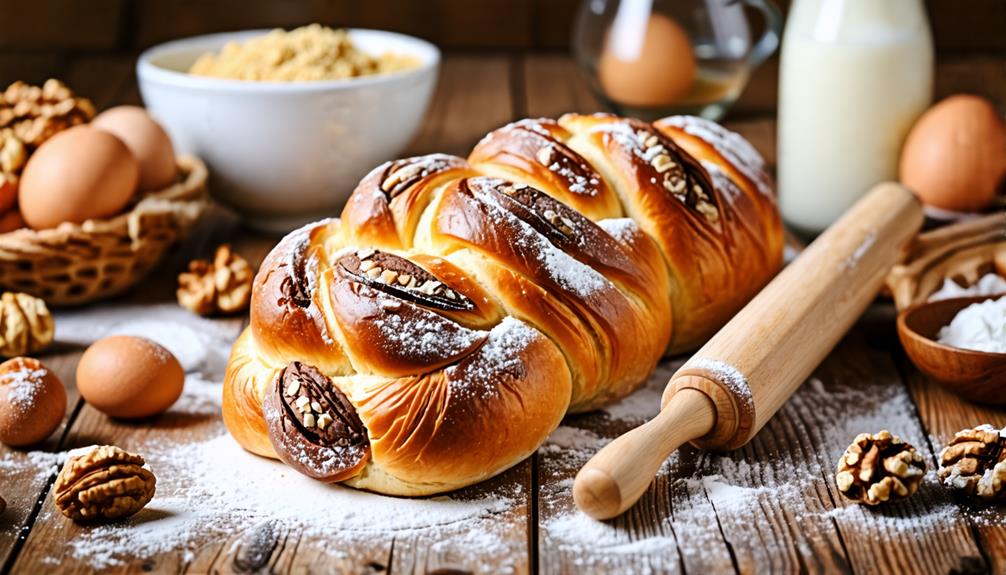
When it comes to making Romanian cozonac at home, it's vital to grasp both the basics and the nuances that elevate this traditional sweet bread. From selecting the right ingredients to mastering yeast activation, each step plays an important role in achieving that perfect loaf. A well-kneaded dough, shaped and filled with care, can transform a simple recipe into a festive centerpiece. However, without proper baking techniques and storage tips, even the best efforts might fall short. Exploring these elements can reveal the secrets to crafting an exceptional cozonac that's sure to impress.
Need cookware for your meal? Toolbox, a Pear to Pear rental marketplace, might be worth a look.
Quick Takeaways
- Use high-quality, high-protein white flour and ensure all ingredients are at room temperature for optimal dough texture.
- Activate yeast by blooming it in lukewarm milk with sugar for 10-15 minutes until frothy for better rise.
- Knead dough for at least 30 minutes and perform the windowpane test to confirm gluten development.
- Roll the dough into a rectangle, spread filling evenly, and seal tightly to maintain shape during baking.
- Preheat the oven to 175°C (350°F) and bake for approximately 45 minutes, covering with foil if necessary to prevent over-browning.
Understand Cozonac Basics
Cozonac, with its golden-brown crust and enticing aroma, stands as a beloved staple in Romanian festive celebrations. This traditional Romanian sweet bread captures the essence of holiday gatherings, thanks to its rich, buttery dough and delightful layered texture.
The process begins with high-protein white flour, lukewarm milk, eggs, and softened unsalted butter, all combined to create a yeasted dough that's light and airy.
To start, bakers prepare a sponge using part of the ingredients, allowing it to rise before mixing in the remaining components. This vital step enhances the dough's texture and flavor.
The nut filling, often made from ground walnuts, cocoa powder, and sugar, is combined with citrus zests like lemon and orange, adding a bright note to each bite. Some even incorporate raisins or chocolate for a twist.
Once shaped, the cozonac undergoes careful proofing to guarantee it achieves the perfect rise before baking. An egg wash applied before baking gives the loaf a glossy finish, creating an enticing visual appeal.
After approximately 45 minutes at 175°C (350°F), the result is a beautifully baked cozonac, ready to be shared and enjoyed during festive occasions.
Choose the Right Ingredients
Choosing the right ingredients is essential for making cozonac that's both delicious and authentic.
High-quality flour, fresh components, and thoughtful flavor enhancements set the foundation for this traditional treat.
Flour Quality Matters
When it comes to crafting the perfect cozonac, the quality of flour plays an essential role in determining the bread's texture and flavor. Using high protein white flour, like Manitoba flour with a protein content around 13%, is vital for ideal gluten development. This guarantees a light and airy texture that delights everyone at the table.
Before diving into the mixing process, it's important to sift the flour at least three times. This aeration not only enhances the dough's fluffiness but also contributes to an even rise.
When adding moisture, lukewarm milk serves as the best choice; it effectively activates the yeast without compromising its potency, allowing the dough to rise beautifully.
For authenticity, traditional white sugar is preferred over brown sugar, as the latter can disrupt the moisture balance and affect cozonac's delicate texture.
Additionally, confirming that all ingredients, especially butter, are at room temperature facilitates better mixing and emulsification, enhancing the overall flavor and consistency of the dough.
Freshness of Ingredients
The freshness of ingredients greatly impacts the overall quality of cozonac. For a delightful result, one should begin with high protein flour, such as Manitoba flour, containing at least 13% protein. This guarantees proper gluten development, resulting in a light and fluffy texture.
Next, lukewarm milk serves as the ideal moisture source; too hot or cold can hinder yeast activity, affecting dough rising.
Choosing fresh, high-quality eggs is essential as they contribute richness, enhancing both flavor and texture. It's equally important to use softened unsalted butter, which improves the dough's texture. Salted butter may disrupt the delicate flavor profile that cozonac is known for.
Lastly, opt for traditional white sugar rather than brown sugar. The latter can alter the moisture balance, impacting the dough's consistency.
Flavor Enhancements Options
A variety of flavor enhancements can elevate cozonac from a traditional treat to a gourmet delight. To begin with, incorporating rum essence into the dough not only enriches the flavor but also guarantees that the alcohol evaporates during baking, leaving a subtle richness.
Fresh lemon and orange zest can be added to both the dough and filling, enhancing the citrus notes and creating a complex flavor profile that dances on the palate.
For aromatic depth, consider using vanilla extract or even vanilla bean paste. This addition transforms the cozonac into an indulgent experience.
When it comes to the filling, blending candied orange peel introduces a delightful sweetness and chewy texture that pairs beautifully with a nut mixture, whether it's pecans or whole nuts.
To further customize, experimenting with cocoa powder can bring a chocolatey richness, while rum-soaked raisins or chopped chocolate can add unique twists.
Master the Yeast Technique

Mastering the yeast technique is essential for achieving the perfect cozonac, and understanding the different types of yeast is the first step.
Blooming active dry yeast in lukewarm milk with sugar guarantees it's ready to work its magic, while instant and fresh yeast offer quicker alternatives for busy bakers.
Regularly checking the dough's consistency during the proofing process will assure a fluffy, airy texture that makes cozonac truly delightful.
Yeast Types Explained
When it comes to baking cozonac, selecting the right type of yeast is essential for achieving that perfect airy texture. There are three main types of yeast to take into account: active dry yeast, instant yeast, and fresh yeast, each offering unique benefits for your dough.
Active dry yeast needs a little extra love; it requires blooming in lukewarm milk for 10-15 minutes before being mixed with flour. This process activates the yeast, ensuring proper dough fermentation and a delightful rise.
On the other hand, instant yeast is a time-saver, as it can be mixed directly with flour without the blooming stage, making it a quick option for busy bakers.
Fresh yeast, also known as cake yeast, adds a rich flavor but has a shorter shelf life. It crumbles easily into the flour, creating a lively fermentation.
Regardless of the type you choose, remember the general rule: roughly 2 to 3 teaspoons of yeast per 500g of flour is ideal for maximum rise.
Blooming Process Importance
The blooming process is an essential step in transforming dry yeast into a lively ingredient that guarantees cozonac rises beautifully.
By properly blooming yeast, bakers can ascertain that their dough achieves the desired rise and texture, making every bite a delight.
To effectively bloom yeast, consider these key steps:
- Use warm milk: Heat your milk to around 110°F (43°C) to create the ideal environment for activating dry yeast.
- Add sugar and yeast: Combine the warm milk with sugar and dry yeast, allowing the mixture to sit for 10-15 minutes. This is when you'll see it become frothy, a sure sign that the yeast is alive.
- Monitor the temperature: Ascertain the mixture isn't too hot, which could kill the yeast, or too cool, which can hinder activation.
- Incorporate into your dough: Once frothy, add this blooming yeast to your other ingredients, ensuring your cozonac rises as intended.
Dough Consistency Checks
Achieving the perfect dough consistency is essential for creating a delightful cozonac. When making the dough, it's critical to start with lukewarm milk at around 37°C (98°F) to effectively activate the yeast. For dry yeast, blooming it with sugar in the milk for 10-15 minutes guarantees it's ready to work its magic.
As the process unfolds, kneading the dough for at least 30 minutes helps develop the gluten, leading to a smooth and elastic texture. To check the consistency, the windowpane test is a handy technique. Simply stretch a small piece of dough; if it forms a thin, translucent membrane without tearing, you're on the right track.
If the dough feels overly sticky, gradually add more flour to achieve the right balance. Conversely, if it's too hard or dry, a bit of liquid can help restore softness and pliability.
Once the dough reaches the desired consistency, let it rise in a warm place until it doubles in size. This step is essential for guaranteeing that your cozonac turns out light and airy, ready to impress those you serve.
Perfect Your Dough Preparation
While perfecting the dough preparation for cozonac, using high-protein white flour like Manitoba flour is vital for achieving the light and fluffy texture this traditional sweet bread is known for. This flour promotes peak gluten development, guaranteeing a delightful bite.
To create the perfect cozonac dough, follow these steps:
- Add the flour: Begin by incorporating high-protein white flour into your mixing bowl, guaranteeing a solid foundation for your dough.
- Prepare the milk mixture: Use lukewarm milk as the moisture source, which not only hydrates the dough but also activates the yeast effectively.
- Knead the dough: Knead the dough for at least 30 minutes. This step is fundamental for gluten development, resulting in the desired layered structure of your cozonac.
- Allow to rise: After kneading, place the dough in a warm place to proof for about 60 minutes. Monitor closely to guarantee it doesn't over-proof, which can affect the final texture.
Shape and Fill With Care
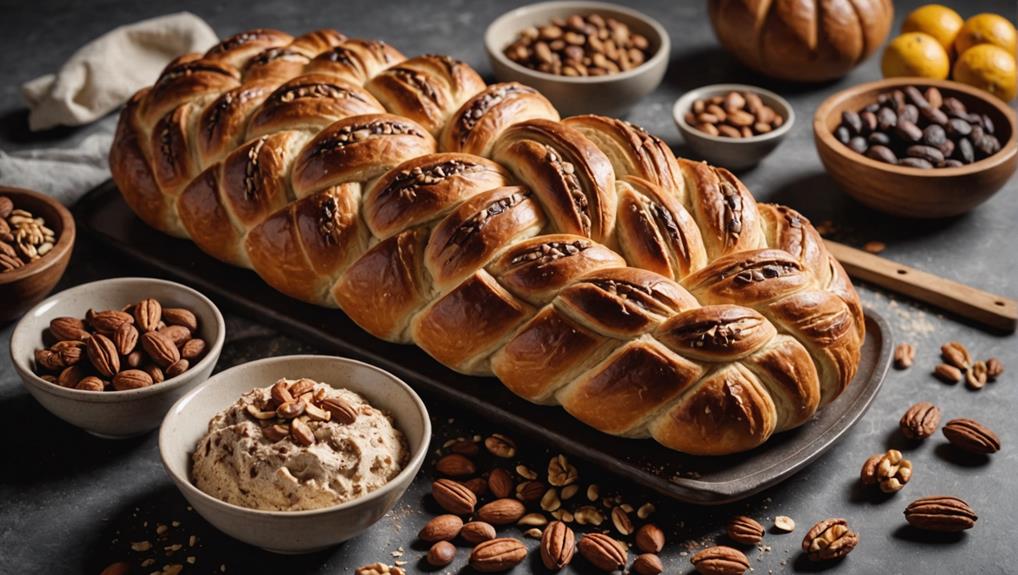
Once the dough has risen to perfection, it's crucial to shape and fill the cozonac with care.
Begin by rolling the dough out into a rectangle, ensuring it's at least 10 cm longer than your loaf pan. This extra length allows for proper shaping and filling, setting the stage for a delightful treat.
Next, spread the filling evenly across the dough, leaving about a 1 cm border at the edges. This prevents any leakage during baking, ensuring a clean presentation.
After spreading the filling, roll the dough tightly into a carpet-like shape. It's crucial to seal the seam well, as this maintains the cozonac's structure.
For a visually appealing touch, twist the rolled dough into an X shape or braid it gently before placing it in the loaf pan. This not only enhances the look but also adds an artistic flair to your creation.
Remember to fill with care; avoid packing the filling too tightly, as this can inhibit the dough's ability to rise properly.
With these steps, your cozonac will be both beautiful and delicious, ready to serve and impress your guests.
Bake to Golden Perfection
Baking cozonac to golden perfection is a rewarding experience that fills the kitchen with delightful aromas. To achieve that beautifully golden color and a soft, airy texture, one must pay attention to a few key steps.
- Preheat your oven to 175°C (350°F). A stable temperature guarantees an even bake and a crust that's just right.
- Before placing the cozonac in the oven, apply an egg wash made from one egg yolk and a tablespoon of milk. This will give the loaves a glossy finish that's irresistible.
- Bake the cozonac for approximately 45 minutes. If the tops brown too quickly, cover them lightly with aluminum foil to prevent burning while the inside cooks through.
- To check for doneness, use a toothpick; it should come out clean from the center to confirm the bread is fully baked.
Once baked to perfection, allow the cozonac to cool in the pan for 15-20 minutes. This essential step helps maintain the texture and prevents sogginess.
Afterward, transfer it to a wire rack to cool completely, guaranteeing every slice is delightful to serve.
Store and Enjoy Properly
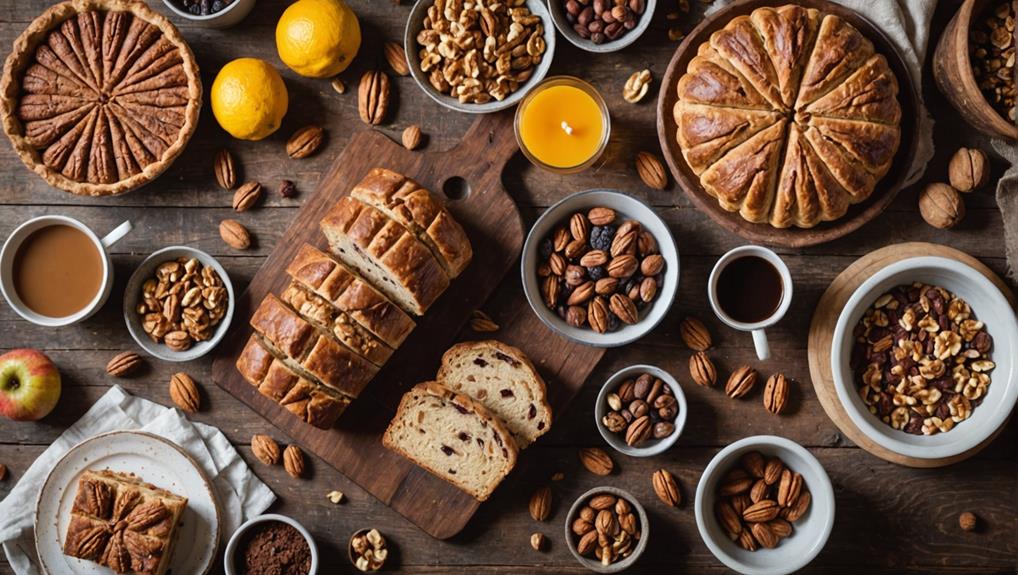
After enjoying the delightful experience of baking cozonac to golden perfection, the next step is to assure that this delectable treat is stored and savored properly.
To maintain its freshness, the cozonac should be stored whole in an airtight zipper bag at room temperature for 1-2 days. This method preserves the rich flavors and soft texture that make this Cozonac recipe a favorite during festive meals.
It's essential to slice the cozonac only after allowing it to cool completely; this prevents sogginess and assures that each slice remains delightful. For an enhanced serving experience, pairing cozonac with a hot beverage, like coffee or milk, beautifully complements its rich flavor profile.
Should there be leftover cozonac, it can also be stored in the same airtight zipper bag for up to two days or frozen for longer preservation.
Additionally, those slices can be transformed into a scrumptious breakfast option by making French toast, adding variety to your morning routine.
Common Questions
What Is Cozonac Made Of?
Cozonac's delightful composition features high-protein white flour, lukewarm milk, whole eggs, and softened unsalted butter. It's enriched with sugar and spiced rum, while a rich filling of ground walnuts, cocoa, and spices completes this traditional treat.
Is Babka the Same as Cozonac?
Babka isn't just cozonac's twin; it's a delightful cousin! While both are sweet, yeasted breads, cozonac's rich Romanian roots and unique fillings set it apart, making each a festive treat in its own right.
Wrapping Up
In the world of baking, crafting cozonac is like composing a symphony—each ingredient and technique plays its part to create a harmonious masterpiece. By mastering these seven tips, anyone can transform simple ingredients into a festive sweet bread that warms the heart and delights the senses. With practice, patience, and a sprinkle of love, your cozonac will not only rise beautifully but also become a cherished tradition shared among family and friends. Enjoy every delicious slice!