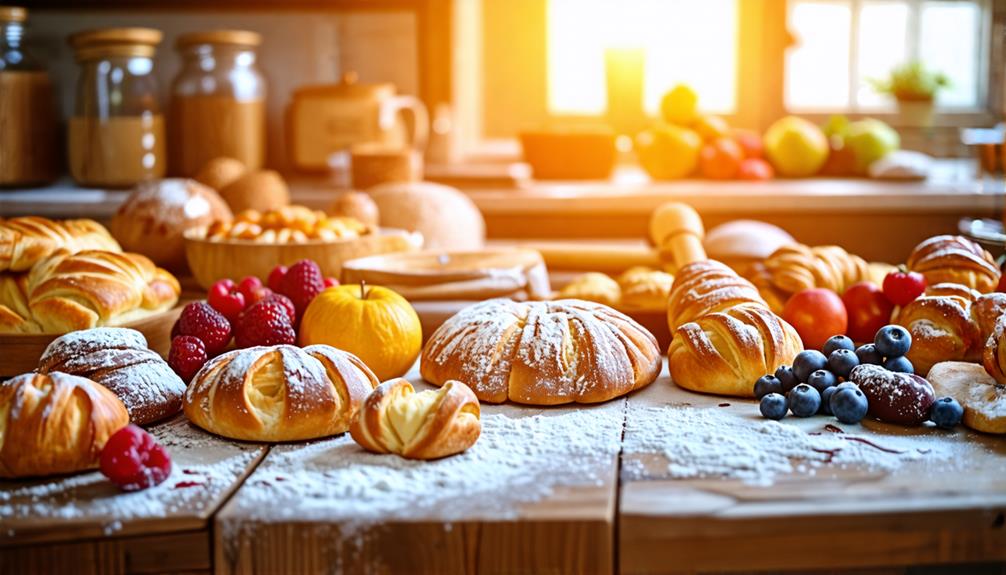
Mastering traditional Danish pastries is like crafting a delicate work of art, where each layer contributes to the final masterpiece. To achieve that coveted flakiness and rich flavor, one must focus on a few essential techniques. The importance of maintaining a cool dough, the precision of the three letter folds, and the exploration of creative fillings can't be overstated. Yet, there's more to uncover about each of these aspects that could transform a simple pastry into a culinary delight. What hidden secrets lie in the process that can elevate the ordinary to the extraordinary?
Need cookware for your meal? Toolbox, a Pear to Pear rental marketplace, might be worth a look.
Quick Takeaways
- Use high-fat European-style butter to achieve rich flavor and flaky texture in your Danish dough.
- Maintain a cool temperature throughout the dough preparation to prevent the butter from melting.
- Master the three letter folds technique to create 27 layers of dough and butter for optimal flakiness.
- Experiment with various fillings like cream cheese, fruit jams, or chocolate for diverse flavor profiles.
- Allow the dough to rest properly between folds for better elasticity and rise during baking.
Perfecting the Danish Dough
In the world of pastry making, perfecting the Danish dough is an art form that demands precision and patience. This laminated dough forms the foundation of the beloved pastry, characterized by its flaky layers. It begins with an enriched yeasted mixture, which must be rolled out to about 6mm thick before the magic of folding and rolling commences.
The key player in this process is high-fat European-style butter, which, when rolled out and enveloped in the dough, contributes to the desired richness and flakiness. Maintaining a cool temperature throughout preparation is essential, as melted butter can compromise the pastry's texture.
To achieve those beautiful flaky layers, bakers typically perform three letter folds, resulting in an impressive 27 layers of dough and butter. Once shaped, the pastries need to rise for at least 2 hours, allowing them to become light and airy. This patience pays off when they're baked on baking sheets at 375°F (190°C) for 15-25 minutes, transforming into golden brown delights.
The result is a pastry that not only looks inviting but also tastes like a slice of heaven, ready to be served to enthusiastic guests.
Essential Ingredients for Success
Achieving success in crafting traditional Danish pastries hinges on selecting the right ingredients, each playing a vital role in the final product. The foundation lies in all-purpose flour, which provides versatility, while bread flour can introduce a chewier texture if desired. Whole milk enhances the richness of the dough, contributing to that distinctive buttery flavor synonymous with Danish pastries.
Equally important is the choice of butter; unsalted, high-fat butter is essential for both flavor and texture. For ideal flakiness, using grated frozen butter is a smart technique, allowing layers to separate beautifully during baking.
Instant yeast, whether used for its convenience or active dry yeast for traditionalists, is crucial for achieving the perfect dough rise, creating that airy, delightful lift. Sugar adds a touch of sweetness that balances the pastry's richness, while eggs not only bind the ingredients but also impart a tender, moist texture.
Together, these ingredients work harmoniously, ensuring each pastry is a celebration of flavor and texture, ready to be shared with loved ones and serve as a delightful treat at any gathering.
Creative Filling Ideas
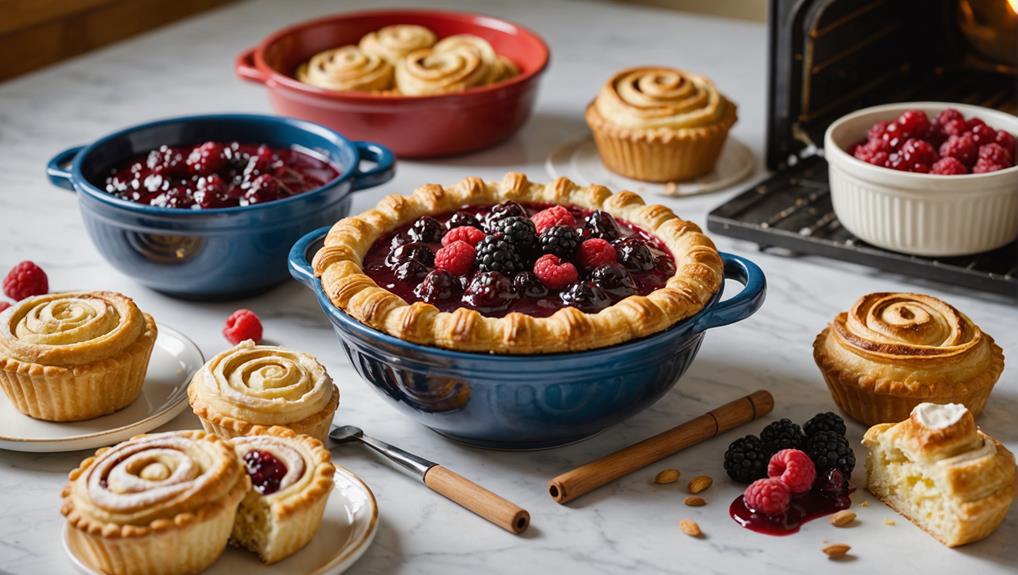
With the right ingredients in hand, the next step in mastering Danish pastries is to explore creative filling ideas that elevate these treats from delightful to extraordinary. Popular fillings like cream cheese mixed with powdered sugar and vanilla add a luscious sweetness that delights the palate.
For a burst of flavor and color, consider incorporating vibrant fruit jams, such as raspberry, apricot, or cherry, enhancing both taste and visual appeal.
For those craving richness, chocolate ganache or Nutella provides a decadent filling that pairs perfectly with the flaky pastry. Brighten the experience with lemon curd, whose tangy zest contrasts beautifully with the buttery dough, offering a rejuvenating twist.
Savory fillings, like a blend of feta cheese and caramelized onions, can transform traditional sweet Danish pastries into a deliciously unique offering.
Experimenting with combinations can yield delightful surprises; try layering almond paste beneath your favorite jam or topping fresh fruit with a dollop of whipped cream. These creative filling ideas not only showcase the versatility of Danish pastries but also promise to impress anyone lucky enough to indulge in them.
Common Questions
Why Is My Danish Pastry Not Flaky?
When his Danish pastry isn't flaky, he realizes it's often due to soft butter or improper dough temperature. Insufficient resting times and heavy rolling can also compress layers, hindering that desired, delicate texture.
Why Is My Danish Pastry Dough Tough?
When Danish pastry dough turns tough, it's often due to overworking, warm butter, inadequate chilling, incorrect flour measurements, or skipping resting periods. Each factor disrupts the delicate balance needed for that coveted flaky texture.
How to Make Danish Pastry Shape?
To shape Danish pastries, one can roll laminated dough into squares or circles, creating defined edges. Cutting slits for claws or pressing centers for filling creates delightful designs. Proper proofing guarantees a light, airy texture before baking.
What Are Four Rules to Follow When Making Pastry?
When crafting pastry, one must embrace the dance of cold ingredients, maintain dough's chill, roll with grace, and allow it to rest. These four rules guarantee a delightful, flaky masterpiece that'll impress every guest.
Wrapping Up
In the delightful journey of crafting traditional Danish pastries, one discovers that mastery lies not just in technique, but in the art of patience and creativity. By keeping the dough cool, executing precise folds, and experimenting with imaginative fillings, bakers can conjure pastries that whisper of flaky perfection and tantalizing flavors. With each golden-brown creation, they invite everyone to savor a little slice of heaven, where every bite tells a story of culinary devotion and sweet indulgence.